Skip to content
The Master of Landscape Architecture Program teaches students to design land and land-based practices that advance environmental and social justice in a time of climate and public change.
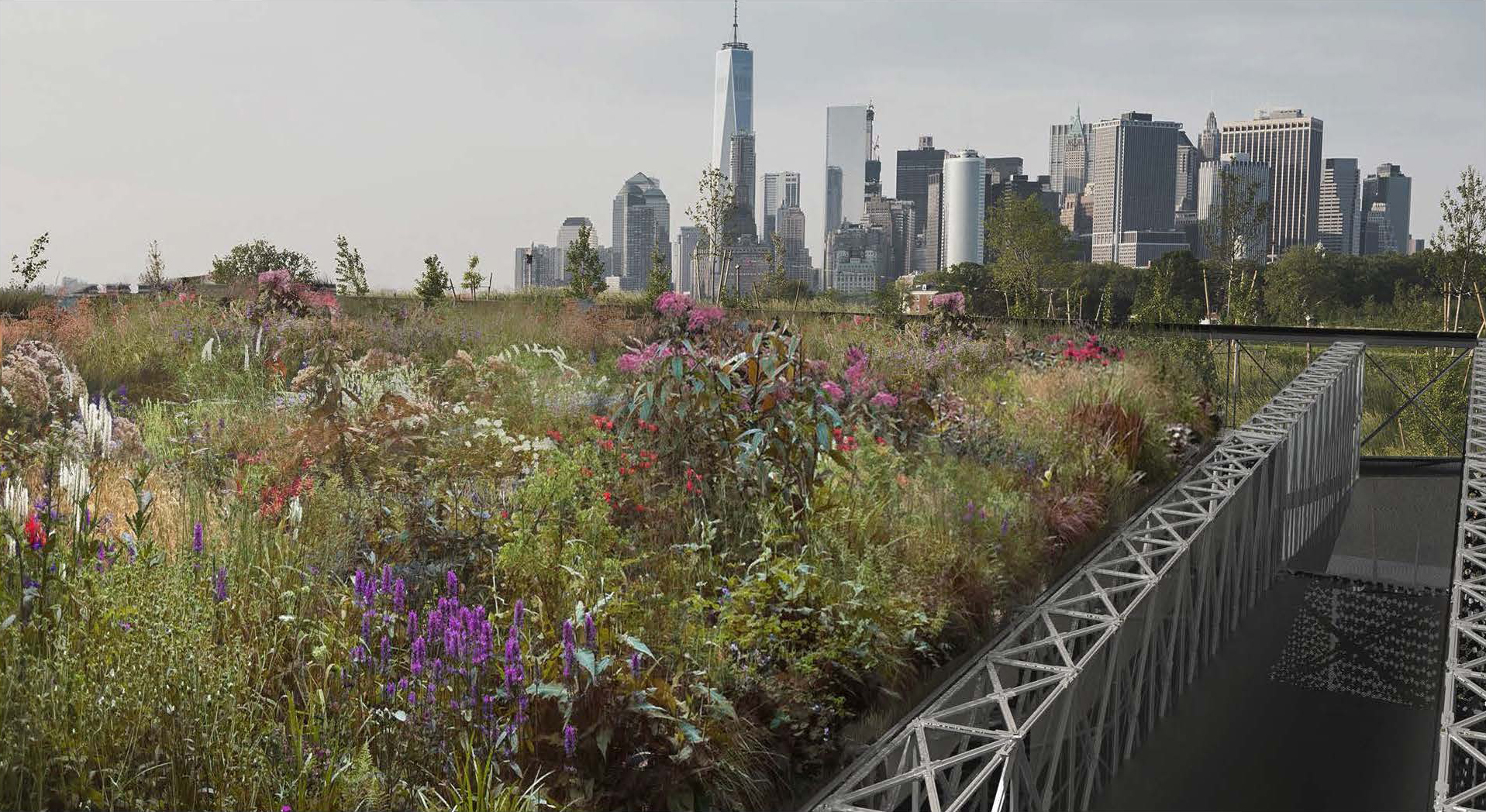
An image of the New York City Downtown skyline from an urban park with paths surrounded by foliage.
Type
Graduate, MLA
Start Term
Fall Only
Credits
56 or 85
Duration
2 or 3 years
Courses
Plan of Study

Landscape Architecture

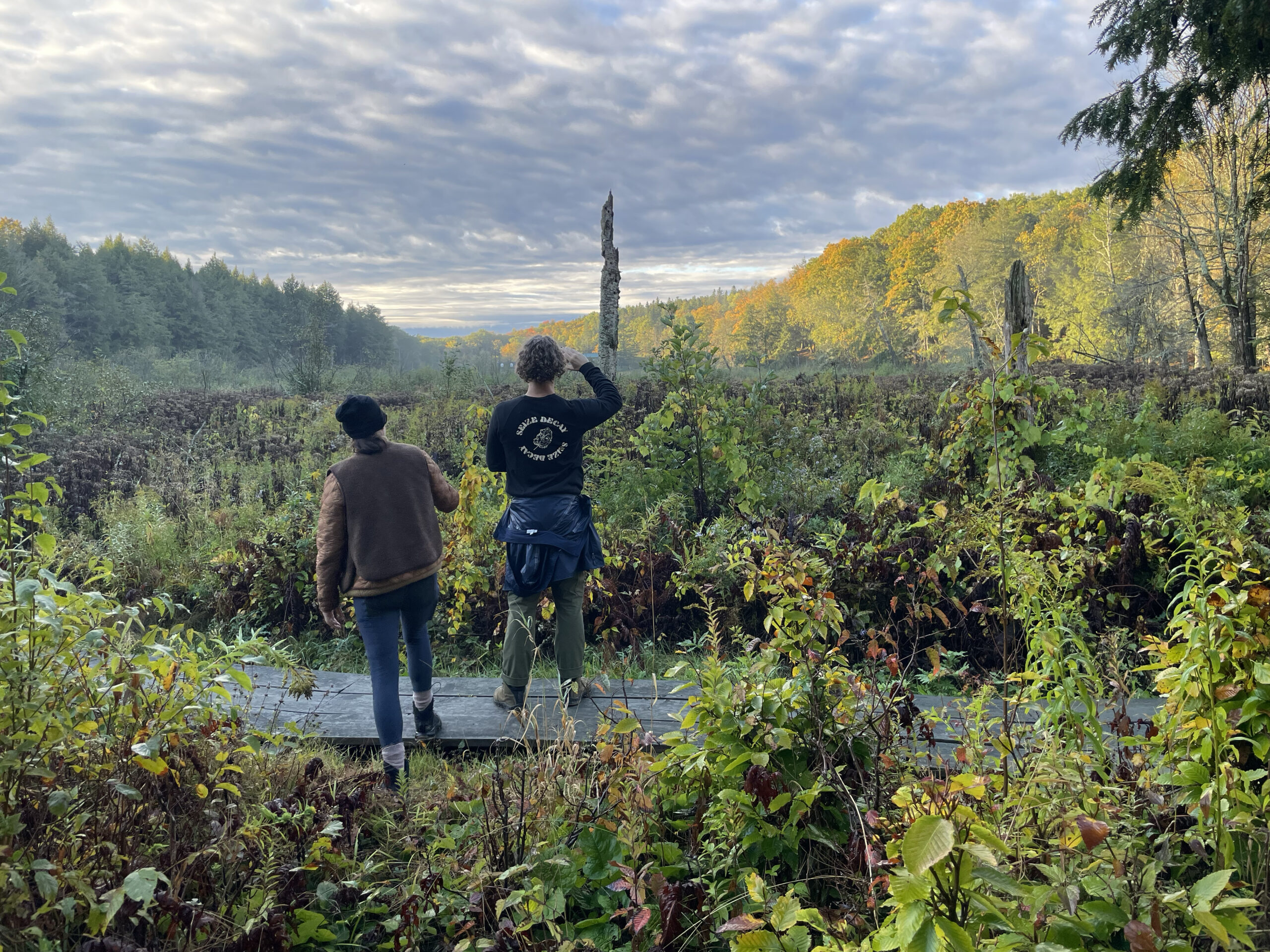
Students work on wooden structures that they've installed in the Catskill Forest
Students install work they designed to increase species habitat in the Catskill Forest

Students earning an MLA degree at Pratt are taught to embrace an inclusive approach to design that bridges culture and nature, ecology and policy, living and built environments. With so many challenges at hand, and underfoot, we prioritize collaborative and team-based learning, articulating changes between large scale systems, expansive historical precedents, evolutionary processes, and individual organisms. Landscape Architecture is a discipline, a profession, and a practice that informs the environment at every scale. We celebrate this legacy by imagining global education as a collaboration with the soils, plants and waters that sustain species.

Career Opportunities

student with protective hi-vis gear and hard hat, viewing site

The program aims to enable graduates to enter the profession with a sophisticated portfolio of flexible skills, knowledge and understanding.

Graduates from the MLA program progress to work in design practice and landscape stewardship both nationally and internationally, as well as contributing to academia and aspects of governance of a wide spectrum of landscapes across a broad range of scales.

Faculty Highlight

As educators, our most important task is to determine how we can create equitable learning for all students, which includes diverse ways of knowing. Our program is supported by colleagues, students, and professional associations that work through civic engagement and respects the traditional and unceded homeland of the Lenape people.  In a time of great uncertainty, we are certain that our relationship to the land requires our complete attention. See all Graduate Architecture, Landscape Architecture, and Urban Design faculty and administrators.

  1. Elliott Maltby

    Interim Academic Director, Landscape Architecture Program; Adjunct Associate Professor

  2. Mariel Collard

    Assistant Professor

  3. Rosetta S. Elkin

    Professor

  1. Mark Heller

    Assistant Professor

  2. Signe Nielsen

    Adjunct Professor

  3. Bill Logan

    Visiting Professor

  1. Jeffrey Hogrefe

    Professor

  2. Ellen Garrett

    Visiting Assistant Professor

  3. Andy Lee

    Visiting Assistant Professor

Success Stories

Ready for More?

HERE’S HOW TO APPLYGraduate Studies at PrattOUR CAMPUS & BEYOND
Join us at Pratt. Learn more about admissions requirements, plan your visit, talk to a counselor, and start your application. Take the next step.Whether your goal is to advance your career, pivot to a new field, or explore your craft or groundbreaking research, our 33 graduate programs provide the rigor and support to achieve your vision. Explore our graduate programs in architecture, fine arts, design, information studies, and the liberal arts and sciences.
Learn More.
You’ll find yourself at home at Pratt. Learn more about our residence halls, student organizations, athletics, gallery exhibitions, events, the amazing City of New York and our Brooklyn neighborhood communities. Check us out.
@pratt_mla
Pratt MLA

@pratt_mla

  • Priority Applications for Fall 2026 are due today, January 5th. Apply at link in bio. 
.
#Pratt #prattinstitute #masterlandscapearchitecture #landscapearchitect #prattsoa #prattgalaud #prattmla #studylandscape #graduatelandscapearchitecture
  • LAR 601 | LAND STUDIO I: REGION
Fall 2025
Professor Mark Heller
.
The first in the Land Studio core sequence, LAR-601 introduces and reveals landscape architecture at the regional scale by studying terrestrial change. Over the course of their first semester, students are taught to investigate multiple perspectives on land formation, from the effect of hydrology, geology, and soil type on settlement patterns, to the biological changes that record the spatial array of forests, meadows and marshes contouring the region. Ecological research quickly generates a humbling effect as we collectively grapple with the complexity, unknowns, interdependencies, entropy, and ultimate fragility of the living world, whether single organisms or watersheds. In the ambiguous and open-ended rests an opportunity to consider change as a driver of invention. Research in ecology, paleobotany and paleontology reveals more gaps and leaps than constant record, a history built of slim threads, gathered from pollen residue and rock matrix, providing detailed cues to speciation and evolution. Where cultural history is documented, particularly where the ‘product’ was an exploitable resource like a tree or a field, the patterns of landscape ecology are inadvertently inscribed in great detail, and provide clues to reconstruct the present using the past, a way into projecting the future. The driving question for design is: how can we protect the future from the present?
.
Student work by Ursula Barker, Lauren Berkman, Miga Higa, Jenna Lamm, Annie Mason, Serrana Mattiauda, Jasmine Sabadosa.
.
.
#Pratt #PrattInstitute #PrattSOA #prattgalaud #PrattMLA #MLA #LandscapeArchitecture #Landscape #regionalmodel #terrainmodel  #LandscapeArchitectureModel #LandscapeModel #Landscapes #StudentWork #LandscapeRendering #HudsonValley #ecoregion #LandscapeResearch #designresearch #landscapedesign
  • Attention, prospective students! If you’re currently at work on an application to Pratt MLA, we invite you to attend an online portfolio workshop that we’re hosting on Monday, December 15 from 6 - 7:30pm ET.

This session will be hosted by Pratt MLA faculty member Melody Stein, and will include information on dos and don’ts of portfolio-making. You’ll also see examples and discuss goals and strategies of portfolio-making.

The workshop will include:

— Overview of portfolio strategies, goals, and common approaches
— Crash-course in using Google Slides as an easy and free tool to build a compelling portfolio
— Portfolio Q&A: ask questions and get feedback on your portfolio progress or ideas

To attend, please RSVP via the link in our bio.

@prattsoa
@prattgalaud
@prattinstitute
@external__affairs
  • This Saturday, Pratt MLA students in the Land III Borough Studio will join community partner @bklvlup for a Plant Symposium in East Flatbush. 

Together, we discuss the benefits of plants that can thrive in the neighborhood and address environmental issues such as access to open space, flooding, extreme heat, air quality, and food sovereignty.

Join us on October 11 from 1-3pm at Rugby Library for conversation and some light refreshments.

@prattinstitute @prattsoa @pratt_galaud 

#landscapearch #community #codesign #climatejustice #prattmla #bklvlup #eastflatbush #plants #brooklyn
  • Now up in @landezine_com: recent Pratt M.Arch graduate Zoë Tank (@zoe.7.tank) reflects on our Landscape Seminar Series event with Mary Miss this past spring, with a particular focus on her 1977–78 project Perimeters/Pavilions/Decoys. The piece also features Tank in conversation with Miss about the importance of movement, scale, and walking in her work.

Read the full piece via the link in our bio.

@prattinsitute
@prattsoa
@pratt_galaud
  • Congratulations to Rosetta S. Elkin for being presented with Pratt Institute’s Research Recognition Award! 

The Research Recognition Award recognizes cumulative and ongoing contributions to research, broadly defined. The RRA Committee reviews nominations for the award and recommends candidates to the Pratt Faculty Senate, which confers the award jointly with the Provost.

The committee acknowledged Rosetta’s varied contributions to the field of landscape architecture across architectural practice, pedagogy, and scholarship. Her research often takes her into the ground, as plant life develops underfoot. In writing and scholarship, she aims to experiment with the ways in which we compose our worlds, blurring the traditional boundaries in the research process. 

From her acceptance speech at the Awards Ceremony:

“I am not alone in believing that there are other ways of living with the land and advancing research through an enlarged sense of responsibility for the living environment. Accordingly, I share this award with the students and faculty committed to our experiment of shaping the first Landscape Architecture degree program at Pratt. 

"Through research, we are creating a model for landscape learning and design in the 21st century. After all, the purpose of looking to the future is to unearth and challenge present assumptions and practices.”

@prattinstitute
@prattsoa
@pratt_galaud
@practicelandscape
  • LAR-704 | Land Studio IV: Park | Final Review

The fourth semester core studio asks students to speculate on how to design a public park for use into the 22nd-century, and to design the potential of expansion and adaptive maintenance by using Prospect Park in Brooklyn as a model. Starting with a series of studies that analyze ownership, management and contextual-specific practices across a range of precedents, the course refines the issues of environmental justice, health, and well-being by enacting design at multiple scales within the large park.

For their final review, students presented their work as that of the fictional firm Liminal Studio, moving around a large map of Prospect Park to show where each specific proposal would be constructed/enacted. 

Projects included a fictional activist group For Liberation of Radical Aesthetics (FLORA)’s transforming of the Vale of Cashmere into a densely planted area for evading drone surveillance; a framework for generating and playing with the city’s various construction and planning codes, accompanied by a plan to integrate the remains of all-weather materials like asphalt and concrete into the park’s ecology; and a phased plan to institute a community-managed circular berm that encompasses and eventually regenerates fallow land within the park.

Course instructor: Andy Lee
Co-teacher: Brad Howe

Student work by: Lesley Arevalo, Connor Jacobs, Chloe Kellner, Dong Hoon Kim, Chrissy Lifton, Tim Nottage, Payton Prendergast, Anna Sheikh

Guest critics: Ifeoma Ebo (CCNY), Curry Hackett (Wayside Studio), Faye Nixon (UT Knoxville), Sanjukta Sen (JCFO)
Pratt MLA critic: Signe Nielsen (MNLA)

@prattinstitute
@prattsoa
@pratt_galaud
@synthetic_milk
  • It’s with immense pleasure and ineffable pride that we present to you Pratt MLA’s first graduating cohort, the class of 2025! 

Congratulations, Patrick, Ana Julia, Nell, Joyce, Noelle, Tiger, Chase, and Daniel! We’ll miss working with you and seeing you all around Higgins Hall, but we’re so excited to see what you all accomplish over your careers.

Wishing a heartfelt congratulations as well to all of the other Pratt students who were graduated at yesterday's Commencement 💛

@prattinstitute
@prattsoa
@pratt_galaud
  • LAR-602 | Land Studio II: Shore | Final Review

For the final project of their second-semester core studio, first-year students collaborated on a proposal for a phased design for the Richard P. Kane Natural Area, located in the northwestern section of the New Jersey Meadowlands District.

Their proposal, titled “Keeping the Meadowlands,” consists of three strategies, each at different elevations—high, middle, and low ground. Using a series of maps overlaid with transparencies, students collectively described the phases of these plans. 

The high-ground strategy involves the retreat of warehouses from low-lying, marsh-adjacent areas to make permeable, previously impermeable land.

The middle-ground strategy involves removing an existing berm to expand the site’s tidal marsh, and constructing new topography that turns the flat earth into mounds. These mounds make available a gradient of salinity and wetness to allow a greater diversity of plant life

The lower-ground strategy involves the area’s creeks system and allows people to enjoy and engage with the Meadowlands through the vantage point of a kayak. The project calls for the moving of earth to create a kayak-appropriate landscape in the Moonachie creek.

Course instructor: Mariel Collard

Student work by: Raha Behnam, Anjali Britto, Lindsey Dannenberg, Lilabet Johnstongil, Greta Lincoln

Guest critics: Eymund Diegel (NYC Dept. of Parks and Recreaiton), Ifeoma Ebo (CCNY), Faye Nixon (UT Knoxville), Annie Lynch (Studio Zewde), Philip Parker (Pratt GALAUD)

@prattinstitute
@prattsoa
@pratt_galaud
Priority Applications for Fall 2026 are due today, January 5th. Apply at link in bio. 
.
#Pratt #prattinstitute #masterlandscapearchitecture #landscapearchitect #prattsoa #prattgalaud #prattmla #studylandscape #graduatelandscapearchitecture
Priority Applications for Fall 2026 are due today, January 5th. Apply at link in bio. . #Pratt #prattinstitute #masterlandscapearchitecture #landscapearchitect #prattsoa #prattgalaud #prattmla #studylandscape #graduatelandscapearchitecture
2 days ago
View on Instagram |
1/9
LAR 601 | LAND STUDIO I: REGION
Fall 2025
Professor Mark Heller
.
The first in the Land Studio core sequence, LAR-601 introduces and reveals landscape architecture at the regional scale by studying terrestrial change. Over the course of their first semester, students are taught to investigate multiple perspectives on land formation, from the effect of hydrology, geology, and soil type on settlement patterns, to the biological changes that record the spatial array of forests, meadows and marshes contouring the region. Ecological research quickly generates a humbling effect as we collectively grapple with the complexity, unknowns, interdependencies, entropy, and ultimate fragility of the living world, whether single organisms or watersheds. In the ambiguous and open-ended rests an opportunity to consider change as a driver of invention. Research in ecology, paleobotany and paleontology reveals more gaps and leaps than constant record, a history built of slim threads, gathered from pollen residue and rock matrix, providing detailed cues to speciation and evolution. Where cultural history is documented, particularly where the ‘product’ was an exploitable resource like a tree or a field, the patterns of landscape ecology are inadvertently inscribed in great detail, and provide clues to reconstruct the present using the past, a way into projecting the future. The driving question for design is: how can we protect the future from the present?
.
Student work by Ursula Barker, Lauren Berkman, Miga Higa, Jenna Lamm, Annie Mason, Serrana Mattiauda, Jasmine Sabadosa.
.
.
#Pratt #PrattInstitute #PrattSOA #prattgalaud #PrattMLA #MLA #LandscapeArchitecture #Landscape #regionalmodel #terrainmodel  #LandscapeArchitectureModel #LandscapeModel #Landscapes #StudentWork #LandscapeRendering #HudsonValley #ecoregion #LandscapeResearch #designresearch #landscapedesign
LAR 601 | LAND STUDIO I: REGION
Fall 2025
Professor Mark Heller
.
The first in the Land Studio core sequence, LAR-601 introduces and reveals landscape architecture at the regional scale by studying terrestrial change. Over the course of their first semester, students are taught to investigate multiple perspectives on land formation, from the effect of hydrology, geology, and soil type on settlement patterns, to the biological changes that record the spatial array of forests, meadows and marshes contouring the region. Ecological research quickly generates a humbling effect as we collectively grapple with the complexity, unknowns, interdependencies, entropy, and ultimate fragility of the living world, whether single organisms or watersheds. In the ambiguous and open-ended rests an opportunity to consider change as a driver of invention. Research in ecology, paleobotany and paleontology reveals more gaps and leaps than constant record, a history built of slim threads, gathered from pollen residue and rock matrix, providing detailed cues to speciation and evolution. Where cultural history is documented, particularly where the ‘product’ was an exploitable resource like a tree or a field, the patterns of landscape ecology are inadvertently inscribed in great detail, and provide clues to reconstruct the present using the past, a way into projecting the future. The driving question for design is: how can we protect the future from the present?
.
Student work by Ursula Barker, Lauren Berkman, Miga Higa, Jenna Lamm, Annie Mason, Serrana Mattiauda, Jasmine Sabadosa.
.
.
#Pratt #PrattInstitute #PrattSOA #prattgalaud #PrattMLA #MLA #LandscapeArchitecture #Landscape #regionalmodel #terrainmodel  #LandscapeArchitectureModel #LandscapeModel #Landscapes #StudentWork #LandscapeRendering #HudsonValley #ecoregion #LandscapeResearch #designresearch #landscapedesign
LAR 601 | LAND STUDIO I: REGION
Fall 2025
Professor Mark Heller
.
The first in the Land Studio core sequence, LAR-601 introduces and reveals landscape architecture at the regional scale by studying terrestrial change. Over the course of their first semester, students are taught to investigate multiple perspectives on land formation, from the effect of hydrology, geology, and soil type on settlement patterns, to the biological changes that record the spatial array of forests, meadows and marshes contouring the region. Ecological research quickly generates a humbling effect as we collectively grapple with the complexity, unknowns, interdependencies, entropy, and ultimate fragility of the living world, whether single organisms or watersheds. In the ambiguous and open-ended rests an opportunity to consider change as a driver of invention. Research in ecology, paleobotany and paleontology reveals more gaps and leaps than constant record, a history built of slim threads, gathered from pollen residue and rock matrix, providing detailed cues to speciation and evolution. Where cultural history is documented, particularly where the ‘product’ was an exploitable resource like a tree or a field, the patterns of landscape ecology are inadvertently inscribed in great detail, and provide clues to reconstruct the present using the past, a way into projecting the future. The driving question for design is: how can we protect the future from the present?
.
Student work by Ursula Barker, Lauren Berkman, Miga Higa, Jenna Lamm, Annie Mason, Serrana Mattiauda, Jasmine Sabadosa.
.
.
#Pratt #PrattInstitute #PrattSOA #prattgalaud #PrattMLA #MLA #LandscapeArchitecture #Landscape #regionalmodel #terrainmodel  #LandscapeArchitectureModel #LandscapeModel #Landscapes #StudentWork #LandscapeRendering #HudsonValley #ecoregion #LandscapeResearch #designresearch #landscapedesign
LAR 601 | LAND STUDIO I: REGION
Fall 2025
Professor Mark Heller
.
The first in the Land Studio core sequence, LAR-601 introduces and reveals landscape architecture at the regional scale by studying terrestrial change. Over the course of their first semester, students are taught to investigate multiple perspectives on land formation, from the effect of hydrology, geology, and soil type on settlement patterns, to the biological changes that record the spatial array of forests, meadows and marshes contouring the region. Ecological research quickly generates a humbling effect as we collectively grapple with the complexity, unknowns, interdependencies, entropy, and ultimate fragility of the living world, whether single organisms or watersheds. In the ambiguous and open-ended rests an opportunity to consider change as a driver of invention. Research in ecology, paleobotany and paleontology reveals more gaps and leaps than constant record, a history built of slim threads, gathered from pollen residue and rock matrix, providing detailed cues to speciation and evolution. Where cultural history is documented, particularly where the ‘product’ was an exploitable resource like a tree or a field, the patterns of landscape ecology are inadvertently inscribed in great detail, and provide clues to reconstruct the present using the past, a way into projecting the future. The driving question for design is: how can we protect the future from the present?
.
Student work by Ursula Barker, Lauren Berkman, Miga Higa, Jenna Lamm, Annie Mason, Serrana Mattiauda, Jasmine Sabadosa.
.
.
#Pratt #PrattInstitute #PrattSOA #prattgalaud #PrattMLA #MLA #LandscapeArchitecture #Landscape #regionalmodel #terrainmodel  #LandscapeArchitectureModel #LandscapeModel #Landscapes #StudentWork #LandscapeRendering #HudsonValley #ecoregion #LandscapeResearch #designresearch #landscapedesign
LAR 601 | LAND STUDIO I: REGION
Fall 2025
Professor Mark Heller
.
The first in the Land Studio core sequence, LAR-601 introduces and reveals landscape architecture at the regional scale by studying terrestrial change. Over the course of their first semester, students are taught to investigate multiple perspectives on land formation, from the effect of hydrology, geology, and soil type on settlement patterns, to the biological changes that record the spatial array of forests, meadows and marshes contouring the region. Ecological research quickly generates a humbling effect as we collectively grapple with the complexity, unknowns, interdependencies, entropy, and ultimate fragility of the living world, whether single organisms or watersheds. In the ambiguous and open-ended rests an opportunity to consider change as a driver of invention. Research in ecology, paleobotany and paleontology reveals more gaps and leaps than constant record, a history built of slim threads, gathered from pollen residue and rock matrix, providing detailed cues to speciation and evolution. Where cultural history is documented, particularly where the ‘product’ was an exploitable resource like a tree or a field, the patterns of landscape ecology are inadvertently inscribed in great detail, and provide clues to reconstruct the present using the past, a way into projecting the future. The driving question for design is: how can we protect the future from the present?
.
Student work by Ursula Barker, Lauren Berkman, Miga Higa, Jenna Lamm, Annie Mason, Serrana Mattiauda, Jasmine Sabadosa.
.
.
#Pratt #PrattInstitute #PrattSOA #prattgalaud #PrattMLA #MLA #LandscapeArchitecture #Landscape #regionalmodel #terrainmodel  #LandscapeArchitectureModel #LandscapeModel #Landscapes #StudentWork #LandscapeRendering #HudsonValley #ecoregion #LandscapeResearch #designresearch #landscapedesign
LAR 601 | LAND STUDIO I: REGION
Fall 2025
Professor Mark Heller
.
The first in the Land Studio core sequence, LAR-601 introduces and reveals landscape architecture at the regional scale by studying terrestrial change. Over the course of their first semester, students are taught to investigate multiple perspectives on land formation, from the effect of hydrology, geology, and soil type on settlement patterns, to the biological changes that record the spatial array of forests, meadows and marshes contouring the region. Ecological research quickly generates a humbling effect as we collectively grapple with the complexity, unknowns, interdependencies, entropy, and ultimate fragility of the living world, whether single organisms or watersheds. In the ambiguous and open-ended rests an opportunity to consider change as a driver of invention. Research in ecology, paleobotany and paleontology reveals more gaps and leaps than constant record, a history built of slim threads, gathered from pollen residue and rock matrix, providing detailed cues to speciation and evolution. Where cultural history is documented, particularly where the ‘product’ was an exploitable resource like a tree or a field, the patterns of landscape ecology are inadvertently inscribed in great detail, and provide clues to reconstruct the present using the past, a way into projecting the future. The driving question for design is: how can we protect the future from the present?
.
Student work by Ursula Barker, Lauren Berkman, Miga Higa, Jenna Lamm, Annie Mason, Serrana Mattiauda, Jasmine Sabadosa.
.
.
#Pratt #PrattInstitute #PrattSOA #prattgalaud #PrattMLA #MLA #LandscapeArchitecture #Landscape #regionalmodel #terrainmodel  #LandscapeArchitectureModel #LandscapeModel #Landscapes #StudentWork #LandscapeRendering #HudsonValley #ecoregion #LandscapeResearch #designresearch #landscapedesign
LAR 601 | LAND STUDIO I: REGION
Fall 2025
Professor Mark Heller
.
The first in the Land Studio core sequence, LAR-601 introduces and reveals landscape architecture at the regional scale by studying terrestrial change. Over the course of their first semester, students are taught to investigate multiple perspectives on land formation, from the effect of hydrology, geology, and soil type on settlement patterns, to the biological changes that record the spatial array of forests, meadows and marshes contouring the region. Ecological research quickly generates a humbling effect as we collectively grapple with the complexity, unknowns, interdependencies, entropy, and ultimate fragility of the living world, whether single organisms or watersheds. In the ambiguous and open-ended rests an opportunity to consider change as a driver of invention. Research in ecology, paleobotany and paleontology reveals more gaps and leaps than constant record, a history built of slim threads, gathered from pollen residue and rock matrix, providing detailed cues to speciation and evolution. Where cultural history is documented, particularly where the ‘product’ was an exploitable resource like a tree or a field, the patterns of landscape ecology are inadvertently inscribed in great detail, and provide clues to reconstruct the present using the past, a way into projecting the future. The driving question for design is: how can we protect the future from the present?
.
Student work by Ursula Barker, Lauren Berkman, Miga Higa, Jenna Lamm, Annie Mason, Serrana Mattiauda, Jasmine Sabadosa.
.
.
#Pratt #PrattInstitute #PrattSOA #prattgalaud #PrattMLA #MLA #LandscapeArchitecture #Landscape #regionalmodel #terrainmodel  #LandscapeArchitectureModel #LandscapeModel #Landscapes #StudentWork #LandscapeRendering #HudsonValley #ecoregion #LandscapeResearch #designresearch #landscapedesign
LAR 601 | LAND STUDIO I: REGION
Fall 2025
Professor Mark Heller
.
The first in the Land Studio core sequence, LAR-601 introduces and reveals landscape architecture at the regional scale by studying terrestrial change. Over the course of their first semester, students are taught to investigate multiple perspectives on land formation, from the effect of hydrology, geology, and soil type on settlement patterns, to the biological changes that record the spatial array of forests, meadows and marshes contouring the region. Ecological research quickly generates a humbling effect as we collectively grapple with the complexity, unknowns, interdependencies, entropy, and ultimate fragility of the living world, whether single organisms or watersheds. In the ambiguous and open-ended rests an opportunity to consider change as a driver of invention. Research in ecology, paleobotany and paleontology reveals more gaps and leaps than constant record, a history built of slim threads, gathered from pollen residue and rock matrix, providing detailed cues to speciation and evolution. Where cultural history is documented, particularly where the ‘product’ was an exploitable resource like a tree or a field, the patterns of landscape ecology are inadvertently inscribed in great detail, and provide clues to reconstruct the present using the past, a way into projecting the future. The driving question for design is: how can we protect the future from the present?
.
Student work by Ursula Barker, Lauren Berkman, Miga Higa, Jenna Lamm, Annie Mason, Serrana Mattiauda, Jasmine Sabadosa.
.
.
#Pratt #PrattInstitute #PrattSOA #prattgalaud #PrattMLA #MLA #LandscapeArchitecture #Landscape #regionalmodel #terrainmodel  #LandscapeArchitectureModel #LandscapeModel #Landscapes #StudentWork #LandscapeRendering #HudsonValley #ecoregion #LandscapeResearch #designresearch #landscapedesign
LAR 601 | LAND STUDIO I: REGION Fall 2025 Professor Mark Heller . The first in the Land Studio core sequence, LAR-601 introduces and reveals landscape architecture at the regional scale by studying terrestrial change. Over the course of their first semester, students are taught to investigate multiple perspectives on land formation, from the effect of hydrology, geology, and soil type on settlement patterns, to the biological changes that record the spatial array of forests, meadows and marshes contouring the region. Ecological research quickly generates a humbling effect as we collectively grapple with the complexity, unknowns, interdependencies, entropy, and ultimate fragility of the living world, whether single organisms or watersheds. In the ambiguous and open-ended rests an opportunity to consider change as a driver of invention. Research in ecology, paleobotany and paleontology reveals more gaps and leaps than constant record, a history built of slim threads, gathered from pollen residue and rock matrix, providing detailed cues to speciation and evolution. Where cultural history is documented, particularly where the ‘product’ was an exploitable resource like a tree or a field, the patterns of landscape ecology are inadvertently inscribed in great detail, and provide clues to reconstruct the present using the past, a way into projecting the future. The driving question for design is: how can we protect the future from the present? . Student work by Ursula Barker, Lauren Berkman, Miga Higa, Jenna Lamm, Annie Mason, Serrana Mattiauda, Jasmine Sabadosa. . . #Pratt #PrattInstitute #PrattSOA #prattgalaud #PrattMLA #MLA #LandscapeArchitecture #Landscape #regionalmodel #terrainmodel #LandscapeArchitectureModel #LandscapeModel #Landscapes #StudentWork #LandscapeRendering #HudsonValley #ecoregion #LandscapeResearch #designresearch #landscapedesign
5 days ago
View on Instagram |
2/9
Attention, prospective students! If you’re currently at work on an application to Pratt MLA, we invite you to attend an online portfolio workshop that we’re hosting on Monday, December 15 from 6 - 7:30pm ET.

This session will be hosted by Pratt MLA faculty member Melody Stein, and will include information on dos and don’ts of portfolio-making. You’ll also see examples and discuss goals and strategies of portfolio-making.

The workshop will include:

— Overview of portfolio strategies, goals, and common approaches
— Crash-course in using Google Slides as an easy and free tool to build a compelling portfolio
— Portfolio Q&A: ask questions and get feedback on your portfolio progress or ideas

To attend, please RSVP via the link in our bio.

@prattsoa
@prattgalaud
@prattinstitute
@external__affairs
Attention, prospective students! If you’re currently at work on an application to Pratt MLA, we invite you to attend an online portfolio workshop that we’re hosting on Monday, December 15 from 6 - 7:30pm ET. This session will be hosted by Pratt MLA faculty member Melody Stein, and will include information on dos and don’ts of portfolio-making. You’ll also see examples and discuss goals and strategies of portfolio-making. The workshop will include: — Overview of portfolio strategies, goals, and common approaches — Crash-course in using Google Slides as an easy and free tool to build a compelling portfolio — Portfolio Q&A: ask questions and get feedback on your portfolio progress or ideas To attend, please RSVP via the link in our bio. @prattsoa @prattgalaud @prattinstitute @external__affairs
4 weeks ago
View on Instagram |
3/9
This Saturday, Pratt MLA students in the Land III Borough Studio will join community partner @bklvlup for a Plant Symposium in East Flatbush. 

Together, we discuss the benefits of plants that can thrive in the neighborhood and address environmental issues such as access to open space, flooding, extreme heat, air quality, and food sovereignty.

Join us on October 11 from 1-3pm at Rugby Library for conversation and some light refreshments.

@prattinstitute @prattsoa @pratt_galaud 

#landscapearch #community #codesign #climatejustice #prattmla #bklvlup #eastflatbush #plants #brooklyn
This Saturday, Pratt MLA students in the Land III Borough Studio will join community partner @bklvlup for a Plant Symposium in East Flatbush. 

Together, we discuss the benefits of plants that can thrive in the neighborhood and address environmental issues such as access to open space, flooding, extreme heat, air quality, and food sovereignty.

Join us on October 11 from 1-3pm at Rugby Library for conversation and some light refreshments.

@prattinstitute @prattsoa @pratt_galaud 

#landscapearch #community #codesign #climatejustice #prattmla #bklvlup #eastflatbush #plants #brooklyn
This Saturday, Pratt MLA students in the Land III Borough Studio will join community partner @bklvlup for a Plant Symposium in East Flatbush. 

Together, we discuss the benefits of plants that can thrive in the neighborhood and address environmental issues such as access to open space, flooding, extreme heat, air quality, and food sovereignty.

Join us on October 11 from 1-3pm at Rugby Library for conversation and some light refreshments.

@prattinstitute @prattsoa @pratt_galaud 

#landscapearch #community #codesign #climatejustice #prattmla #bklvlup #eastflatbush #plants #brooklyn
This Saturday, Pratt MLA students in the Land III Borough Studio will join community partner @bklvlup for a Plant Symposium in East Flatbush. 

Together, we discuss the benefits of plants that can thrive in the neighborhood and address environmental issues such as access to open space, flooding, extreme heat, air quality, and food sovereignty.

Join us on October 11 from 1-3pm at Rugby Library for conversation and some light refreshments.

@prattinstitute @prattsoa @pratt_galaud 

#landscapearch #community #codesign #climatejustice #prattmla #bklvlup #eastflatbush #plants #brooklyn
This Saturday, Pratt MLA students in the Land III Borough Studio will join community partner @bklvlup for a Plant Symposium in East Flatbush. 

Together, we discuss the benefits of plants that can thrive in the neighborhood and address environmental issues such as access to open space, flooding, extreme heat, air quality, and food sovereignty.

Join us on October 11 from 1-3pm at Rugby Library for conversation and some light refreshments.

@prattinstitute @prattsoa @pratt_galaud 

#landscapearch #community #codesign #climatejustice #prattmla #bklvlup #eastflatbush #plants #brooklyn
This Saturday, Pratt MLA students in the Land III Borough Studio will join community partner @bklvlup for a Plant Symposium in East Flatbush. Together, we discuss the benefits of plants that can thrive in the neighborhood and address environmental issues such as access to open space, flooding, extreme heat, air quality, and food sovereignty. Join us on October 11 from 1-3pm at Rugby Library for conversation and some light refreshments. @prattinstitute @prattsoa @pratt_galaud #landscapearch #community #codesign #climatejustice #prattmla #bklvlup #eastflatbush #plants #brooklyn
3 months ago
View on Instagram |
4/9
Now up in @landezine_com: recent Pratt M.Arch graduate Zoë Tank (@zoe.7.tank) reflects on our Landscape Seminar Series event with Mary Miss this past spring, with a particular focus on her 1977–78 project Perimeters/Pavilions/Decoys. The piece also features Tank in conversation with Miss about the importance of movement, scale, and walking in her work.

Read the full piece via the link in our bio.

@prattinsitute
@prattsoa
@pratt_galaud
Now up in @landezine_com: recent Pratt M.Arch graduate Zoë Tank (@zoe.7.tank) reflects on our Landscape Seminar Series event with Mary Miss this past spring, with a particular focus on her 1977–78 project Perimeters/Pavilions/Decoys. The piece also features Tank in conversation with Miss about the importance of movement, scale, and walking in her work.

Read the full piece via the link in our bio.

@prattinsitute
@prattsoa
@pratt_galaud
Now up in @landezine_com: recent Pratt M.Arch graduate Zoë Tank (@zoe.7.tank) reflects on our Landscape Seminar Series event with Mary Miss this past spring, with a particular focus on her 1977–78 project Perimeters/Pavilions/Decoys. The piece also features Tank in conversation with Miss about the importance of movement, scale, and walking in her work.

Read the full piece via the link in our bio.

@prattinsitute
@prattsoa
@pratt_galaud
Now up in @landezine_com: recent Pratt M.Arch graduate Zoë Tank (@zoe.7.tank) reflects on our Landscape Seminar Series event with Mary Miss this past spring, with a particular focus on her 1977–78 project Perimeters/Pavilions/Decoys. The piece also features Tank in conversation with Miss about the importance of movement, scale, and walking in her work.

Read the full piece via the link in our bio.

@prattinsitute
@prattsoa
@pratt_galaud
Now up in @landezine_com: recent Pratt M.Arch graduate Zoë Tank (@zoe.7.tank) reflects on our Landscape Seminar Series event with Mary Miss this past spring, with a particular focus on her 1977–78 project Perimeters/Pavilions/Decoys. The piece also features Tank in conversation with Miss about the importance of movement, scale, and walking in her work.

Read the full piece via the link in our bio.

@prattinsitute
@prattsoa
@pratt_galaud
Now up in @landezine_com: recent Pratt M.Arch graduate Zoë Tank (@zoe.7.tank) reflects on our Landscape Seminar Series event with Mary Miss this past spring, with a particular focus on her 1977–78 project Perimeters/Pavilions/Decoys. The piece also features Tank in conversation with Miss about the importance of movement, scale, and walking in her work.

Read the full piece via the link in our bio.

@prattinsitute
@prattsoa
@pratt_galaud
Now up in @landezine_com: recent Pratt M.Arch graduate Zoë Tank (@zoe.7.tank) reflects on our Landscape Seminar Series event with Mary Miss this past spring, with a particular focus on her 1977–78 project Perimeters/Pavilions/Decoys. The piece also features Tank in conversation with Miss about the importance of movement, scale, and walking in her work.

Read the full piece via the link in our bio.

@prattinsitute
@prattsoa
@pratt_galaud
Now up in @landezine_com: recent Pratt M.Arch graduate Zoë Tank (@zoe.7.tank) reflects on our Landscape Seminar Series event with Mary Miss this past spring, with a particular focus on her 1977–78 project Perimeters/Pavilions/Decoys. The piece also features Tank in conversation with Miss about the importance of movement, scale, and walking in her work. Read the full piece via the link in our bio. @prattinsitute @prattsoa @pratt_galaud
6 months ago
View on Instagram |
5/9
Congratulations to Rosetta S. Elkin for being presented with Pratt Institute’s Research Recognition Award! 

The Research Recognition Award recognizes cumulative and ongoing contributions to research, broadly defined. The RRA Committee reviews nominations for the award and recommends candidates to the Pratt Faculty Senate, which confers the award jointly with the Provost.

The committee acknowledged Rosetta’s varied contributions to the field of landscape architecture across architectural practice, pedagogy, and scholarship. Her research often takes her into the ground, as plant life develops underfoot. In writing and scholarship, she aims to experiment with the ways in which we compose our worlds, blurring the traditional boundaries in the research process. 

From her acceptance speech at the Awards Ceremony:

“I am not alone in believing that there are other ways of living with the land and advancing research through an enlarged sense of responsibility for the living environment. Accordingly, I share this award with the students and faculty committed to our experiment of shaping the first Landscape Architecture degree program at Pratt. 

"Through research, we are creating a model for landscape learning and design in the 21st century. After all, the purpose of looking to the future is to unearth and challenge present assumptions and practices.”

@prattinstitute
@prattsoa
@pratt_galaud
@practicelandscape
Congratulations to Rosetta S. Elkin for being presented with Pratt Institute’s Research Recognition Award! 

The Research Recognition Award recognizes cumulative and ongoing contributions to research, broadly defined. The RRA Committee reviews nominations for the award and recommends candidates to the Pratt Faculty Senate, which confers the award jointly with the Provost.

The committee acknowledged Rosetta’s varied contributions to the field of landscape architecture across architectural practice, pedagogy, and scholarship. Her research often takes her into the ground, as plant life develops underfoot. In writing and scholarship, she aims to experiment with the ways in which we compose our worlds, blurring the traditional boundaries in the research process. 

From her acceptance speech at the Awards Ceremony:

“I am not alone in believing that there are other ways of living with the land and advancing research through an enlarged sense of responsibility for the living environment. Accordingly, I share this award with the students and faculty committed to our experiment of shaping the first Landscape Architecture degree program at Pratt. 

"Through research, we are creating a model for landscape learning and design in the 21st century. After all, the purpose of looking to the future is to unearth and challenge present assumptions and practices.”

@prattinstitute
@prattsoa
@pratt_galaud
@practicelandscape
Congratulations to Rosetta S. Elkin for being presented with Pratt Institute’s Research Recognition Award! 

The Research Recognition Award recognizes cumulative and ongoing contributions to research, broadly defined. The RRA Committee reviews nominations for the award and recommends candidates to the Pratt Faculty Senate, which confers the award jointly with the Provost.

The committee acknowledged Rosetta’s varied contributions to the field of landscape architecture across architectural practice, pedagogy, and scholarship. Her research often takes her into the ground, as plant life develops underfoot. In writing and scholarship, she aims to experiment with the ways in which we compose our worlds, blurring the traditional boundaries in the research process. 

From her acceptance speech at the Awards Ceremony:

“I am not alone in believing that there are other ways of living with the land and advancing research through an enlarged sense of responsibility for the living environment. Accordingly, I share this award with the students and faculty committed to our experiment of shaping the first Landscape Architecture degree program at Pratt. 

"Through research, we are creating a model for landscape learning and design in the 21st century. After all, the purpose of looking to the future is to unearth and challenge present assumptions and practices.”

@prattinstitute
@prattsoa
@pratt_galaud
@practicelandscape
Congratulations to Rosetta S. Elkin for being presented with Pratt Institute’s Research Recognition Award! 

The Research Recognition Award recognizes cumulative and ongoing contributions to research, broadly defined. The RRA Committee reviews nominations for the award and recommends candidates to the Pratt Faculty Senate, which confers the award jointly with the Provost.

The committee acknowledged Rosetta’s varied contributions to the field of landscape architecture across architectural practice, pedagogy, and scholarship. Her research often takes her into the ground, as plant life develops underfoot. In writing and scholarship, she aims to experiment with the ways in which we compose our worlds, blurring the traditional boundaries in the research process. 

From her acceptance speech at the Awards Ceremony:

“I am not alone in believing that there are other ways of living with the land and advancing research through an enlarged sense of responsibility for the living environment. Accordingly, I share this award with the students and faculty committed to our experiment of shaping the first Landscape Architecture degree program at Pratt. 

"Through research, we are creating a model for landscape learning and design in the 21st century. After all, the purpose of looking to the future is to unearth and challenge present assumptions and practices.”

@prattinstitute
@prattsoa
@pratt_galaud
@practicelandscape
Congratulations to Rosetta S. Elkin for being presented with Pratt Institute’s Research Recognition Award! 

The Research Recognition Award recognizes cumulative and ongoing contributions to research, broadly defined. The RRA Committee reviews nominations for the award and recommends candidates to the Pratt Faculty Senate, which confers the award jointly with the Provost.

The committee acknowledged Rosetta’s varied contributions to the field of landscape architecture across architectural practice, pedagogy, and scholarship. Her research often takes her into the ground, as plant life develops underfoot. In writing and scholarship, she aims to experiment with the ways in which we compose our worlds, blurring the traditional boundaries in the research process. 

From her acceptance speech at the Awards Ceremony:

“I am not alone in believing that there are other ways of living with the land and advancing research through an enlarged sense of responsibility for the living environment. Accordingly, I share this award with the students and faculty committed to our experiment of shaping the first Landscape Architecture degree program at Pratt. 

"Through research, we are creating a model for landscape learning and design in the 21st century. After all, the purpose of looking to the future is to unearth and challenge present assumptions and practices.”

@prattinstitute
@prattsoa
@pratt_galaud
@practicelandscape
Congratulations to Rosetta S. Elkin for being presented with Pratt Institute’s Research Recognition Award! 

The Research Recognition Award recognizes cumulative and ongoing contributions to research, broadly defined. The RRA Committee reviews nominations for the award and recommends candidates to the Pratt Faculty Senate, which confers the award jointly with the Provost.

The committee acknowledged Rosetta’s varied contributions to the field of landscape architecture across architectural practice, pedagogy, and scholarship. Her research often takes her into the ground, as plant life develops underfoot. In writing and scholarship, she aims to experiment with the ways in which we compose our worlds, blurring the traditional boundaries in the research process. 

From her acceptance speech at the Awards Ceremony:

“I am not alone in believing that there are other ways of living with the land and advancing research through an enlarged sense of responsibility for the living environment. Accordingly, I share this award with the students and faculty committed to our experiment of shaping the first Landscape Architecture degree program at Pratt. 

"Through research, we are creating a model for landscape learning and design in the 21st century. After all, the purpose of looking to the future is to unearth and challenge present assumptions and practices.”

@prattinstitute
@prattsoa
@pratt_galaud
@practicelandscape
Congratulations to Rosetta S. Elkin for being presented with Pratt Institute’s Research Recognition Award! 

The Research Recognition Award recognizes cumulative and ongoing contributions to research, broadly defined. The RRA Committee reviews nominations for the award and recommends candidates to the Pratt Faculty Senate, which confers the award jointly with the Provost.

The committee acknowledged Rosetta’s varied contributions to the field of landscape architecture across architectural practice, pedagogy, and scholarship. Her research often takes her into the ground, as plant life develops underfoot. In writing and scholarship, she aims to experiment with the ways in which we compose our worlds, blurring the traditional boundaries in the research process. 

From her acceptance speech at the Awards Ceremony:

“I am not alone in believing that there are other ways of living with the land and advancing research through an enlarged sense of responsibility for the living environment. Accordingly, I share this award with the students and faculty committed to our experiment of shaping the first Landscape Architecture degree program at Pratt. 

"Through research, we are creating a model for landscape learning and design in the 21st century. After all, the purpose of looking to the future is to unearth and challenge present assumptions and practices.”

@prattinstitute
@prattsoa
@pratt_galaud
@practicelandscape
Congratulations to Rosetta S. Elkin for being presented with Pratt Institute’s Research Recognition Award! 

The Research Recognition Award recognizes cumulative and ongoing contributions to research, broadly defined. The RRA Committee reviews nominations for the award and recommends candidates to the Pratt Faculty Senate, which confers the award jointly with the Provost.

The committee acknowledged Rosetta’s varied contributions to the field of landscape architecture across architectural practice, pedagogy, and scholarship. Her research often takes her into the ground, as plant life develops underfoot. In writing and scholarship, she aims to experiment with the ways in which we compose our worlds, blurring the traditional boundaries in the research process. 

From her acceptance speech at the Awards Ceremony:

“I am not alone in believing that there are other ways of living with the land and advancing research through an enlarged sense of responsibility for the living environment. Accordingly, I share this award with the students and faculty committed to our experiment of shaping the first Landscape Architecture degree program at Pratt. 

"Through research, we are creating a model for landscape learning and design in the 21st century. After all, the purpose of looking to the future is to unearth and challenge present assumptions and practices.”

@prattinstitute
@prattsoa
@pratt_galaud
@practicelandscape
Congratulations to Rosetta S. Elkin for being presented with Pratt Institute’s Research Recognition Award! 

The Research Recognition Award recognizes cumulative and ongoing contributions to research, broadly defined. The RRA Committee reviews nominations for the award and recommends candidates to the Pratt Faculty Senate, which confers the award jointly with the Provost.

The committee acknowledged Rosetta’s varied contributions to the field of landscape architecture across architectural practice, pedagogy, and scholarship. Her research often takes her into the ground, as plant life develops underfoot. In writing and scholarship, she aims to experiment with the ways in which we compose our worlds, blurring the traditional boundaries in the research process. 

From her acceptance speech at the Awards Ceremony:

“I am not alone in believing that there are other ways of living with the land and advancing research through an enlarged sense of responsibility for the living environment. Accordingly, I share this award with the students and faculty committed to our experiment of shaping the first Landscape Architecture degree program at Pratt. 

"Through research, we are creating a model for landscape learning and design in the 21st century. After all, the purpose of looking to the future is to unearth and challenge present assumptions and practices.”

@prattinstitute
@prattsoa
@pratt_galaud
@practicelandscape
Congratulations to Rosetta S. Elkin for being presented with Pratt Institute’s Research Recognition Award! 

The Research Recognition Award recognizes cumulative and ongoing contributions to research, broadly defined. The RRA Committee reviews nominations for the award and recommends candidates to the Pratt Faculty Senate, which confers the award jointly with the Provost.

The committee acknowledged Rosetta’s varied contributions to the field of landscape architecture across architectural practice, pedagogy, and scholarship. Her research often takes her into the ground, as plant life develops underfoot. In writing and scholarship, she aims to experiment with the ways in which we compose our worlds, blurring the traditional boundaries in the research process. 

From her acceptance speech at the Awards Ceremony:

“I am not alone in believing that there are other ways of living with the land and advancing research through an enlarged sense of responsibility for the living environment. Accordingly, I share this award with the students and faculty committed to our experiment of shaping the first Landscape Architecture degree program at Pratt. 

"Through research, we are creating a model for landscape learning and design in the 21st century. After all, the purpose of looking to the future is to unearth and challenge present assumptions and practices.”

@prattinstitute
@prattsoa
@pratt_galaud
@practicelandscape
Congratulations to Rosetta S. Elkin for being presented with Pratt Institute’s Research Recognition Award! The Research Recognition Award recognizes cumulative and ongoing contributions to research, broadly defined. The RRA Committee reviews nominations for the award and recommends candidates to the Pratt Faculty Senate, which confers the award jointly with the Provost. The committee acknowledged Rosetta’s varied contributions to the field of landscape architecture across architectural practice, pedagogy, and scholarship. Her research often takes her into the ground, as plant life develops underfoot. In writing and scholarship, she aims to experiment with the ways in which we compose our worlds, blurring the traditional boundaries in the research process. From her acceptance speech at the Awards Ceremony: “I am not alone in believing that there are other ways of living with the land and advancing research through an enlarged sense of responsibility for the living environment. Accordingly, I share this award with the students and faculty committed to our experiment of shaping the first Landscape Architecture degree program at Pratt. "Through research, we are creating a model for landscape learning and design in the 21st century. After all, the purpose of looking to the future is to unearth and challenge present assumptions and practices.” @prattinstitute @prattsoa @pratt_galaud @practicelandscape
7 months ago
View on Instagram |
6/9
LAR-704 | Land Studio IV: Park | Final Review

The fourth semester core studio asks students to speculate on how to design a public park for use into the 22nd-century, and to design the potential of expansion and adaptive maintenance by using Prospect Park in Brooklyn as a model. Starting with a series of studies that analyze ownership, management and contextual-specific practices across a range of precedents, the course refines the issues of environmental justice, health, and well-being by enacting design at multiple scales within the large park.

For their final review, students presented their work as that of the fictional firm Liminal Studio, moving around a large map of Prospect Park to show where each specific proposal would be constructed/enacted. 

Projects included a fictional activist group For Liberation of Radical Aesthetics (FLORA)’s transforming of the Vale of Cashmere into a densely planted area for evading drone surveillance; a framework for generating and playing with the city’s various construction and planning codes, accompanied by a plan to integrate the remains of all-weather materials like asphalt and concrete into the park’s ecology; and a phased plan to institute a community-managed circular berm that encompasses and eventually regenerates fallow land within the park.

Course instructor: Andy Lee
Co-teacher: Brad Howe

Student work by: Lesley Arevalo, Connor Jacobs, Chloe Kellner, Dong Hoon Kim, Chrissy Lifton, Tim Nottage, Payton Prendergast, Anna Sheikh

Guest critics: Ifeoma Ebo (CCNY), Curry Hackett (Wayside Studio), Faye Nixon (UT Knoxville), Sanjukta Sen (JCFO)
Pratt MLA critic: Signe Nielsen (MNLA)

@prattinstitute
@prattsoa
@pratt_galaud
@synthetic_milk
LAR-704 | Land Studio IV: Park | Final Review

The fourth semester core studio asks students to speculate on how to design a public park for use into the 22nd-century, and to design the potential of expansion and adaptive maintenance by using Prospect Park in Brooklyn as a model. Starting with a series of studies that analyze ownership, management and contextual-specific practices across a range of precedents, the course refines the issues of environmental justice, health, and well-being by enacting design at multiple scales within the large park.

For their final review, students presented their work as that of the fictional firm Liminal Studio, moving around a large map of Prospect Park to show where each specific proposal would be constructed/enacted. 

Projects included a fictional activist group For Liberation of Radical Aesthetics (FLORA)’s transforming of the Vale of Cashmere into a densely planted area for evading drone surveillance; a framework for generating and playing with the city’s various construction and planning codes, accompanied by a plan to integrate the remains of all-weather materials like asphalt and concrete into the park’s ecology; and a phased plan to institute a community-managed circular berm that encompasses and eventually regenerates fallow land within the park.

Course instructor: Andy Lee
Co-teacher: Brad Howe

Student work by: Lesley Arevalo, Connor Jacobs, Chloe Kellner, Dong Hoon Kim, Chrissy Lifton, Tim Nottage, Payton Prendergast, Anna Sheikh

Guest critics: Ifeoma Ebo (CCNY), Curry Hackett (Wayside Studio), Faye Nixon (UT Knoxville), Sanjukta Sen (JCFO)
Pratt MLA critic: Signe Nielsen (MNLA)

@prattinstitute
@prattsoa
@pratt_galaud
@synthetic_milk
LAR-704 | Land Studio IV: Park | Final Review

The fourth semester core studio asks students to speculate on how to design a public park for use into the 22nd-century, and to design the potential of expansion and adaptive maintenance by using Prospect Park in Brooklyn as a model. Starting with a series of studies that analyze ownership, management and contextual-specific practices across a range of precedents, the course refines the issues of environmental justice, health, and well-being by enacting design at multiple scales within the large park.

For their final review, students presented their work as that of the fictional firm Liminal Studio, moving around a large map of Prospect Park to show where each specific proposal would be constructed/enacted. 

Projects included a fictional activist group For Liberation of Radical Aesthetics (FLORA)’s transforming of the Vale of Cashmere into a densely planted area for evading drone surveillance; a framework for generating and playing with the city’s various construction and planning codes, accompanied by a plan to integrate the remains of all-weather materials like asphalt and concrete into the park’s ecology; and a phased plan to institute a community-managed circular berm that encompasses and eventually regenerates fallow land within the park.

Course instructor: Andy Lee
Co-teacher: Brad Howe

Student work by: Lesley Arevalo, Connor Jacobs, Chloe Kellner, Dong Hoon Kim, Chrissy Lifton, Tim Nottage, Payton Prendergast, Anna Sheikh

Guest critics: Ifeoma Ebo (CCNY), Curry Hackett (Wayside Studio), Faye Nixon (UT Knoxville), Sanjukta Sen (JCFO)
Pratt MLA critic: Signe Nielsen (MNLA)

@prattinstitute
@prattsoa
@pratt_galaud
@synthetic_milk
LAR-704 | Land Studio IV: Park | Final Review

The fourth semester core studio asks students to speculate on how to design a public park for use into the 22nd-century, and to design the potential of expansion and adaptive maintenance by using Prospect Park in Brooklyn as a model. Starting with a series of studies that analyze ownership, management and contextual-specific practices across a range of precedents, the course refines the issues of environmental justice, health, and well-being by enacting design at multiple scales within the large park.

For their final review, students presented their work as that of the fictional firm Liminal Studio, moving around a large map of Prospect Park to show where each specific proposal would be constructed/enacted. 

Projects included a fictional activist group For Liberation of Radical Aesthetics (FLORA)’s transforming of the Vale of Cashmere into a densely planted area for evading drone surveillance; a framework for generating and playing with the city’s various construction and planning codes, accompanied by a plan to integrate the remains of all-weather materials like asphalt and concrete into the park’s ecology; and a phased plan to institute a community-managed circular berm that encompasses and eventually regenerates fallow land within the park.

Course instructor: Andy Lee
Co-teacher: Brad Howe

Student work by: Lesley Arevalo, Connor Jacobs, Chloe Kellner, Dong Hoon Kim, Chrissy Lifton, Tim Nottage, Payton Prendergast, Anna Sheikh

Guest critics: Ifeoma Ebo (CCNY), Curry Hackett (Wayside Studio), Faye Nixon (UT Knoxville), Sanjukta Sen (JCFO)
Pratt MLA critic: Signe Nielsen (MNLA)

@prattinstitute
@prattsoa
@pratt_galaud
@synthetic_milk
LAR-704 | Land Studio IV: Park | Final Review

The fourth semester core studio asks students to speculate on how to design a public park for use into the 22nd-century, and to design the potential of expansion and adaptive maintenance by using Prospect Park in Brooklyn as a model. Starting with a series of studies that analyze ownership, management and contextual-specific practices across a range of precedents, the course refines the issues of environmental justice, health, and well-being by enacting design at multiple scales within the large park.

For their final review, students presented their work as that of the fictional firm Liminal Studio, moving around a large map of Prospect Park to show where each specific proposal would be constructed/enacted. 

Projects included a fictional activist group For Liberation of Radical Aesthetics (FLORA)’s transforming of the Vale of Cashmere into a densely planted area for evading drone surveillance; a framework for generating and playing with the city’s various construction and planning codes, accompanied by a plan to integrate the remains of all-weather materials like asphalt and concrete into the park’s ecology; and a phased plan to institute a community-managed circular berm that encompasses and eventually regenerates fallow land within the park.

Course instructor: Andy Lee
Co-teacher: Brad Howe

Student work by: Lesley Arevalo, Connor Jacobs, Chloe Kellner, Dong Hoon Kim, Chrissy Lifton, Tim Nottage, Payton Prendergast, Anna Sheikh

Guest critics: Ifeoma Ebo (CCNY), Curry Hackett (Wayside Studio), Faye Nixon (UT Knoxville), Sanjukta Sen (JCFO)
Pratt MLA critic: Signe Nielsen (MNLA)

@prattinstitute
@prattsoa
@pratt_galaud
@synthetic_milk
LAR-704 | Land Studio IV: Park | Final Review

The fourth semester core studio asks students to speculate on how to design a public park for use into the 22nd-century, and to design the potential of expansion and adaptive maintenance by using Prospect Park in Brooklyn as a model. Starting with a series of studies that analyze ownership, management and contextual-specific practices across a range of precedents, the course refines the issues of environmental justice, health, and well-being by enacting design at multiple scales within the large park.

For their final review, students presented their work as that of the fictional firm Liminal Studio, moving around a large map of Prospect Park to show where each specific proposal would be constructed/enacted. 

Projects included a fictional activist group For Liberation of Radical Aesthetics (FLORA)’s transforming of the Vale of Cashmere into a densely planted area for evading drone surveillance; a framework for generating and playing with the city’s various construction and planning codes, accompanied by a plan to integrate the remains of all-weather materials like asphalt and concrete into the park’s ecology; and a phased plan to institute a community-managed circular berm that encompasses and eventually regenerates fallow land within the park.

Course instructor: Andy Lee
Co-teacher: Brad Howe

Student work by: Lesley Arevalo, Connor Jacobs, Chloe Kellner, Dong Hoon Kim, Chrissy Lifton, Tim Nottage, Payton Prendergast, Anna Sheikh

Guest critics: Ifeoma Ebo (CCNY), Curry Hackett (Wayside Studio), Faye Nixon (UT Knoxville), Sanjukta Sen (JCFO)
Pratt MLA critic: Signe Nielsen (MNLA)

@prattinstitute
@prattsoa
@pratt_galaud
@synthetic_milk
LAR-704 | Land Studio IV: Park | Final Review

The fourth semester core studio asks students to speculate on how to design a public park for use into the 22nd-century, and to design the potential of expansion and adaptive maintenance by using Prospect Park in Brooklyn as a model. Starting with a series of studies that analyze ownership, management and contextual-specific practices across a range of precedents, the course refines the issues of environmental justice, health, and well-being by enacting design at multiple scales within the large park.

For their final review, students presented their work as that of the fictional firm Liminal Studio, moving around a large map of Prospect Park to show where each specific proposal would be constructed/enacted. 

Projects included a fictional activist group For Liberation of Radical Aesthetics (FLORA)’s transforming of the Vale of Cashmere into a densely planted area for evading drone surveillance; a framework for generating and playing with the city’s various construction and planning codes, accompanied by a plan to integrate the remains of all-weather materials like asphalt and concrete into the park’s ecology; and a phased plan to institute a community-managed circular berm that encompasses and eventually regenerates fallow land within the park.

Course instructor: Andy Lee
Co-teacher: Brad Howe

Student work by: Lesley Arevalo, Connor Jacobs, Chloe Kellner, Dong Hoon Kim, Chrissy Lifton, Tim Nottage, Payton Prendergast, Anna Sheikh

Guest critics: Ifeoma Ebo (CCNY), Curry Hackett (Wayside Studio), Faye Nixon (UT Knoxville), Sanjukta Sen (JCFO)
Pratt MLA critic: Signe Nielsen (MNLA)

@prattinstitute
@prattsoa
@pratt_galaud
@synthetic_milk
LAR-704 | Land Studio IV: Park | Final Review

The fourth semester core studio asks students to speculate on how to design a public park for use into the 22nd-century, and to design the potential of expansion and adaptive maintenance by using Prospect Park in Brooklyn as a model. Starting with a series of studies that analyze ownership, management and contextual-specific practices across a range of precedents, the course refines the issues of environmental justice, health, and well-being by enacting design at multiple scales within the large park.

For their final review, students presented their work as that of the fictional firm Liminal Studio, moving around a large map of Prospect Park to show where each specific proposal would be constructed/enacted. 

Projects included a fictional activist group For Liberation of Radical Aesthetics (FLORA)’s transforming of the Vale of Cashmere into a densely planted area for evading drone surveillance; a framework for generating and playing with the city’s various construction and planning codes, accompanied by a plan to integrate the remains of all-weather materials like asphalt and concrete into the park’s ecology; and a phased plan to institute a community-managed circular berm that encompasses and eventually regenerates fallow land within the park.

Course instructor: Andy Lee
Co-teacher: Brad Howe

Student work by: Lesley Arevalo, Connor Jacobs, Chloe Kellner, Dong Hoon Kim, Chrissy Lifton, Tim Nottage, Payton Prendergast, Anna Sheikh

Guest critics: Ifeoma Ebo (CCNY), Curry Hackett (Wayside Studio), Faye Nixon (UT Knoxville), Sanjukta Sen (JCFO)
Pratt MLA critic: Signe Nielsen (MNLA)

@prattinstitute
@prattsoa
@pratt_galaud
@synthetic_milk
LAR-704 | Land Studio IV: Park | Final Review

The fourth semester core studio asks students to speculate on how to design a public park for use into the 22nd-century, and to design the potential of expansion and adaptive maintenance by using Prospect Park in Brooklyn as a model. Starting with a series of studies that analyze ownership, management and contextual-specific practices across a range of precedents, the course refines the issues of environmental justice, health, and well-being by enacting design at multiple scales within the large park.

For their final review, students presented their work as that of the fictional firm Liminal Studio, moving around a large map of Prospect Park to show where each specific proposal would be constructed/enacted. 

Projects included a fictional activist group For Liberation of Radical Aesthetics (FLORA)’s transforming of the Vale of Cashmere into a densely planted area for evading drone surveillance; a framework for generating and playing with the city’s various construction and planning codes, accompanied by a plan to integrate the remains of all-weather materials like asphalt and concrete into the park’s ecology; and a phased plan to institute a community-managed circular berm that encompasses and eventually regenerates fallow land within the park.

Course instructor: Andy Lee
Co-teacher: Brad Howe

Student work by: Lesley Arevalo, Connor Jacobs, Chloe Kellner, Dong Hoon Kim, Chrissy Lifton, Tim Nottage, Payton Prendergast, Anna Sheikh

Guest critics: Ifeoma Ebo (CCNY), Curry Hackett (Wayside Studio), Faye Nixon (UT Knoxville), Sanjukta Sen (JCFO)
Pratt MLA critic: Signe Nielsen (MNLA)

@prattinstitute
@prattsoa
@pratt_galaud
@synthetic_milk
LAR-704 | Land Studio IV: Park | Final Review

The fourth semester core studio asks students to speculate on how to design a public park for use into the 22nd-century, and to design the potential of expansion and adaptive maintenance by using Prospect Park in Brooklyn as a model. Starting with a series of studies that analyze ownership, management and contextual-specific practices across a range of precedents, the course refines the issues of environmental justice, health, and well-being by enacting design at multiple scales within the large park.

For their final review, students presented their work as that of the fictional firm Liminal Studio, moving around a large map of Prospect Park to show where each specific proposal would be constructed/enacted. 

Projects included a fictional activist group For Liberation of Radical Aesthetics (FLORA)’s transforming of the Vale of Cashmere into a densely planted area for evading drone surveillance; a framework for generating and playing with the city’s various construction and planning codes, accompanied by a plan to integrate the remains of all-weather materials like asphalt and concrete into the park’s ecology; and a phased plan to institute a community-managed circular berm that encompasses and eventually regenerates fallow land within the park.

Course instructor: Andy Lee
Co-teacher: Brad Howe

Student work by: Lesley Arevalo, Connor Jacobs, Chloe Kellner, Dong Hoon Kim, Chrissy Lifton, Tim Nottage, Payton Prendergast, Anna Sheikh

Guest critics: Ifeoma Ebo (CCNY), Curry Hackett (Wayside Studio), Faye Nixon (UT Knoxville), Sanjukta Sen (JCFO)
Pratt MLA critic: Signe Nielsen (MNLA)

@prattinstitute
@prattsoa
@pratt_galaud
@synthetic_milk
LAR-704 | Land Studio IV: Park | Final Review The fourth semester core studio asks students to speculate on how to design a public park for use into the 22nd-century, and to design the potential of expansion and adaptive maintenance by using Prospect Park in Brooklyn as a model. Starting with a series of studies that analyze ownership, management and contextual-specific practices across a range of precedents, the course refines the issues of environmental justice, health, and well-being by enacting design at multiple scales within the large park. For their final review, students presented their work as that of the fictional firm Liminal Studio, moving around a large map of Prospect Park to show where each specific proposal would be constructed/enacted. Projects included a fictional activist group For Liberation of Radical Aesthetics (FLORA)’s transforming of the Vale of Cashmere into a densely planted area for evading drone surveillance; a framework for generating and playing with the city’s various construction and planning codes, accompanied by a plan to integrate the remains of all-weather materials like asphalt and concrete into the park’s ecology; and a phased plan to institute a community-managed circular berm that encompasses and eventually regenerates fallow land within the park. Course instructor: Andy Lee Co-teacher: Brad Howe Student work by: Lesley Arevalo, Connor Jacobs, Chloe Kellner, Dong Hoon Kim, Chrissy Lifton, Tim Nottage, Payton Prendergast, Anna Sheikh Guest critics: Ifeoma Ebo (CCNY), Curry Hackett (Wayside Studio), Faye Nixon (UT Knoxville), Sanjukta Sen (JCFO) Pratt MLA critic: Signe Nielsen (MNLA) @prattinstitute @prattsoa @pratt_galaud @synthetic_milk
8 months ago
View on Instagram |
7/9
It’s with immense pleasure and ineffable pride that we present to you Pratt MLA’s first graduating cohort, the class of 2025! 

Congratulations, Patrick, Ana Julia, Nell, Joyce, Noelle, Tiger, Chase, and Daniel! We’ll miss working with you and seeing you all around Higgins Hall, but we’re so excited to see what you all accomplish over your careers.

Wishing a heartfelt congratulations as well to all of the other Pratt students who were graduated at yesterday's Commencement 💛

@prattinstitute
@prattsoa
@pratt_galaud
It’s with immense pleasure and ineffable pride that we present to you Pratt MLA’s first graduating cohort, the class of 2025! 

Congratulations, Patrick, Ana Julia, Nell, Joyce, Noelle, Tiger, Chase, and Daniel! We’ll miss working with you and seeing you all around Higgins Hall, but we’re so excited to see what you all accomplish over your careers.

Wishing a heartfelt congratulations as well to all of the other Pratt students who were graduated at yesterday's Commencement 💛

@prattinstitute
@prattsoa
@pratt_galaud
It’s with immense pleasure and ineffable pride that we present to you Pratt MLA’s first graduating cohort, the class of 2025! 

Congratulations, Patrick, Ana Julia, Nell, Joyce, Noelle, Tiger, Chase, and Daniel! We’ll miss working with you and seeing you all around Higgins Hall, but we’re so excited to see what you all accomplish over your careers.

Wishing a heartfelt congratulations as well to all of the other Pratt students who were graduated at yesterday's Commencement 💛

@prattinstitute
@prattsoa
@pratt_galaud
It’s with immense pleasure and ineffable pride that we present to you Pratt MLA’s first graduating cohort, the class of 2025! 

Congratulations, Patrick, Ana Julia, Nell, Joyce, Noelle, Tiger, Chase, and Daniel! We’ll miss working with you and seeing you all around Higgins Hall, but we’re so excited to see what you all accomplish over your careers.

Wishing a heartfelt congratulations as well to all of the other Pratt students who were graduated at yesterday's Commencement 💛

@prattinstitute
@prattsoa
@pratt_galaud
It’s with immense pleasure and ineffable pride that we present to you Pratt MLA’s first graduating cohort, the class of 2025! 

Congratulations, Patrick, Ana Julia, Nell, Joyce, Noelle, Tiger, Chase, and Daniel! We’ll miss working with you and seeing you all around Higgins Hall, but we’re so excited to see what you all accomplish over your careers.

Wishing a heartfelt congratulations as well to all of the other Pratt students who were graduated at yesterday's Commencement 💛

@prattinstitute
@prattsoa
@pratt_galaud
It’s with immense pleasure and ineffable pride that we present to you Pratt MLA’s first graduating cohort, the class of 2025! 

Congratulations, Patrick, Ana Julia, Nell, Joyce, Noelle, Tiger, Chase, and Daniel! We’ll miss working with you and seeing you all around Higgins Hall, but we’re so excited to see what you all accomplish over your careers.

Wishing a heartfelt congratulations as well to all of the other Pratt students who were graduated at yesterday's Commencement 💛

@prattinstitute
@prattsoa
@pratt_galaud
It’s with immense pleasure and ineffable pride that we present to you Pratt MLA’s first graduating cohort, the class of 2025! Congratulations, Patrick, Ana Julia, Nell, Joyce, Noelle, Tiger, Chase, and Daniel! We’ll miss working with you and seeing you all around Higgins Hall, but we’re so excited to see what you all accomplish over your careers. Wishing a heartfelt congratulations as well to all of the other Pratt students who were graduated at yesterday's Commencement 💛 @prattinstitute @prattsoa @pratt_galaud
8 months ago
View on Instagram |
8/9
LAR-602 | Land Studio II: Shore | Final Review

For the final project of their second-semester core studio, first-year students collaborated on a proposal for a phased design for the Richard P. Kane Natural Area, located in the northwestern section of the New Jersey Meadowlands District.

Their proposal, titled “Keeping the Meadowlands,” consists of three strategies, each at different elevations—high, middle, and low ground. Using a series of maps overlaid with transparencies, students collectively described the phases of these plans. 

The high-ground strategy involves the retreat of warehouses from low-lying, marsh-adjacent areas to make permeable, previously impermeable land.

The middle-ground strategy involves removing an existing berm to expand the site’s tidal marsh, and constructing new topography that turns the flat earth into mounds. These mounds make available a gradient of salinity and wetness to allow a greater diversity of plant life

The lower-ground strategy involves the area’s creeks system and allows people to enjoy and engage with the Meadowlands through the vantage point of a kayak. The project calls for the moving of earth to create a kayak-appropriate landscape in the Moonachie creek.

Course instructor: Mariel Collard

Student work by: Raha Behnam, Anjali Britto, Lindsey Dannenberg, Lilabet Johnstongil, Greta Lincoln

Guest critics: Eymund Diegel (NYC Dept. of Parks and Recreaiton), Ifeoma Ebo (CCNY), Faye Nixon (UT Knoxville), Annie Lynch (Studio Zewde), Philip Parker (Pratt GALAUD)

@prattinstitute
@prattsoa
@pratt_galaud
LAR-602 | Land Studio II: Shore | Final Review

For the final project of their second-semester core studio, first-year students collaborated on a proposal for a phased design for the Richard P. Kane Natural Area, located in the northwestern section of the New Jersey Meadowlands District.

Their proposal, titled “Keeping the Meadowlands,” consists of three strategies, each at different elevations—high, middle, and low ground. Using a series of maps overlaid with transparencies, students collectively described the phases of these plans. 

The high-ground strategy involves the retreat of warehouses from low-lying, marsh-adjacent areas to make permeable, previously impermeable land.

The middle-ground strategy involves removing an existing berm to expand the site’s tidal marsh, and constructing new topography that turns the flat earth into mounds. These mounds make available a gradient of salinity and wetness to allow a greater diversity of plant life

The lower-ground strategy involves the area’s creeks system and allows people to enjoy and engage with the Meadowlands through the vantage point of a kayak. The project calls for the moving of earth to create a kayak-appropriate landscape in the Moonachie creek.

Course instructor: Mariel Collard

Student work by: Raha Behnam, Anjali Britto, Lindsey Dannenberg, Lilabet Johnstongil, Greta Lincoln

Guest critics: Eymund Diegel (NYC Dept. of Parks and Recreaiton), Ifeoma Ebo (CCNY), Faye Nixon (UT Knoxville), Annie Lynch (Studio Zewde), Philip Parker (Pratt GALAUD)

@prattinstitute
@prattsoa
@pratt_galaud
LAR-602 | Land Studio II: Shore | Final Review

For the final project of their second-semester core studio, first-year students collaborated on a proposal for a phased design for the Richard P. Kane Natural Area, located in the northwestern section of the New Jersey Meadowlands District.

Their proposal, titled “Keeping the Meadowlands,” consists of three strategies, each at different elevations—high, middle, and low ground. Using a series of maps overlaid with transparencies, students collectively described the phases of these plans. 

The high-ground strategy involves the retreat of warehouses from low-lying, marsh-adjacent areas to make permeable, previously impermeable land.

The middle-ground strategy involves removing an existing berm to expand the site’s tidal marsh, and constructing new topography that turns the flat earth into mounds. These mounds make available a gradient of salinity and wetness to allow a greater diversity of plant life

The lower-ground strategy involves the area’s creeks system and allows people to enjoy and engage with the Meadowlands through the vantage point of a kayak. The project calls for the moving of earth to create a kayak-appropriate landscape in the Moonachie creek.

Course instructor: Mariel Collard

Student work by: Raha Behnam, Anjali Britto, Lindsey Dannenberg, Lilabet Johnstongil, Greta Lincoln

Guest critics: Eymund Diegel (NYC Dept. of Parks and Recreaiton), Ifeoma Ebo (CCNY), Faye Nixon (UT Knoxville), Annie Lynch (Studio Zewde), Philip Parker (Pratt GALAUD)

@prattinstitute
@prattsoa
@pratt_galaud
LAR-602 | Land Studio II: Shore | Final Review

For the final project of their second-semester core studio, first-year students collaborated on a proposal for a phased design for the Richard P. Kane Natural Area, located in the northwestern section of the New Jersey Meadowlands District.

Their proposal, titled “Keeping the Meadowlands,” consists of three strategies, each at different elevations—high, middle, and low ground. Using a series of maps overlaid with transparencies, students collectively described the phases of these plans. 

The high-ground strategy involves the retreat of warehouses from low-lying, marsh-adjacent areas to make permeable, previously impermeable land.

The middle-ground strategy involves removing an existing berm to expand the site’s tidal marsh, and constructing new topography that turns the flat earth into mounds. These mounds make available a gradient of salinity and wetness to allow a greater diversity of plant life

The lower-ground strategy involves the area’s creeks system and allows people to enjoy and engage with the Meadowlands through the vantage point of a kayak. The project calls for the moving of earth to create a kayak-appropriate landscape in the Moonachie creek.

Course instructor: Mariel Collard

Student work by: Raha Behnam, Anjali Britto, Lindsey Dannenberg, Lilabet Johnstongil, Greta Lincoln

Guest critics: Eymund Diegel (NYC Dept. of Parks and Recreaiton), Ifeoma Ebo (CCNY), Faye Nixon (UT Knoxville), Annie Lynch (Studio Zewde), Philip Parker (Pratt GALAUD)

@prattinstitute
@prattsoa
@pratt_galaud
LAR-602 | Land Studio II: Shore | Final Review

For the final project of their second-semester core studio, first-year students collaborated on a proposal for a phased design for the Richard P. Kane Natural Area, located in the northwestern section of the New Jersey Meadowlands District.

Their proposal, titled “Keeping the Meadowlands,” consists of three strategies, each at different elevations—high, middle, and low ground. Using a series of maps overlaid with transparencies, students collectively described the phases of these plans. 

The high-ground strategy involves the retreat of warehouses from low-lying, marsh-adjacent areas to make permeable, previously impermeable land.

The middle-ground strategy involves removing an existing berm to expand the site’s tidal marsh, and constructing new topography that turns the flat earth into mounds. These mounds make available a gradient of salinity and wetness to allow a greater diversity of plant life

The lower-ground strategy involves the area’s creeks system and allows people to enjoy and engage with the Meadowlands through the vantage point of a kayak. The project calls for the moving of earth to create a kayak-appropriate landscape in the Moonachie creek.

Course instructor: Mariel Collard

Student work by: Raha Behnam, Anjali Britto, Lindsey Dannenberg, Lilabet Johnstongil, Greta Lincoln

Guest critics: Eymund Diegel (NYC Dept. of Parks and Recreaiton), Ifeoma Ebo (CCNY), Faye Nixon (UT Knoxville), Annie Lynch (Studio Zewde), Philip Parker (Pratt GALAUD)

@prattinstitute
@prattsoa
@pratt_galaud
LAR-602 | Land Studio II: Shore | Final Review

For the final project of their second-semester core studio, first-year students collaborated on a proposal for a phased design for the Richard P. Kane Natural Area, located in the northwestern section of the New Jersey Meadowlands District.

Their proposal, titled “Keeping the Meadowlands,” consists of three strategies, each at different elevations—high, middle, and low ground. Using a series of maps overlaid with transparencies, students collectively described the phases of these plans. 

The high-ground strategy involves the retreat of warehouses from low-lying, marsh-adjacent areas to make permeable, previously impermeable land.

The middle-ground strategy involves removing an existing berm to expand the site’s tidal marsh, and constructing new topography that turns the flat earth into mounds. These mounds make available a gradient of salinity and wetness to allow a greater diversity of plant life

The lower-ground strategy involves the area’s creeks system and allows people to enjoy and engage with the Meadowlands through the vantage point of a kayak. The project calls for the moving of earth to create a kayak-appropriate landscape in the Moonachie creek.

Course instructor: Mariel Collard

Student work by: Raha Behnam, Anjali Britto, Lindsey Dannenberg, Lilabet Johnstongil, Greta Lincoln

Guest critics: Eymund Diegel (NYC Dept. of Parks and Recreaiton), Ifeoma Ebo (CCNY), Faye Nixon (UT Knoxville), Annie Lynch (Studio Zewde), Philip Parker (Pratt GALAUD)

@prattinstitute
@prattsoa
@pratt_galaud
LAR-602 | Land Studio II: Shore | Final Review

For the final project of their second-semester core studio, first-year students collaborated on a proposal for a phased design for the Richard P. Kane Natural Area, located in the northwestern section of the New Jersey Meadowlands District.

Their proposal, titled “Keeping the Meadowlands,” consists of three strategies, each at different elevations—high, middle, and low ground. Using a series of maps overlaid with transparencies, students collectively described the phases of these plans. 

The high-ground strategy involves the retreat of warehouses from low-lying, marsh-adjacent areas to make permeable, previously impermeable land.

The middle-ground strategy involves removing an existing berm to expand the site’s tidal marsh, and constructing new topography that turns the flat earth into mounds. These mounds make available a gradient of salinity and wetness to allow a greater diversity of plant life

The lower-ground strategy involves the area’s creeks system and allows people to enjoy and engage with the Meadowlands through the vantage point of a kayak. The project calls for the moving of earth to create a kayak-appropriate landscape in the Moonachie creek.

Course instructor: Mariel Collard

Student work by: Raha Behnam, Anjali Britto, Lindsey Dannenberg, Lilabet Johnstongil, Greta Lincoln

Guest critics: Eymund Diegel (NYC Dept. of Parks and Recreaiton), Ifeoma Ebo (CCNY), Faye Nixon (UT Knoxville), Annie Lynch (Studio Zewde), Philip Parker (Pratt GALAUD)

@prattinstitute
@prattsoa
@pratt_galaud
LAR-602 | Land Studio II: Shore | Final Review

For the final project of their second-semester core studio, first-year students collaborated on a proposal for a phased design for the Richard P. Kane Natural Area, located in the northwestern section of the New Jersey Meadowlands District.

Their proposal, titled “Keeping the Meadowlands,” consists of three strategies, each at different elevations—high, middle, and low ground. Using a series of maps overlaid with transparencies, students collectively described the phases of these plans. 

The high-ground strategy involves the retreat of warehouses from low-lying, marsh-adjacent areas to make permeable, previously impermeable land.

The middle-ground strategy involves removing an existing berm to expand the site’s tidal marsh, and constructing new topography that turns the flat earth into mounds. These mounds make available a gradient of salinity and wetness to allow a greater diversity of plant life

The lower-ground strategy involves the area’s creeks system and allows people to enjoy and engage with the Meadowlands through the vantage point of a kayak. The project calls for the moving of earth to create a kayak-appropriate landscape in the Moonachie creek.

Course instructor: Mariel Collard

Student work by: Raha Behnam, Anjali Britto, Lindsey Dannenberg, Lilabet Johnstongil, Greta Lincoln

Guest critics: Eymund Diegel (NYC Dept. of Parks and Recreaiton), Ifeoma Ebo (CCNY), Faye Nixon (UT Knoxville), Annie Lynch (Studio Zewde), Philip Parker (Pratt GALAUD)

@prattinstitute
@prattsoa
@pratt_galaud
LAR-602 | Land Studio II: Shore | Final Review

For the final project of their second-semester core studio, first-year students collaborated on a proposal for a phased design for the Richard P. Kane Natural Area, located in the northwestern section of the New Jersey Meadowlands District.

Their proposal, titled “Keeping the Meadowlands,” consists of three strategies, each at different elevations—high, middle, and low ground. Using a series of maps overlaid with transparencies, students collectively described the phases of these plans. 

The high-ground strategy involves the retreat of warehouses from low-lying, marsh-adjacent areas to make permeable, previously impermeable land.

The middle-ground strategy involves removing an existing berm to expand the site’s tidal marsh, and constructing new topography that turns the flat earth into mounds. These mounds make available a gradient of salinity and wetness to allow a greater diversity of plant life

The lower-ground strategy involves the area’s creeks system and allows people to enjoy and engage with the Meadowlands through the vantage point of a kayak. The project calls for the moving of earth to create a kayak-appropriate landscape in the Moonachie creek.

Course instructor: Mariel Collard

Student work by: Raha Behnam, Anjali Britto, Lindsey Dannenberg, Lilabet Johnstongil, Greta Lincoln

Guest critics: Eymund Diegel (NYC Dept. of Parks and Recreaiton), Ifeoma Ebo (CCNY), Faye Nixon (UT Knoxville), Annie Lynch (Studio Zewde), Philip Parker (Pratt GALAUD)

@prattinstitute
@prattsoa
@pratt_galaud
LAR-602 | Land Studio II: Shore | Final Review

For the final project of their second-semester core studio, first-year students collaborated on a proposal for a phased design for the Richard P. Kane Natural Area, located in the northwestern section of the New Jersey Meadowlands District.

Their proposal, titled “Keeping the Meadowlands,” consists of three strategies, each at different elevations—high, middle, and low ground. Using a series of maps overlaid with transparencies, students collectively described the phases of these plans. 

The high-ground strategy involves the retreat of warehouses from low-lying, marsh-adjacent areas to make permeable, previously impermeable land.

The middle-ground strategy involves removing an existing berm to expand the site’s tidal marsh, and constructing new topography that turns the flat earth into mounds. These mounds make available a gradient of salinity and wetness to allow a greater diversity of plant life

The lower-ground strategy involves the area’s creeks system and allows people to enjoy and engage with the Meadowlands through the vantage point of a kayak. The project calls for the moving of earth to create a kayak-appropriate landscape in the Moonachie creek.

Course instructor: Mariel Collard

Student work by: Raha Behnam, Anjali Britto, Lindsey Dannenberg, Lilabet Johnstongil, Greta Lincoln

Guest critics: Eymund Diegel (NYC Dept. of Parks and Recreaiton), Ifeoma Ebo (CCNY), Faye Nixon (UT Knoxville), Annie Lynch (Studio Zewde), Philip Parker (Pratt GALAUD)

@prattinstitute
@prattsoa
@pratt_galaud
LAR-602 | Land Studio II: Shore | Final Review For the final project of their second-semester core studio, first-year students collaborated on a proposal for a phased design for the Richard P. Kane Natural Area, located in the northwestern section of the New Jersey Meadowlands District. Their proposal, titled “Keeping the Meadowlands,” consists of three strategies, each at different elevations—high, middle, and low ground. Using a series of maps overlaid with transparencies, students collectively described the phases of these plans. The high-ground strategy involves the retreat of warehouses from low-lying, marsh-adjacent areas to make permeable, previously impermeable land. The middle-ground strategy involves removing an existing berm to expand the site’s tidal marsh, and constructing new topography that turns the flat earth into mounds. These mounds make available a gradient of salinity and wetness to allow a greater diversity of plant life The lower-ground strategy involves the area’s creeks system and allows people to enjoy and engage with the Meadowlands through the vantage point of a kayak. The project calls for the moving of earth to create a kayak-appropriate landscape in the Moonachie creek. Course instructor: Mariel Collard Student work by: Raha Behnam, Anjali Britto, Lindsey Dannenberg, Lilabet Johnstongil, Greta Lincoln Guest critics: Eymund Diegel (NYC Dept. of Parks and Recreaiton), Ifeoma Ebo (CCNY), Faye Nixon (UT Knoxville), Annie Lynch (Studio Zewde), Philip Parker (Pratt GALAUD) @prattinstitute @prattsoa @pratt_galaud
8 months ago
View on Instagram |
9/9