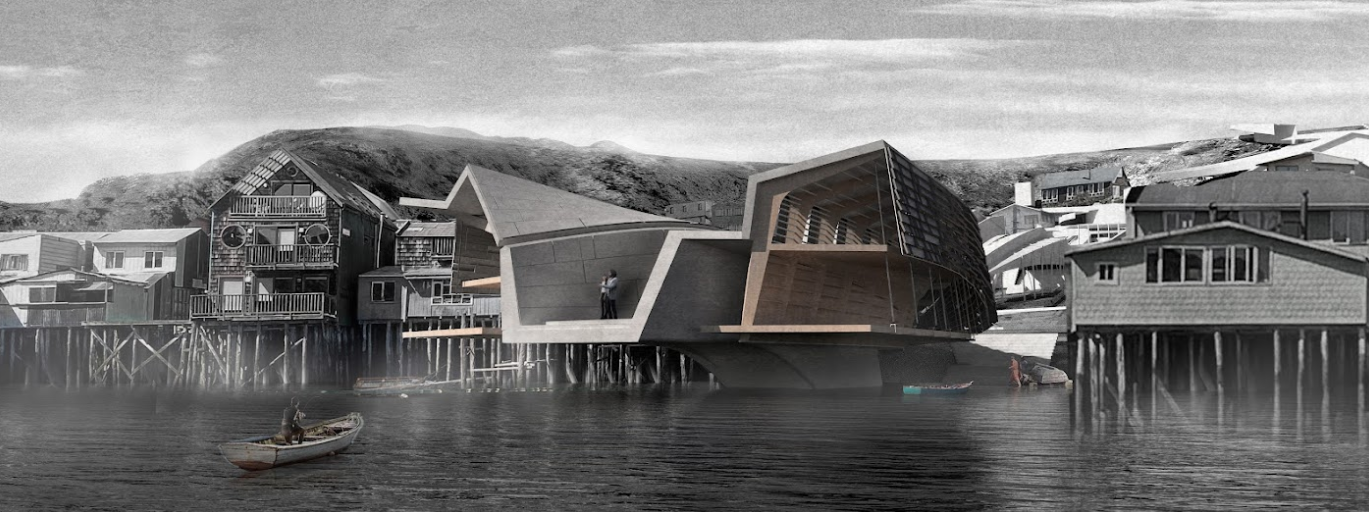
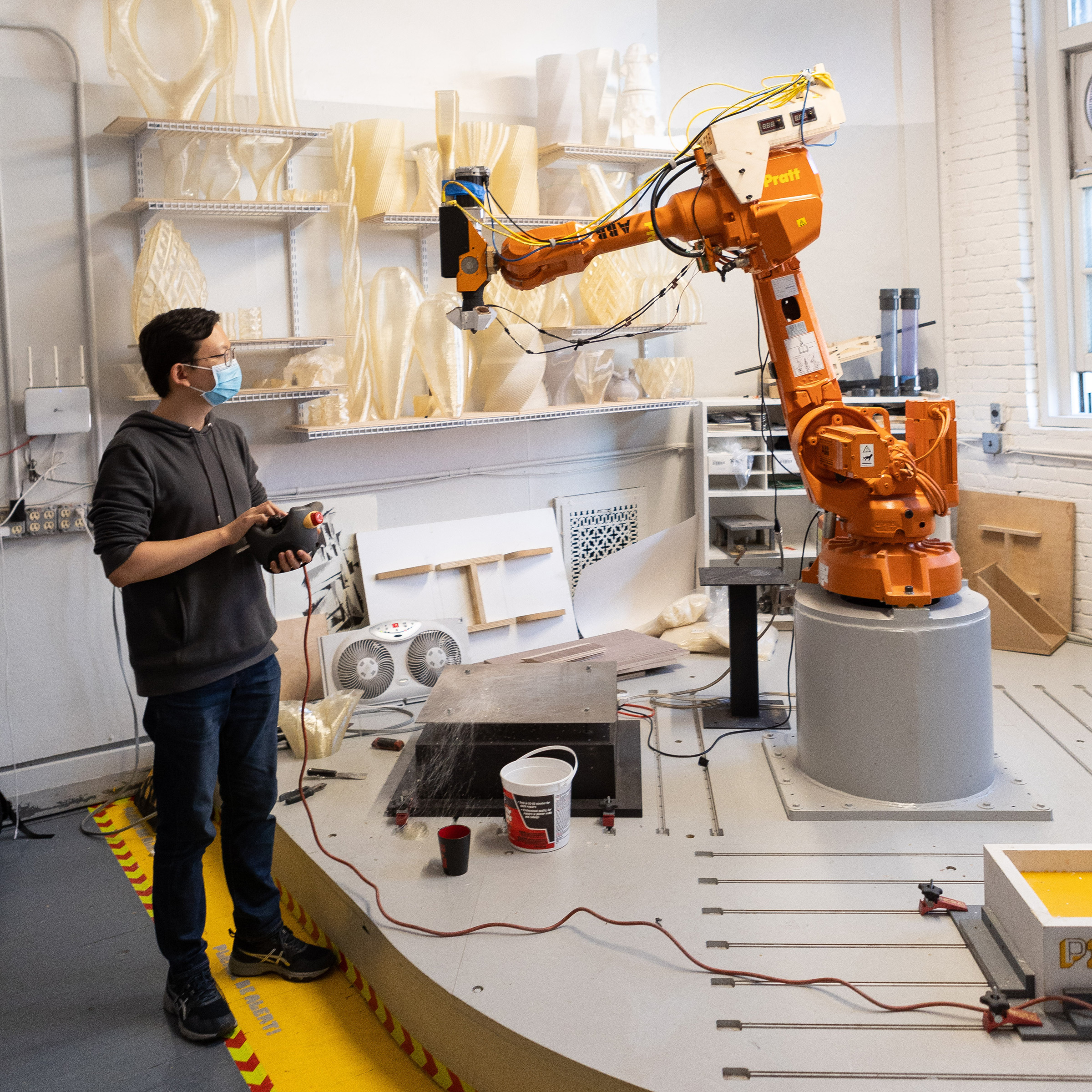
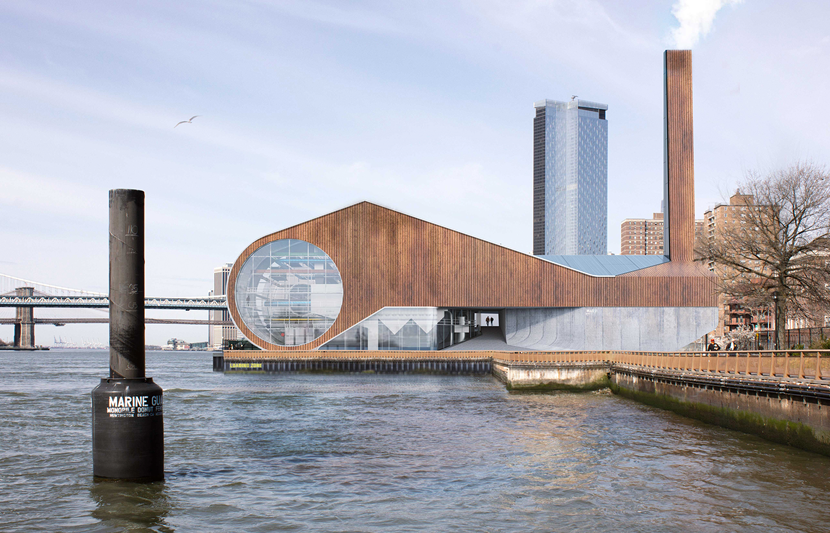
Skip to content
The Master of Architecture program trains students to become leaders in the professional practice of architecture with innovative methods of design research and inquiry. 
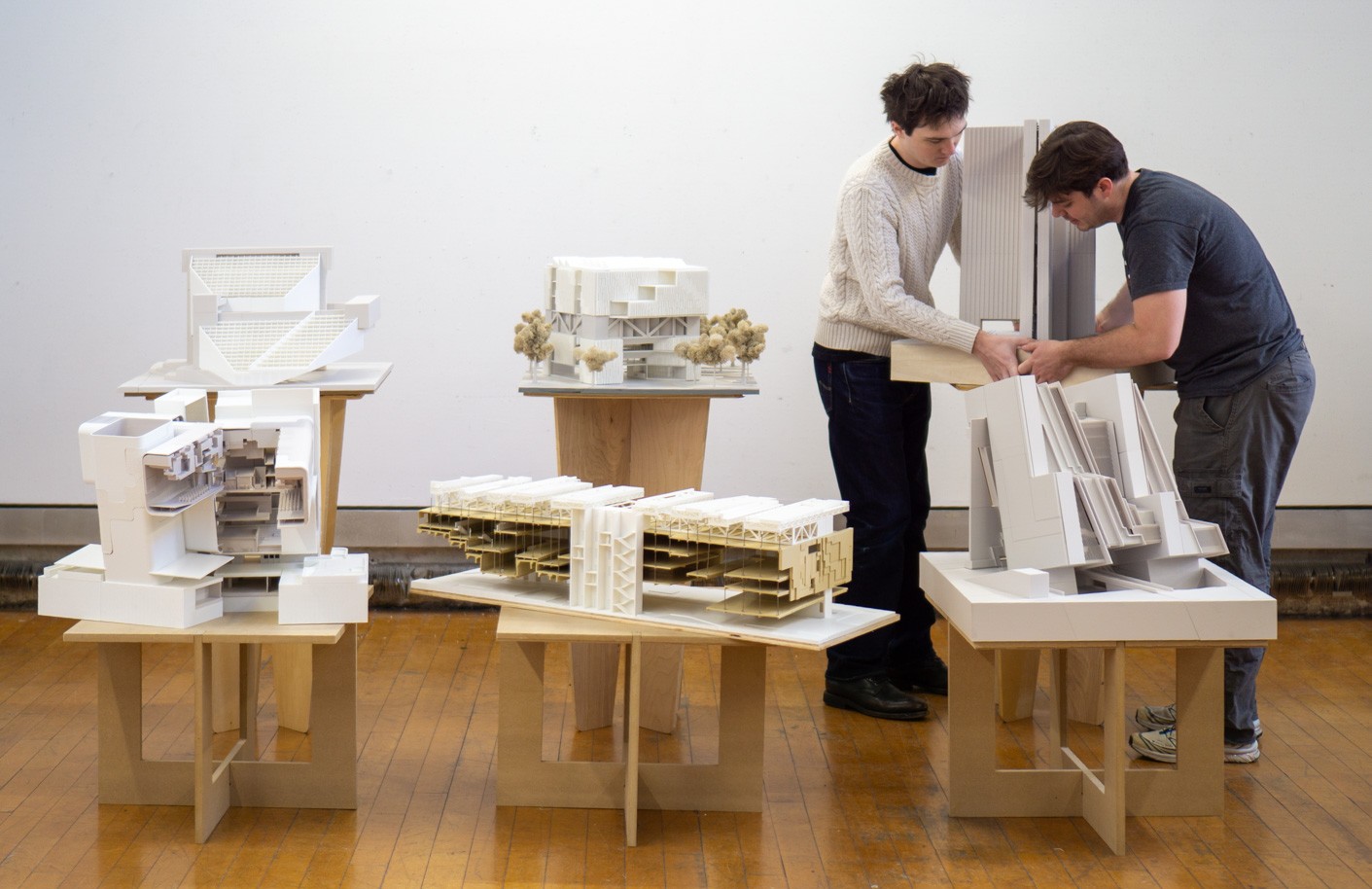
Two students stand in a studio space adjusting a large white architectural model on a table. Several detailed architectural scale models are displayed on wooden pedestal tables arranged across a hardwood floor. The models include cutaway sections, layered structural elements, and small landscape features. The setting appears to be an architecture studio or exhibition space with a plain white wall backdrop.
Type
Graduate, MAR
Start Term
Fall Only
Credits
84
Duration
6 Semesters
Courses
Plan of Study
Colorful, abstract architectural models arranged on a tabletop, featuring layered geometric forms in wood, plastic, and painted materials. The foreground shows sculptural components in blue, white, gray, and natural wood tones, while the background includes brightly colored cut-paper or foam-core studies pinned to the wall. The scene conveys an active design studio environment with experimental material exploration.
Students: Sophy Feldman & Rowan Price
Instructor: Alexandra Barker
SP23 Studio 4

Master of Architecture at Pratt

The M.Arch curriculum embraces an integrative approach to design that weaves together technical knowledge and creative practice, building science and environmental stewardship, and professional responsibility and equity. We actively engage the pressing climatic and social challenges of our era through rigorous inquiry. Through case studies that leverage the city as our classroom, students develop innovative design strategies that convey a thorough understanding of the way in which architecture shapes the built environment and its communities. As architects, our inquiry extends across all scales of the built environment, from individual buildings to neighborhoods, cities, and all the way to global systems and ecosystems. What connects our intervention across this broad range of scales is our deep commitment to design work that prioritizes the well-being and safety of all life forms.
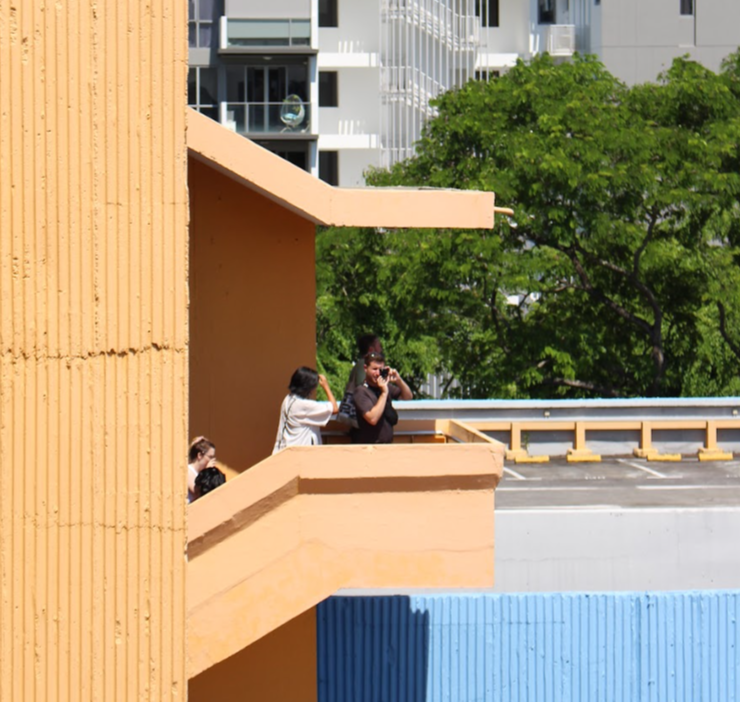
Student Work
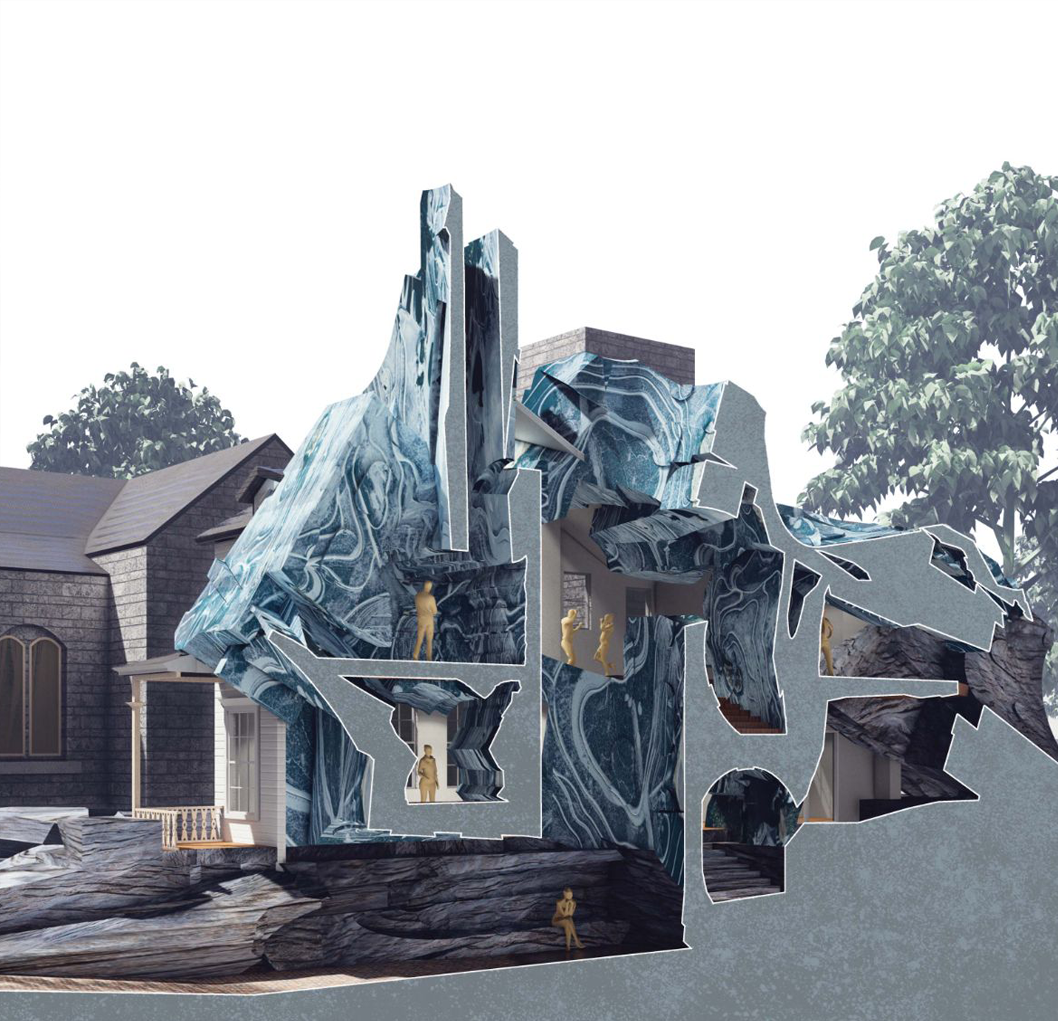
Faculty Highlight

Our faculty are leading practitioners, scholars, and educators, including a distinctive cohort of PhD candidates from top universities who share a common desire to develop each student’s potential and creativity to the fullest. Bringing different views, methods, and perspectives the faculty provide a rigorous educational model in which students make and learn. See all GA/LA/UD faculty and administrators

  1. Andrew Holder

    Chairperson of Graduate Architecture

  2. Hart Marlow

    Interim Assistant Chairperson of GALAUD; Adjunct Associate Professor – CCE; SCPS Lecturer

  3. Alexandra Barker

    Adjunct Associate Professor – CCE; Academic Coordinator of MS Arch Program

  1. William MacDonald

    Professor

  2. David Erdman

    Associate Professor

  3. Carisima Koenig

    Adjunct Associate Professor
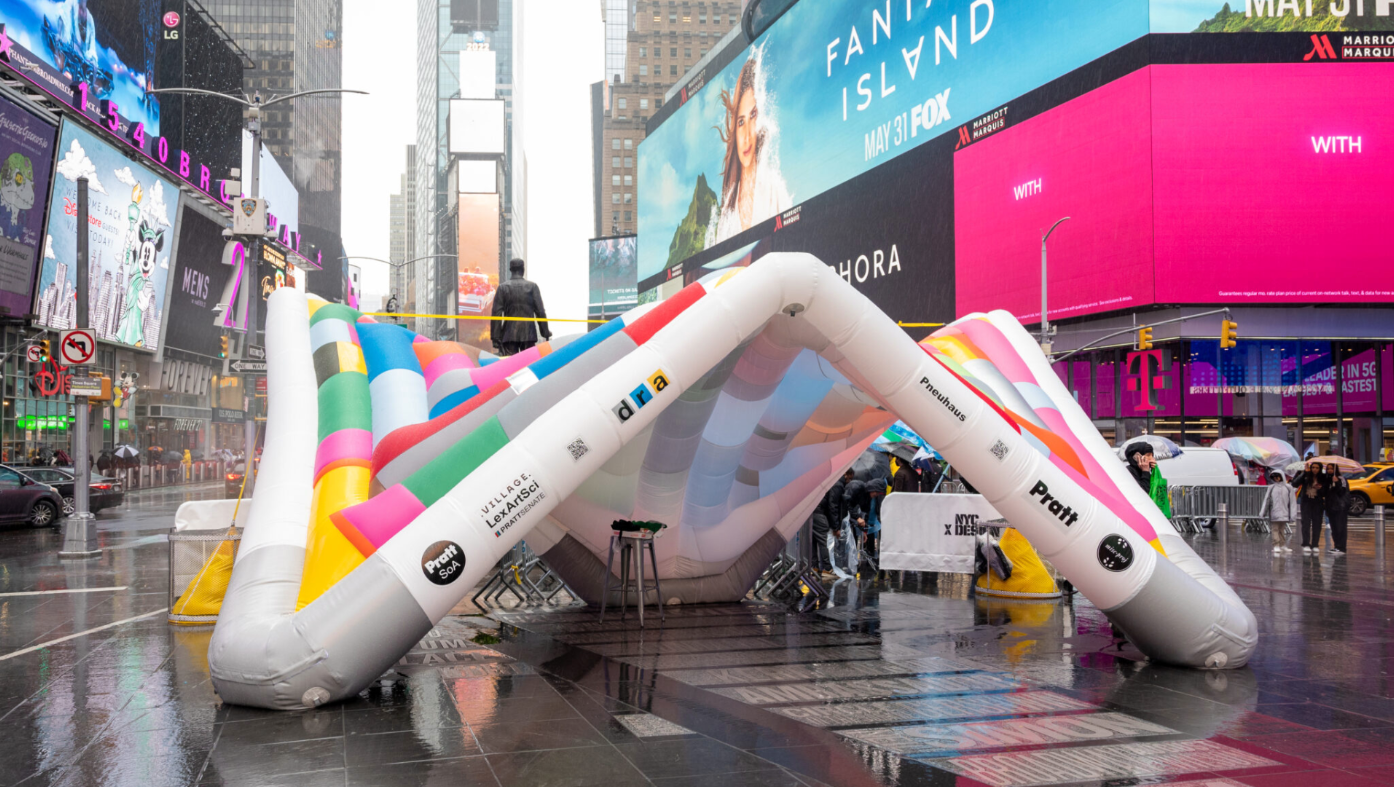
Ready for More?

HERE’S HOW TO APPLYGraduate Studies at PrattOUR CAMPUS & BEYOND
Join us at Pratt. Learn more about admissions requirements, plan your visit, talk to a counselor, and start your application. Take the next step.Whether your goal is to advance your career, pivot to a new field, or explore your craft or groundbreaking research, our 33 graduate programs provide the rigor and support to achieve your vision. Explore our graduate programs in architecture, fine arts, design, information studies, and the liberal arts and sciences.
Learn More.
You’ll find yourself at home at Pratt. Learn more about our residence halls, student organizations, athletics, gallery exhibitions, events, the amazing City of New York and our Brooklyn neighborhood communities. Check us out.
@pratt_galaud
Pratt GA/LA/UD

@pratt_galaud

  • PRATT SESSIONS: MARK FOSTER GAGE
Monday, March 30th
6:15 - 8:30 pm, Higgins Hall Auditorium

Mark Foster Gage is an architect, theorist, and author. Since 2002, his New York City firm, Mark Foster Gage Architects, has combined philosophical and technological speculation with the assets of a fully licensed architectural practice for clients such as Lady Gaga, Google, Samsung, Equinox, The Coachella Music Festival, and the Biden/Harris presidential campaign. Gage’s area of academic expertise is aesthetic philosophy, where he has engaged in both public and published dialogues with some of the world’s leading philosophers including David Chalmers, Jacques Rancière, and Graham Harman.

@mark_foster_gage 

#Pratt #PrattInstitute #PrattSOA #PrattGALAUD #ArchitectureLecture
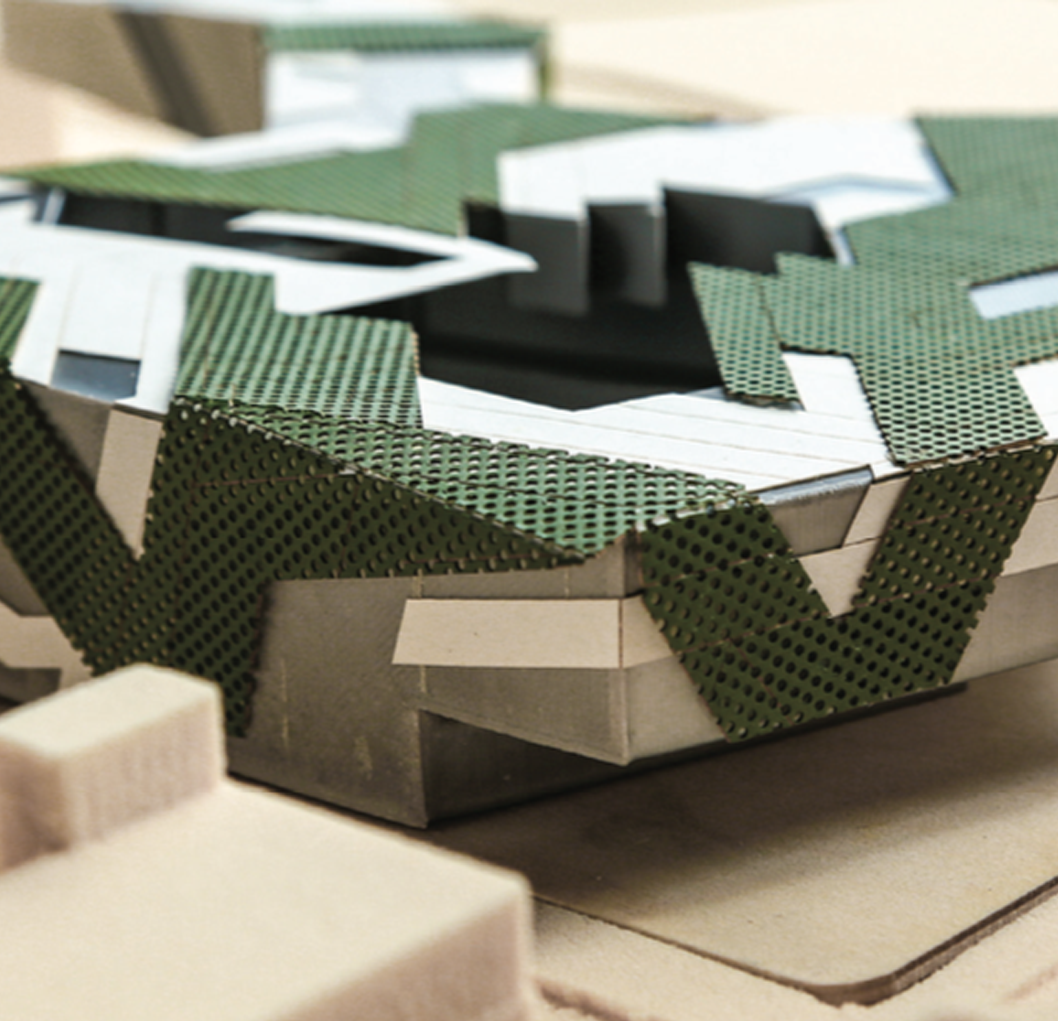
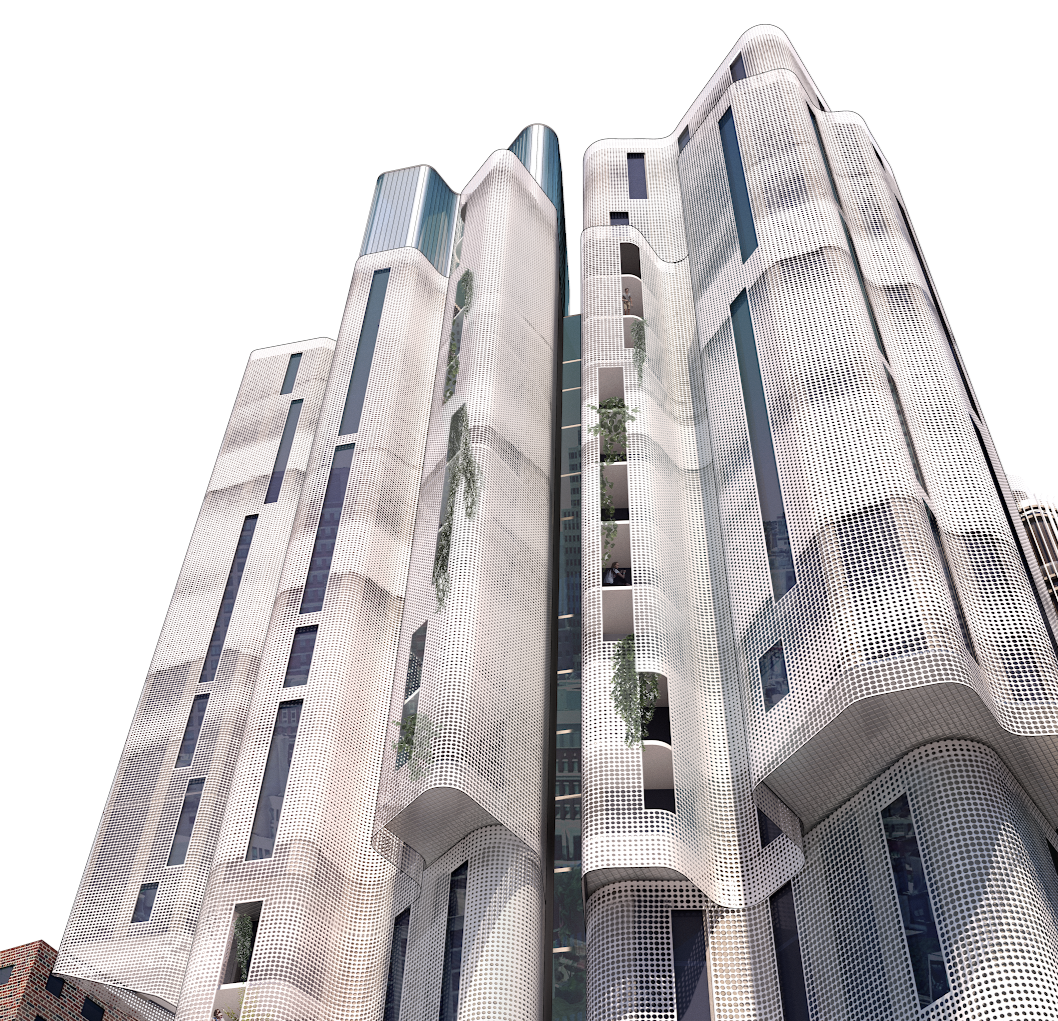
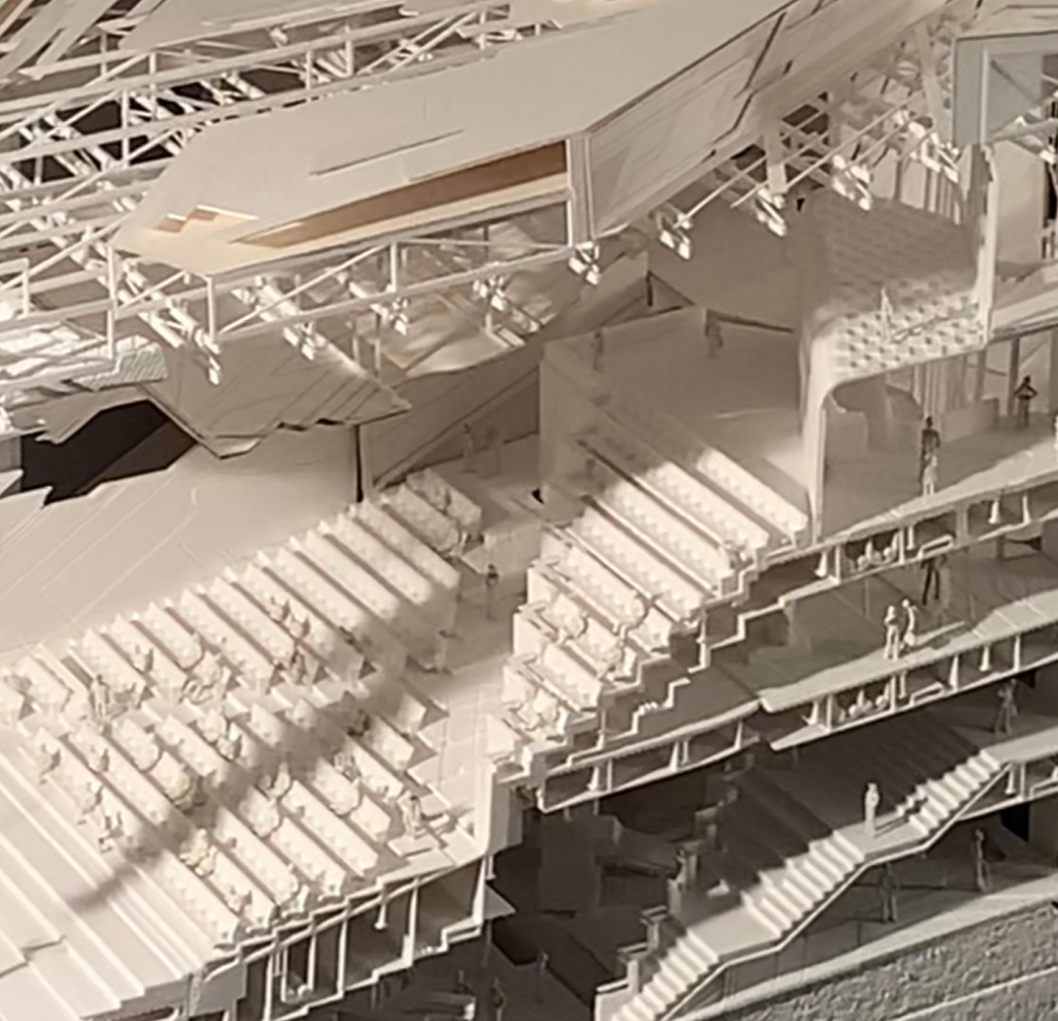
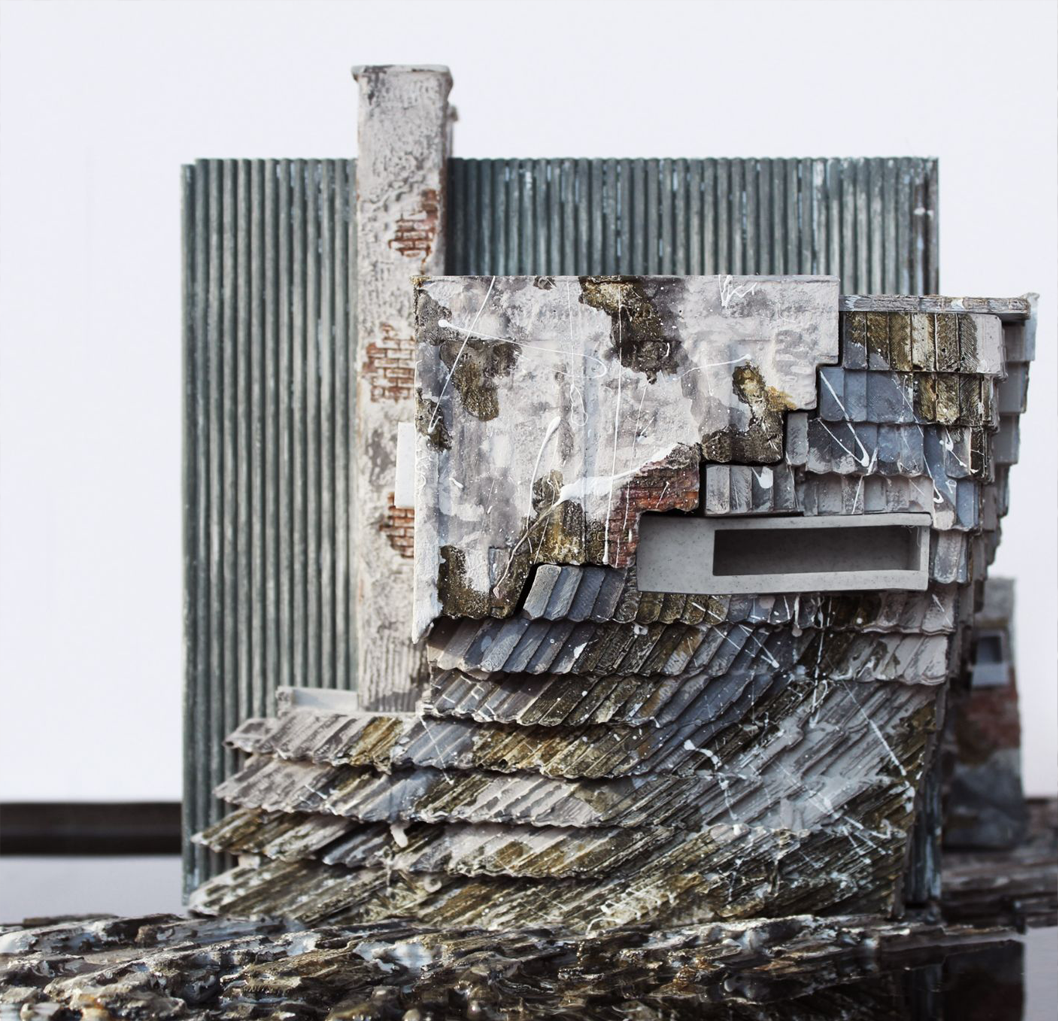
  • ARCH 806 | ADVANCED DESIGN RESEARCH 2: A NEW DOWNTOWN ATHLETIC CLUB
Spring  2026 | Mid Review Models
Professor Wonne Ickx, Co-Teacher Genevieve Garlock

This studio takes the historic “Downtown Athletic Club” as a cue to problematize the relation between architectural image and program (content), and to challenge contemporary ideas on wellness and fitness as a space for socializing, collective experience and community. Before the actual design works starts, students will research architectural discourse and references projects related to the studio, as well as the history of the site. These initial explorations include of course the well-known writing on the Downtown Athletic Club by Rem Koolhaas in the framework of his work on the Metropolis and the Culture of Congestion from “Delirious New York” (1978). 

Work by Students: 1,6. Costanza Bacci and Harrison DuBose, 2,7. Peter Harvey and Rachit Joshi, 3,8. Abyan Mohammed Ali and Halil Emre Baştürk, 4,9. Mateusz Wos and Brian Chan, 5. Kerry Richardson and Joji Kawamura

@wonnex @productora_df @genevieve3milia 
@costanzabacci @harrisondubose @peter___harvey @rachit_0107 @10_abyan @hebasturk @mateusz.wos_ @b_chan.arch @kerryarchdesigns @jojis_e_archlife 

#PrattMArch #PrattInstitute #PrattGALAUD #PrattSOA #architecturemodel @archdaily @archinect @next_top_architects @superarchitects @designboom @dezeen @architecturefactor
  • PRATT GA/LA/UD SUMMER IMMERSION STUDIO REGISTRATION OPEN NOW

The Summer Immersion Studio is an introduction to the key ideas and techniques in Architecture and Landscape. Open to students 18+, from current undergraduates to mid-career professionals, the course is suitable for anyone interested in a focused introduction to the discipline. Taught by Faculty from Graduate Architecture, Landscape Architecture, and Urban Design, students will emerge with a command of essential skills and a small body of work suitable for use as the foundation for a graduate application portfolio. Students receive individualized, one-to-one technical instruction in drawing, modeling, fabrication workflows, and portfolio development, building both conceptual and technical fluency in preparation for graduate-level study.

#PrattSOA #prattinstitute #PrattGALAUD #SummerCourses #Architecture
  • LAR 602 Land Studio II: Shore
Spring 2026 | Assignment 1 Models
Professor Mariel Collard

The second semester core studio focuses on the urbanized shores of the North Atlantic. The emphasis shifts from sea-level rise to the landward migration of the shore, making “adaptation” central to Land Studio II. Additional key themes include relocation, retreat, and rewilding as critical 21st-century design propositions, policy frameworks, and management strategies. The effects of oceanic and atmospheric warming are widespread, as fixed infrastructure, settlement patterns, and recreational economies evolve in response to the geomorphic dynamics of salt marshes, beaches, and dunes. Students gain firsthand experience with the winds, waves, tides, and currents that shape coastal environments, challenging assumptions around hardening techniques and exploring the design of living shorelines. This studio works in close collaboration with LAR 633 Cartography II: Soil Making.

For this assignment each student studies a geomorphic process found in the North Atlantic Coast through the landforms resulting from erosion, transport, and deposition in the littoral zone. The North Atlantic coast is heavily influenced by Pleistocene glaciation—many features formed from reworked glacial sediments, and the region experienced post-glacial rebound and sea level changes. The landforms surveyed by the students include, barrier islands, barrier spits, dunes, cliffs/bluffs, inlets/lagoons, estuaries, salt marshes, and mudflats.

@marielilla

#PrattMLA #PrattInstitute #PrattGALAUD #landscape #landscapearchitecture @archdaily @archinect @next_top_architects @superarchitects @designboom @dezeen @architecturefactor
  • WISDOM OF PLACE | Lecture, Workshop, and Sketch Walk
March 27, 2026 12:30 PM – 4:30 PM
HHN Room 505

Join landscape architects Chip Sullivan and Elizabeth Boults for a magical journey in search of the genius loci – the spirit of place – to explore the creative forces and hidden currents of nature. Following a presentation on nature-based archetypes and folklore from cultures across the world, we will enter the portal to another dimension to draw the mystical spirits present around the Pratt campus environs. Through drawing, field sketching, and collaging, we will gain insights into the voice of water, the spirit of the grove, the energy of the earth, and the phenomena of shadows. At the conclusion of the workshop participants will have created their own Genius loci tarot card.

@theoriginallandscapecartoonist @pratt_mla

#landscapearchitecture #landscapesketch #Pratt #PrattInstitute #landscape
  • ARCH 806 DESIGN 6: NORMAL STUDIO
Spring 2026 | Normal, Illinois
Professor: Alexandra Barker

GA/LA/UD’s new architecture studio, in collaboration with @rivianofficial, asks: How can architecture reconceptualize industrial sites as integrated environments where production, habitation, and public life intersect?

Students had the chance to travel to Normal, Illinois, to examine the design of an electric vehicle production plant. How does Rivian’s plant operate as a complex territorial and civic project rather than a singular industrial object?  Students investigate how spatial organization, logistics, environmental systems, and architectural form can operate together to support both industrial performance and social presence.
 
The studio is conducted through a combination of design exercises, precedent analysis, collective discussions, and iterative project development. Students work at multiple scales—from territorial planning and infrastructural organization to spatial sequences and environmental strategies—using drawings, physical models, and representational techniques. Emphasis is placed on understanding architecture as a continuous system of buildings, landscapes, and infrastructures, with a particular attention to how voids, courtyards, circulation networks, and environmental mediation structure large, deep-plan environments.

Photos courtesy of Noah Spivak 

@alexandrabarker 
@n__spivak 

#prattinstitute #prattsoa #prattschoolofarchitecture #prattgalaud #architecture @archdaily @archinect @next_top_architects @superarchitects @dezeen @designboom @architecturefactor
  • EXHIBITION OPENING | FIELD ARCHIVES
Tuesday, March 24th 6:00-8:00 PM | Higgins Hall Gallery

“Field Archives: Landscape Architecture in Process” presents student work from the  Master of Landscape Architecture program as an evolving, collective record of inquiry. Framed through horizontality, the exhibition foregrounds landscape as a field condition shaped by research, collaboration, and material investigation. Drawings, models, mappings, and full-scale studies are brought together through an interactive exhibition design that invites visitors to move across projects, tracing connections between ecologies, communities and projects. Emphasizing process, Field Archives reveals landscape architecture as iterative practice: grounded in observation, expanded through dialogue, and continuously in formation.

@pratt_mla 

#PrattMLA #PrattGALAUD #PrattSOA #landscapearchitecture #Exhibition
  • ARCH 704 | DESIGN 4: INTEGRATED STUDIO
Spring 2026 | 1/3 Review Models
Professors Hart Marlow and Jonas Coersmeier

An urban reuse center serves as a hybrid community facility that combines materials recovery, repair, and creative reuse with public education and neighborhood gathering. It is positioned at the intersection of residential and industrial space and operates as a visible, accessible node where residents can drop off reusable materials, learn hands-on skills in maker and repair workshops. The center offers classrooms, exhibition areas, and community rooms to promote environmental literacy and local initiatives. The project acts as a porous threshold between everyday living and public life, transforming waste into resources and the building itself into a social infrastructure that fosters circular economy practices, social interaction, and local identity. Education and community engagement are integral to the mission of an advanced materials ReUse facility. Engaging children, youth, and adults in reuse practices helps establish long-term sustainable habits and fosters a deeper understanding of material lifecycles. Educational initiatives may include guided tours that expose visitors to the full ReUse process, hands-on learning activities using repurposed materials, workshops focused on repair and reuse, and dedicated maker spaces that encourage creative experimentation with recovered resources. Community rooms and flexible learning spaces support lectures, exhibitions, and collaborative programs, positioning the facility not only as an industrial system but also as a shared civic resource that promotes environmental literacy, stewardship, and collective responsibility.

Work by Students 1. Emersyn Gentry & Alexandros Vamvakas 2. Ashley Gray & Issy Clancy 3. Lila Gaber & Gabriel Dayan 4. Elena Mota & Stephen Favale 5. Ashley Zhong & Eli Lange

@emersy.n @alekovamvakas @ashleymyrenegray @issyclancy @lila_gaber @gabriel.dayan @elenabmota @sc.favale @lange042

#PrattMarch #PrattInstitute #PrattGALAUD #PrattSOA #architecturemodel @archdaily @archinect @next_top_architects @superarchitects @designboom @dezeen @architecturefactor
  • Admitted students are invited to our Spring Open House on March 24th, and our Virtual Open House on April 1st. 

Our Spring Open House takes place on Tuesday, March 24th and features a full day of talks, presentations, and tours designed to introduce you to the creative, collaborative culture of GA/LA/UD at Pratt. We invite admitted students to join us for the entire day or the sessions that match your availability and interests. Registration is required, RSVP now! 

Our virtual open house will kick off with a welcome from Department Chair Andrew Holder, followed by a virtual visit to MLA with remarks from Signe Nielsen, and a presentation of student work. The event also includes a virtual tour of our studios and exhibition, followed by a live Q&A with faculty and current students. Registration is required, RSVP now!
PRATT SESSIONS: MARK FOSTER GAGE
Monday, March 30th
6:15 - 8:30 pm, Higgins Hall Auditorium

Mark Foster Gage is an architect, theorist, and author. Since 2002, his New York City firm, Mark Foster Gage Architects, has combined philosophical and technological speculation with the assets of a fully licensed architectural practice for clients such as Lady Gaga, Google, Samsung, Equinox, The Coachella Music Festival, and the Biden/Harris presidential campaign. Gage’s area of academic expertise is aesthetic philosophy, where he has engaged in both public and published dialogues with some of the world’s leading philosophers including David Chalmers, Jacques Rancière, and Graham Harman.

@mark_foster_gage 

#Pratt #PrattInstitute #PrattSOA #PrattGALAUD #ArchitectureLecture
PRATT SESSIONS: MARK FOSTER GAGE
Monday, March 30th
6:15 - 8:30 pm, Higgins Hall Auditorium

Mark Foster Gage is an architect, theorist, and author. Since 2002, his New York City firm, Mark Foster Gage Architects, has combined philosophical and technological speculation with the assets of a fully licensed architectural practice for clients such as Lady Gaga, Google, Samsung, Equinox, The Coachella Music Festival, and the Biden/Harris presidential campaign. Gage’s area of academic expertise is aesthetic philosophy, where he has engaged in both public and published dialogues with some of the world’s leading philosophers including David Chalmers, Jacques Rancière, and Graham Harman.

@mark_foster_gage 

#Pratt #PrattInstitute #PrattSOA #PrattGALAUD #ArchitectureLecture
PRATT SESSIONS: MARK FOSTER GAGE Monday, March 30th
6:15 - 8:30 pm, Higgins Hall Auditorium
 Mark Foster Gage is an architect, theorist, and author. Since 2002, his New York City firm, Mark Foster Gage Architects, has combined philosophical and technological speculation with the assets of a fully licensed architectural practice for clients such as Lady Gaga, Google, Samsung, Equinox, The Coachella Music Festival, and the Biden/Harris presidential campaign. Gage’s area of academic expertise is aesthetic philosophy, where he has engaged in both public and published dialogues with some of the world’s leading philosophers including David Chalmers, Jacques Rancière, and Graham Harman. @mark_foster_gage #Pratt #PrattInstitute #PrattSOA #PrattGALAUD #ArchitectureLecture
17 hours ago
View on Instagram |
1/9
ARCH 806 | ADVANCED DESIGN RESEARCH 2: A NEW DOWNTOWN ATHLETIC CLUB
Spring  2026 | Mid Review Models
Professor Wonne Ickx, Co-Teacher Genevieve Garlock

This studio takes the historic “Downtown Athletic Club” as a cue to problematize the relation between architectural image and program (content), and to challenge contemporary ideas on wellness and fitness as a space for socializing, collective experience and community. Before the actual design works starts, students will research architectural discourse and references projects related to the studio, as well as the history of the site. These initial explorations include of course the well-known writing on the Downtown Athletic Club by Rem Koolhaas in the framework of his work on the Metropolis and the Culture of Congestion from “Delirious New York” (1978). 

Work by Students: 1,6. Costanza Bacci and Harrison DuBose, 2,7. Peter Harvey and Rachit Joshi, 3,8. Abyan Mohammed Ali and Halil Emre Baştürk, 4,9. Mateusz Wos and Brian Chan, 5. Kerry Richardson and Joji Kawamura

@wonnex @productora_df @genevieve3milia 
@costanzabacci @harrisondubose @peter___harvey @rachit_0107 @10_abyan @hebasturk @mateusz.wos_ @b_chan.arch @kerryarchdesigns @jojis_e_archlife 

#PrattMArch #PrattInstitute #PrattGALAUD #PrattSOA #architecturemodel @archdaily @archinect @next_top_architects @superarchitects @designboom @dezeen @architecturefactor
ARCH 806 | ADVANCED DESIGN RESEARCH 2: A NEW DOWNTOWN ATHLETIC CLUB
Spring  2026 | Mid Review Models
Professor Wonne Ickx, Co-Teacher Genevieve Garlock

This studio takes the historic “Downtown Athletic Club” as a cue to problematize the relation between architectural image and program (content), and to challenge contemporary ideas on wellness and fitness as a space for socializing, collective experience and community. Before the actual design works starts, students will research architectural discourse and references projects related to the studio, as well as the history of the site. These initial explorations include of course the well-known writing on the Downtown Athletic Club by Rem Koolhaas in the framework of his work on the Metropolis and the Culture of Congestion from “Delirious New York” (1978). 

Work by Students: 1,6. Costanza Bacci and Harrison DuBose, 2,7. Peter Harvey and Rachit Joshi, 3,8. Abyan Mohammed Ali and Halil Emre Baştürk, 4,9. Mateusz Wos and Brian Chan, 5. Kerry Richardson and Joji Kawamura

@wonnex @productora_df @genevieve3milia 
@costanzabacci @harrisondubose @peter___harvey @rachit_0107 @10_abyan @hebasturk @mateusz.wos_ @b_chan.arch @kerryarchdesigns @jojis_e_archlife 

#PrattMArch #PrattInstitute #PrattGALAUD #PrattSOA #architecturemodel @archdaily @archinect @next_top_architects @superarchitects @designboom @dezeen @architecturefactor
ARCH 806 | ADVANCED DESIGN RESEARCH 2: A NEW DOWNTOWN ATHLETIC CLUB
Spring  2026 | Mid Review Models
Professor Wonne Ickx, Co-Teacher Genevieve Garlock

This studio takes the historic “Downtown Athletic Club” as a cue to problematize the relation between architectural image and program (content), and to challenge contemporary ideas on wellness and fitness as a space for socializing, collective experience and community. Before the actual design works starts, students will research architectural discourse and references projects related to the studio, as well as the history of the site. These initial explorations include of course the well-known writing on the Downtown Athletic Club by Rem Koolhaas in the framework of his work on the Metropolis and the Culture of Congestion from “Delirious New York” (1978). 

Work by Students: 1,6. Costanza Bacci and Harrison DuBose, 2,7. Peter Harvey and Rachit Joshi, 3,8. Abyan Mohammed Ali and Halil Emre Baştürk, 4,9. Mateusz Wos and Brian Chan, 5. Kerry Richardson and Joji Kawamura

@wonnex @productora_df @genevieve3milia 
@costanzabacci @harrisondubose @peter___harvey @rachit_0107 @10_abyan @hebasturk @mateusz.wos_ @b_chan.arch @kerryarchdesigns @jojis_e_archlife 

#PrattMArch #PrattInstitute #PrattGALAUD #PrattSOA #architecturemodel @archdaily @archinect @next_top_architects @superarchitects @designboom @dezeen @architecturefactor
ARCH 806 | ADVANCED DESIGN RESEARCH 2: A NEW DOWNTOWN ATHLETIC CLUB
Spring  2026 | Mid Review Models
Professor Wonne Ickx, Co-Teacher Genevieve Garlock

This studio takes the historic “Downtown Athletic Club” as a cue to problematize the relation between architectural image and program (content), and to challenge contemporary ideas on wellness and fitness as a space for socializing, collective experience and community. Before the actual design works starts, students will research architectural discourse and references projects related to the studio, as well as the history of the site. These initial explorations include of course the well-known writing on the Downtown Athletic Club by Rem Koolhaas in the framework of his work on the Metropolis and the Culture of Congestion from “Delirious New York” (1978). 

Work by Students: 1,6. Costanza Bacci and Harrison DuBose, 2,7. Peter Harvey and Rachit Joshi, 3,8. Abyan Mohammed Ali and Halil Emre Baştürk, 4,9. Mateusz Wos and Brian Chan, 5. Kerry Richardson and Joji Kawamura

@wonnex @productora_df @genevieve3milia 
@costanzabacci @harrisondubose @peter___harvey @rachit_0107 @10_abyan @hebasturk @mateusz.wos_ @b_chan.arch @kerryarchdesigns @jojis_e_archlife 

#PrattMArch #PrattInstitute #PrattGALAUD #PrattSOA #architecturemodel @archdaily @archinect @next_top_architects @superarchitects @designboom @dezeen @architecturefactor
ARCH 806 | ADVANCED DESIGN RESEARCH 2: A NEW DOWNTOWN ATHLETIC CLUB
Spring  2026 | Mid Review Models
Professor Wonne Ickx, Co-Teacher Genevieve Garlock

This studio takes the historic “Downtown Athletic Club” as a cue to problematize the relation between architectural image and program (content), and to challenge contemporary ideas on wellness and fitness as a space for socializing, collective experience and community. Before the actual design works starts, students will research architectural discourse and references projects related to the studio, as well as the history of the site. These initial explorations include of course the well-known writing on the Downtown Athletic Club by Rem Koolhaas in the framework of his work on the Metropolis and the Culture of Congestion from “Delirious New York” (1978). 

Work by Students: 1,6. Costanza Bacci and Harrison DuBose, 2,7. Peter Harvey and Rachit Joshi, 3,8. Abyan Mohammed Ali and Halil Emre Baştürk, 4,9. Mateusz Wos and Brian Chan, 5. Kerry Richardson and Joji Kawamura

@wonnex @productora_df @genevieve3milia 
@costanzabacci @harrisondubose @peter___harvey @rachit_0107 @10_abyan @hebasturk @mateusz.wos_ @b_chan.arch @kerryarchdesigns @jojis_e_archlife 

#PrattMArch #PrattInstitute #PrattGALAUD #PrattSOA #architecturemodel @archdaily @archinect @next_top_architects @superarchitects @designboom @dezeen @architecturefactor
ARCH 806 | ADVANCED DESIGN RESEARCH 2: A NEW DOWNTOWN ATHLETIC CLUB
Spring  2026 | Mid Review Models
Professor Wonne Ickx, Co-Teacher Genevieve Garlock

This studio takes the historic “Downtown Athletic Club” as a cue to problematize the relation between architectural image and program (content), and to challenge contemporary ideas on wellness and fitness as a space for socializing, collective experience and community. Before the actual design works starts, students will research architectural discourse and references projects related to the studio, as well as the history of the site. These initial explorations include of course the well-known writing on the Downtown Athletic Club by Rem Koolhaas in the framework of his work on the Metropolis and the Culture of Congestion from “Delirious New York” (1978). 

Work by Students: 1,6. Costanza Bacci and Harrison DuBose, 2,7. Peter Harvey and Rachit Joshi, 3,8. Abyan Mohammed Ali and Halil Emre Baştürk, 4,9. Mateusz Wos and Brian Chan, 5. Kerry Richardson and Joji Kawamura

@wonnex @productora_df @genevieve3milia 
@costanzabacci @harrisondubose @peter___harvey @rachit_0107 @10_abyan @hebasturk @mateusz.wos_ @b_chan.arch @kerryarchdesigns @jojis_e_archlife 

#PrattMArch #PrattInstitute #PrattGALAUD #PrattSOA #architecturemodel @archdaily @archinect @next_top_architects @superarchitects @designboom @dezeen @architecturefactor
ARCH 806 | ADVANCED DESIGN RESEARCH 2: A NEW DOWNTOWN ATHLETIC CLUB
Spring  2026 | Mid Review Models
Professor Wonne Ickx, Co-Teacher Genevieve Garlock

This studio takes the historic “Downtown Athletic Club” as a cue to problematize the relation between architectural image and program (content), and to challenge contemporary ideas on wellness and fitness as a space for socializing, collective experience and community. Before the actual design works starts, students will research architectural discourse and references projects related to the studio, as well as the history of the site. These initial explorations include of course the well-known writing on the Downtown Athletic Club by Rem Koolhaas in the framework of his work on the Metropolis and the Culture of Congestion from “Delirious New York” (1978). 

Work by Students: 1,6. Costanza Bacci and Harrison DuBose, 2,7. Peter Harvey and Rachit Joshi, 3,8. Abyan Mohammed Ali and Halil Emre Baştürk, 4,9. Mateusz Wos and Brian Chan, 5. Kerry Richardson and Joji Kawamura

@wonnex @productora_df @genevieve3milia 
@costanzabacci @harrisondubose @peter___harvey @rachit_0107 @10_abyan @hebasturk @mateusz.wos_ @b_chan.arch @kerryarchdesigns @jojis_e_archlife 

#PrattMArch #PrattInstitute #PrattGALAUD #PrattSOA #architecturemodel @archdaily @archinect @next_top_architects @superarchitects @designboom @dezeen @architecturefactor
ARCH 806 | ADVANCED DESIGN RESEARCH 2: A NEW DOWNTOWN ATHLETIC CLUB
Spring  2026 | Mid Review Models
Professor Wonne Ickx, Co-Teacher Genevieve Garlock

This studio takes the historic “Downtown Athletic Club” as a cue to problematize the relation between architectural image and program (content), and to challenge contemporary ideas on wellness and fitness as a space for socializing, collective experience and community. Before the actual design works starts, students will research architectural discourse and references projects related to the studio, as well as the history of the site. These initial explorations include of course the well-known writing on the Downtown Athletic Club by Rem Koolhaas in the framework of his work on the Metropolis and the Culture of Congestion from “Delirious New York” (1978). 

Work by Students: 1,6. Costanza Bacci and Harrison DuBose, 2,7. Peter Harvey and Rachit Joshi, 3,8. Abyan Mohammed Ali and Halil Emre Baştürk, 4,9. Mateusz Wos and Brian Chan, 5. Kerry Richardson and Joji Kawamura

@wonnex @productora_df @genevieve3milia 
@costanzabacci @harrisondubose @peter___harvey @rachit_0107 @10_abyan @hebasturk @mateusz.wos_ @b_chan.arch @kerryarchdesigns @jojis_e_archlife 

#PrattMArch #PrattInstitute #PrattGALAUD #PrattSOA #architecturemodel @archdaily @archinect @next_top_architects @superarchitects @designboom @dezeen @architecturefactor
ARCH 806 | ADVANCED DESIGN RESEARCH 2: A NEW DOWNTOWN ATHLETIC CLUB
Spring  2026 | Mid Review Models
Professor Wonne Ickx, Co-Teacher Genevieve Garlock

This studio takes the historic “Downtown Athletic Club” as a cue to problematize the relation between architectural image and program (content), and to challenge contemporary ideas on wellness and fitness as a space for socializing, collective experience and community. Before the actual design works starts, students will research architectural discourse and references projects related to the studio, as well as the history of the site. These initial explorations include of course the well-known writing on the Downtown Athletic Club by Rem Koolhaas in the framework of his work on the Metropolis and the Culture of Congestion from “Delirious New York” (1978). 

Work by Students: 1,6. Costanza Bacci and Harrison DuBose, 2,7. Peter Harvey and Rachit Joshi, 3,8. Abyan Mohammed Ali and Halil Emre Baştürk, 4,9. Mateusz Wos and Brian Chan, 5. Kerry Richardson and Joji Kawamura

@wonnex @productora_df @genevieve3milia 
@costanzabacci @harrisondubose @peter___harvey @rachit_0107 @10_abyan @hebasturk @mateusz.wos_ @b_chan.arch @kerryarchdesigns @jojis_e_archlife 

#PrattMArch #PrattInstitute #PrattGALAUD #PrattSOA #architecturemodel @archdaily @archinect @next_top_architects @superarchitects @designboom @dezeen @architecturefactor
ARCH 806 | ADVANCED DESIGN RESEARCH 2: A NEW DOWNTOWN ATHLETIC CLUB Spring 2026 | Mid Review Models Professor Wonne Ickx, Co-Teacher Genevieve Garlock This studio takes the historic “Downtown Athletic Club” as a cue to problematize the relation between architectural image and program (content), and to challenge contemporary ideas on wellness and fitness as a space for socializing, collective experience and community. Before the actual design works starts, students will research architectural discourse and references projects related to the studio, as well as the history of the site. These initial explorations include of course the well-known writing on the Downtown Athletic Club by Rem Koolhaas in the framework of his work on the Metropolis and the Culture of Congestion from “Delirious New York” (1978). Work by Students: 1,6. Costanza Bacci and Harrison DuBose, 2,7. Peter Harvey and Rachit Joshi, 3,8. Abyan Mohammed Ali and Halil Emre Baştürk, 4,9. Mateusz Wos and Brian Chan, 5. Kerry Richardson and Joji Kawamura @wonnex @productora_df @genevieve3milia @costanzabacci @harrisondubose @peter___harvey @rachit_0107 @10_abyan @hebasturk @mateusz.wos_ @b_chan.arch @kerryarchdesigns @jojis_e_archlife #PrattMArch #PrattInstitute #PrattGALAUD #PrattSOA #architecturemodel @archdaily @archinect @next_top_architects @superarchitects @designboom @dezeen @architecturefactor
17 hours ago
View on Instagram |
2/9
PRATT GA/LA/UD SUMMER IMMERSION STUDIO REGISTRATION OPEN NOW

The Summer Immersion Studio is an introduction to the key ideas and techniques in Architecture and Landscape. Open to students 18+, from current undergraduates to mid-career professionals, the course is suitable for anyone interested in a focused introduction to the discipline. Taught by Faculty from Graduate Architecture, Landscape Architecture, and Urban Design, students will emerge with a command of essential skills and a small body of work suitable for use as the foundation for a graduate application portfolio. Students receive individualized, one-to-one technical instruction in drawing, modeling, fabrication workflows, and portfolio development, building both conceptual and technical fluency in preparation for graduate-level study.

#PrattSOA #prattinstitute #PrattGALAUD #SummerCourses #Architecture
PRATT GA/LA/UD SUMMER IMMERSION STUDIO REGISTRATION OPEN NOW

The Summer Immersion Studio is an introduction to the key ideas and techniques in Architecture and Landscape. Open to students 18+, from current undergraduates to mid-career professionals, the course is suitable for anyone interested in a focused introduction to the discipline. Taught by Faculty from Graduate Architecture, Landscape Architecture, and Urban Design, students will emerge with a command of essential skills and a small body of work suitable for use as the foundation for a graduate application portfolio. Students receive individualized, one-to-one technical instruction in drawing, modeling, fabrication workflows, and portfolio development, building both conceptual and technical fluency in preparation for graduate-level study.

#PrattSOA #prattinstitute #PrattGALAUD #SummerCourses #Architecture
PRATT GA/LA/UD SUMMER IMMERSION STUDIO REGISTRATION OPEN NOW The Summer Immersion Studio is an introduction to the key ideas and techniques in Architecture and Landscape. Open to students 18+, from current undergraduates to mid-career professionals, the course is suitable for anyone interested in a focused introduction to the discipline. Taught by Faculty from Graduate Architecture, Landscape Architecture, and Urban Design, students will emerge with a command of essential skills and a small body of work suitable for use as the foundation for a graduate application portfolio. Students receive individualized, one-to-one technical instruction in drawing, modeling, fabrication workflows, and portfolio development, building both conceptual and technical fluency in preparation for graduate-level study. #PrattSOA #prattinstitute #PrattGALAUD #SummerCourses #Architecture
6 days ago
View on Instagram |
3/9
LAR 602 Land Studio II: Shore
Spring 2026 | Assignment 1 Models
Professor Mariel Collard

The second semester core studio focuses on the urbanized shores of the North Atlantic. The emphasis shifts from sea-level rise to the landward migration of the shore, making “adaptation” central to Land Studio II. Additional key themes include relocation, retreat, and rewilding as critical 21st-century design propositions, policy frameworks, and management strategies. The effects of oceanic and atmospheric warming are widespread, as fixed infrastructure, settlement patterns, and recreational economies evolve in response to the geomorphic dynamics of salt marshes, beaches, and dunes. Students gain firsthand experience with the winds, waves, tides, and currents that shape coastal environments, challenging assumptions around hardening techniques and exploring the design of living shorelines. This studio works in close collaboration with LAR 633 Cartography II: Soil Making.

For this assignment each student studies a geomorphic process found in the North Atlantic Coast through the landforms resulting from erosion, transport, and deposition in the littoral zone. The North Atlantic coast is heavily influenced by Pleistocene glaciation—many features formed from reworked glacial sediments, and the region experienced post-glacial rebound and sea level changes. The landforms surveyed by the students include, barrier islands, barrier spits, dunes, cliffs/bluffs, inlets/lagoons, estuaries, salt marshes, and mudflats.

@marielilla

#PrattMLA #PrattInstitute #PrattGALAUD #landscape #landscapearchitecture @archdaily @archinect @next_top_architects @superarchitects @designboom @dezeen @architecturefactor
LAR 602 Land Studio II: Shore
Spring 2026 | Assignment 1 Models
Professor Mariel Collard

The second semester core studio focuses on the urbanized shores of the North Atlantic. The emphasis shifts from sea-level rise to the landward migration of the shore, making “adaptation” central to Land Studio II. Additional key themes include relocation, retreat, and rewilding as critical 21st-century design propositions, policy frameworks, and management strategies. The effects of oceanic and atmospheric warming are widespread, as fixed infrastructure, settlement patterns, and recreational economies evolve in response to the geomorphic dynamics of salt marshes, beaches, and dunes. Students gain firsthand experience with the winds, waves, tides, and currents that shape coastal environments, challenging assumptions around hardening techniques and exploring the design of living shorelines. This studio works in close collaboration with LAR 633 Cartography II: Soil Making.

For this assignment each student studies a geomorphic process found in the North Atlantic Coast through the landforms resulting from erosion, transport, and deposition in the littoral zone. The North Atlantic coast is heavily influenced by Pleistocene glaciation—many features formed from reworked glacial sediments, and the region experienced post-glacial rebound and sea level changes. The landforms surveyed by the students include, barrier islands, barrier spits, dunes, cliffs/bluffs, inlets/lagoons, estuaries, salt marshes, and mudflats.

@marielilla

#PrattMLA #PrattInstitute #PrattGALAUD #landscape #landscapearchitecture @archdaily @archinect @next_top_architects @superarchitects @designboom @dezeen @architecturefactor
LAR 602 Land Studio II: Shore
Spring 2026 | Assignment 1 Models
Professor Mariel Collard

The second semester core studio focuses on the urbanized shores of the North Atlantic. The emphasis shifts from sea-level rise to the landward migration of the shore, making “adaptation” central to Land Studio II. Additional key themes include relocation, retreat, and rewilding as critical 21st-century design propositions, policy frameworks, and management strategies. The effects of oceanic and atmospheric warming are widespread, as fixed infrastructure, settlement patterns, and recreational economies evolve in response to the geomorphic dynamics of salt marshes, beaches, and dunes. Students gain firsthand experience with the winds, waves, tides, and currents that shape coastal environments, challenging assumptions around hardening techniques and exploring the design of living shorelines. This studio works in close collaboration with LAR 633 Cartography II: Soil Making.

For this assignment each student studies a geomorphic process found in the North Atlantic Coast through the landforms resulting from erosion, transport, and deposition in the littoral zone. The North Atlantic coast is heavily influenced by Pleistocene glaciation—many features formed from reworked glacial sediments, and the region experienced post-glacial rebound and sea level changes. The landforms surveyed by the students include, barrier islands, barrier spits, dunes, cliffs/bluffs, inlets/lagoons, estuaries, salt marshes, and mudflats.

@marielilla

#PrattMLA #PrattInstitute #PrattGALAUD #landscape #landscapearchitecture @archdaily @archinect @next_top_architects @superarchitects @designboom @dezeen @architecturefactor
LAR 602 Land Studio II: Shore
Spring 2026 | Assignment 1 Models
Professor Mariel Collard

The second semester core studio focuses on the urbanized shores of the North Atlantic. The emphasis shifts from sea-level rise to the landward migration of the shore, making “adaptation” central to Land Studio II. Additional key themes include relocation, retreat, and rewilding as critical 21st-century design propositions, policy frameworks, and management strategies. The effects of oceanic and atmospheric warming are widespread, as fixed infrastructure, settlement patterns, and recreational economies evolve in response to the geomorphic dynamics of salt marshes, beaches, and dunes. Students gain firsthand experience with the winds, waves, tides, and currents that shape coastal environments, challenging assumptions around hardening techniques and exploring the design of living shorelines. This studio works in close collaboration with LAR 633 Cartography II: Soil Making.

For this assignment each student studies a geomorphic process found in the North Atlantic Coast through the landforms resulting from erosion, transport, and deposition in the littoral zone. The North Atlantic coast is heavily influenced by Pleistocene glaciation—many features formed from reworked glacial sediments, and the region experienced post-glacial rebound and sea level changes. The landforms surveyed by the students include, barrier islands, barrier spits, dunes, cliffs/bluffs, inlets/lagoons, estuaries, salt marshes, and mudflats.

@marielilla

#PrattMLA #PrattInstitute #PrattGALAUD #landscape #landscapearchitecture @archdaily @archinect @next_top_architects @superarchitects @designboom @dezeen @architecturefactor
LAR 602 Land Studio II: Shore
Spring 2026 | Assignment 1 Models
Professor Mariel Collard

The second semester core studio focuses on the urbanized shores of the North Atlantic. The emphasis shifts from sea-level rise to the landward migration of the shore, making “adaptation” central to Land Studio II. Additional key themes include relocation, retreat, and rewilding as critical 21st-century design propositions, policy frameworks, and management strategies. The effects of oceanic and atmospheric warming are widespread, as fixed infrastructure, settlement patterns, and recreational economies evolve in response to the geomorphic dynamics of salt marshes, beaches, and dunes. Students gain firsthand experience with the winds, waves, tides, and currents that shape coastal environments, challenging assumptions around hardening techniques and exploring the design of living shorelines. This studio works in close collaboration with LAR 633 Cartography II: Soil Making.

For this assignment each student studies a geomorphic process found in the North Atlantic Coast through the landforms resulting from erosion, transport, and deposition in the littoral zone. The North Atlantic coast is heavily influenced by Pleistocene glaciation—many features formed from reworked glacial sediments, and the region experienced post-glacial rebound and sea level changes. The landforms surveyed by the students include, barrier islands, barrier spits, dunes, cliffs/bluffs, inlets/lagoons, estuaries, salt marshes, and mudflats.

@marielilla

#PrattMLA #PrattInstitute #PrattGALAUD #landscape #landscapearchitecture @archdaily @archinect @next_top_architects @superarchitects @designboom @dezeen @architecturefactor
LAR 602 Land Studio II: Shore
Spring 2026 | Assignment 1 Models
Professor Mariel Collard

The second semester core studio focuses on the urbanized shores of the North Atlantic. The emphasis shifts from sea-level rise to the landward migration of the shore, making “adaptation” central to Land Studio II. Additional key themes include relocation, retreat, and rewilding as critical 21st-century design propositions, policy frameworks, and management strategies. The effects of oceanic and atmospheric warming are widespread, as fixed infrastructure, settlement patterns, and recreational economies evolve in response to the geomorphic dynamics of salt marshes, beaches, and dunes. Students gain firsthand experience with the winds, waves, tides, and currents that shape coastal environments, challenging assumptions around hardening techniques and exploring the design of living shorelines. This studio works in close collaboration with LAR 633 Cartography II: Soil Making.

For this assignment each student studies a geomorphic process found in the North Atlantic Coast through the landforms resulting from erosion, transport, and deposition in the littoral zone. The North Atlantic coast is heavily influenced by Pleistocene glaciation—many features formed from reworked glacial sediments, and the region experienced post-glacial rebound and sea level changes. The landforms surveyed by the students include, barrier islands, barrier spits, dunes, cliffs/bluffs, inlets/lagoons, estuaries, salt marshes, and mudflats.

@marielilla

#PrattMLA #PrattInstitute #PrattGALAUD #landscape #landscapearchitecture @archdaily @archinect @next_top_architects @superarchitects @designboom @dezeen @architecturefactor
LAR 602 Land Studio II: Shore
Spring 2026 | Assignment 1 Models
Professor Mariel Collard

The second semester core studio focuses on the urbanized shores of the North Atlantic. The emphasis shifts from sea-level rise to the landward migration of the shore, making “adaptation” central to Land Studio II. Additional key themes include relocation, retreat, and rewilding as critical 21st-century design propositions, policy frameworks, and management strategies. The effects of oceanic and atmospheric warming are widespread, as fixed infrastructure, settlement patterns, and recreational economies evolve in response to the geomorphic dynamics of salt marshes, beaches, and dunes. Students gain firsthand experience with the winds, waves, tides, and currents that shape coastal environments, challenging assumptions around hardening techniques and exploring the design of living shorelines. This studio works in close collaboration with LAR 633 Cartography II: Soil Making.

For this assignment each student studies a geomorphic process found in the North Atlantic Coast through the landforms resulting from erosion, transport, and deposition in the littoral zone. The North Atlantic coast is heavily influenced by Pleistocene glaciation—many features formed from reworked glacial sediments, and the region experienced post-glacial rebound and sea level changes. The landforms surveyed by the students include, barrier islands, barrier spits, dunes, cliffs/bluffs, inlets/lagoons, estuaries, salt marshes, and mudflats.

@marielilla

#PrattMLA #PrattInstitute #PrattGALAUD #landscape #landscapearchitecture @archdaily @archinect @next_top_architects @superarchitects @designboom @dezeen @architecturefactor
LAR 602 Land Studio II: Shore
Spring 2026 | Assignment 1 Models
Professor Mariel Collard

The second semester core studio focuses on the urbanized shores of the North Atlantic. The emphasis shifts from sea-level rise to the landward migration of the shore, making “adaptation” central to Land Studio II. Additional key themes include relocation, retreat, and rewilding as critical 21st-century design propositions, policy frameworks, and management strategies. The effects of oceanic and atmospheric warming are widespread, as fixed infrastructure, settlement patterns, and recreational economies evolve in response to the geomorphic dynamics of salt marshes, beaches, and dunes. Students gain firsthand experience with the winds, waves, tides, and currents that shape coastal environments, challenging assumptions around hardening techniques and exploring the design of living shorelines. This studio works in close collaboration with LAR 633 Cartography II: Soil Making.

For this assignment each student studies a geomorphic process found in the North Atlantic Coast through the landforms resulting from erosion, transport, and deposition in the littoral zone. The North Atlantic coast is heavily influenced by Pleistocene glaciation—many features formed from reworked glacial sediments, and the region experienced post-glacial rebound and sea level changes. The landforms surveyed by the students include, barrier islands, barrier spits, dunes, cliffs/bluffs, inlets/lagoons, estuaries, salt marshes, and mudflats.

@marielilla

#PrattMLA #PrattInstitute #PrattGALAUD #landscape #landscapearchitecture @archdaily @archinect @next_top_architects @superarchitects @designboom @dezeen @architecturefactor
LAR 602 Land Studio II: Shore
Spring 2026 | Assignment 1 Models
Professor Mariel Collard

The second semester core studio focuses on the urbanized shores of the North Atlantic. The emphasis shifts from sea-level rise to the landward migration of the shore, making “adaptation” central to Land Studio II. Additional key themes include relocation, retreat, and rewilding as critical 21st-century design propositions, policy frameworks, and management strategies. The effects of oceanic and atmospheric warming are widespread, as fixed infrastructure, settlement patterns, and recreational economies evolve in response to the geomorphic dynamics of salt marshes, beaches, and dunes. Students gain firsthand experience with the winds, waves, tides, and currents that shape coastal environments, challenging assumptions around hardening techniques and exploring the design of living shorelines. This studio works in close collaboration with LAR 633 Cartography II: Soil Making.

For this assignment each student studies a geomorphic process found in the North Atlantic Coast through the landforms resulting from erosion, transport, and deposition in the littoral zone. The North Atlantic coast is heavily influenced by Pleistocene glaciation—many features formed from reworked glacial sediments, and the region experienced post-glacial rebound and sea level changes. The landforms surveyed by the students include, barrier islands, barrier spits, dunes, cliffs/bluffs, inlets/lagoons, estuaries, salt marshes, and mudflats.

@marielilla

#PrattMLA #PrattInstitute #PrattGALAUD #landscape #landscapearchitecture @archdaily @archinect @next_top_architects @superarchitects @designboom @dezeen @architecturefactor
LAR 602 Land Studio II: Shore
Spring 2026 | Assignment 1 Models
Professor Mariel Collard

The second semester core studio focuses on the urbanized shores of the North Atlantic. The emphasis shifts from sea-level rise to the landward migration of the shore, making “adaptation” central to Land Studio II. Additional key themes include relocation, retreat, and rewilding as critical 21st-century design propositions, policy frameworks, and management strategies. The effects of oceanic and atmospheric warming are widespread, as fixed infrastructure, settlement patterns, and recreational economies evolve in response to the geomorphic dynamics of salt marshes, beaches, and dunes. Students gain firsthand experience with the winds, waves, tides, and currents that shape coastal environments, challenging assumptions around hardening techniques and exploring the design of living shorelines. This studio works in close collaboration with LAR 633 Cartography II: Soil Making.

For this assignment each student studies a geomorphic process found in the North Atlantic Coast through the landforms resulting from erosion, transport, and deposition in the littoral zone. The North Atlantic coast is heavily influenced by Pleistocene glaciation—many features formed from reworked glacial sediments, and the region experienced post-glacial rebound and sea level changes. The landforms surveyed by the students include, barrier islands, barrier spits, dunes, cliffs/bluffs, inlets/lagoons, estuaries, salt marshes, and mudflats.

@marielilla

#PrattMLA #PrattInstitute #PrattGALAUD #landscape #landscapearchitecture @archdaily @archinect @next_top_architects @superarchitects @designboom @dezeen @architecturefactor
LAR 602 Land Studio II: Shore
Spring 2026 | Assignment 1 Models
Professor Mariel Collard

The second semester core studio focuses on the urbanized shores of the North Atlantic. The emphasis shifts from sea-level rise to the landward migration of the shore, making “adaptation” central to Land Studio II. Additional key themes include relocation, retreat, and rewilding as critical 21st-century design propositions, policy frameworks, and management strategies. The effects of oceanic and atmospheric warming are widespread, as fixed infrastructure, settlement patterns, and recreational economies evolve in response to the geomorphic dynamics of salt marshes, beaches, and dunes. Students gain firsthand experience with the winds, waves, tides, and currents that shape coastal environments, challenging assumptions around hardening techniques and exploring the design of living shorelines. This studio works in close collaboration with LAR 633 Cartography II: Soil Making.

For this assignment each student studies a geomorphic process found in the North Atlantic Coast through the landforms resulting from erosion, transport, and deposition in the littoral zone. The North Atlantic coast is heavily influenced by Pleistocene glaciation—many features formed from reworked glacial sediments, and the region experienced post-glacial rebound and sea level changes. The landforms surveyed by the students include, barrier islands, barrier spits, dunes, cliffs/bluffs, inlets/lagoons, estuaries, salt marshes, and mudflats.

@marielilla

#PrattMLA #PrattInstitute #PrattGALAUD #landscape #landscapearchitecture @archdaily @archinect @next_top_architects @superarchitects @designboom @dezeen @architecturefactor
LAR 602 Land Studio II: Shore
Spring 2026 | Assignment 1 Models
Professor Mariel Collard

The second semester core studio focuses on the urbanized shores of the North Atlantic. The emphasis shifts from sea-level rise to the landward migration of the shore, making “adaptation” central to Land Studio II. Additional key themes include relocation, retreat, and rewilding as critical 21st-century design propositions, policy frameworks, and management strategies. The effects of oceanic and atmospheric warming are widespread, as fixed infrastructure, settlement patterns, and recreational economies evolve in response to the geomorphic dynamics of salt marshes, beaches, and dunes. Students gain firsthand experience with the winds, waves, tides, and currents that shape coastal environments, challenging assumptions around hardening techniques and exploring the design of living shorelines. This studio works in close collaboration with LAR 633 Cartography II: Soil Making. For this assignment each student studies a geomorphic process found in the North Atlantic Coast through the landforms resulting from erosion, transport, and deposition in the littoral zone. The North Atlantic coast is heavily influenced by Pleistocene glaciation—many features formed from reworked glacial sediments, and the region experienced post-glacial rebound and sea level changes. The landforms surveyed by the students include, barrier islands, barrier spits, dunes, cliffs/bluffs, inlets/lagoons, estuaries, salt marshes, and mudflats. @marielilla #PrattMLA #PrattInstitute #PrattGALAUD #landscape #landscapearchitecture @archdaily @archinect @next_top_architects @superarchitects @designboom @dezeen @architecturefactor
7 days ago
View on Instagram |
4/9
WISDOM OF PLACE | Lecture, Workshop, and Sketch Walk
March 27, 2026 12:30 PM – 4:30 PM
HHN Room 505

Join landscape architects Chip Sullivan and Elizabeth Boults for a magical journey in search of the genius loci – the spirit of place – to explore the creative forces and hidden currents of nature. Following a presentation on nature-based archetypes and folklore from cultures across the world, we will enter the portal to another dimension to draw the mystical spirits present around the Pratt campus environs. Through drawing, field sketching, and collaging, we will gain insights into the voice of water, the spirit of the grove, the energy of the earth, and the phenomena of shadows. At the conclusion of the workshop participants will have created their own Genius loci tarot card.

@theoriginallandscapecartoonist @pratt_mla

#landscapearchitecture #landscapesketch #Pratt #PrattInstitute #landscape
WISDOM OF PLACE | Lecture, Workshop, and Sketch Walk
March 27, 2026 12:30 PM – 4:30 PM
HHN Room 505

Join landscape architects Chip Sullivan and Elizabeth Boults for a magical journey in search of the genius loci – the spirit of place – to explore the creative forces and hidden currents of nature. Following a presentation on nature-based archetypes and folklore from cultures across the world, we will enter the portal to another dimension to draw the mystical spirits present around the Pratt campus environs. Through drawing, field sketching, and collaging, we will gain insights into the voice of water, the spirit of the grove, the energy of the earth, and the phenomena of shadows. At the conclusion of the workshop participants will have created their own Genius loci tarot card.

@theoriginallandscapecartoonist @pratt_mla

#landscapearchitecture #landscapesketch #Pratt #PrattInstitute #landscape
WISDOM OF PLACE | Lecture, Workshop, and Sketch Walk March 27, 2026 12:30 PM – 4:30 PM HHN Room 505 Join landscape architects Chip Sullivan and Elizabeth Boults for a magical journey in search of the genius loci – the spirit of place – to explore the creative forces and hidden currents of nature. Following a presentation on nature-based archetypes and folklore from cultures across the world, we will enter the portal to another dimension to draw the mystical spirits present around the Pratt campus environs. Through drawing, field sketching, and collaging, we will gain insights into the voice of water, the spirit of the grove, the energy of the earth, and the phenomena of shadows. At the conclusion of the workshop participants will have created their own Genius loci tarot card. @theoriginallandscapecartoonist @pratt_mla #landscapearchitecture #landscapesketch #Pratt #PrattInstitute #landscape
1 week ago
View on Instagram |
5/9
ARCH 806 DESIGN 6: NORMAL STUDIO
Spring 2026 | Normal, Illinois
Professor: Alexandra Barker

GA/LA/UD’s new architecture studio, in collaboration with @rivianofficial, asks: How can architecture reconceptualize industrial sites as integrated environments where production, habitation, and public life intersect?

Students had the chance to travel to Normal, Illinois, to examine the design of an electric vehicle production plant. How does Rivian’s plant operate as a complex territorial and civic project rather than a singular industrial object?  Students investigate how spatial organization, logistics, environmental systems, and architectural form can operate together to support both industrial performance and social presence.
 
The studio is conducted through a combination of design exercises, precedent analysis, collective discussions, and iterative project development. Students work at multiple scales—from territorial planning and infrastructural organization to spatial sequences and environmental strategies—using drawings, physical models, and representational techniques. Emphasis is placed on understanding architecture as a continuous system of buildings, landscapes, and infrastructures, with a particular attention to how voids, courtyards, circulation networks, and environmental mediation structure large, deep-plan environments.

Photos courtesy of Noah Spivak 

@alexandrabarker 
@n__spivak 

#prattinstitute #prattsoa #prattschoolofarchitecture #prattgalaud #architecture @archdaily @archinect @next_top_architects @superarchitects @dezeen @designboom @architecturefactor
ARCH 806 DESIGN 6: NORMAL STUDIO
Spring 2026 | Normal, Illinois
Professor: Alexandra Barker

GA/LA/UD’s new architecture studio, in collaboration with @rivianofficial, asks: How can architecture reconceptualize industrial sites as integrated environments where production, habitation, and public life intersect?

Students had the chance to travel to Normal, Illinois, to examine the design of an electric vehicle production plant. How does Rivian’s plant operate as a complex territorial and civic project rather than a singular industrial object?  Students investigate how spatial organization, logistics, environmental systems, and architectural form can operate together to support both industrial performance and social presence.
 
The studio is conducted through a combination of design exercises, precedent analysis, collective discussions, and iterative project development. Students work at multiple scales—from territorial planning and infrastructural organization to spatial sequences and environmental strategies—using drawings, physical models, and representational techniques. Emphasis is placed on understanding architecture as a continuous system of buildings, landscapes, and infrastructures, with a particular attention to how voids, courtyards, circulation networks, and environmental mediation structure large, deep-plan environments.

Photos courtesy of Noah Spivak 

@alexandrabarker 
@n__spivak 

#prattinstitute #prattsoa #prattschoolofarchitecture #prattgalaud #architecture @archdaily @archinect @next_top_architects @superarchitects @dezeen @designboom @architecturefactor
ARCH 806 DESIGN 6: NORMAL STUDIO
Spring 2026 | Normal, Illinois
Professor: Alexandra Barker

GA/LA/UD’s new architecture studio, in collaboration with @rivianofficial, asks: How can architecture reconceptualize industrial sites as integrated environments where production, habitation, and public life intersect?

Students had the chance to travel to Normal, Illinois, to examine the design of an electric vehicle production plant. How does Rivian’s plant operate as a complex territorial and civic project rather than a singular industrial object?  Students investigate how spatial organization, logistics, environmental systems, and architectural form can operate together to support both industrial performance and social presence.
 
The studio is conducted through a combination of design exercises, precedent analysis, collective discussions, and iterative project development. Students work at multiple scales—from territorial planning and infrastructural organization to spatial sequences and environmental strategies—using drawings, physical models, and representational techniques. Emphasis is placed on understanding architecture as a continuous system of buildings, landscapes, and infrastructures, with a particular attention to how voids, courtyards, circulation networks, and environmental mediation structure large, deep-plan environments.

Photos courtesy of Noah Spivak 

@alexandrabarker 
@n__spivak 

#prattinstitute #prattsoa #prattschoolofarchitecture #prattgalaud #architecture @archdaily @archinect @next_top_architects @superarchitects @dezeen @designboom @architecturefactor
ARCH 806 DESIGN 6: NORMAL STUDIO
Spring 2026 | Normal, Illinois
Professor: Alexandra Barker

GA/LA/UD’s new architecture studio, in collaboration with @rivianofficial, asks: How can architecture reconceptualize industrial sites as integrated environments where production, habitation, and public life intersect?

Students had the chance to travel to Normal, Illinois, to examine the design of an electric vehicle production plant. How does Rivian’s plant operate as a complex territorial and civic project rather than a singular industrial object?  Students investigate how spatial organization, logistics, environmental systems, and architectural form can operate together to support both industrial performance and social presence.
 
The studio is conducted through a combination of design exercises, precedent analysis, collective discussions, and iterative project development. Students work at multiple scales—from territorial planning and infrastructural organization to spatial sequences and environmental strategies—using drawings, physical models, and representational techniques. Emphasis is placed on understanding architecture as a continuous system of buildings, landscapes, and infrastructures, with a particular attention to how voids, courtyards, circulation networks, and environmental mediation structure large, deep-plan environments.

Photos courtesy of Noah Spivak 

@alexandrabarker 
@n__spivak 

#prattinstitute #prattsoa #prattschoolofarchitecture #prattgalaud #architecture @archdaily @archinect @next_top_architects @superarchitects @dezeen @designboom @architecturefactor
ARCH 806 DESIGN 6: NORMAL STUDIO
Spring 2026 | Normal, Illinois
Professor: Alexandra Barker

GA/LA/UD’s new architecture studio, in collaboration with @rivianofficial, asks: How can architecture reconceptualize industrial sites as integrated environments where production, habitation, and public life intersect?

Students had the chance to travel to Normal, Illinois, to examine the design of an electric vehicle production plant. How does Rivian’s plant operate as a complex territorial and civic project rather than a singular industrial object?  Students investigate how spatial organization, logistics, environmental systems, and architectural form can operate together to support both industrial performance and social presence.
 
The studio is conducted through a combination of design exercises, precedent analysis, collective discussions, and iterative project development. Students work at multiple scales—from territorial planning and infrastructural organization to spatial sequences and environmental strategies—using drawings, physical models, and representational techniques. Emphasis is placed on understanding architecture as a continuous system of buildings, landscapes, and infrastructures, with a particular attention to how voids, courtyards, circulation networks, and environmental mediation structure large, deep-plan environments.

Photos courtesy of Noah Spivak 

@alexandrabarker 
@n__spivak 

#prattinstitute #prattsoa #prattschoolofarchitecture #prattgalaud #architecture @archdaily @archinect @next_top_architects @superarchitects @dezeen @designboom @architecturefactor
ARCH 806 DESIGN 6: NORMAL STUDIO
Spring 2026 | Normal, Illinois
Professor: Alexandra Barker

GA/LA/UD’s new architecture studio, in collaboration with @rivianofficial, asks: How can architecture reconceptualize industrial sites as integrated environments where production, habitation, and public life intersect?

Students had the chance to travel to Normal, Illinois, to examine the design of an electric vehicle production plant. How does Rivian’s plant operate as a complex territorial and civic project rather than a singular industrial object?  Students investigate how spatial organization, logistics, environmental systems, and architectural form can operate together to support both industrial performance and social presence.
 
The studio is conducted through a combination of design exercises, precedent analysis, collective discussions, and iterative project development. Students work at multiple scales—from territorial planning and infrastructural organization to spatial sequences and environmental strategies—using drawings, physical models, and representational techniques. Emphasis is placed on understanding architecture as a continuous system of buildings, landscapes, and infrastructures, with a particular attention to how voids, courtyards, circulation networks, and environmental mediation structure large, deep-plan environments.

Photos courtesy of Noah Spivak 

@alexandrabarker 
@n__spivak 

#prattinstitute #prattsoa #prattschoolofarchitecture #prattgalaud #architecture @archdaily @archinect @next_top_architects @superarchitects @dezeen @designboom @architecturefactor
ARCH 806 DESIGN 6: NORMAL STUDIO
Spring 2026 | Normal, Illinois
Professor: Alexandra Barker

GA/LA/UD’s new architecture studio, in collaboration with @rivianofficial, asks: How can architecture reconceptualize industrial sites as integrated environments where production, habitation, and public life intersect?

Students had the chance to travel to Normal, Illinois, to examine the design of an electric vehicle production plant. How does Rivian’s plant operate as a complex territorial and civic project rather than a singular industrial object?  Students investigate how spatial organization, logistics, environmental systems, and architectural form can operate together to support both industrial performance and social presence.
 
The studio is conducted through a combination of design exercises, precedent analysis, collective discussions, and iterative project development. Students work at multiple scales—from territorial planning and infrastructural organization to spatial sequences and environmental strategies—using drawings, physical models, and representational techniques. Emphasis is placed on understanding architecture as a continuous system of buildings, landscapes, and infrastructures, with a particular attention to how voids, courtyards, circulation networks, and environmental mediation structure large, deep-plan environments.

Photos courtesy of Noah Spivak 

@alexandrabarker 
@n__spivak 

#prattinstitute #prattsoa #prattschoolofarchitecture #prattgalaud #architecture @archdaily @archinect @next_top_architects @superarchitects @dezeen @designboom @architecturefactor
ARCH 806 DESIGN 6: NORMAL STUDIO
Spring 2026 | Normal, Illinois
Professor: Alexandra Barker

GA/LA/UD’s new architecture studio, in collaboration with @rivianofficial, asks: How can architecture reconceptualize industrial sites as integrated environments where production, habitation, and public life intersect?

Students had the chance to travel to Normal, Illinois, to examine the design of an electric vehicle production plant. How does Rivian’s plant operate as a complex territorial and civic project rather than a singular industrial object?  Students investigate how spatial organization, logistics, environmental systems, and architectural form can operate together to support both industrial performance and social presence.
 
The studio is conducted through a combination of design exercises, precedent analysis, collective discussions, and iterative project development. Students work at multiple scales—from territorial planning and infrastructural organization to spatial sequences and environmental strategies—using drawings, physical models, and representational techniques. Emphasis is placed on understanding architecture as a continuous system of buildings, landscapes, and infrastructures, with a particular attention to how voids, courtyards, circulation networks, and environmental mediation structure large, deep-plan environments.

Photos courtesy of Noah Spivak 

@alexandrabarker 
@n__spivak 

#prattinstitute #prattsoa #prattschoolofarchitecture #prattgalaud #architecture @archdaily @archinect @next_top_architects @superarchitects @dezeen @designboom @architecturefactor
ARCH 806 DESIGN 6: NORMAL STUDIO
Spring 2026 | Normal, Illinois
Professor: Alexandra Barker

GA/LA/UD’s new architecture studio, in collaboration with @rivianofficial, asks: How can architecture reconceptualize industrial sites as integrated environments where production, habitation, and public life intersect?

Students had the chance to travel to Normal, Illinois, to examine the design of an electric vehicle production plant. How does Rivian’s plant operate as a complex territorial and civic project rather than a singular industrial object?  Students investigate how spatial organization, logistics, environmental systems, and architectural form can operate together to support both industrial performance and social presence.
 
The studio is conducted through a combination of design exercises, precedent analysis, collective discussions, and iterative project development. Students work at multiple scales—from territorial planning and infrastructural organization to spatial sequences and environmental strategies—using drawings, physical models, and representational techniques. Emphasis is placed on understanding architecture as a continuous system of buildings, landscapes, and infrastructures, with a particular attention to how voids, courtyards, circulation networks, and environmental mediation structure large, deep-plan environments.

Photos courtesy of Noah Spivak 

@alexandrabarker 
@n__spivak 

#prattinstitute #prattsoa #prattschoolofarchitecture #prattgalaud #architecture @archdaily @archinect @next_top_architects @superarchitects @dezeen @designboom @architecturefactor
ARCH 806 DESIGN 6: NORMAL STUDIO
Spring 2026 | Normal, Illinois
Professor: Alexandra Barker

GA/LA/UD’s new architecture studio, in collaboration with @rivianofficial, asks: How can architecture reconceptualize industrial sites as integrated environments where production, habitation, and public life intersect?

Students had the chance to travel to Normal, Illinois, to examine the design of an electric vehicle production plant. How does Rivian’s plant operate as a complex territorial and civic project rather than a singular industrial object?  Students investigate how spatial organization, logistics, environmental systems, and architectural form can operate together to support both industrial performance and social presence.
 
The studio is conducted through a combination of design exercises, precedent analysis, collective discussions, and iterative project development. Students work at multiple scales—from territorial planning and infrastructural organization to spatial sequences and environmental strategies—using drawings, physical models, and representational techniques. Emphasis is placed on understanding architecture as a continuous system of buildings, landscapes, and infrastructures, with a particular attention to how voids, courtyards, circulation networks, and environmental mediation structure large, deep-plan environments.

Photos courtesy of Noah Spivak 

@alexandrabarker 
@n__spivak 

#prattinstitute #prattsoa #prattschoolofarchitecture #prattgalaud #architecture @archdaily @archinect @next_top_architects @superarchitects @dezeen @designboom @architecturefactor
ARCH 806 DESIGN 6: NORMAL STUDIO Spring 2026 | Normal, Illinois Professor: Alexandra Barker GA/LA/UD’s new architecture studio, in collaboration with @rivianofficial, asks: How can architecture reconceptualize industrial sites as integrated environments where production, habitation, and public life intersect? Students had the chance to travel to Normal, Illinois, to examine the design of an electric vehicle production plant. How does Rivian’s plant operate as a complex territorial and civic project rather than a singular industrial object? Students investigate how spatial organization, logistics, environmental systems, and architectural form can operate together to support both industrial performance and social presence. The studio is conducted through a combination of design exercises, precedent analysis, collective discussions, and iterative project development. Students work at multiple scales—from territorial planning and infrastructural organization to spatial sequences and environmental strategies—using drawings, physical models, and representational techniques. Emphasis is placed on understanding architecture as a continuous system of buildings, landscapes, and infrastructures, with a particular attention to how voids, courtyards, circulation networks, and environmental mediation structure large, deep-plan environments. Photos courtesy of Noah Spivak @alexandrabarker @n__spivak #prattinstitute #prattsoa #prattschoolofarchitecture #prattgalaud #architecture @archdaily @archinect @next_top_architects @superarchitects @dezeen @designboom @architecturefactor
1 week ago
View on Instagram |
6/9
EXHIBITION OPENING | FIELD ARCHIVES
Tuesday, March 24th 6:00-8:00 PM | Higgins Hall Gallery

“Field Archives: Landscape Architecture in Process” presents student work from the  Master of Landscape Architecture program as an evolving, collective record of inquiry. Framed through horizontality, the exhibition foregrounds landscape as a field condition shaped by research, collaboration, and material investigation. Drawings, models, mappings, and full-scale studies are brought together through an interactive exhibition design that invites visitors to move across projects, tracing connections between ecologies, communities and projects. Emphasizing process, Field Archives reveals landscape architecture as iterative practice: grounded in observation, expanded through dialogue, and continuously in formation.

@pratt_mla 

#PrattMLA #PrattGALAUD #PrattSOA #landscapearchitecture #Exhibition
EXHIBITION OPENING | FIELD ARCHIVES
Tuesday, March 24th 6:00-8:00 PM | Higgins Hall Gallery

“Field Archives: Landscape Architecture in Process” presents student work from the  Master of Landscape Architecture program as an evolving, collective record of inquiry. Framed through horizontality, the exhibition foregrounds landscape as a field condition shaped by research, collaboration, and material investigation. Drawings, models, mappings, and full-scale studies are brought together through an interactive exhibition design that invites visitors to move across projects, tracing connections between ecologies, communities and projects. Emphasizing process, Field Archives reveals landscape architecture as iterative practice: grounded in observation, expanded through dialogue, and continuously in formation.

@pratt_mla 

#PrattMLA #PrattGALAUD #PrattSOA #landscapearchitecture #Exhibition
EXHIBITION OPENING | FIELD ARCHIVES Tuesday, March 24th 6:00-8:00 PM | Higgins Hall Gallery “Field Archives: Landscape Architecture in Process” presents student work from the Master of Landscape Architecture program as an evolving, collective record of inquiry. Framed through horizontality, the exhibition foregrounds landscape as a field condition shaped by research, collaboration, and material investigation. Drawings, models, mappings, and full-scale studies are brought together through an interactive exhibition design that invites visitors to move across projects, tracing connections between ecologies, communities and projects. Emphasizing process, Field Archives reveals landscape architecture as iterative practice: grounded in observation, expanded through dialogue, and continuously in formation. @pratt_mla #PrattMLA #PrattGALAUD #PrattSOA #landscapearchitecture #Exhibition
2 weeks ago
View on Instagram |
7/9
ARCH 704 | DESIGN 4: INTEGRATED STUDIO
Spring 2026 | 1/3 Review Models
Professors Hart Marlow and Jonas Coersmeier

An urban reuse center serves as a hybrid community facility that combines materials recovery, repair, and creative reuse with public education and neighborhood gathering. It is positioned at the intersection of residential and industrial space and operates as a visible, accessible node where residents can drop off reusable materials, learn hands-on skills in maker and repair workshops. The center offers classrooms, exhibition areas, and community rooms to promote environmental literacy and local initiatives. The project acts as a porous threshold between everyday living and public life, transforming waste into resources and the building itself into a social infrastructure that fosters circular economy practices, social interaction, and local identity. Education and community engagement are integral to the mission of an advanced materials ReUse facility. Engaging children, youth, and adults in reuse practices helps establish long-term sustainable habits and fosters a deeper understanding of material lifecycles. Educational initiatives may include guided tours that expose visitors to the full ReUse process, hands-on learning activities using repurposed materials, workshops focused on repair and reuse, and dedicated maker spaces that encourage creative experimentation with recovered resources. Community rooms and flexible learning spaces support lectures, exhibitions, and collaborative programs, positioning the facility not only as an industrial system but also as a shared civic resource that promotes environmental literacy, stewardship, and collective responsibility.

Work by Students 1. Emersyn Gentry & Alexandros Vamvakas 2. Ashley Gray & Issy Clancy 3. Lila Gaber & Gabriel Dayan 4. Elena Mota & Stephen Favale 5. Ashley Zhong & Eli Lange

@emersy.n @alekovamvakas @ashleymyrenegray @issyclancy @lila_gaber @gabriel.dayan @elenabmota @sc.favale @lange042

#PrattMarch #PrattInstitute #PrattGALAUD #PrattSOA #architecturemodel @archdaily @archinect @next_top_architects @superarchitects @designboom @dezeen @architecturefactor
ARCH 704 | DESIGN 4: INTEGRATED STUDIO
Spring 2026 | 1/3 Review Models
Professors Hart Marlow and Jonas Coersmeier

An urban reuse center serves as a hybrid community facility that combines materials recovery, repair, and creative reuse with public education and neighborhood gathering. It is positioned at the intersection of residential and industrial space and operates as a visible, accessible node where residents can drop off reusable materials, learn hands-on skills in maker and repair workshops. The center offers classrooms, exhibition areas, and community rooms to promote environmental literacy and local initiatives. The project acts as a porous threshold between everyday living and public life, transforming waste into resources and the building itself into a social infrastructure that fosters circular economy practices, social interaction, and local identity. Education and community engagement are integral to the mission of an advanced materials ReUse facility. Engaging children, youth, and adults in reuse practices helps establish long-term sustainable habits and fosters a deeper understanding of material lifecycles. Educational initiatives may include guided tours that expose visitors to the full ReUse process, hands-on learning activities using repurposed materials, workshops focused on repair and reuse, and dedicated maker spaces that encourage creative experimentation with recovered resources. Community rooms and flexible learning spaces support lectures, exhibitions, and collaborative programs, positioning the facility not only as an industrial system but also as a shared civic resource that promotes environmental literacy, stewardship, and collective responsibility.

Work by Students 1. Emersyn Gentry & Alexandros Vamvakas 2. Ashley Gray & Issy Clancy 3. Lila Gaber & Gabriel Dayan 4. Elena Mota & Stephen Favale 5. Ashley Zhong & Eli Lange

@emersy.n @alekovamvakas @ashleymyrenegray @issyclancy @lila_gaber @gabriel.dayan @elenabmota @sc.favale @lange042

#PrattMarch #PrattInstitute #PrattGALAUD #PrattSOA #architecturemodel @archdaily @archinect @next_top_architects @superarchitects @designboom @dezeen @architecturefactor
ARCH 704 | DESIGN 4: INTEGRATED STUDIO
Spring 2026 | 1/3 Review Models
Professors Hart Marlow and Jonas Coersmeier

An urban reuse center serves as a hybrid community facility that combines materials recovery, repair, and creative reuse with public education and neighborhood gathering. It is positioned at the intersection of residential and industrial space and operates as a visible, accessible node where residents can drop off reusable materials, learn hands-on skills in maker and repair workshops. The center offers classrooms, exhibition areas, and community rooms to promote environmental literacy and local initiatives. The project acts as a porous threshold between everyday living and public life, transforming waste into resources and the building itself into a social infrastructure that fosters circular economy practices, social interaction, and local identity. Education and community engagement are integral to the mission of an advanced materials ReUse facility. Engaging children, youth, and adults in reuse practices helps establish long-term sustainable habits and fosters a deeper understanding of material lifecycles. Educational initiatives may include guided tours that expose visitors to the full ReUse process, hands-on learning activities using repurposed materials, workshops focused on repair and reuse, and dedicated maker spaces that encourage creative experimentation with recovered resources. Community rooms and flexible learning spaces support lectures, exhibitions, and collaborative programs, positioning the facility not only as an industrial system but also as a shared civic resource that promotes environmental literacy, stewardship, and collective responsibility.

Work by Students 1. Emersyn Gentry & Alexandros Vamvakas 2. Ashley Gray & Issy Clancy 3. Lila Gaber & Gabriel Dayan 4. Elena Mota & Stephen Favale 5. Ashley Zhong & Eli Lange

@emersy.n @alekovamvakas @ashleymyrenegray @issyclancy @lila_gaber @gabriel.dayan @elenabmota @sc.favale @lange042

#PrattMarch #PrattInstitute #PrattGALAUD #PrattSOA #architecturemodel @archdaily @archinect @next_top_architects @superarchitects @designboom @dezeen @architecturefactor
ARCH 704 | DESIGN 4: INTEGRATED STUDIO
Spring 2026 | 1/3 Review Models
Professors Hart Marlow and Jonas Coersmeier

An urban reuse center serves as a hybrid community facility that combines materials recovery, repair, and creative reuse with public education and neighborhood gathering. It is positioned at the intersection of residential and industrial space and operates as a visible, accessible node where residents can drop off reusable materials, learn hands-on skills in maker and repair workshops. The center offers classrooms, exhibition areas, and community rooms to promote environmental literacy and local initiatives. The project acts as a porous threshold between everyday living and public life, transforming waste into resources and the building itself into a social infrastructure that fosters circular economy practices, social interaction, and local identity. Education and community engagement are integral to the mission of an advanced materials ReUse facility. Engaging children, youth, and adults in reuse practices helps establish long-term sustainable habits and fosters a deeper understanding of material lifecycles. Educational initiatives may include guided tours that expose visitors to the full ReUse process, hands-on learning activities using repurposed materials, workshops focused on repair and reuse, and dedicated maker spaces that encourage creative experimentation with recovered resources. Community rooms and flexible learning spaces support lectures, exhibitions, and collaborative programs, positioning the facility not only as an industrial system but also as a shared civic resource that promotes environmental literacy, stewardship, and collective responsibility.

Work by Students 1. Emersyn Gentry & Alexandros Vamvakas 2. Ashley Gray & Issy Clancy 3. Lila Gaber & Gabriel Dayan 4. Elena Mota & Stephen Favale 5. Ashley Zhong & Eli Lange

@emersy.n @alekovamvakas @ashleymyrenegray @issyclancy @lila_gaber @gabriel.dayan @elenabmota @sc.favale @lange042

#PrattMarch #PrattInstitute #PrattGALAUD #PrattSOA #architecturemodel @archdaily @archinect @next_top_architects @superarchitects @designboom @dezeen @architecturefactor
ARCH 704 | DESIGN 4: INTEGRATED STUDIO
Spring 2026 | 1/3 Review Models
Professors Hart Marlow and Jonas Coersmeier

An urban reuse center serves as a hybrid community facility that combines materials recovery, repair, and creative reuse with public education and neighborhood gathering. It is positioned at the intersection of residential and industrial space and operates as a visible, accessible node where residents can drop off reusable materials, learn hands-on skills in maker and repair workshops. The center offers classrooms, exhibition areas, and community rooms to promote environmental literacy and local initiatives. The project acts as a porous threshold between everyday living and public life, transforming waste into resources and the building itself into a social infrastructure that fosters circular economy practices, social interaction, and local identity. Education and community engagement are integral to the mission of an advanced materials ReUse facility. Engaging children, youth, and adults in reuse practices helps establish long-term sustainable habits and fosters a deeper understanding of material lifecycles. Educational initiatives may include guided tours that expose visitors to the full ReUse process, hands-on learning activities using repurposed materials, workshops focused on repair and reuse, and dedicated maker spaces that encourage creative experimentation with recovered resources. Community rooms and flexible learning spaces support lectures, exhibitions, and collaborative programs, positioning the facility not only as an industrial system but also as a shared civic resource that promotes environmental literacy, stewardship, and collective responsibility.

Work by Students 1. Emersyn Gentry & Alexandros Vamvakas 2. Ashley Gray & Issy Clancy 3. Lila Gaber & Gabriel Dayan 4. Elena Mota & Stephen Favale 5. Ashley Zhong & Eli Lange

@emersy.n @alekovamvakas @ashleymyrenegray @issyclancy @lila_gaber @gabriel.dayan @elenabmota @sc.favale @lange042

#PrattMarch #PrattInstitute #PrattGALAUD #PrattSOA #architecturemodel @archdaily @archinect @next_top_architects @superarchitects @designboom @dezeen @architecturefactor
ARCH 704 | DESIGN 4: INTEGRATED STUDIO
Spring 2026 | 1/3 Review Models
Professors Hart Marlow and Jonas Coersmeier

An urban reuse center serves as a hybrid community facility that combines materials recovery, repair, and creative reuse with public education and neighborhood gathering. It is positioned at the intersection of residential and industrial space and operates as a visible, accessible node where residents can drop off reusable materials, learn hands-on skills in maker and repair workshops. The center offers classrooms, exhibition areas, and community rooms to promote environmental literacy and local initiatives. The project acts as a porous threshold between everyday living and public life, transforming waste into resources and the building itself into a social infrastructure that fosters circular economy practices, social interaction, and local identity. Education and community engagement are integral to the mission of an advanced materials ReUse facility. Engaging children, youth, and adults in reuse practices helps establish long-term sustainable habits and fosters a deeper understanding of material lifecycles. Educational initiatives may include guided tours that expose visitors to the full ReUse process, hands-on learning activities using repurposed materials, workshops focused on repair and reuse, and dedicated maker spaces that encourage creative experimentation with recovered resources. Community rooms and flexible learning spaces support lectures, exhibitions, and collaborative programs, positioning the facility not only as an industrial system but also as a shared civic resource that promotes environmental literacy, stewardship, and collective responsibility.

Work by Students 1. Emersyn Gentry & Alexandros Vamvakas 2. Ashley Gray & Issy Clancy 3. Lila Gaber & Gabriel Dayan 4. Elena Mota & Stephen Favale 5. Ashley Zhong & Eli Lange

@emersy.n @alekovamvakas @ashleymyrenegray @issyclancy @lila_gaber @gabriel.dayan @elenabmota @sc.favale @lange042

#PrattMarch #PrattInstitute #PrattGALAUD #PrattSOA #architecturemodel @archdaily @archinect @next_top_architects @superarchitects @designboom @dezeen @architecturefactor
ARCH 704 | DESIGN 4: INTEGRATED STUDIO
Spring 2026 | 1/3 Review Models
Professors Hart Marlow and Jonas Coersmeier

An urban reuse center serves as a hybrid community facility that combines materials recovery, repair, and creative reuse with public education and neighborhood gathering. It is positioned at the intersection of residential and industrial space and operates as a visible, accessible node where residents can drop off reusable materials, learn hands-on skills in maker and repair workshops. The center offers classrooms, exhibition areas, and community rooms to promote environmental literacy and local initiatives. The project acts as a porous threshold between everyday living and public life, transforming waste into resources and the building itself into a social infrastructure that fosters circular economy practices, social interaction, and local identity. Education and community engagement are integral to the mission of an advanced materials ReUse facility. Engaging children, youth, and adults in reuse practices helps establish long-term sustainable habits and fosters a deeper understanding of material lifecycles. Educational initiatives may include guided tours that expose visitors to the full ReUse process, hands-on learning activities using repurposed materials, workshops focused on repair and reuse, and dedicated maker spaces that encourage creative experimentation with recovered resources. Community rooms and flexible learning spaces support lectures, exhibitions, and collaborative programs, positioning the facility not only as an industrial system but also as a shared civic resource that promotes environmental literacy, stewardship, and collective responsibility.

Work by Students 1. Emersyn Gentry & Alexandros Vamvakas 2. Ashley Gray & Issy Clancy 3. Lila Gaber & Gabriel Dayan 4. Elena Mota & Stephen Favale 5. Ashley Zhong & Eli Lange

@emersy.n @alekovamvakas @ashleymyrenegray @issyclancy @lila_gaber @gabriel.dayan @elenabmota @sc.favale @lange042

#PrattMarch #PrattInstitute #PrattGALAUD #PrattSOA #architecturemodel @archdaily @archinect @next_top_architects @superarchitects @designboom @dezeen @architecturefactor
ARCH 704 | DESIGN 4: INTEGRATED STUDIO
Spring 2026 | 1/3 Review Models
Professors Hart Marlow and Jonas Coersmeier

An urban reuse center serves as a hybrid community facility that combines materials recovery, repair, and creative reuse with public education and neighborhood gathering. It is positioned at the intersection of residential and industrial space and operates as a visible, accessible node where residents can drop off reusable materials, learn hands-on skills in maker and repair workshops. The center offers classrooms, exhibition areas, and community rooms to promote environmental literacy and local initiatives. The project acts as a porous threshold between everyday living and public life, transforming waste into resources and the building itself into a social infrastructure that fosters circular economy practices, social interaction, and local identity. Education and community engagement are integral to the mission of an advanced materials ReUse facility. Engaging children, youth, and adults in reuse practices helps establish long-term sustainable habits and fosters a deeper understanding of material lifecycles. Educational initiatives may include guided tours that expose visitors to the full ReUse process, hands-on learning activities using repurposed materials, workshops focused on repair and reuse, and dedicated maker spaces that encourage creative experimentation with recovered resources. Community rooms and flexible learning spaces support lectures, exhibitions, and collaborative programs, positioning the facility not only as an industrial system but also as a shared civic resource that promotes environmental literacy, stewardship, and collective responsibility.

Work by Students 1. Emersyn Gentry & Alexandros Vamvakas 2. Ashley Gray & Issy Clancy 3. Lila Gaber & Gabriel Dayan 4. Elena Mota & Stephen Favale 5. Ashley Zhong & Eli Lange

@emersy.n @alekovamvakas @ashleymyrenegray @issyclancy @lila_gaber @gabriel.dayan @elenabmota @sc.favale @lange042

#PrattMarch #PrattInstitute #PrattGALAUD #PrattSOA #architecturemodel @archdaily @archinect @next_top_architects @superarchitects @designboom @dezeen @architecturefactor
ARCH 704 | DESIGN 4: INTEGRATED STUDIO
Spring 2026 | 1/3 Review Models
Professors Hart Marlow and Jonas Coersmeier

An urban reuse center serves as a hybrid community facility that combines materials recovery, repair, and creative reuse with public education and neighborhood gathering. It is positioned at the intersection of residential and industrial space and operates as a visible, accessible node where residents can drop off reusable materials, learn hands-on skills in maker and repair workshops. The center offers classrooms, exhibition areas, and community rooms to promote environmental literacy and local initiatives. The project acts as a porous threshold between everyday living and public life, transforming waste into resources and the building itself into a social infrastructure that fosters circular economy practices, social interaction, and local identity. Education and community engagement are integral to the mission of an advanced materials ReUse facility. Engaging children, youth, and adults in reuse practices helps establish long-term sustainable habits and fosters a deeper understanding of material lifecycles. Educational initiatives may include guided tours that expose visitors to the full ReUse process, hands-on learning activities using repurposed materials, workshops focused on repair and reuse, and dedicated maker spaces that encourage creative experimentation with recovered resources. Community rooms and flexible learning spaces support lectures, exhibitions, and collaborative programs, positioning the facility not only as an industrial system but also as a shared civic resource that promotes environmental literacy, stewardship, and collective responsibility.

Work by Students 1. Emersyn Gentry & Alexandros Vamvakas 2. Ashley Gray & Issy Clancy 3. Lila Gaber & Gabriel Dayan 4. Elena Mota & Stephen Favale 5. Ashley Zhong & Eli Lange

@emersy.n @alekovamvakas @ashleymyrenegray @issyclancy @lila_gaber @gabriel.dayan @elenabmota @sc.favale @lange042

#PrattMarch #PrattInstitute #PrattGALAUD #PrattSOA #architecturemodel @archdaily @archinect @next_top_architects @superarchitects @designboom @dezeen @architecturefactor
ARCH 704 | DESIGN 4: INTEGRATED STUDIO
Spring 2026 | 1/3 Review Models
Professors Hart Marlow and Jonas Coersmeier

An urban reuse center serves as a hybrid community facility that combines materials recovery, repair, and creative reuse with public education and neighborhood gathering. It is positioned at the intersection of residential and industrial space and operates as a visible, accessible node where residents can drop off reusable materials, learn hands-on skills in maker and repair workshops. The center offers classrooms, exhibition areas, and community rooms to promote environmental literacy and local initiatives. The project acts as a porous threshold between everyday living and public life, transforming waste into resources and the building itself into a social infrastructure that fosters circular economy practices, social interaction, and local identity. Education and community engagement are integral to the mission of an advanced materials ReUse facility. Engaging children, youth, and adults in reuse practices helps establish long-term sustainable habits and fosters a deeper understanding of material lifecycles. Educational initiatives may include guided tours that expose visitors to the full ReUse process, hands-on learning activities using repurposed materials, workshops focused on repair and reuse, and dedicated maker spaces that encourage creative experimentation with recovered resources. Community rooms and flexible learning spaces support lectures, exhibitions, and collaborative programs, positioning the facility not only as an industrial system but also as a shared civic resource that promotes environmental literacy, stewardship, and collective responsibility.

Work by Students 1. Emersyn Gentry & Alexandros Vamvakas 2. Ashley Gray & Issy Clancy 3. Lila Gaber & Gabriel Dayan 4. Elena Mota & Stephen Favale 5. Ashley Zhong & Eli Lange

@emersy.n @alekovamvakas @ashleymyrenegray @issyclancy @lila_gaber @gabriel.dayan @elenabmota @sc.favale @lange042

#PrattMarch #PrattInstitute #PrattGALAUD #PrattSOA #architecturemodel @archdaily @archinect @next_top_architects @superarchitects @designboom @dezeen @architecturefactor
ARCH 704 | DESIGN 4: INTEGRATED STUDIO Spring 2026 | 1/3 Review Models Professors Hart Marlow and Jonas Coersmeier An urban reuse center serves as a hybrid community facility that combines materials recovery, repair, and creative reuse with public education and neighborhood gathering. It is positioned at the intersection of residential and industrial space and operates as a visible, accessible node where residents can drop off reusable materials, learn hands-on skills in maker and repair workshops. The center offers classrooms, exhibition areas, and community rooms to promote environmental literacy and local initiatives. The project acts as a porous threshold between everyday living and public life, transforming waste into resources and the building itself into a social infrastructure that fosters circular economy practices, social interaction, and local identity. Education and community engagement are integral to the mission of an advanced materials ReUse facility. Engaging children, youth, and adults in reuse practices helps establish long-term sustainable habits and fosters a deeper understanding of material lifecycles. Educational initiatives may include guided tours that expose visitors to the full ReUse process, hands-on learning activities using repurposed materials, workshops focused on repair and reuse, and dedicated maker spaces that encourage creative experimentation with recovered resources. Community rooms and flexible learning spaces support lectures, exhibitions, and collaborative programs, positioning the facility not only as an industrial system but also as a shared civic resource that promotes environmental literacy, stewardship, and collective responsibility. Work by Students 1. Emersyn Gentry & Alexandros Vamvakas 2. Ashley Gray & Issy Clancy 3. Lila Gaber & Gabriel Dayan 4. Elena Mota & Stephen Favale 5. Ashley Zhong & Eli Lange @emersy.n @alekovamvakas @ashleymyrenegray @issyclancy @lila_gaber @gabriel.dayan @elenabmota @sc.favale @lange042 #PrattMarch #PrattInstitute #PrattGALAUD #PrattSOA #architecturemodel @archdaily @archinect @next_top_architects @superarchitects @designboom @dezeen @architecturefactor
2 weeks ago
View on Instagram |
8/9
Admitted students are invited to our Spring Open House on March 24th, and our Virtual Open House on April 1st. 

Our Spring Open House takes place on Tuesday, March 24th and features a full day of talks, presentations, and tours designed to introduce you to the creative, collaborative culture of GA/LA/UD at Pratt. We invite admitted students to join us for the entire day or the sessions that match your availability and interests. Registration is required, RSVP now! 

Our virtual open house will kick off with a welcome from Department Chair Andrew Holder, followed by a virtual visit to MLA with remarks from Signe Nielsen, and a presentation of student work. The event also includes a virtual tour of our studios and exhibition, followed by a live Q&A with faculty and current students. Registration is required, RSVP now!
Admitted students are invited to our Spring Open House on March 24th, and our Virtual Open House on April 1st. 

Our Spring Open House takes place on Tuesday, March 24th and features a full day of talks, presentations, and tours designed to introduce you to the creative, collaborative culture of GA/LA/UD at Pratt. We invite admitted students to join us for the entire day or the sessions that match your availability and interests. Registration is required, RSVP now! 

Our virtual open house will kick off with a welcome from Department Chair Andrew Holder, followed by a virtual visit to MLA with remarks from Signe Nielsen, and a presentation of student work. The event also includes a virtual tour of our studios and exhibition, followed by a live Q&A with faculty and current students. Registration is required, RSVP now!
Admitted students are invited to our Spring Open House on March 24th, and our Virtual Open House on April 1st. Our Spring Open House takes place on Tuesday, March 24th and features a full day of talks, presentations, and tours designed to introduce you to the creative, collaborative culture of GA/LA/UD at Pratt. We invite admitted students to join us for the entire day or the sessions that match your availability and interests. Registration is required, RSVP now! Our virtual open house will kick off with a welcome from Department Chair Andrew Holder, followed by a virtual visit to MLA with remarks from Signe Nielsen, and a presentation of student work. The event also includes a virtual tour of our studios and exhibition, followed by a live Q&A with faculty and current students. Registration is required, RSVP now!
2 weeks ago
View on Instagram |
9/9