Pratt seeks to instill in all graduates aesthetic judgment, professional knowledge, collaborative skills, and technical expertise.
With a firm grounding in the liberal arts and sciences, a Pratt education blends theory with creative application in preparing graduates to become leaders in their professions.
Pratt enrolls a diverse group of highly talented and dedicated students, challenging them to achieve their full potential.
Media Arts Professors Awarded Prestigious Arts Grants
2008 Alum Wins BKLYN Designs Best of Show Award from Target
Pratt Alum Selected As Official Artist of Summer Olympics
Pratt Manhattan Gallery Presents Naomi Leff Exhibition
Media Arts Professor Receives Prestigious Arts Writers Grant
Pratt Institute media arts professors Lisa Crafts and Ellen Wallenstein were recently both awarded unrestricted $7,000 New York Foundation for the Arts (NYFA) grants for their film and photography work. NYFA awarded 136 fellowships to 144 New York artists representing eight artistic disciplines that cover the visual, performing, and literary arts. The fellows were selected from over 4,500 applicants by peer panels assembled according to each artistic discipline.
Recent Pratt industrial design alumnus Gregory Buntain received the Target Design Award for his ingeniously designed side table, titled “(intension),” as part of the sixth annual BKLYN DESIGNS™, presented by the Brooklyn Chamber of Commerce on May 9. This first time award celebrates exceptional talent and promise in the field of design and its winner was judged among all exhibitors of the show. As part of the award, Buntain has been invited to join an assembly of the country’s top designers in an event at the Cooper Hewitt, National Design Museum during National Design Week in October.
Pratt alumnus and Miami-based painter Mark T. Smith was one of ten artists selected by the U.S. Olympics Committee to be an official artist of the 2008 Summer Olympics in Beijing, China. His winning work depicts a vibrant blue dragon breathing fire onto the Olympic torch.
Pratt Institute President’s Exhibition Series will present “Naomi Leff: Interior Design,” the fourth in a series that honors distinguished alumni and faculty, at Pratt Manhattan Gallery from June 19 – September 13, 2008. The exhibition will be the first to explore the work of Naomi Leff (1938–2005), and will include photographs, furniture, and objects from her personal collection and video presentations devoted to signature projects for companies such as Polo/Ralph Lauren and Giorgio Armani. The exhibition is free and open to the public.
Pratt Institute adjunct professor Jim Supanick recently received a prestigious Arts Writers Grant from Creative Capital | Warhol Foundation for his article Windsock Navigation: eteam’s International Airport Montello, an in-depth investigation of artist collective eteam’s International Airport Montello, an elaborate art project staged near a defunct airstrip in the remote desert town of Montello, Nevada.
Login with your OneKey to access advisement, registration, and billing academic tools, the learning management system (LMS), human resources data, email, faculty, staff and student directories, and FAQs.
200 willoughby avenue
brooklyn, ny 11205
144 west 14th street
new york, ny 10011
(718) 636-3600
info@pratt.edu
higgins hall north,
room 106
tel: (718) 399-4314
fax: (718) 399-4379
gradplan@pratt.edu
The GCPE offers a Joint Degree Program in Planning and Law in conjunction with Brooklyn Law School.
A Joint Degree Program in Architecture and Planning to replace the Combined Degree Program is currently being developed.
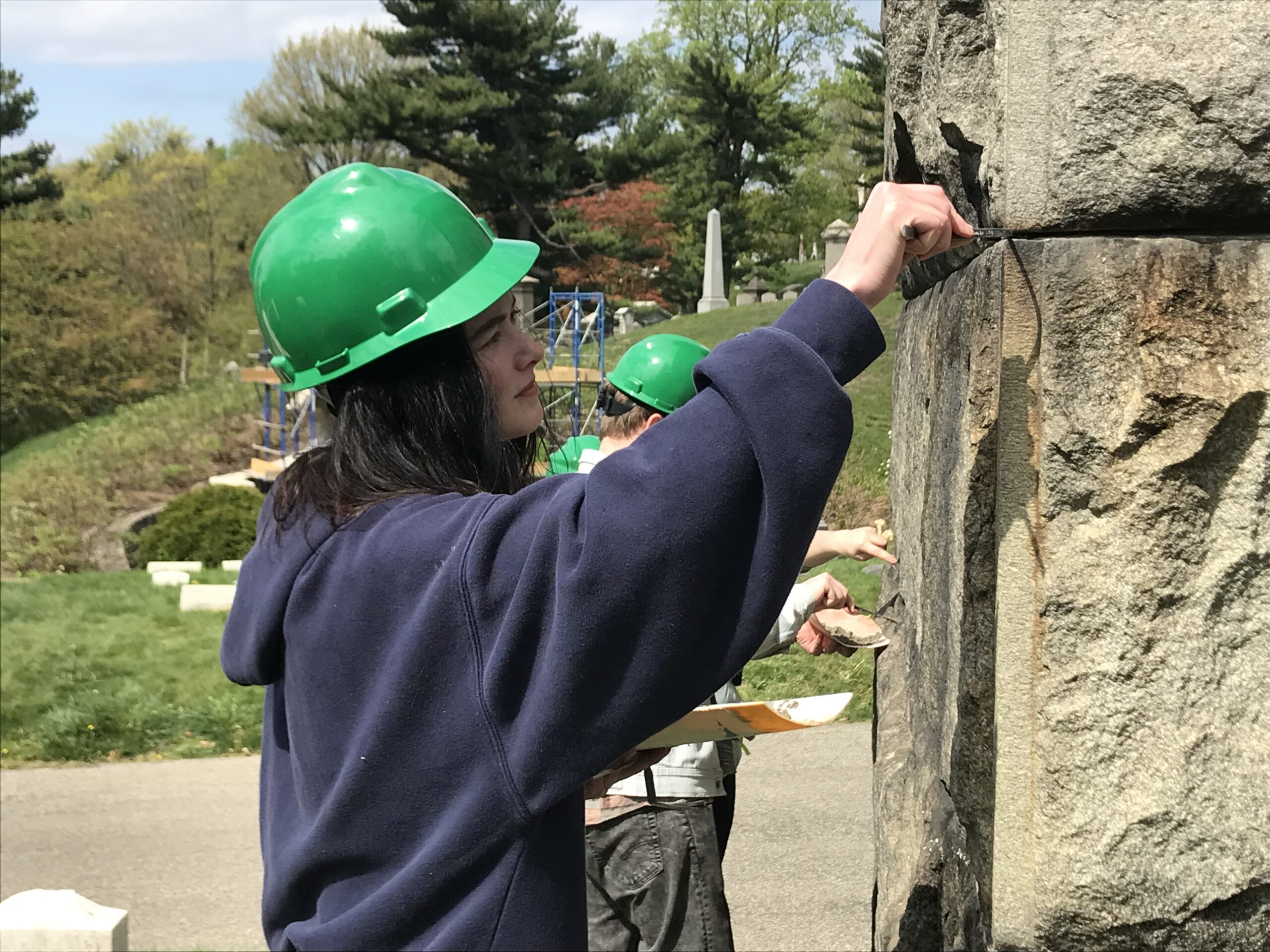
The 44-credit M.S. in Historic Preservation offers a focus different from that of other programs, concentrating on heritage, public policy, and building an in-depth understanding of the issues preservationists so often grapple with beyond the physical preservation and restoration of important structures. We encourage students to understand preservation policies and methods as part of a broader historical and social context while providing the range of skills that practitioners need in today's professional environment.
Examples of our core courses beyond the basics include Concepts of Heritage, Adaptive Re-use, Architecture and Urban Form, and the Preservation Colloquium.
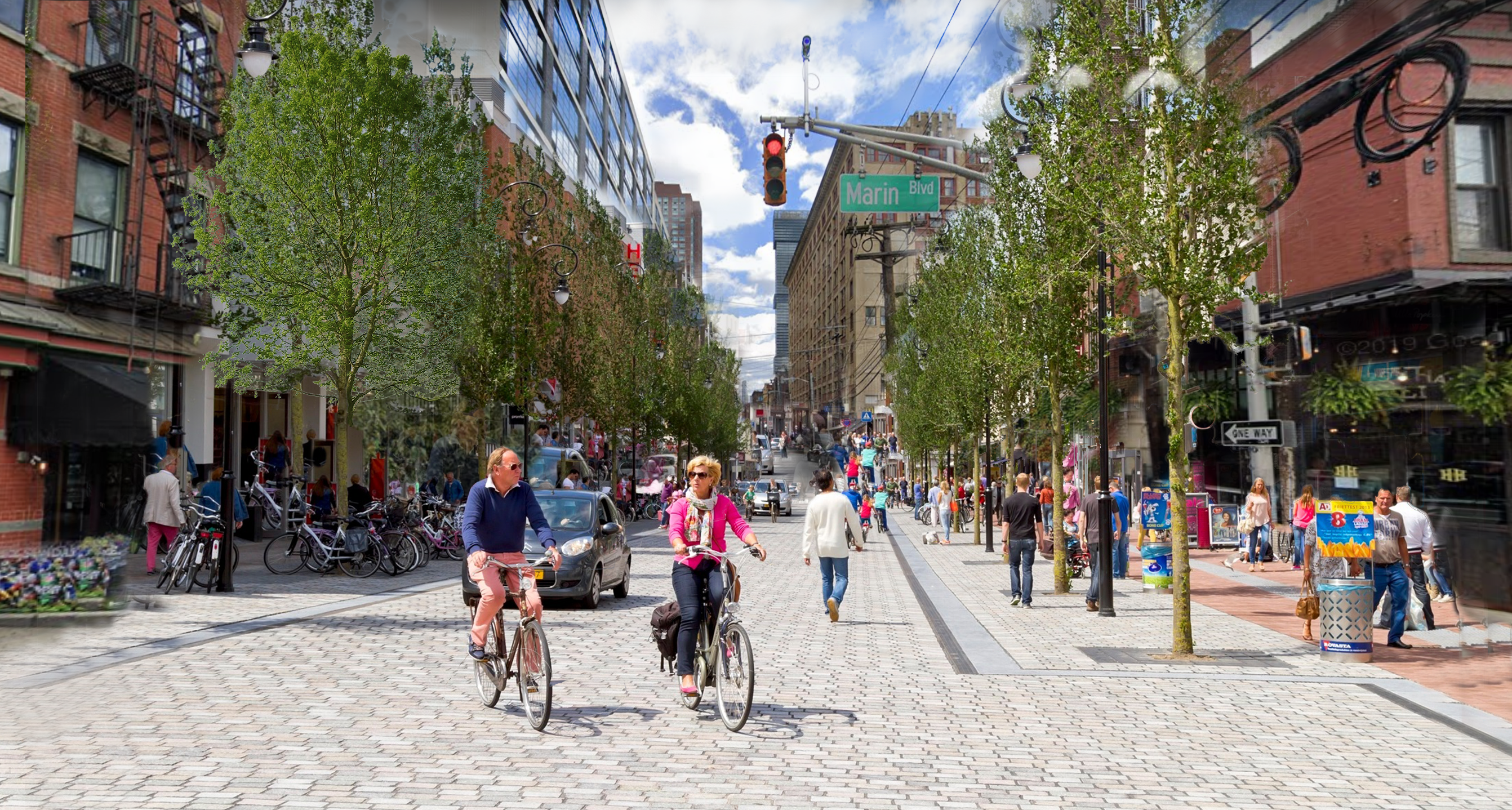
The program offers electives in areas such as Main Street Revitalization, Green Buildings, and Public History as well as the resources of both the School of Architecture and the School of Art and Design.
We also seek to foster a critical approach to the field. Historic Preservation is in the midst of many changes as the profession grapples with the integration of environmental, sustainability, and livability issues. Our urban focus, using New York City as a laboratory, allows our students to interact not just with preservation professionals but also with the residents and community groups of historic neighborhoods, experiencing as students the world they will work in.
The faculty is drawn from preservation professionals who bring the real world of preservation practice-that of the architect, the designer, the historian, of the private sector, the government, and the not-for-profit into the classroom. Students intern at the New York City Landmarks Preservation Commission, at preservation organizations, and in architects' offices, working at the cutting edge of our field.
The Historic Preservation program resides within the Graduate Center for Planning and the Environment in the School of Architecture.
GCPE's mission is to create and sustain a learning community of students, faculty and alumni that is characterized by innovative professional practice and that emphasizes planning and preservation approaches rooted in the principles of sustainability, equity and public participation.
For information contact program coordinator Eric Allison at eallison@pratt.edu or at 212.647.7532
The mission of the 40-credit graduate program in Environmental Systems Management is to join technical expertise to policy analysis based on a commitment to environmental and social justice. It provides students with the skills needed to build and preserve sustainable urban communities, and prepares them to take on a range of roles as planners, architects, engineers, developers, researchers and advocates, collaborating with environmental scientists, policymakers and communities.
Like the City and Regional Planning program, Environmental Systems Management is an evening program with a practical focus, and its faculty includes well-known environmental professionals from developer Carlton Brown to energy policy expert Steven Hammer to advocate and innovator Ronald Shiffman. For more information on the campus-wide effort to
reduce the ecological footprint of the Institute and expose students to the principles of ecological design, see www.sustainablepratt.edu.
We encourage applications to the Environmental Systems Management Program for fall of 2008. Applications for spring 2008 will be reviewed on a rolling basis.
The 60-credit MS in City and Regional Planning, part of the School of Architecture, includes four concentrations:
The program is practically and professionally oriented. Pratt faculty and students are known for their innovative work in these four areas. This work is often undertaken on behalf of community-based and public sector clients, and it is done in a spirit of commitment to environmental sustainability, social equity and public participation in urban governance.
Taught by accomplished and active professionals, the program offers planners-in-training concrete skills that help them to influence and guide the many forces – ecological, economic, political and cultural – shaping cities and neighborhoods. Students become fluent in applying tools like land use regulation, community mapping, environmental impact analysis, advocacy, strategic planning and real estate development in real situations with real clients. Seminars courses, studios, and a capstone thesis project take students into the field to work with municipal agencies and community-based organizations on a variety of projects. The MCRP program is also linked to the nationally famous Pratt Center for Community Development (www.prattcenter.net), affording students the chance to participate in hands-on planning, design and advocacy work in New York City’s extraordinary neighborhoods.
As an evening program, Pratt is convenient for students who wish to work full- or part-time while attending school. Holding courses in the evening also enables the program to attract faculty with active professional practices – faculty who frequently hire students they have taught. New York City provides a fascinating backdrop for students interested in urbanism, public space and the built environment.
The practice of city and regional planning engages the urban environment at many levels. The physical city – its built form and character – is deeply influenced by zoning and building codes, by site design, by transportation and watershed planning. Planners also help shape the economy of the city – what industries and labor pool it attracts and nurtures, what productive capacities it exploits, how it responds to rapid economic globalization and increasing economic inequality. By shaping development choices in the private market, city planners help define public spaces and shape people's awareness of and response to the natural ecosystems that persist in highly urbanized settings. Through their influence on municipal and regional housing policy, they shape patterns of residential and social integration; through their influence on intergovernmental relations at a regional level they can reduce regional fragmentation and build cooperative structures for managing phenomena like water and air quality that transcend city boundaries.
Pratt's 60-credit masters program in city and regional planning is practically and professionally oriented, engaging the physical city, the urban economy, the natural environment and urban culture. Seminar courses, studios, and a capstone thesis project take students into the field to work with municipal agencies and community-based organizations on a variety of projects. The program's mission is to provide an education rooted in sustainability, equity, and public participation, and these principles infuse coursework in all four of our academic concentrations. Community development concentrators work closely with the Pratt Center, the first university-based advocacy planning and design center in the United States. Environmental planning concentrators have access to a variety of courses on innovative environmental analysis techniques, environmental management strategies, and green buildings/green infrastructure. The physical planning concentration offers courses in land use planning, site design, and open space and transportation planning. The historic preservation concentration, linked to a unique masters program focused on cultural and heritage conservation, offers a certificate accredited by the National Council on Preservation Education.
Pratt's 40-credit program in environmental systems management is an intense introduction to the environmental aspects of planning. Students take courses in environmental science, history and ethics, environmental economics, environmental analysis, and policy implementation, learning from leading practitioners in water, waste and energy management and in green building and environmental remediation. A studio project serves as a capstone. The program is closely integrated with the masters program in City and Regional Planning so that students are also exposed to land use, transportation and economic development strategies in urban areas.
Both the city planning and environmental planning programs cross-pollinate with the School of Architecture's masters programs in Urban Design and Historic Preservation.
industrial ecology
housing policy, real estate development, housing studio
transportation planning and policy
land use regulation, comprehensive land use planning, planning methods
history and theory of city planning, world architecture and urban history
GIS
studios
advocacy planning, sustainable development planning, environmental planning studio
Metropolitan Regional Planning, Watershed Planning
housing policy, real estate development, housing studio
neighborhood studio, summer traveling studio
public finance and economics, economic and community development, planning history and theory
planning methods, fundamentals of planning, economic and community development
preservation studio
The Pratt Center for Community Development works for a more just, equitable, and sustainable city for all New Yorkers, by empowering communities to plan for and realize their futures.
As part of Pratt Institute, we leverage professional skills - especially planning, architecture and public policy - to support community-based organizations in their efforts to improve neighborhood quality of life, attack the causes of poverty and inequality, and advance sustainable development.
The Center was founded at the birth of the community development movement, as the first university-based advocacy planning and design center in the U.S. For over 40 years, we have helped community groups to revitalize their neighborhoods, create and preserve affordable housing, build childcare and community centers, and improve their environment. We have trained hundreds of community leaders and organizations to implement effective community development strategies, and supported a wide array of successful public policy and community planning efforts.
In pursuit of our mission, the Pratt Center works to advance the following strategic initiatives:
Helping Communities Build
We help community-based organizations representing low-income communities build physical development projects that address unmet needs and leverage innovation and change.
Planning for Equity
We work to ensure that low-income communities get a fair share of the benefits of physical and economic development, and are not burdened with a disproportionate share of the costs.
Promoting Sustainability and Environmental Justice
We support and advance grassroots organizations and movements that push the New York City region toward environmental sustainability and equity.
60 total credits required
40 total credits required
44 total credits required
The mission of the Graduate Center for Planning and the Environment (GCPE) is to provide a professionally
oriented education to a diverse student body with a focus on participatory planning and sustainable development. The programs offered by the GCPE equip students with the theory, technical skills, and critical thinking that enable them to foster social, economic, and environmental justice in urban neighborhoods and metropolitan regions.
The Graduate Center for Planning and the Environment (GCPE) is a leading international center for the study of community-based and participatory planning. It offers three degree Programs:
I. The 60-credit Master of Science in City and Regional Planning, which includes four concentrations:
• Community Development
• Preservation Planning
• Environmental Planning
• Physical Planning
II. The 40-credit Master of Science in Urban Environmental Systems Management
III. The 44-credit Master of Science in Historic Preservation
In addition, the GCPE offers a Joint Degree Program in Planning and Law in conjunction with Brooklyn Law School. A Joint Degree Program in Architecture and Planning to replace the Combined Degree Program is currently being developed.
In keeping with its flexible, interdisciplinary approach, the GCPE welcomes applicants with undergraduate degrees in a wide range of academic disciplines. Creative and intellectual capacities and a depth of experience are considered strong evidence of the student’s ability to participate in the GCPE’s graduate programs.
Courses are offered primarily in the evening and on weekends at Pratt’s Brooklyn and Manhattan campuses, giving students maximum flexibility to work full-time in a variety of public, private, or nonprofit agencies. The structure of the program makes it possible to draw faculty from a wide pool of practicing professionals throughout the New York area, contributing to the GCPE’s strong emphasis on work-related skills.
Pratt graduates play leading roles in a broad spectrum of jobs in the public, private and non-profit sectors.
Edward Perry Winston (R.A.) is architectural director at the Pratt Center for Community Development. He has a B.A. from Harvard University ('67) and an M.Arch. from Rice University ('78). He has been active in architecture since 1978, and since 1990 as Senior Architect at the Pratt Center, where he has worked on the rehabilitation of more than 130 residential buildings in New York City and in upstate New York, school and day care projects, open space design, and on an urban agriculture project in East New York, Brooklyn. He has conducted research projects on apartment usage for the New York City Housing Authority, computerized architectural offices, and on sustainable development practices in an indigenous village in Ecuador. He made an award-winning documentary film, "Bordersville" about a Houston, TX neighborhood's efforts to obtain running water, and has published several book reviews in Design Book Review and JAE. Within the GCPE, Mr. Winston teaches a neighborhood studio focused on affordable housing and runs an annual “traveling studio” which has given students the opportunity to work in the former East Germany, Johannesburg, South Africa and elsewhere.
Joe Weisbord is a senior policy analyst at FannieMae (one of the largest businesses in the United States), where he directs an initiative to create supportive housing and end chronic homelessness. Joe has over 20 years of professional experience in community development, residential real estate development and public policy. Joe worked with community based development organizations for 7 years as a member of the PICCED staff. He also has extensive experience in nonprofit management having spent 5 years as vice president for management and planning at Corporation for Supportive Housing. Prior to FannieMae, he was staff director for Housing First!, a coalition of community, business, labor, civic and religious organizations committed to educating the public and promoting solutions to New York City's affordable housing crisis. Housing First! played a key role in facilitating and shaping Mayor Michael Bloomberg's “New Marketplace” housing initiative.
Ira Stern is an environmental planner specializing in watershed planning and protection, open space preservation and large scale regional planning. He has experience working with local communities in urban, suburban, and rural areas and has been involved as a professional planner in government, for non-profit organizations, in a private development firm, and as a consultant. Currently, he is Deputy Director of the Bureau of Water Supply for the New York City Department of Environmental Protection. In that role, he manages the Division of Watershed Lands and Community Planning, a staff of planners, geologists, foresters, real estate professionals, GIS technicians, and land stewards. This Division is responsible for the voluntary watershed protection programs designed to protect New York City's water supply including the City's Land Acquisition Program - one of the largest efforts of its kind in the world. Managing more than 120,000 acres of water supply land owned by the City, these lands are used for appropriate recreation. He was also a key member of the principal negotiating team for New York City that drafted and secured the historic 1997 NYC Watershed Memorandum of Agreement that is the basis for the City's effort to protect the water supply. “Teaching Regional Planning at Pratt is very fulfilling - being a part of a great program gives me hope that planning on a regional, environmental scale will become even more commonplace and meaningful”.
John Shapiro is a long-standing member of the Pratt planning family: he attended Pratt in the 1970s, and has been teaching intermitently since the 1980s. John is a principal of Phillips Preiss Shapiro Associates -- one of the Tri-State's leading planning firms. His award-winning work includes the Stamford growth management plan, the Chinatown economic development strategy, the Hoboken master plan, and the Comprehensive Community Revitalization Program in the South Bronx -- winner of the nation's top planning award in 1996. John is also active in civic affairs, including a prior stint as the president of the Metro-Chapter of the American Planning Association -- during which time the Chapter received a special award from national APA. John’s studios involve teams advocating different types of "clients" -- local residents, private developers, local businesses, preservation or other civic groups. Both then culminate in a charrette in which the best ideas of all of the teams are synthesized. Students are encouraged to stretch their creativity, with past plans ranging from the Housing Authority tenants' plan for 300 vacant acres of Queens beachfront, to a Hip Hop strategy for downtown Brooklyn.
Ron Shiffman, FAICP, is the former director of the Pratt Center for Community Development, which he co-founded in 1964. A city planner with nearly four decades of experience, he has received numerous awards from community based organizations, national advocacy groups including local and national awards from ADPSR [Architects, Designers and Planners for Social Responsibility], the local chapters of the AIA and AICP, the Municipal Art Society and he has authored a number of articles on urban planning, social justice and community economic development. Shiffman is a key member of the Pratt team assisting ACORN Housing Corporation in New Orleans under a grant from the Department of Housing and Urban Development. His work was featured most recently in the 2006 Architcture Biennale in Venice.
Steven Romalewski’s 20+ year career has centered around accessing, understanding, analyzing, and publicizing data for public policy development, community planning, and research purposes. Most recently he joined the Center for Urban Research at The Graduate Center / CUNY to establish the CUNY Mapping Service, responsible in part for coordinating the Open Accessible Space Information System (OASIS) partnership and providing geographic information systems (GIS) to a wide array of organizations. Prior to joining CUNY and the faculty at Pratt, Romalewski had directed and co-founded the Community Mapping Assistance Project (CMAP) at NYPIRG. During its 8-year history, CMAP enabled dozens of nonprofits and others to leverage the power of GIS in their work. He holds a Masters in Urban Planning from Columbia University in the City of New York and a B.A. in Economics from the State University of New York at Stony Brook.
A recent transplant to New York City, Jonathan brings over 20 years of professional and academic experience in design, architecture and planning. His experiences range from comprehensive planning and urban design to architecture and furniture design, and he has worked professionally in Arizona, Pennsylvania, Upstate New York, and, most recently, New York City. After working professionally in architecture in Phoenix, Arizona, Jonathan attended graduate school at Cornell University, where his academic studies focused on land use, urban design and housing affordability. Jonathan is currently an associate with Saccardi and Schiff, Inc., one of New York metro’s leading planning and development consults, where he specializes in physical and comprehensive planning, impact analysis, and urban design.
Reflecting his professional and academic background, Jonathan’s courses seek to balance theory and practice by conveying subject knowledge and professional intelligence to enable the student to effectively and ethically navigate the world of professional practice.
Laura Wolf-Powers has a bachelors degree in American literature from Yale University, a masters in public affairs from Princeton University and a PhD in Urban Planning and Policy from Rutgers University. Her research interests include urban economic development, labor markets and workforce development, and the history and political economy of planning; she has published in or has articles forthcoming in Environment and Planning A, Revue Urbanisme and the Journal of Planning Education and Research. Laura recently completed a faculty fellowship with the Pratt Center for Community Development, during which she authored the report “Building in Good Jobs: Linking Economic and Workforce Development with Real Estate-Led Economic Development.” With her colleague William Menking, she is working on City Legacies, a book project that traces the history and importance of the Pratt Planning Papers and STREET Magazine. Laura recently joined the editorial board of PLACES, a Forum of Design for the Public Realm (see link below) and writes frequently for Architect’s Newspaper.
Ayse Yonder has a bachelors degree in architecture from Istanbul Technical University, a masters in planning from the University of Pennsylvania and a PhD in planning from the University of California at Berkeley. Her research interests include community development, disaster mitigation, gender issues, and informal land and housing markets in developing countries. Ayse recently published with S. Akcar and P. Gophalan) Grassroots Women's Participation in Disaster Relief and Recovery, a special issue of SEEDS, the journal of Population Council (see link below). She has the Fall 2005 issue of Progressive Planning Magazine on arts, culture and community development, and is working on a paper that looks at different partnership models between major arts institutions and community groups. She is working on a research project that explores the distributional impacts of the disaster mitigation projects on low income settlements in Istanbul, Turkey. She completed a handbook and an exhibition for the World Urban Forum in Vancouver in June 2006 that highlighted the importance of securing public spaces for grassroots women's organizing using examples from different parts of the world.
Stefanie Feldman is the Director of Sustainability for the Industrial& Technology Assistance Corporation (ITAC), a NYC economic development nonprofit. ITAC's mission is helping manufacturing and technology firms in NYC in order to create and retain quality jobs for NYers. In this role, she works with firms to implement environmental products and processes. She also was Director of NY Wa$teMatch, an online Materials Exchange for two years. Prior to working at ITAC, Stefanie provided ISO 14001 consulting services to a wide range of industrial firms and benchmarking studies on corporate environmental practices. She has a Master's Degree in Environmental Policy Studies from the NJ Institute of Technology and a BS in Literature & Rhetoric from Binghamton University.
Henry Gifford is director of mechanical system design at Architecture and Energy Limited, a Manhattan firm that designs buildings that are very energy efficient, yet cost no extra to build. He is a longtime practitioner in the Building Science and energy efficiency fields, specializing in multifamily buildings, and thinks one good measurement is worth a thousand expert opinions.
Moshe Adler is an economic consultant, specializing in the analysis of working conditions in different industries and of how these conditions are affected by different government policies. In addition, he has conducted studies about privatization, done cost benefit analyses of urban renewal projects, and about the effect of taxes on employment and the causes of poverty in NYC. His articles appear in both academic journals and newspapers and his commentaries have been broadcast on radio and television. He is
currently writing a book about the role of public policy in the economy.
Damon Chaky is an assistant professor in the Department of Math and Science at Pratt. He received a Ph.D. in Geology (Geochemistry concentration from Rensselaer Polytechnic Institute in 2003, after earning a M.S. in Geology from Mississippi State University and a B.S. in Environmental Engineering from RPI. Dr. Chaky's research focuses on the sources, transport and fate of pollutants in the urban environment, particularly that of New York City. He teaches the undergraduate course "Ecology for Architects" as well as the "Toxics and Hazards" short course for the GCPE. Dr. Chaky is also active in Sustainable Pratt, a group of students, faculty and staff that works to position Pratt as a leader in sustainable, ecologically aware design and architecture.
Vicki Weiner has fifteen years of experience in historic preservation in New York City, and has been teaching at Pratt since 2001. She has served as Executive Director of two New York City non-profit, preservation organizations — the Historic Districts Council and the Greenwich Village Society for Historic Preservation – where she worked with communities to create City, State and Nationally designated historic districts, developed preservation strategies and public policy initiatives, and produced publications, educational programs and conferences.
Vicki first came to Pratt Center for Community Development as Preservation Specialist to develop and lead projects that explore the connection between preserving culturally important places and creating more equitable communities. She completed a year-long study of the Fulton Street Mall that analyzed the Mall's history and importance to various stakeholders, and made recommendations for using innovative historic preservation strategies to improve the Mall for users and non-users alike. Phase 2 of the work on Fulton Street Mall has just commenced, and will result in the creation of preservation-oriented development plans for several sites along Fulton Street. Recently promoted to Director of Planning and Preservation at Pratt Center, Vicki now coordinates the team of planners who lead the Center’s community planning efforts, and also continues her work combining preservation and planning tools to benefit communities such as Cypress Hills and the Lower East Side.
As an Adjunct Associate Professor at Pratt, Vicki teaches in the Historic Preservation graduate program and serves on its Curriculum Committee. Her courses include Documentation and Interpretation of the Built Environment and the Historic Preservation Studio.
Vicki has a Master of Science degree in Historic Preservation from Columbia University, and a Bachelor of Art degree from Drew University.
Chairperson and Assistant Professor
Assistant to the Chairperson
Graduate Assistant
Floyd Lapp has been a practitioner at virtually every level — neighborhood, municipality, county, regional, metropolitan and state. Most recently he served as transportation director (1991-2000) for the New York City Department of City Planning. He served as NYMetro APA Chapter President twice, was a member of the national APA board and AICP Commission which he also chaired twice. Dr. Lapp. Effective September 5th, 2006, Lapp became executive director of the South Western Regional Planning Agency in Stamford, Connecticut. SWRPA is in charge of regional planning and transportation in the area that serves Greenwich, Stamford, Norwalk, New Canaan, Darien, Wilton, Weston and Westport.
Students of the Pratt Institute will work in professions that shape the built environment, influence material culture, and affect everyday life for millions of people. In the face of growing awareness about issues such as air and water pollution, health risks from chemicals, fossil fuel depletion and climate change, innovations are underway in a burgeoning revolution in design. These innovations include carbon-neutral buildings, landscapes that promote water conservation and stormwater management, design for recycling, products with recycled content, and fabrication and construction processes that minimize waste and energy consumption. Graduates of art, design and architecture programs should be exposed to the practices associated with this transformation.
Curriculum & Teaching
-Facilitate communication among faculty and students interested in sustainability issues.
-Develop avenues for cross-departmental interaction.
-Through a website and accessible databases, provide the Pratt community and others faculty & students with information about curricular and operations-related initiatives across the Pratt campus and on other campuses that relate to the goal of reducing humans’ ecological footprint.
-Integrate sustainability principles into existing courses and curricula and encourage new courses that further the organization’s mission.
-Identify and pursue funding opportunities for interdisciplinary and collaborative projects.
Campus
-Generate awareness of sustainability issues among faculty, students and staff.
-Create and publicize public events on campus that will provide information and spark enthusiasm concerning sustainable design and planning.
-Identify and publicize sustainable initiatives currently taking place in campus operations and facilities and encourage the incorporation of additional sustainable practices.
-Facilitate collaboration with community organizations.
Sustainable Pratt is a group of faculty, administrators, students and staff of Pratt Institute from a variety of disciplines including art, design, architecture, planning, and science who have been meeting monthly since October 2005. Sustainable Pratt is dedicated to identifying, interpreting, inspiring, incorporating and instituting ecologically responsible practices into curricula, operations and programs at Pratt Institute. The group meets monthly – in 2006-07, on the first Wednesday of each month in the small faculty dining room in North Hall. The 2006-2007 coordinator is Eva Hanhardt, an adjunct faculty member in the Graduate Center for Planning and the Environment in the School of Architecture and the coordinator of the Environmental Systems Management Program. Sustainable Pratt has been supported through the Faculty Development Fund and the Academic Senate.
William Menking, is the founder and editor of The Architect’s Newspapers and is Professor, School of Architecture, Pratt Institute, Brooklyn and on the International Advisory Board of the Architectural Humanities Research Association. He has organized, curated and created catalogues for exhibitions on architecture for venues in the U.S. and Europe including; Archigram: Experimental Architecture 1961-1974, Superstudio Life Without Object’s and FRAC Orleans: Experimental Architecture 1964-2000. He has co-authored an essay Total Living Unit: Joe Colombo and Architecture for the exhibition catalogue on Colombo for the Milan Triennale and organized a symposium on the architecture and video of Ant Farm. I am currently preparing an exhibition The Art and Architecture of the Counter Culture on the utopian community experiments of the 1960’s and 1970’s with Professor Alessandra Ponte with whom he delivered a public lecture on the subject at The National Clubs as part of their “Engaging the City’ series.
He curated and organized exhibition Forever Modern: Fifty Years of Record Houses and Shrinking Cities at The Pratt Manhattan gallery. The Archigram Family Tree that created for the entrance wall of the London Design Museum’s Archigram exhibition appeared in Yale Perspecta 37 Famous in 2005. His essay The Installation Architecture of Ant Farm appeared in Yale’s Constructs journal in 2006. He is currently preparing an exhibition Counter Cultures on the utopian community experiments of the 1960’s, editing a book on the British American architect Michael Webb, preparing a new published version of the original Archigrams and editing papers from the symposium City Legacies for an anthology of the journal The Pratt Planning Papers (later The Street and then City Limits) in 2006. He organized and directed the ‘New Practices’ series of lectures and exhibition at the AIA’s New York Center for Architecture.
Born in Paramaribo, Suriname 1939
Educated in Suriname, Holland,
Switzerland and Germany
Master of Fine Arts
Art Academy of Hamburg 1964
The Artist
Roland Gebhardt is an internationally known sculptor whose work has been shown around the world and is in many prominent collections. He studied at the Art Academy of Hamburg where he earned a Master of Fine Arts. He also studied at the Kunstgewerbeschule in Zurich. He is perhaps best known for his monolithic sculptures which explore the concept of the linear void. Some of these explorations were executed as large scale environmental sculptures (such as those shown at Wave Hill and Storm King in New York). Other explorations utilized “host volumes” as diverse as natural boulders, and fruit and vegetables. The latter were the subject of a series of highly acclaimed 8 one-day exhibits at the Kunstmuseum, Duesseldorf in 1982.
The Designer
Respected for his versatility and originality as a designer and knowledge of the retail industry, especially market
positioning and visual communications, Mr. Gebhardt has designed and directed projects as a consultant for New York's top design firms and was the Designer Director for Robert P. Gersin Associates. His particular strengths are in the areas of space planning, retail environments, exhibits, signage, product development and packaging. Drawing on his talents as an artist, he has also developed a line of sculptural furniture. He holds several mechanical and design product patents.
The Civic Participant
Mr. Gebhardt is a participant in many community related activities, including the Hudson River Waterfront, Community Board 1, and is a member of the steering committees for the Civic Alliance and Rebuild Downtown Our Town (R.Dot)*.
He is a contributor to the R.Dot White Paper and Position Papers on Managed Streets, Arts and Culture, and Neighborhood and Housing.
Roland Gebhardt is a founder and board member of the Tribeca Organization. He is a Fellow of The Institute for Urban Design. Recently he was a panelist on NY1’s Roundtable of civic leaders involved in rebuilding Lower
Manhattan. Mr. Gebhardt was invited to deliver a paper on community revitalization in Halle, Germany and was a
panelist for the Cultur/Bloc workshop concerning citizen participation in the urban design process.
He was also a member of the delegation of participants in the rebuilding effort for Lower Manhattan that visited Berlin, Munich, Copenhagen, Bologna and Barcelona.
Transposing his experience as a designer, Mr. Gebhardt’s contribution to the Lower Manhattan planning process has proved unique and innovative. This is particularly the case with regard to making planning for the future of Lower Manhattan people-centric rather than based on site and/or existing conditions and expectations. Arguments for this approach are now widely recognized in the planning and architectural community.
* R.Dot is a post 9/11 coalition of Lower Manhattan residents, businesses, representatives from community and business associations, artists, professionals, designers, architects and planners. Respected by policy makers in the City Council, the Mayor’s office, as well as City and State agencies, many of R.Dot’s recommendations have been adapted into policy for the development of Lower Manhattan.
Exhibits (One Man Shows, selected):
1971 The Hudson River Museum, Yonkers, NY
1972 - 1973 Wave Hill, Center for Environmental Studies, New York, NY
1973 Gallery 84, Inc., New York, NY
1974 and 1977 Carlton Gallery, New York, NY
1978 Robert Freidus Gallery (Sculpture of the Roof),
New York, NY
1982 Kunstmuseum Duesseldorf, Germany
Exhibits (Group Shows, selected): 1972 Hudson River Museum, Yonkers, NY
1974 - 1975 Storm King Art Center, Mountainville, NY
1975 and 1978 Carlton Gallery, New York, NY
1978 P.S. 1 (Miniature Golf), Queens, NY
1978 - 1981 Wards Island, NY
1978 New York Institute of Technology, Old Westbury, NY
1979 The Aldrich Museum (the Minimal Tradition), Ridgefield, CT
1980 AREA Creedmore, Queens, NY
1982 Portico Gallery, Philadelphia, PA
Collectors (selected):
Museum of Modern Art, New York, NY; Storm King Art Center, Mountainville, NY; Neuberger Museum, State University of New York, Purchase, NY; Brandeis University, Waltham, MA; Kunstsammlung of the City of Ludwigshafen, Germany; Wave Hill, Center for Enviromental Studies, Bronx, NY; Epstain Collection, Washington, D.C.; Best Products Collection, Ashland, Virginia; MD. Davidson, New Rochelle, NY; E. Schawrtz, New York City; E. Gerber, Great Neck, NY; S. Spector, New York, NY; J. Revson, Mt.Kisco, NY; R.P. Gersin, New York, NY; C.A. Willers, New York, NY; H. Hussey, New York, NY; Rehmann, Ratingen, Germany; K. Tweedy-Holmes, New York, NY; R. Spalten, New York, NY; Prof. Terance Moran, New York NY; Tanabe Corp. Tokyo, Japan.
Clients/Projects (selected):
Corporate Identity:
Sears, Roebuck and Co. Chicago, IL
Tokyo Department Store (Eiko Ishioka Design), Japan
Tanabe Corporation, Tokyo, Japan
Santori Ltd., Tokyo, Japan (special projects)
Toshiba EMI (music) Tokyo, Japan
Traveler Corporation, Ltd. Tokyo Japan
PICK Inc., Wayne, NJ
Don Hill's, New York, NY
Earth'song Day (VPI) Tower Association, Seattle, WA.
CoStyle (Coland Corp) Tokyo, Japan
JCLL, New York, NY
Tribeca Organization, New York, NY
Store Identity/Interiors
Kirin Beer (Beer Market IDO, KONA), Tokyo, Japan
Mauve de Mau and Boutique Mauve, Tokyo, Japan
A+P Supermarket (Future Store) Montvale, NJ
Pasta Vera, Greenwich, CT
Traveler Ltd., Tokyo, Japan
Food Emporium, Patterson, NJ
ACLU National Headquarters, New York, NY
Comprehensive Development, Inc. New York, NY
Michelle Sinai (showroom and studio), New York, NY
Signage
Burger King, Miami, FL
Genuardi Supermarkets, Morristown, PA
Nassau Street Mall, New York, NY
LAOX, Tokyo, Japan
47th Street Photo, New York, NY
Eckerd's Drugstores, Miami, FL
UPS (United Parcel Service), Atlanta, GA
A+P Supermarkets, Montvale, NJ
Exhibition Design
USIA (Okinawa Worlds Fair) Japan
COMSAT (Louisville Worlds Fair)
Miles Pharmaceuticals (trade show booth)
Hudson River Museum (20th century sculpture) Yonkers, NY
NYC Host Committee for the UN (Monuments of symbols of New York) New York, NY
JCLL (exhibit environment graphics) New, York, NY
JFK International Airport Terminal 4 (photographic exhibition of immigration through New York’s ports)
Queens, NY
John L. Loeb Visitor Center at Touro Synagogue (Concept) Newport, RI
Brand Identity/Packaging
Government of Jamaica
Myojo Foods, Tokyo, Japan
Bencheley Tea, Lakewood, NJ
Mars Chocolates, Los Angeles, CA
Premium Coffee, Lakewood, NJ
Keio Department Stores (hosiery) Tokyo, Japan
Communicash/PICK (prepaid telephone cards), Wayne, NJ
RSL Com USA (prepaid telephone cards), New York, NY
Product Design
American Tourister, Providence, RI
Boston Metal Products, Boston, MA
Singer Co. (sewing machine), Stamford, CT
McCue Corp. Salem, MA
Hood Sail Maker, Marblehead, MA
A+P Supermarkets (checkout development), Montvale, NJ
Awards (selected)
Chain Store Age, Retail Store of the Year 1992
Advertising Club of New York:"Andy" Award of Merit, Association of Graphic Arts: Certificate of Achievement
American Corporate Identity: Award of Excellence
American Planning Association, Lawrence M. Orton Award for Leadership in City Planning (R.Dot)
Cleo for work on GE Answer Center
Films and Documentaries
“Roland Gebhardt, Sculptor” 16mm Documentary, 1971
“Linear Voids” Video, Arlene Krebs, 1979
Publications and Seminars (selected)
Roland Gebhardt is a recognized voice and advocate for Lower Manhattan. He has presented at press conferences for the introduction of R.Dot position papers. He was a representative for R.Dot’s position paper on Arts & Culture on the steps of City Hall.
Metropolis Magazine: "21 Great Design Ideas for
the 21st Century: Experience Mapping" by Susan Szenasy August 2002
NY1 News: "What Next Downtown" Roundtable discussion with John Schiumo, September 2003
Presenter, R.Dot, Culture/Block, Halle Neustadt, Germany, July 2003
Delegate, Civic Alliance to Rebuild Downtown New York, Europe, November 2002
Presenter, DGI (Digital Printing Institute) World Conference, St. Paul, MN. 2001
Contributor/designer, R.Dot Position Papers, 2002 – 2004
Editorial contributor to the following PIE (Tokyo) design-related books: T-Shirt Art; Brochures and Pamphlets; Calendar Art; Letterheads; Poster Graphics; Retail Graphics; Advertising Graphics.
Lecture series at the Pratt Institute, Brooklyn, NY, 2004 “Graphic Expression – a Language of its Own”
Contact Information
Roland Gebhardt
Roland Gebhardt Design
67 Vestry Street,
New York, NY 10013
Tel 212 925 4110
Fax 212 941 1719
roland@rolandgebhardtdesign.com
www.rolandgebhardtdesign.com
Rayna Huber Erlich has been working as an architect and urban designer in New York City since 1999 after graduating with a Bachelor of Architecture degree from Cornell University. She has worked on large and small-scale projects throughout the NY region including the Jazz@Lincoln Center Performance, Education and Broadcast Facility with Rafael Viñoly Architects, low-income residential renovations with the NYC Department of Housing, Preservation & Development, The Alternative Plan for Hudson Yards with Meta Brunzema Architects, and a Conceptual Master Plan for the Passaic River in Newark, NJ with Nautilus International Development Consulting. She is currently working with Beyer Blinder Belle Architects & Planners on the Princeton University Campus Framework Plan and a 43-acre mixed-use private waterfront development in New Jersey.
Dr. Stephen Hammer serves as President of Mesacosa LLC, an energy and environmental policy research and business development firm based in New York City. With 18 years of experience in the environmental field, Dr. Hammer has provided research, regulatory, technical and project management support to several start-up firms, President George H.W. Bush’s Commission on Environmental Quality, the U.S. Environmental Protection Agency, the U.S. National Park Service, the City of New York, leading international NGOs, and hundreds of small and medium-sized businesses around the U.S. and the Caribbean. Dr. Hammer’s research interests focus on urban energy planning, urban sustainability, renewable energy/clean energy, and waste policy issues. Dr. Hammer holds a PhD in Urban Planning from the London School of Economics, a MPP from Harvard University’s Kennedy School of Government, and a BS in Environmental Studies from the University of California at Davis.
Eva Hanhardt is a city and environmental planning consultant and has been teaching at Pratt since 1997. Since 2004 she has been the coordinator of the masters program in Environmental Systems Management. As a practicing planner, Eva has centered her professional activities around community-based and environmental planning. At the New York City Department of Environmental Protection, she directed a unit that assisted businesses in environmental compliance, pollution prevention and sustainable development practices. As director of the Greenpoint/Williamsburg Environmental Benefits Program, she supported the development of one of the earliest community GIS systems and worked closely with environmental justice organizations. She directed the Municipal Art Society’s Planning Center, whose mission is the support of community-based planning in low and moderate-income communities, and co-directed the ImagineNY project, which receive an award in 2002 from the American Planning Association for its facilitation of broad public participation in decisions relating to New York City’s recovery and rebuilding after the tragedy of 9/11. In addition, Eva worked for many years as a planner for the New York City Department of City Planning and was a principal author of numerous planning studies and zoning texts including the Comprehensive Waterfront Plan, NYC waterfront zoning text and the Hunters Point Mixed Use zoning text.
Brad Lander directs the Pratt Center for Community Development, which leverages professional skills in planning, architecture, and public policy to support community-based organizations in their efforts to improve neighborhood quality of life, attack the causes of poverty and inequality, and advance sustainable development. Before coming to Pratt in 2003, Brad served for a decade as executive director of the Fifth Avenue Committee, an award-winning community-based organization in Brooklyn that develops and manages affordable housing, creates economic opportunities, and organizes tenants and workers to fight for a better community. Brad's work has been recognized with awards from the Ford Foundation, Fannie Mae Foundation, New York Magazine, University of Chicago, and the NYC Metro Chapter of the American Planning Association. In addition to a masters in City and Regional Planning from Pratt, Brad holds a masters in Social Anthropology from the University College London, and a bachelor of arts from the University of Chicago.
Chris Benedict is a licensed architect in the states of New York, New Jersey and Washington, DC. She is a graduate of the Irwin S. Chanin School of Architecture at the Cooper Union in New York City. Benedict’s architectural firm provides services of private and not-for-profit clients for the construction of commercial and residential buildings. The firm specializes in projects that incorporate healthy, durable and energy-efficient building systems. Currently her office is responsible for over 30 million dollars worth of construction.