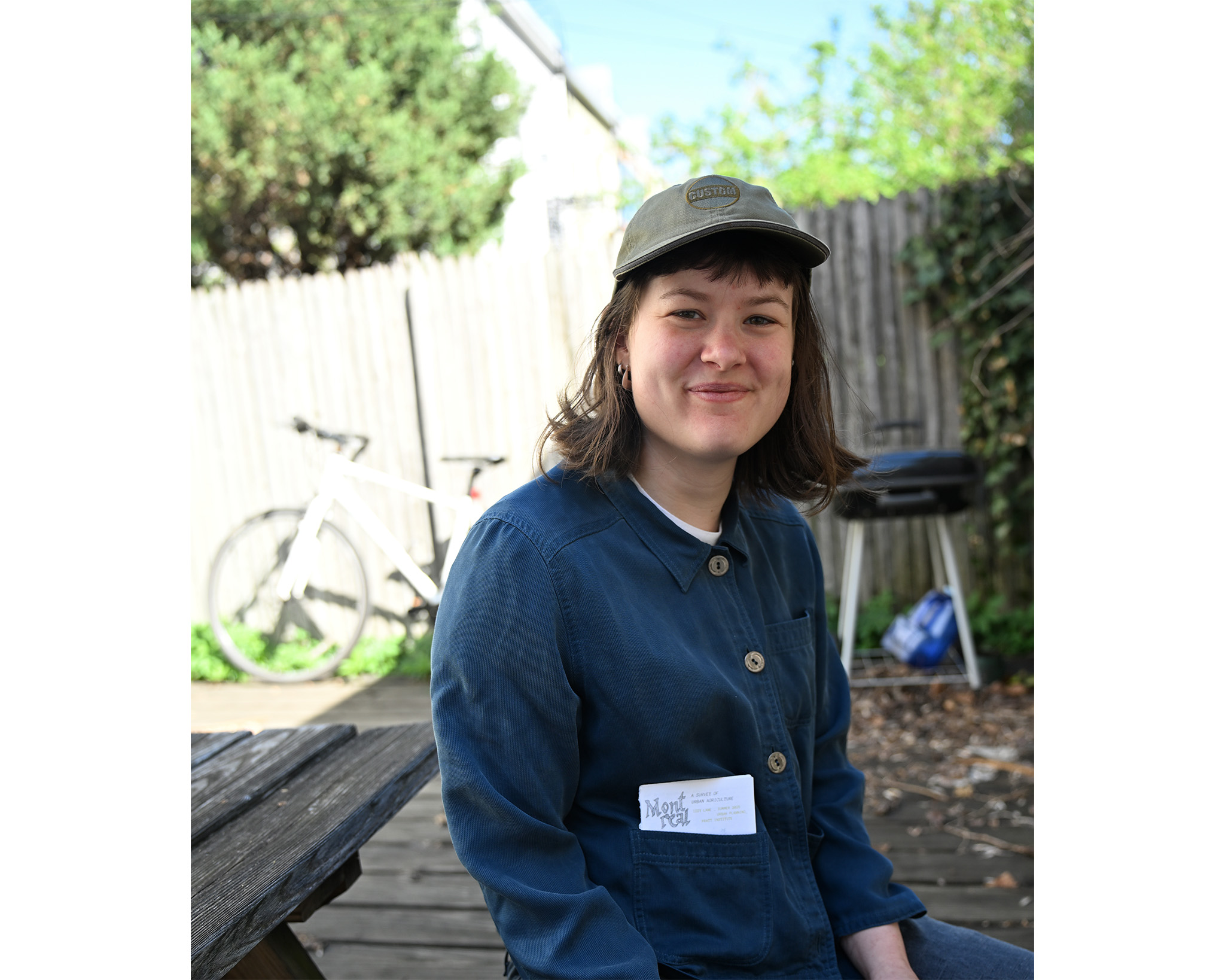
The recipient of the SoA’s 2025 Bill Menking Travel Award, Isabel “Izzy” Lane (M.S. Urban and Community Planning ’26) traveled to Montreal to research urban agricultural production and identify what New Yorkers can learn from our neighbors to the north about sustainable urban farming. The following is the zine she created to share her findings, entitled “Montreal: A Survey of Urban Agriculture.” You can view the zine below, and read some excerpts in this article. You can also download and print a copy — including folding instructions — here. (Editing and web production by SoA temporary content and archives manager Marina Fang.)

People have grown food in dense, urban spaces for as long as they have organized in cities. In the 1970s, when the Bronx was burning, residents reclaimed lots, hauled away junk, and repurposed the land into gardens. Community gardens endure in New York City today as meeting and teaching spaces, refuge areas for shade and rest, and sources of self-sufficiency and self-expression. What’s more, they feed people. Urban gardens are as wonderful as they are revolutionary.

In 2022, the City of New York recognized the legacies of urban agriculture by establishing an office dedicated to protecting and advancing gardens as a feature of New York’s food system and climate resiliency plan. This move converged formal policies with longstanding traditions. Then came the City of Yes, an aggressive housing plan that will review all city-owned land for development suitability. Land scarcity challenges us to interrogate our priorities, be creative, and refuse to settle for easy or binary answers. It may even call on us to grapple with what we mean by public space.

So, what can Montreal, a world capital in urban farming, teach us?

My study of Montreal was observational, drawing from individuals’ experiences, which might hint at or infer larger phenomena, but is ultimately an exchange of personal knowledge and perspectives.
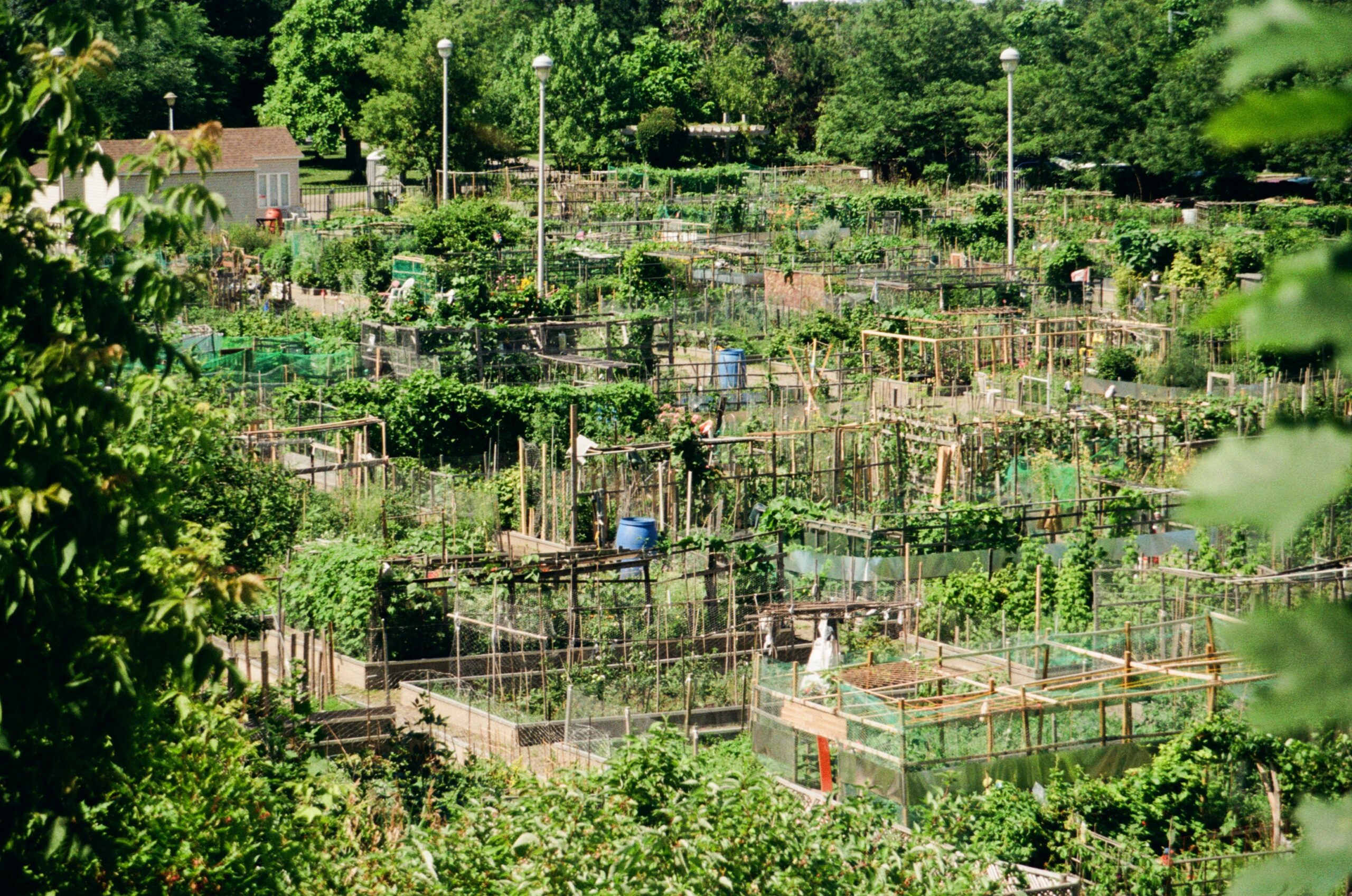
Aerial view of a community garden with numerous plots enclosed by wooden frames and fencing. The garden is lush with various plants, including leafy greens and climbing vegetables. There are also garden structures such as trellises and sheds scattered throughout the area. Surrounding trees provide greenery in the background, creating a vibrant atmosphere.
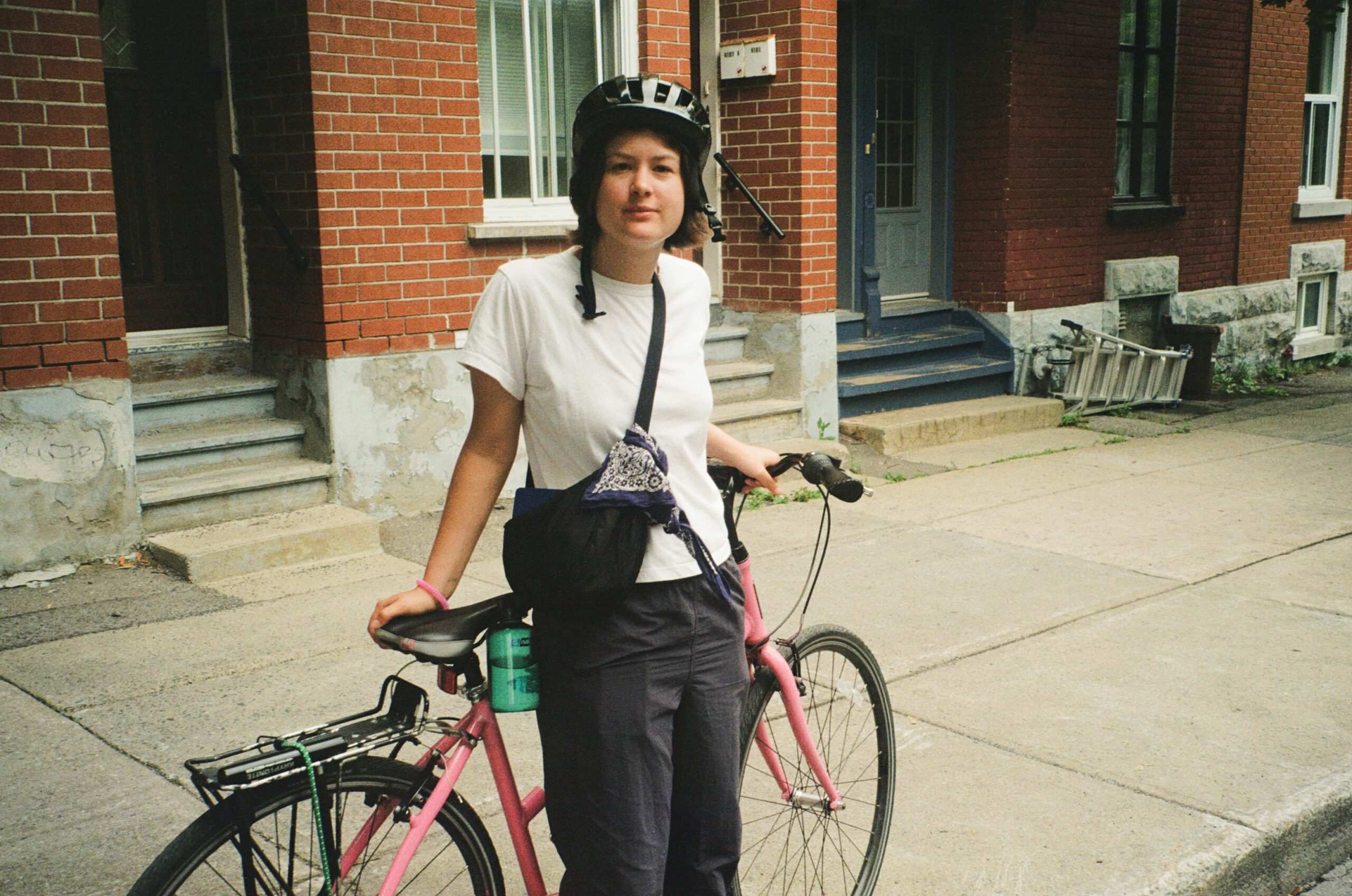
A person wearing a black helmet and a white t-shirt stands beside a pink bicycle on a sidewalk. They have a black bag slung across their shoulder and a green water bottle attached to the bike. The background features a red brick building with steps leading to a doorway.
Photo by Gracie Broughton
Business card design featuring a circular logo with the text "JR" and "LA BICYCLETTERRIE" above it. The card includes contact information: Instagram handle, phone number (514-843-6989), address (201 rue Rachel E, Montreal, QC, H2W 1E4), and website (labicycletteriejr.com). The overall background is black with white text and logo.

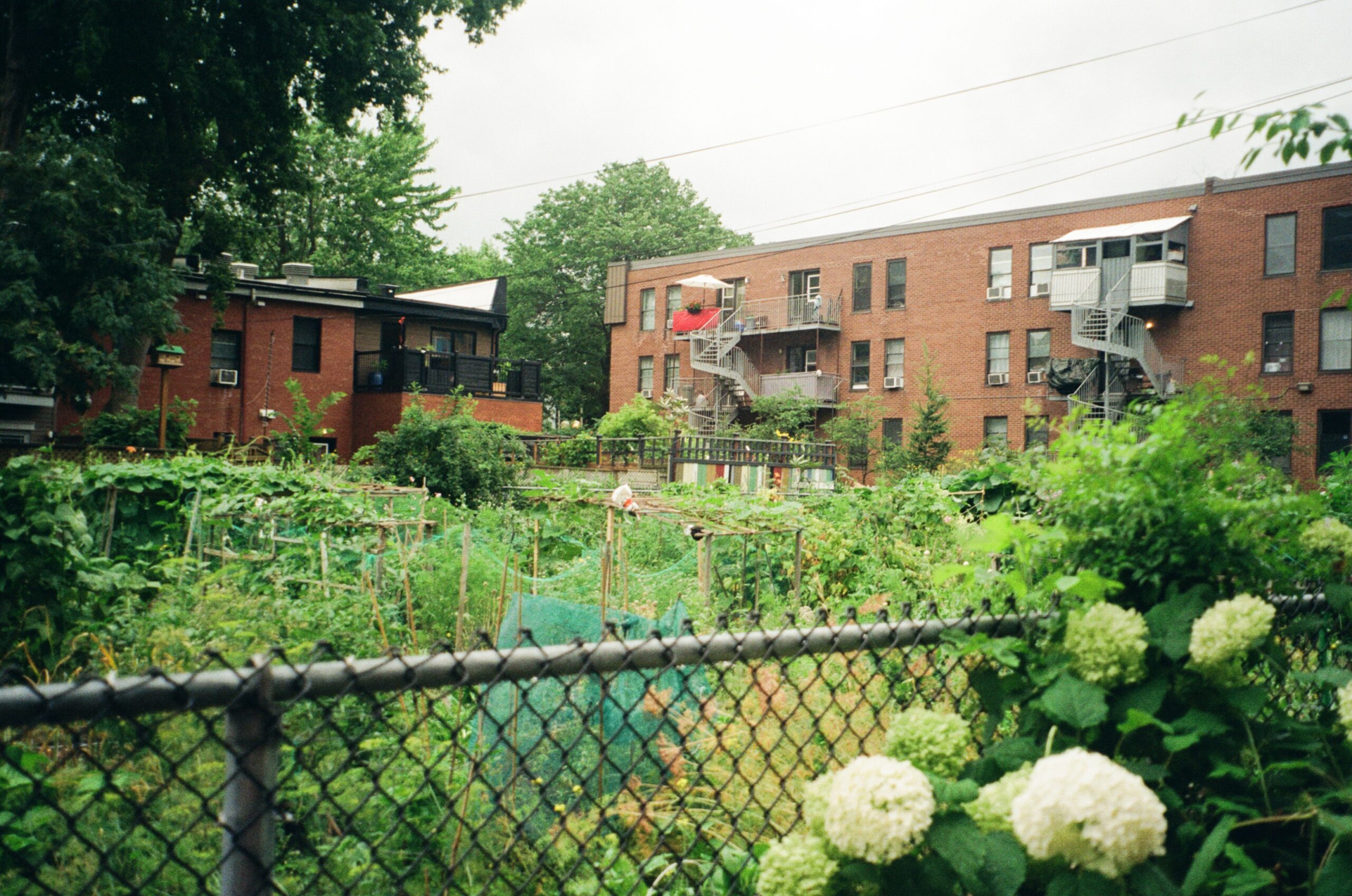
COMMUNITAIRE (community) gardens: land subdivided by plots, which are individually tended to — plot waitlists, run by the city, can be years long
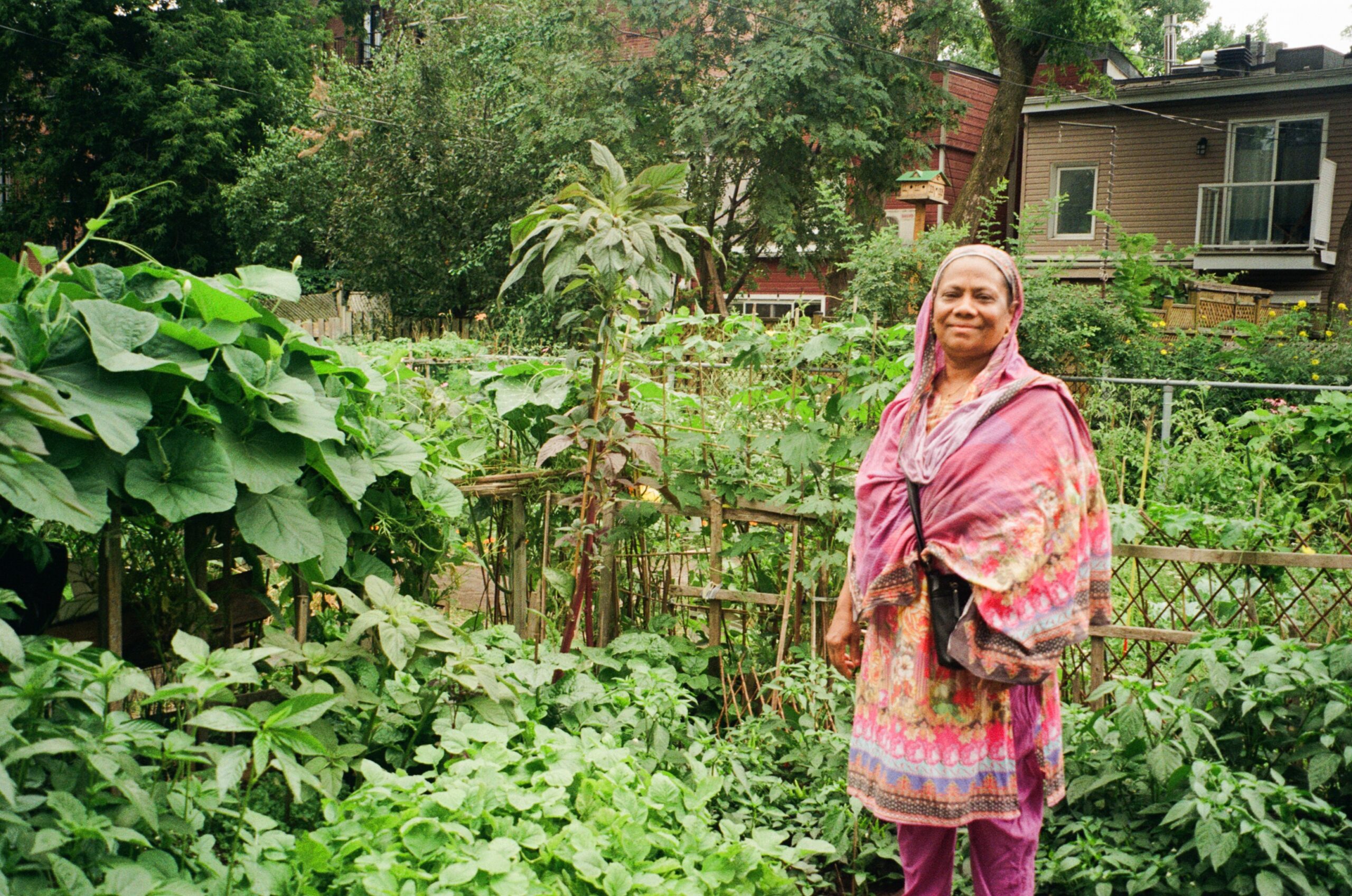
A woman stands happily in a lush, green garden filled with various plants and vegetables. She is wearing a colorful, patterned outfit and a scarf. The garden features tall leafy plants and a wooden trellis in the background, with a house visible behind the greenery. The atmosphere is vibrant and lively, indicating a flourishing garden.
A community garden is visible in the foreground, featuring various plants and rows of greenery. In the background, red brick apartment buildings rise, showcasing balconies and outdoor spaces. A chain-link fence borders the garden, with white flowering plants in the foreground. The sky is overcast, suggesting a cloudy day.
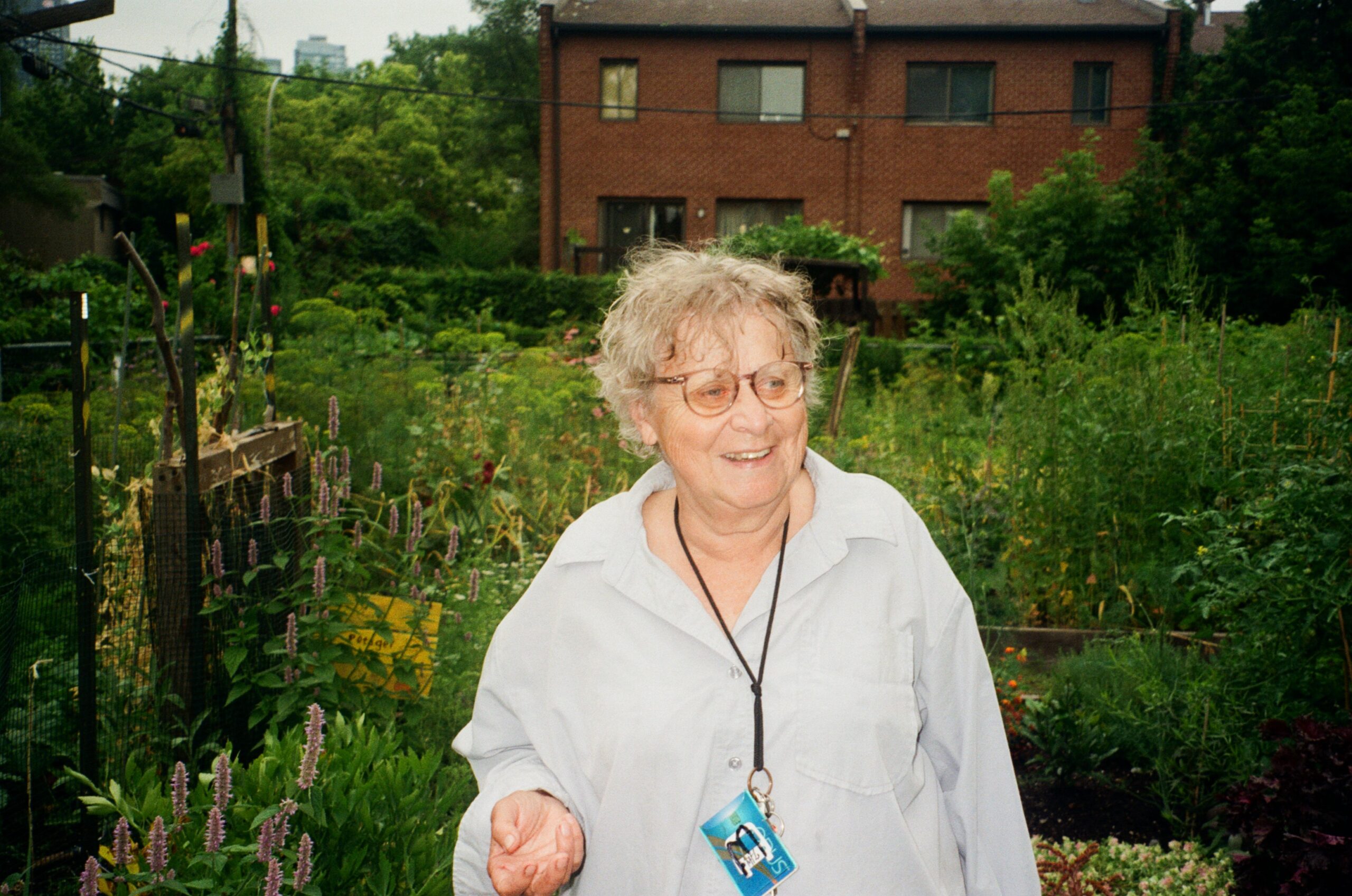
An elderly person with curly gray hair and glasses stands in a lush garden filled with various plants. They are wearing a light-colored button-up shirt and a lanyard with an ID attached. A brick building is visible in the background, partially obscured by greenery. The person has a friendly smile and appears to be enjoying the garden surroundings.

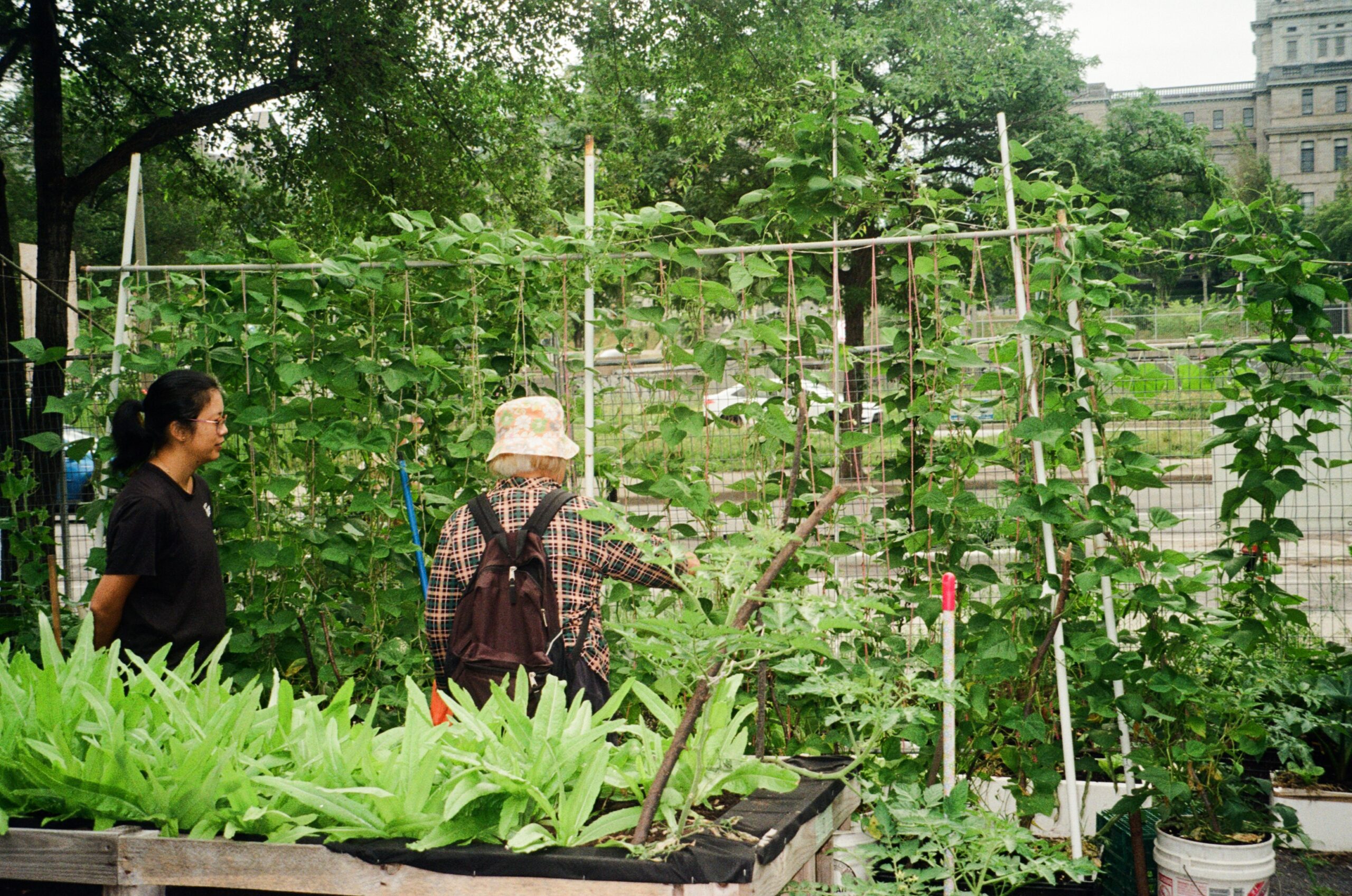
COLLECTIF (collective) gardens: no individual plots, and crop yield is subdivided and shared with members [newer model in Montreal; often an educational, community-building space]
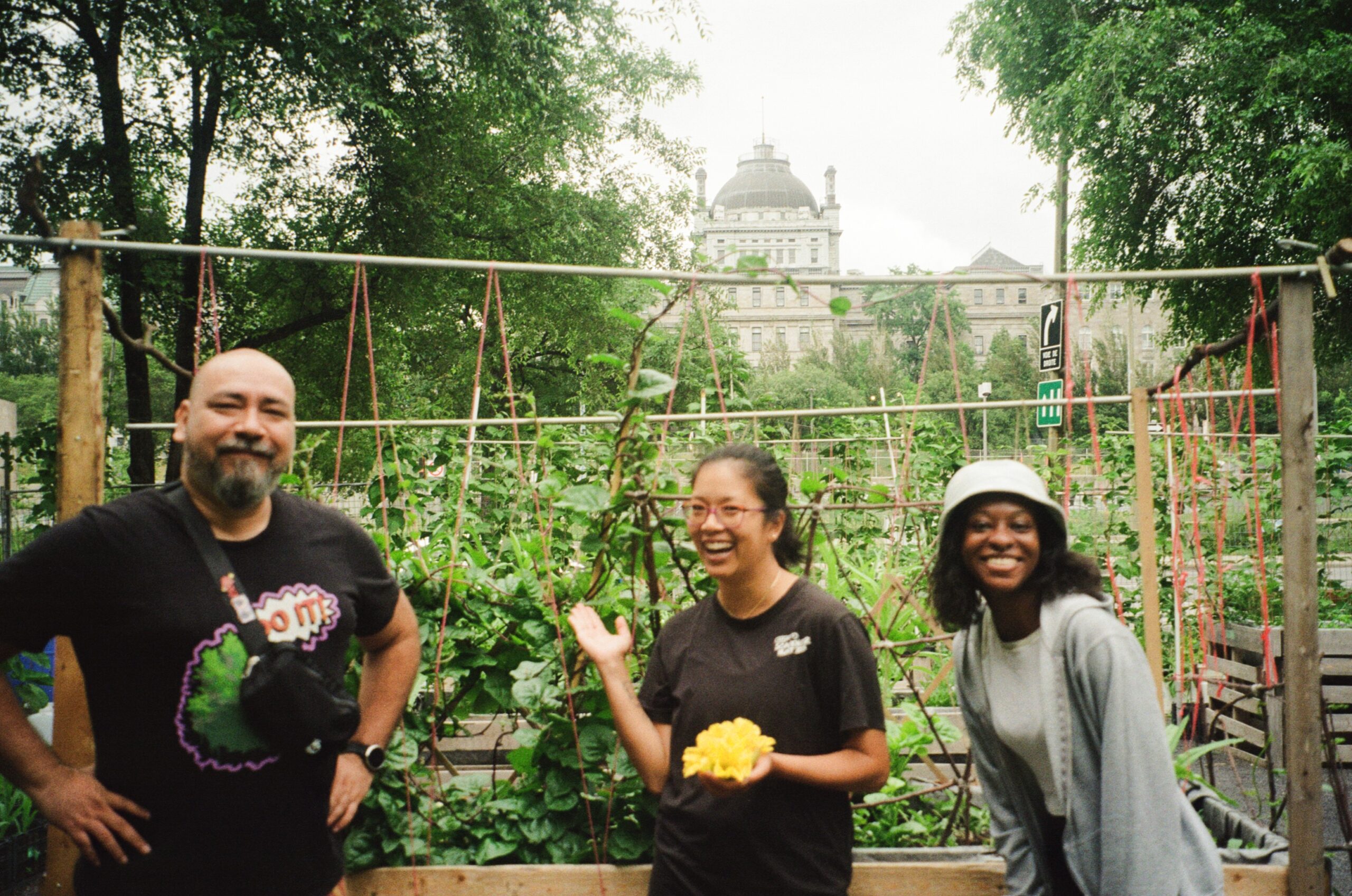
Three individuals are standing in a community garden. A man with a beard is smiling with his hands on his hips. A woman in a black shirt holds a yellow flower, gesturing joyfully. To her right, a woman in a light gray sweater and hat smiles. Lush green plants and a building are visible in the background, with trees framing the scene.
Two people are engaging in a community garden. One person, with long hair in a ponytail and glasses, stands beside another person with short, light-colored hair, wearing a floral bucket hat and plaid shirt. They are surrounded by lush green plants and climbing vines, while rows of vegetables and herbs are visible in the foreground. The background features a slightly blurred view of a structure and more greenery.

INSTITUTIONAL LAND

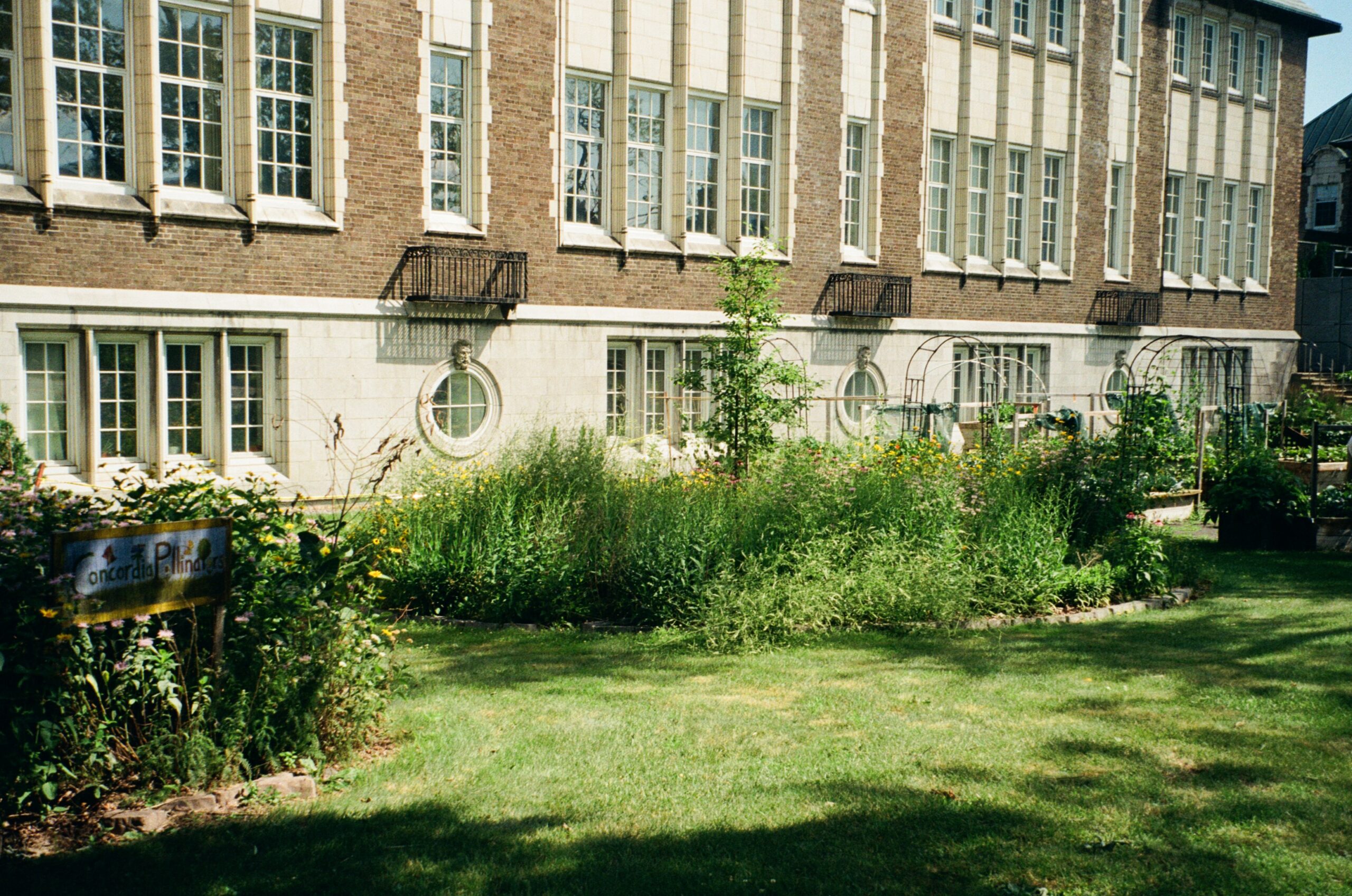
A view of a garden located beside a brick building with large, multi-paned windows. The garden features various plants and flowers, with a sign that reads "Concordia Pollinators" positioned among green foliage. There are also structures resembling trellises and well-maintained grass areas. The building has a classic architectural style, with decorative stonework and small balconies visible above the windows.
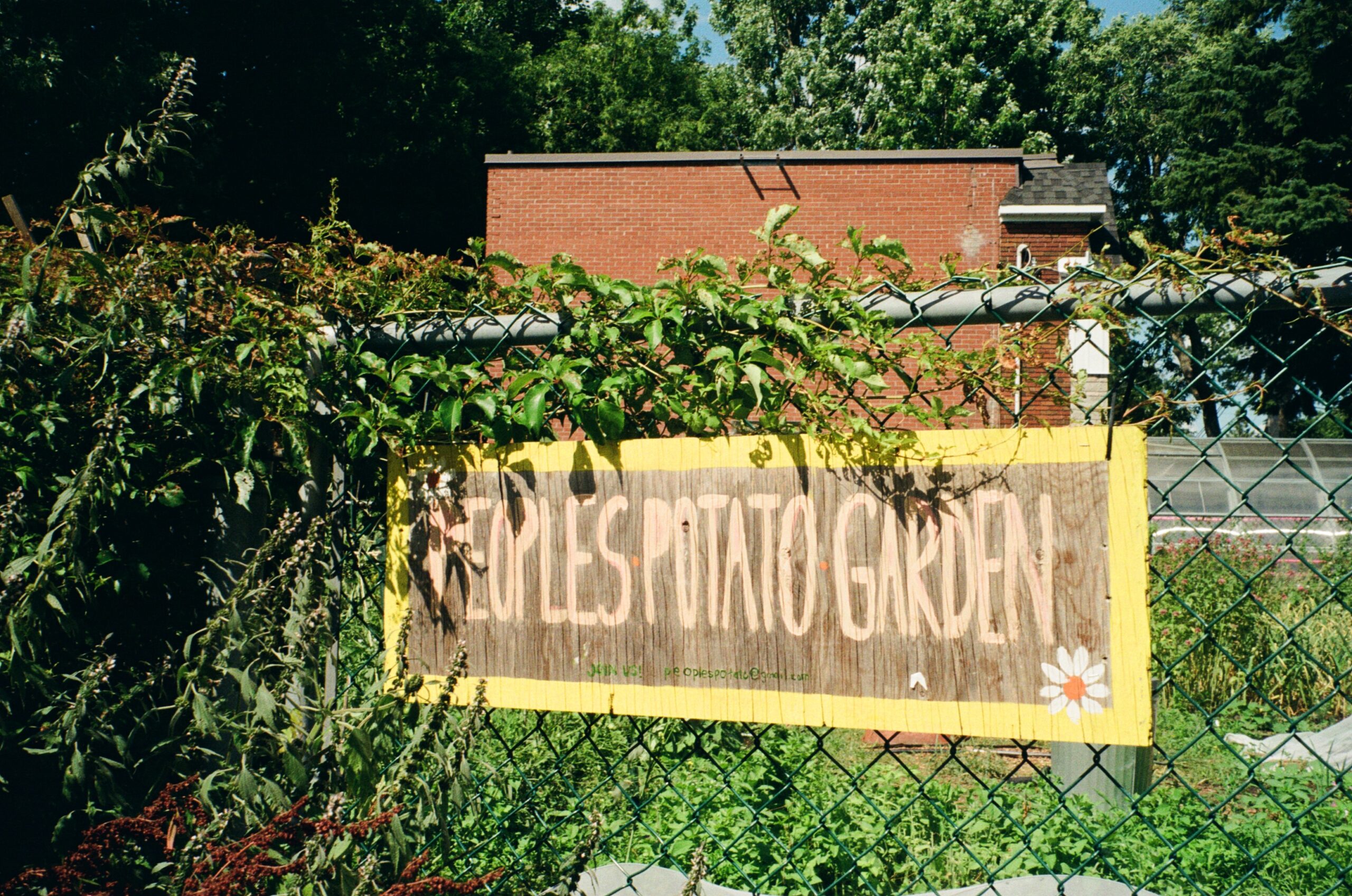
A wooden sign hanging on a chain-link fence reads "PEOPLES POTATO GARDEN." The sign has a yellow border and features a small flower design. Lush greenery and plants surround the fence, while a brick building is visible in the background, partially obscured by trees.
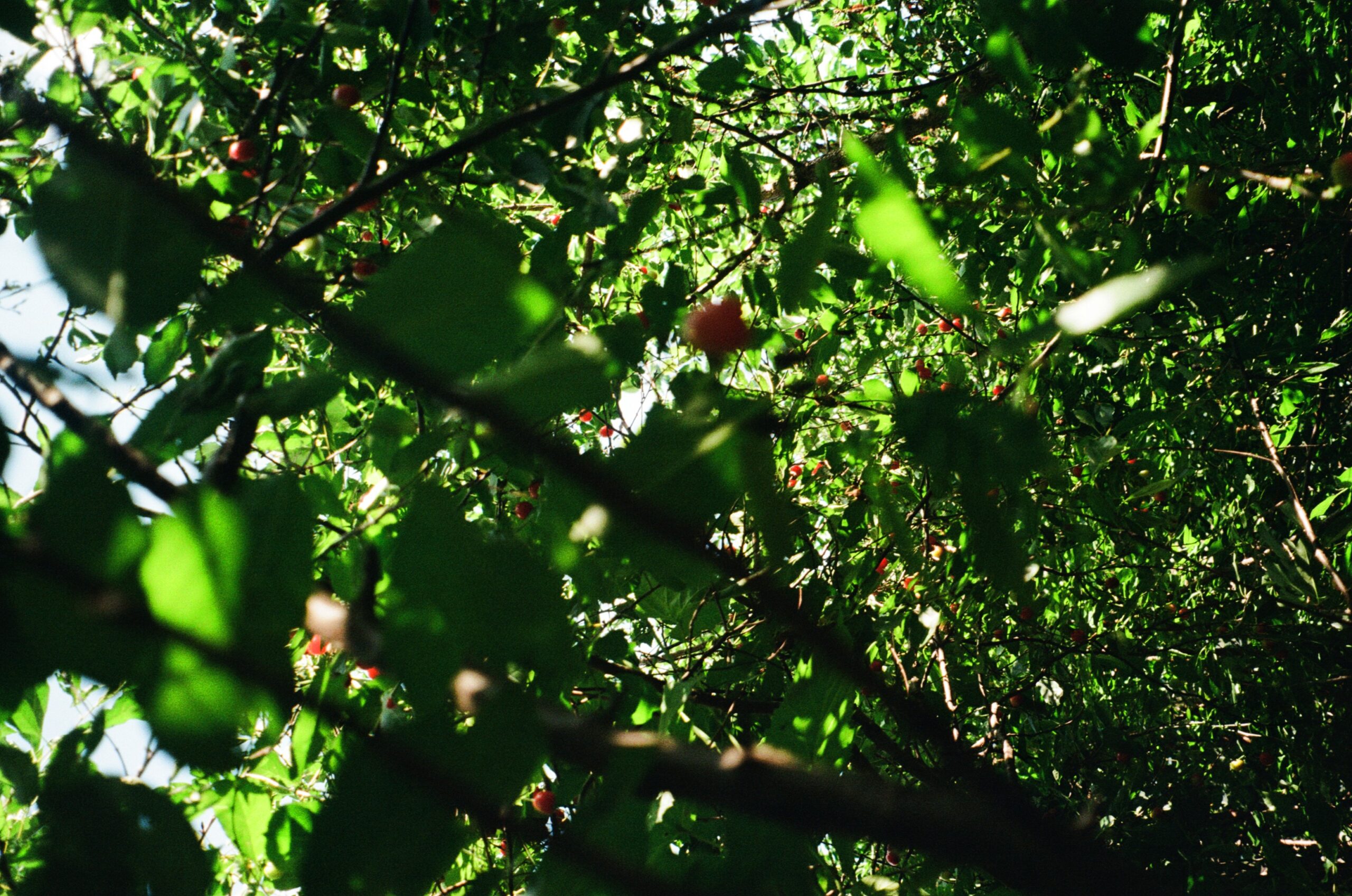
A dense cluster of green leaves and branches, with several small red fruit visible among the foliage. The sunlight filters through the leaves, creating a mix of light and shadow. The perspective suggests looking up into the foliage of a tree.

CREATIVITY AND SURPRISE

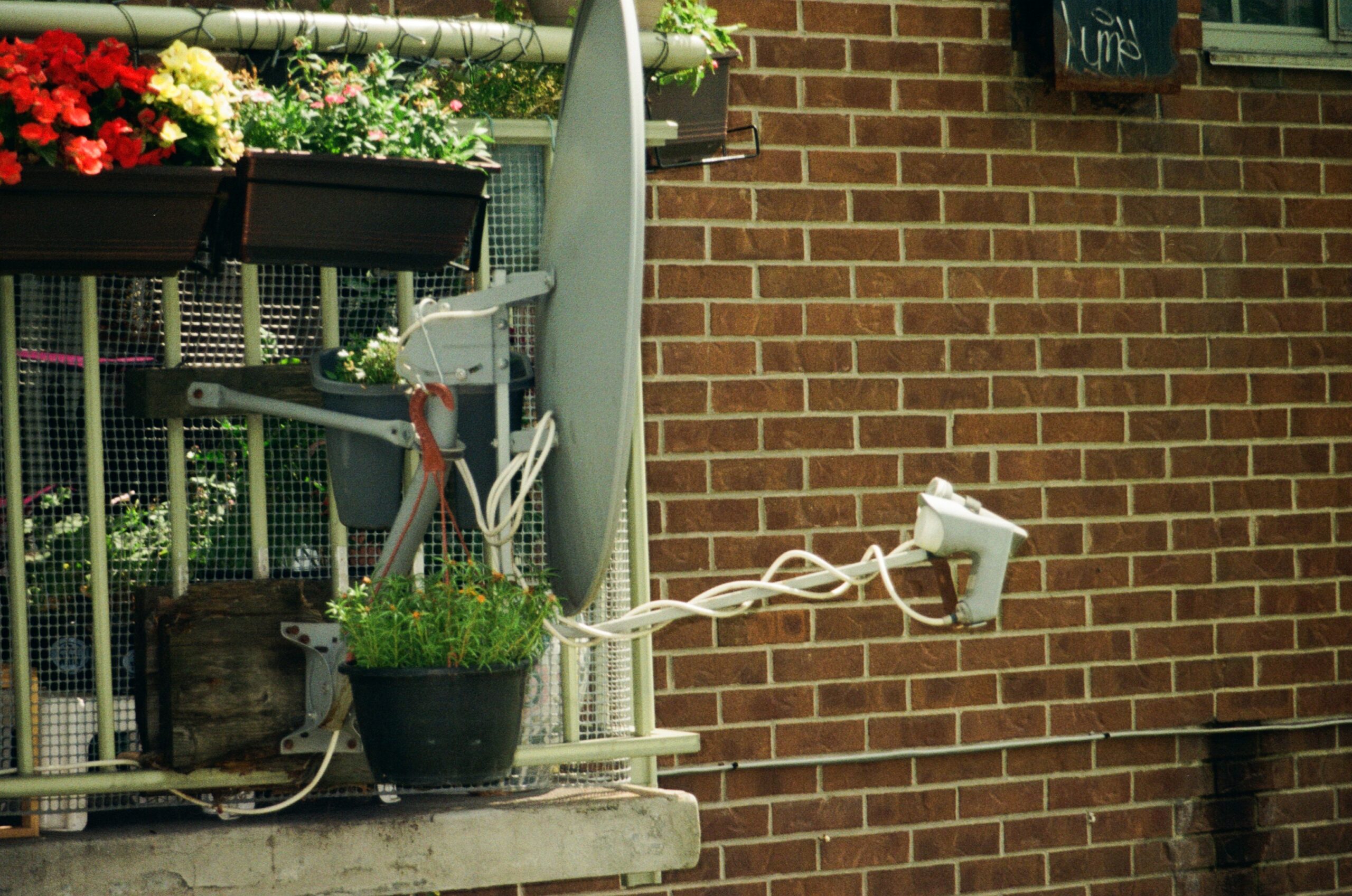
A mounted satellite dish is attached to a brick wall, with various flower pots containing colorful flowers situated above it. A tangle of white cables extends from the dish toward a small device or component at the end. The background features a grid-like window and another plant on a ledge.
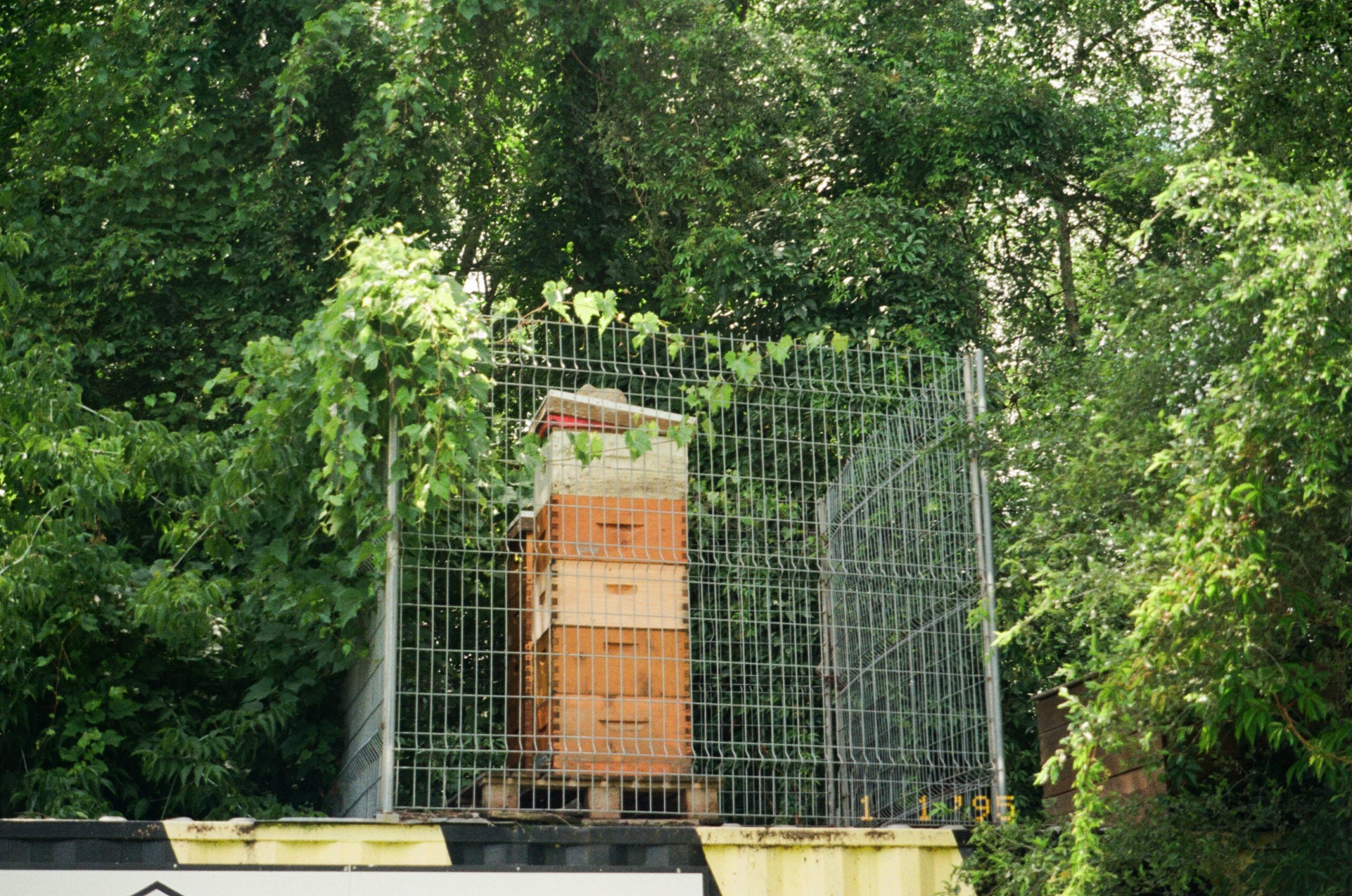
A fenced area with beehive boxes stacked on a platform, surrounded by dense greenery. The beehives are mostly orange and tan, and a few have red tops. The fence is made of wire, partially enclosing the beehives in a natural setting with sunlight filtering through the leaves.
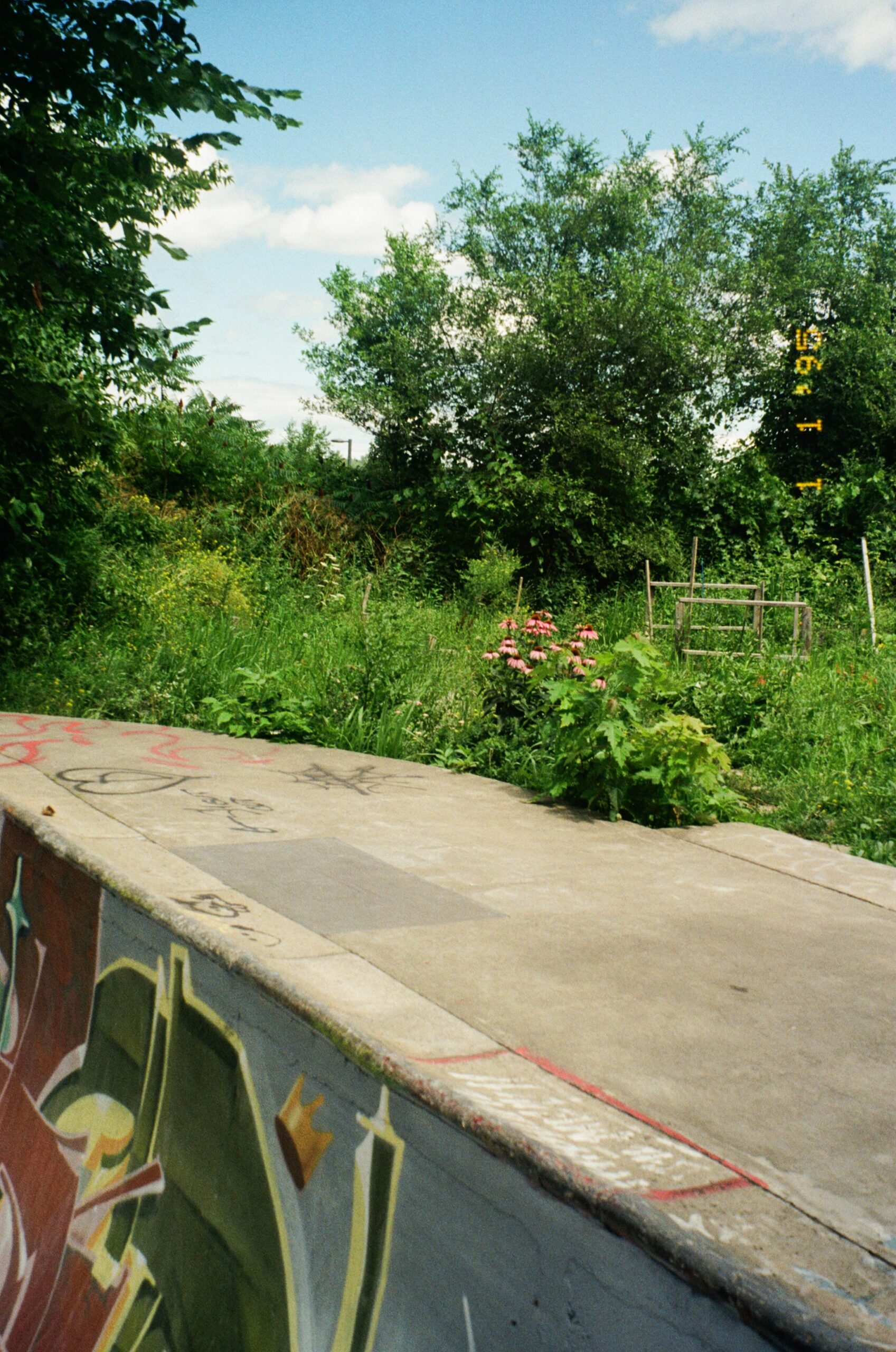
A concrete skatepark edge with graffiti overlays is in the foreground, while lush greenery fills the background. Bright pink flowers and various plants are visible along the edge of the park. The sky above is partly cloudy, with blue patches visible.

PUBLIC SPACE

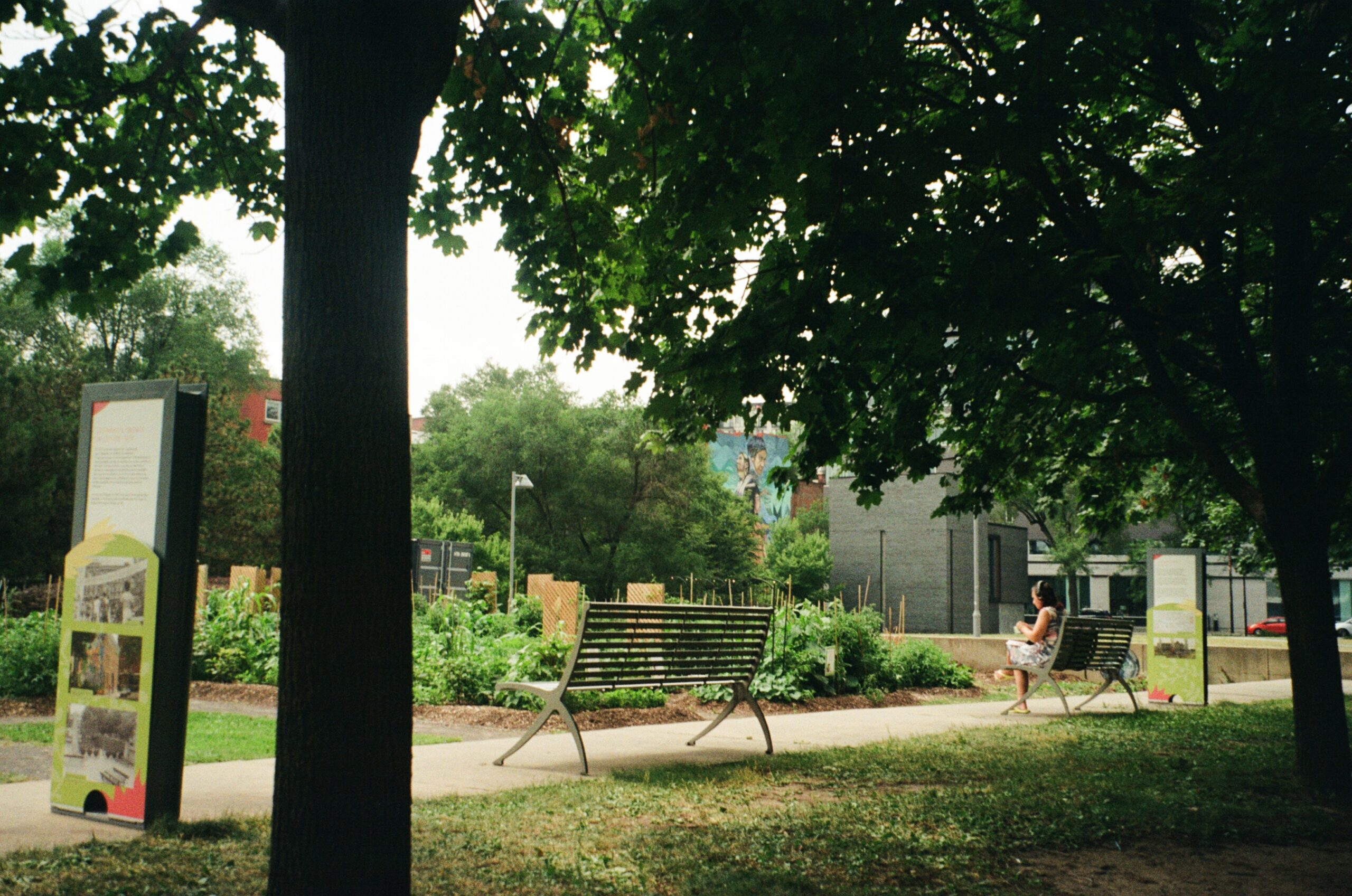
A park scene featuring a pathway with two metal benches on either side. One bench is occupied by a person sitting and reading. Lush green plants and a community garden are visible in the background. Informational signage is positioned nearby, and the area is shaded by large trees. In the far background, there are urban structures and a mural. The atmosphere is calm and serene.
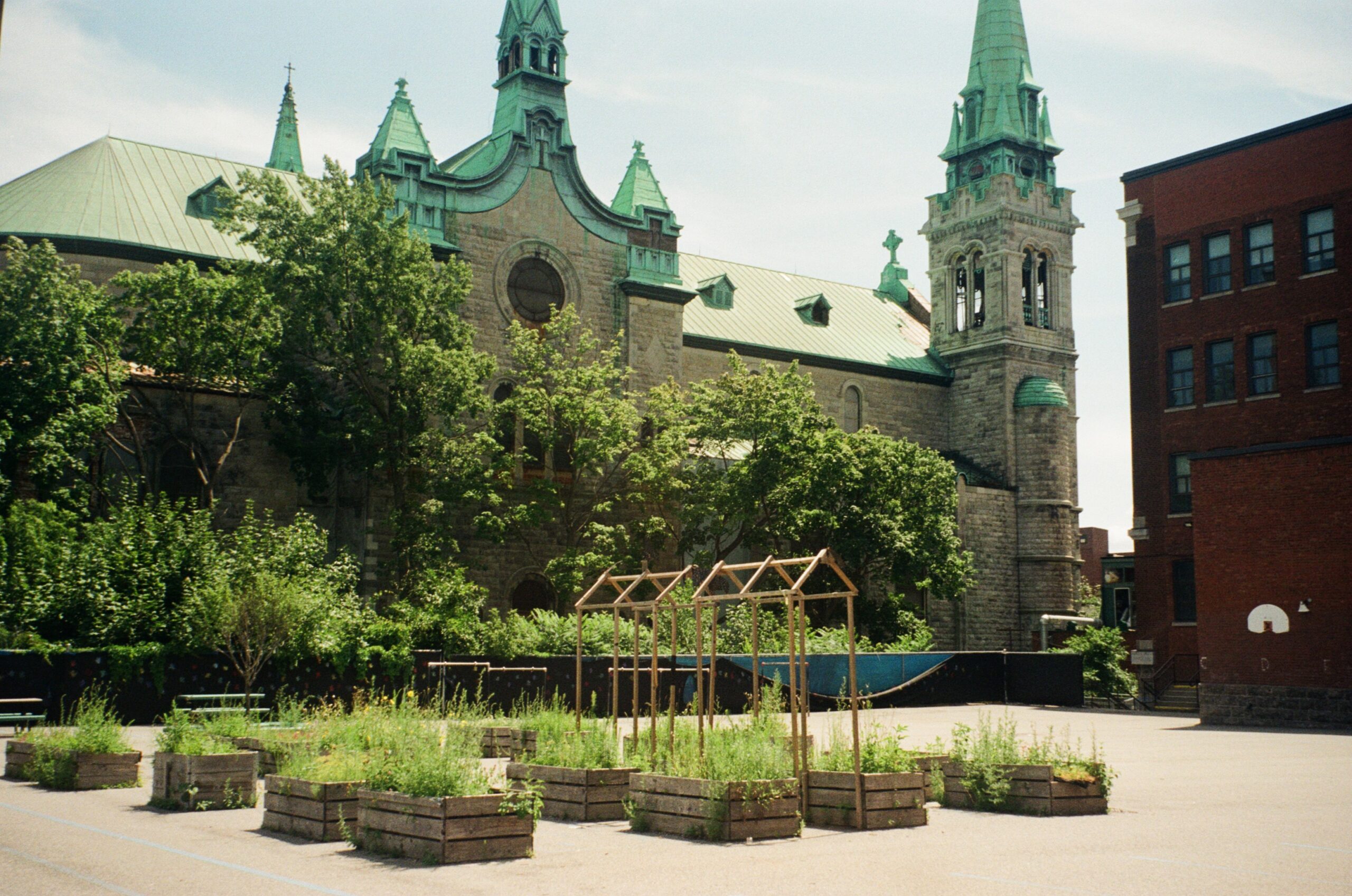
A stone building with green spires and a large window is shown in the background, surrounded by trees. In the foreground, there are wooden planters with various plants and a wooden structure resembling a garden frame. A red brick building is visible to the right, partially obscured by trees. The scene is set under a clear sky with sunlight.

PUBLIC MARKETS

A busy market scene filled with people shopping for fresh produce. Stalls display a variety of fruits and vegetables, prominently featuring apples in baskets. Bright red decorations hang from the ceiling, adding vibrancy to the atmosphere. Shoppers include individuals with bicycles and groups engaging in conversation. Signs in the background hint at various vendors and offerings, creating a lively and colorful marketplace environment.

SOLIDARITY MODEL

A vibrant community center called "Carrefour Solidaire" is featured in the image, showcasing a bright yellow exterior with large windows and a red tomato logo. In front of the center, two people interact, one with a dog on a leash, while another sits nearby. A sign with menu items and prices is displayed outside. The background includes a mix of brick buildings and a sidewalk with graffiti art on benches.

COMMERCIAL URBAN FARMING

A narrow storage room with tall shelves on both sides, filled with clear plastic bags containing various items. In the center, there is a metal step ladder with a red top. The lighting is dim, highlighting the bags and the green shelves against a pale wall.

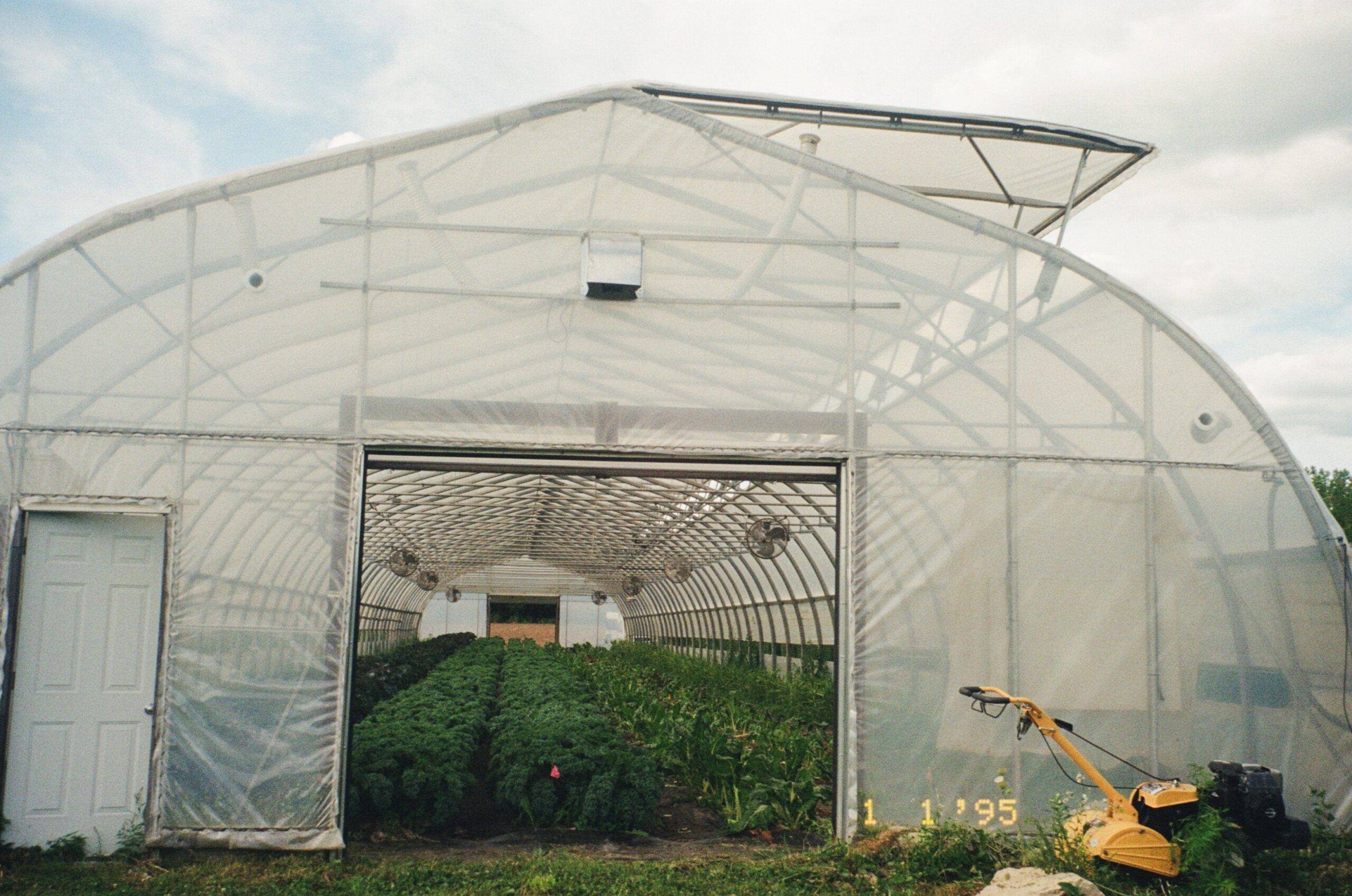
RURAL REGIONAL FARMING

LEARNINGS

  • Community gardens can be a real source of sustenance, community building, and education. Yet, their survival is a matter of cost of living: When people do not have time for their hobbies and are at risk of displacement, they can’t contribute time on a routine basis. Long-term community projects suffer when there is high neighborhood turnover. 
  • Garden projects are in need of funding resources and land protection, but overplanning and political bureaucracy can stifle the DIY feel that draws people there in the first place. 
  • Housing and garden/farming projects can exist together, even when land is scarce — they actually complement each other and can be achieved through creative design/land use practices. (see Dr. Vikram Bhatt’s work)
  • Urban farming is incredible, but it is not a magic bullet. Cities can produce greens at scale, but not grains, and food insecurity remains a poverty issue. Coordination, public investment, and knowledge sharing between urban and rural food systems can help address gaps in food security and create mutual understanding between rural and urban communities.
  • There are many initiatives in urban farming and food security, but many are barebones and deal with limitations, like storage capacity. An expert I spoke with explained that the supply chain drives higher prices and environmental impact. These projects do not have to be siloed — collectivizing resources like delivery vans and cold storage, organizing into community land trusts, or creating cooperative management systems can help these projects sustain themselves and support each other.
A rooftop garden filled with wildflowers and tall grasses, featuring a metal object in the foreground and a wooden lattice structure. In the background, urban buildings and trees are visible under a partly cloudy blue sky. A small inflatable pool can also be seen among the greenery.

Thank you to the wonderful Montrealers who shared their knowledge and work with me, including Claire Lanctot, Dr. Vikram Bhatt, Andrea Tremblay, Adrienne Richards, Rose-Andree Sauvageau, Kevin Drouin-Leger, Nina of La Barouette, Sam from Carrefour Solidaire, Nicolas Fabien-Ouellet, Béatrice Reid, Olivia St. Laurent, Colleen Thorpe, Dominique Lalond, and Gabriel Townsend Darriau.

Photography, scans, & drawings by Izzy Lane.

Title font inspired by fwolk zine.

Thank you to past Bill Menking Award recipients and the urban agriculture community in NYC for inspiring this work, and to Bill’s family for their generosity.