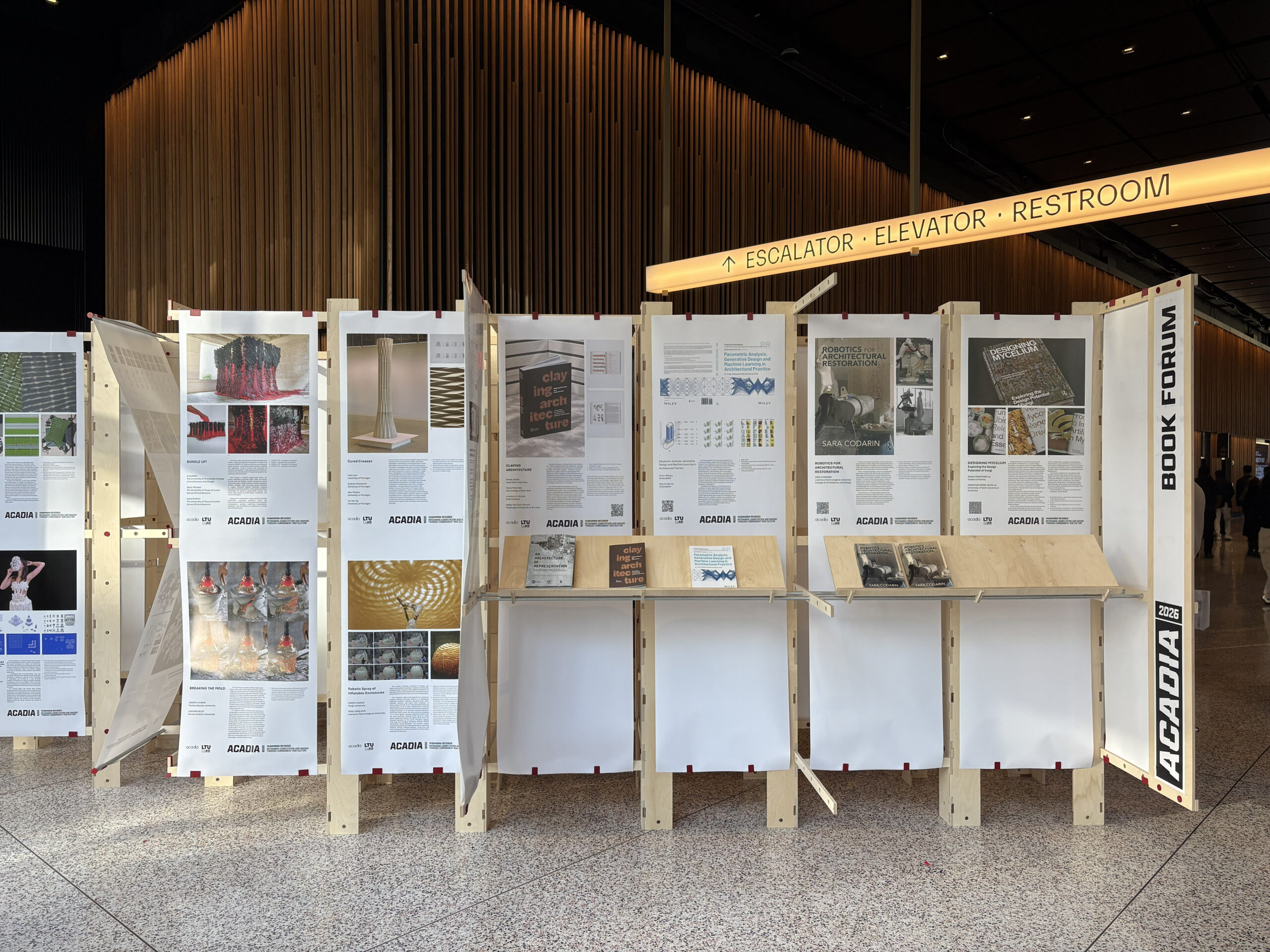
School of Architecture faculty Jonathan A. Scelsa and Jonas Coersmeier participated in the ACADIA 2026 Book Forum, held as part of Humanism Recoded in Detroit, Michigan.

Scelsa @oparchland presented Claying Architecture: Making Machine and Material Kin, co-edited with Shelby Doyle, Frank Melendez, and Kelley Van Dyck Murphy published by Applied Research + Design. The publication examines the evolving relationships between material intelligence, computational processes, and architectural making, positioning clay as a medium through which emerging technologies such as 3d printing and traditional material practices intersect.
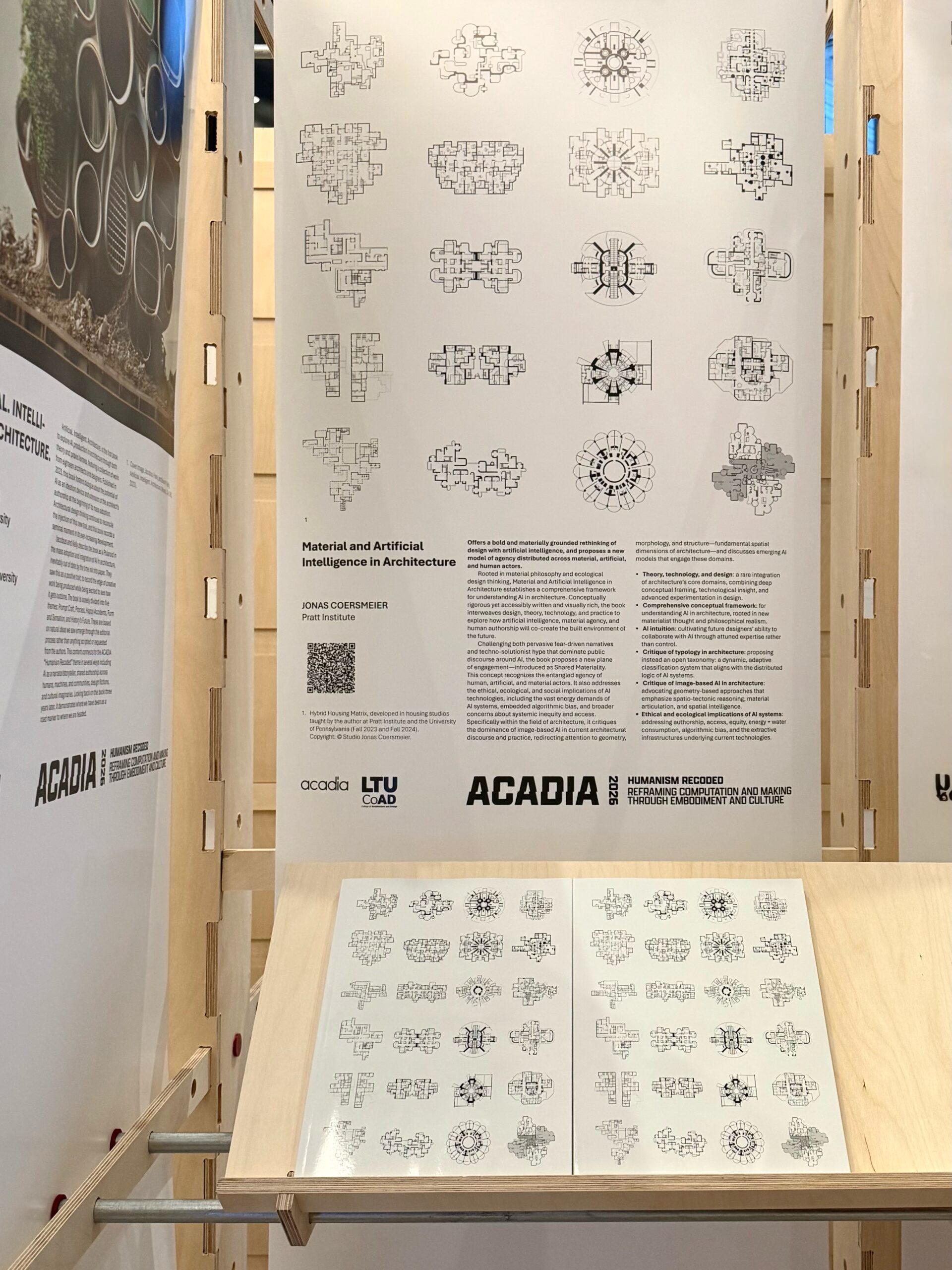
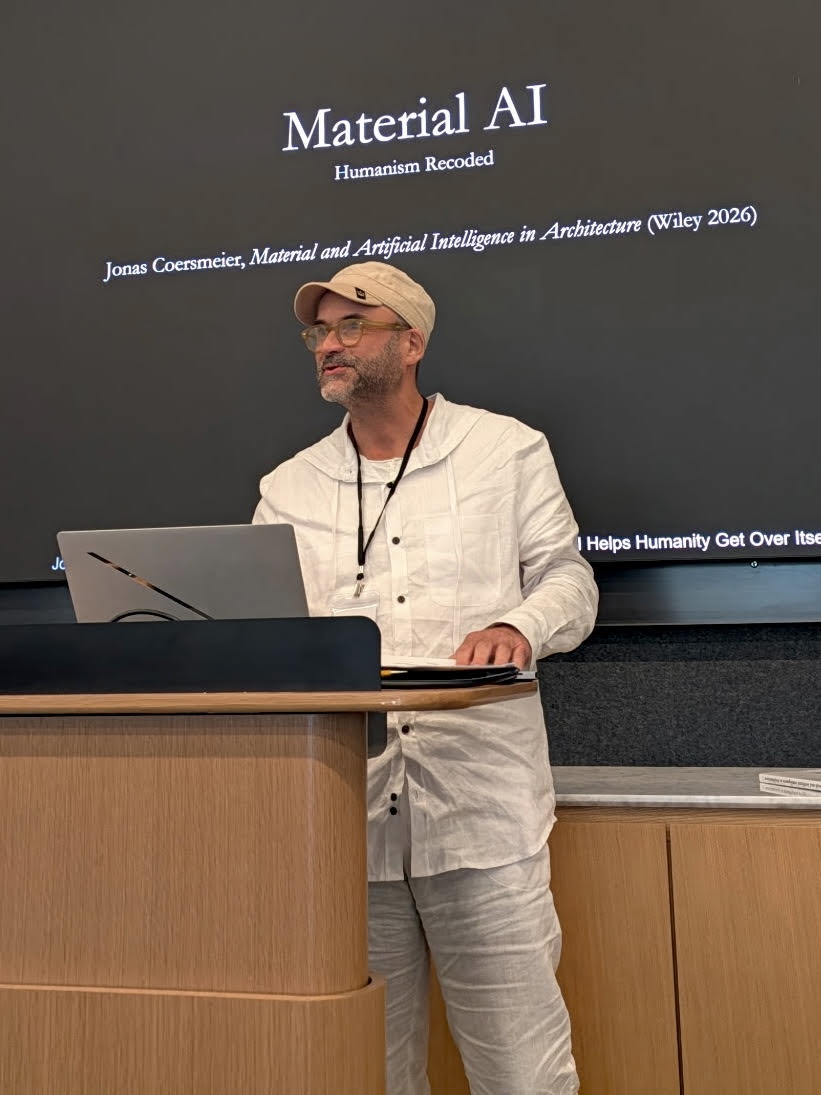
Coersmeier presented Material and Artificial Intelligence in Architecture (Wiley, 2026), focusing on AI ethics through the Shared Materiality framework developed in the book. Addressing the design computation community directly, he argued that conferences such as ACADIA cannot afford to retreat into technological enthusiasm while leaving the ethical and political concerns surrounding AI at the margins. He asked whether other forms of AI can be imagined that are more distributed, situated, materially embedded, and ecologically accountable.
The ACADIA Book Forum brought together recent publications exploring computation, digital fabrication, material innovation, and emerging architectural practices. The event provided an opportunity for scholars and practitioners to exchange ideas about the cultural and material futures of computational design.
Hosted by Lawrence Technological University in collaboration with ACADIA, the forum highlighted contemporary research that reconsiders the relationship between technology, materiality, and human experience in architecture.