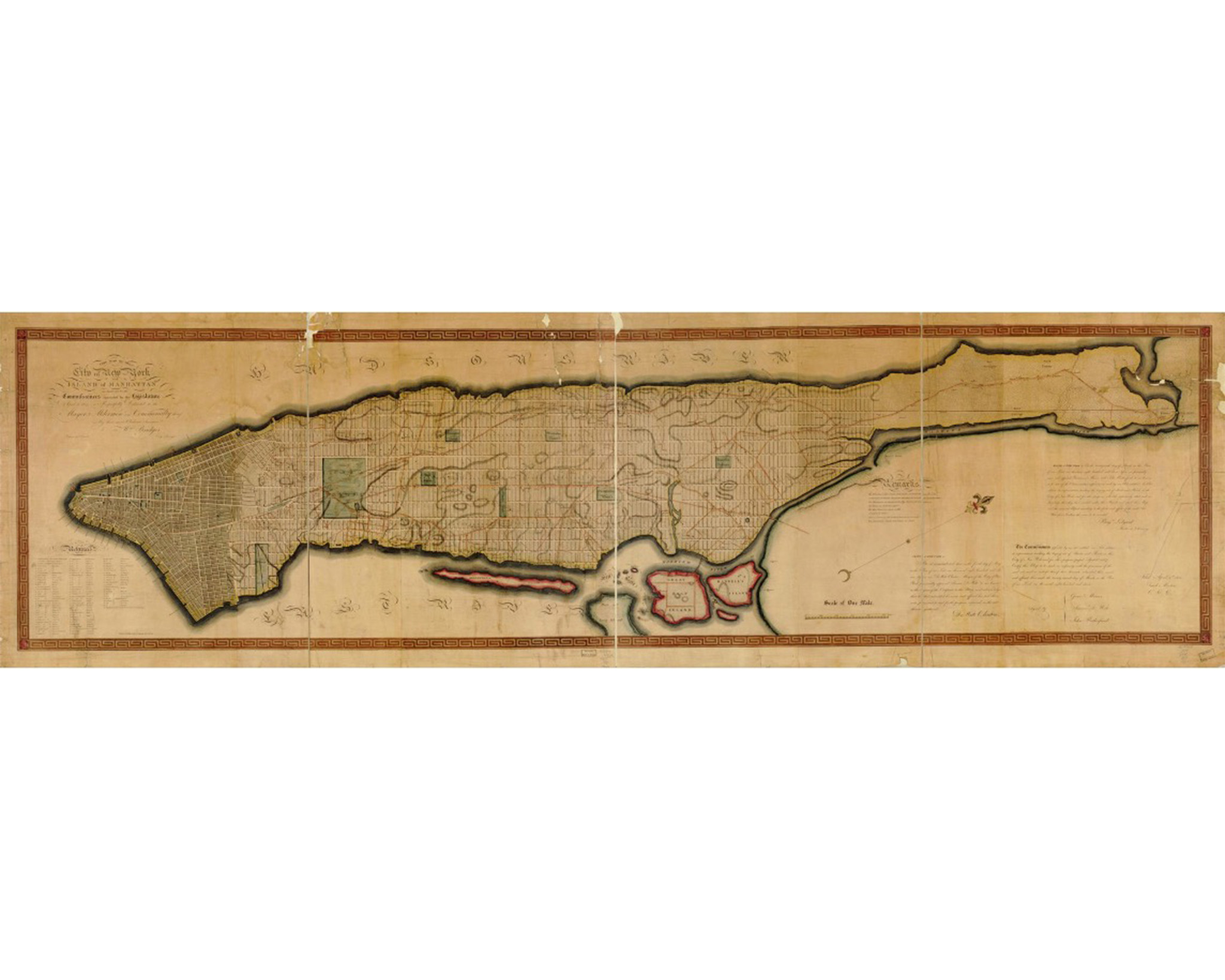
School of Architecture faculty member Dr. Chantal El Hayek will present the lecture “The Political Economy of the Grid: New York’s Commissioners’ Plan of 1811” at the Society for American City and Regional Planning History Conference. The lecture explores New York’s 1811 Commissioners’ Plan as an expression of modern rational planning, examining its spatial and economic implications through the use of straight lines and the gridiron street layout. It interprets the grid within the broader context of eighteenth-century liberal thought, particularly the emphasis on individual liberty, private property, and the role of government in protecting individual rights. These ideas, associated with thinkers such as John Locke, influenced American political thought and informed the intellectual context of the Declaration of Independence in 1776 and the Constitution of 1787.
The liberal conception of political authority emphasized the protection of individual rights and property, while also recognizing the role of government in serving the public good. In New York, this framework can be used to interpret the grid as more than a technical system of spatial organization. By making urban space measurable, divisible, and exchangeable, the 1811 Commissioners’ Plan established a system that facilitated land subdivision and development. The grid thus reflected and reinforced a changing conception of property within the liberal political and economic order, transforming the organization of urban space into a means of facilitating investment and wealth accumulation. In this sense, rational grid planning in New York helped establish the conditions through which land could be defined and exchanged as private property and property could become a vehicle for capital accumulation.