Develop your creative voice and build skills in art, design, and creative problem solving.
Fall, Winter and Spring PreCollege courses are designed for high school students in grades 9 – 12 (ages 14 – 18) to explore creative disciplines and prepare for admission to a degree in art, design, or architecture. During the college level courses, students create portfolio pieces for undergraduate admission and develop art/design skills while earning college credit.
Courses, tuition, location, and schedules may vary by semester; please review the application or registration link for details and availability each term.
Please note that credit and noncredit courses have separate registration processes and deadlines.
FALL, WINTER, AND SPRING OFFERINGS
1-CREDIT COURSES
Credit-bearing classes are modeled after Pratt’s undergraduate curriculum, focus on specific areas of study available across the Institute’s offerings, and are priced at 38% off the undergraduate tuition rate. Classes are taught by Pratt faculty or alumni on Pratt’s Manhattan Campus or via Zoom.
Each course requires dedicated time to complete assignments outside of class hours. Upon completion of the class, students receive a letter grade and one (1) college credit per class accepted at Pratt and most other colleges and universities.
PreCollege NonCredit courses are designed to support your creative practice, expand your technical skills, and build your portfolio. Classes allow Pratt faculty to share their unique expertise. Recurring courses includes assignments to be completed outside of class hours and students receive a pass/fail grade.
Sept. 13; classes are filled on a first-come, first-serve basis
*No classes will be held on October 3 or November 7 due to the SAT
Reconstruct the spaces you use every day. This course is designed to introduce students to ideas, principles, concepts, and methods of architectural design in a studio setting. Through exercises in 3D model making, technical drawing, and AutoCAD, students explore the architectural concepts of space, form, function, scale, site, structure, and inhabitation through analytic and generative approaches.
Instructor:David Paraschiv Class Time: Saturdays, 10:00AM – 12:50PM ET Cost: $1,294.00 Note: Students must have a computer with Rhino installed
Learn the basics of digital imaging: scanning, shooting, using graphic software, and various forms of manipulating and outputting images. Using primarily Adobe Photoshop and Lightroom, students will develop imagery and improve conceptual and technical skills, while incorporating art elements and the principles of design. Familiarity with computers is helpful, not necessary.
Instructor:Stephanie Espinoza Class Time: Saturdays, 10:00AM – 12:50PM Cost: $1,294.00 Note: NO LONGER ACCEPTING APPLICATIONS FOR FALL 2026.
Discover the power of design in a rapidly evolving world. This course introduces the fundamentals of design, including core principles, visual thinking, and computer graphics. Through hands-on projects, students explore creative concepts, research methods, and content development to craft memorable, impactful work with a strong point of view. Learn to use Adobe Creative Suite and hand-drawing techniques as you develop projects in typography, logo design, and more.
Instructor:Noble Cumming Class Time: Saturdays, 10:00AM – 12:50PM Cost: $1,294.00
Note: NO LONGER ACCEPTING APPLICATIONS FOR FALL 2026.
Learn to shape your art and design portfolio in ways that reflect your creative voice. Students will research topics of personal interest, create one or more portfolio pieces that demonstrate their personal perspectives, and begin to draft an artist statement in this virtual studio class.
Instructor:Raina Wellman Class Time: Saturdays, 1:00PM – 3:00PM ET Cost: $675.00
Develop storytelling skills using digital tools. Explore how to express ideas and narratives that are both personal and professionally relevant. Students will use Adobe Photoshop and Illustrator as they learn foundational skills necessary to produce compelling digital artwork. Assignments are based on industry prompts while learning color mixing, negative space, and figure/ground relationships.
Instructor:Justin Oon Class Time: Saturdays, 10:00AM – 12:50PM Cost: $1,294.00 Note: NO LONGER ACCEPTING APPLICATIONS FOR FALL 2026.
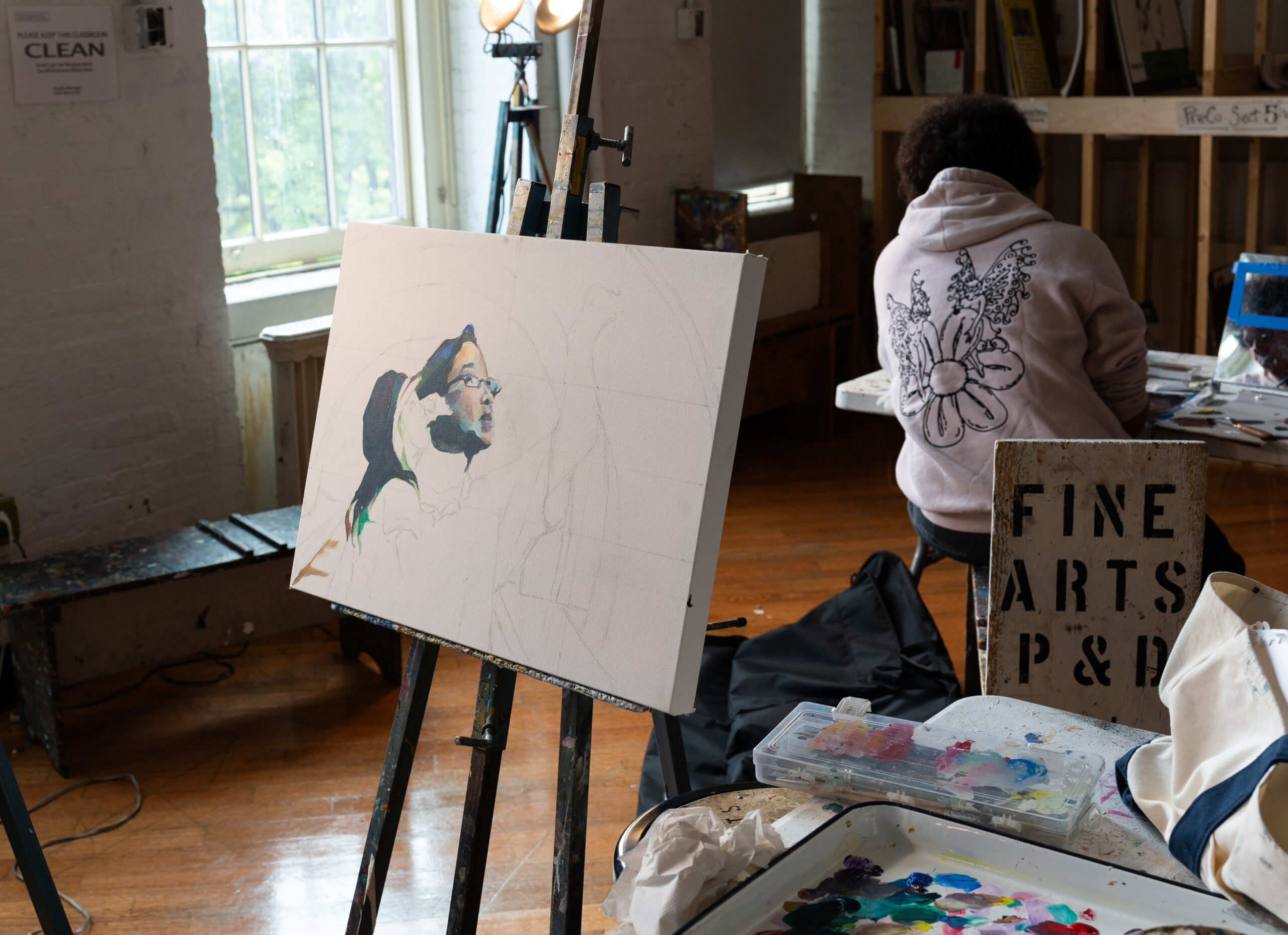
Translate the three-dimensional world onto a two-dimensional surface. This course covers fundamental issues in drawing and painting while enhancing perception and aesthetic awareness of Fine Art. Students will be familiarized with the visual language of line, shape, composition, proportion, perspective, and color; and are given the tools to express their ideas through a variety of techniques with a focus on graphite and acrylics.
Instructor:Karen Azoulay Class Time: Saturdays, 10:00AM – 12:50PM Cost: $1,294.00
Note: PreCollege does not currently offer scholarship opportunities or payment plans for fall, winter, or spring students. Full payment for courses must be completed before the start of any course. Tuition does not include the cost of any materials or lab fees unless otherwise stated.
Please visit our FAQ Page for more information on eligibility, withdrawal policies, and technology requirements for online classes.