Vonetta DeVonish, MS Information Experience Design ’22, enrolled at Pratt Institute to rediscover her creative voice and apply it to solve business challenges in the technology sector. Now a content designer and UX writer at JPMorgan Chase, DeVonish shares her insights into making a career pivot in the following Q&A.
Can you tell us about your current role?
My team is working really hard to enhance the experience for our millions of users. Deep dives, refinement sessions and trainings keep me busy. Currently, I am working on some exciting AI-related projects.
What prompted you to pivot from a long-term senior administrative role and pursue a master’s in Information Experience Design?
I had long wanted to get back into a more creative environment after working in advertising and marketing in my early career. I had a degree in print journalism, but wanted to pursue a master’s to help better facilitate a career change.
I wanted to do something that combined design, tech, and business, but wasn’t sure what. After looking into various MBA and design programs, I learned about design strategy and UX design. That set me on the path to where I am now.
Looking back, what was the most valuable part of your master’s program at Pratt, especially as someone making a significant career change?
My courses in the IXD program at Pratt prepared me for my career transition by providing an array of skills I needed as a newbie to the field.
My first class was Information Architecture and Interaction Design, which laid the groundwork for important principles I needed to know, and my Conversational UX Design course opened my eyes to a different career path than the one I initially had in mind. Content Strategy was also a very beneficial course.
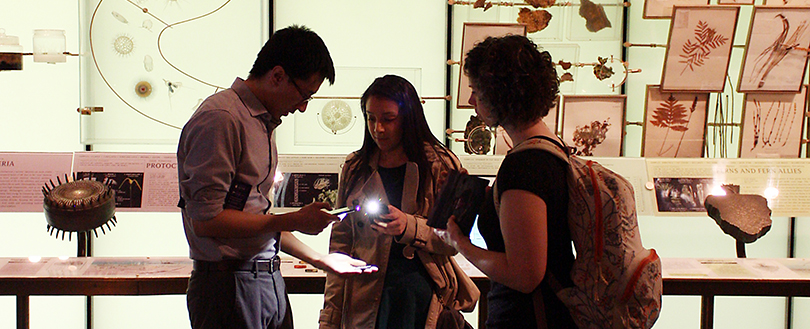
The ability to choose electives, the workshops, guest lecturers, and completing a fellowship at the Metropolitan Museum of Art made my experience in the program robust and rich and uniquely catered to my interests.
What’s a professional skill you developed at Pratt that you rely on today?
Learning about the end-to-end design process, the discovery phase, and how to apply various research methodologies were crucial skills I learned at Pratt. Knowing who we are designing for, and keeping them top of mind, is always something I go back to. And the problem statement is important; I learned to ask myself, “What are we solving for and why?”

How did your UX design fellowship at The Metropolitan Museum of Art and other Pratt resources help you transition into your current role at JPMorgan Chase?
My Met fellowship provided me with crucial hands-on experience in how a UX design team works and collaborates with other departments. I learned what it’s like to design for a public-facing product that millions visit online as well as in person. Although I also worked full time, I had the support of my manager and colleagues to take time off to do my work for the Met, so I was able to juggle both.
In addition to that amazing learning experience, meeting people in my desired field was pivotal. I found a community of people doing something that I thought was exciting and fun. Fortunately, I still have a great community and support network at JPMorgan Chase.
Can you tell us about a particularly difficult professional challenge you’ve faced since entering the UX field?
The challenge I faced was multifaceted. I was not only starting a new role, but joining a team that was well established. I had to learn the product and learn about the company on a quick timeline.
My undergrad and graduate work prepared me for the writing and design aspects of the role, but I also had a lot of on-the-job training. It was not an easy road but my excitement, curiosity, dedication and focus kept me motivated. I didn’t have an option to not succeed, so I pushed through the discomfort and doubts.

Is there a specific project you consider a turning point in your new career?
Working on the Wealth Plan digital app was a major opportunity. I joined the team in October 2021. It was a brand-new product offering, public-facing, high visibility, and high stakes.
After it launched in November 2022, we did a lot of work to refine the design and enhance it with new features. I was involved in all aspects of the design process, from research and testing to refining the use cases and writing copy.
What advice would you give to a student or professional who is considering a major career change into a creative or tech-focused field?
You need to talk to people who are doing the thing that you want to do. If their work sounds intriguing and like something you could see yourself doing, then you may have found a good career path.
Hopefully, whatever you choose sustains you through the good and bad, because it may not always be fun or easy. Even through the challenges, find something that makes you want to continue forward.
Learn more about programs in Pratt’s School of Information