Magdalena Valdevenito
Work Samples
-
![A spacious exhibition area displays multiple architectural models and drawings on tables. Attendees are engaged, with two individuals visible in the foreground and others observing or discussing the models. The backdrop showcases large windows with a patterned façade, while the floor is covered in red carpeting. Various model styles, including some with greenery and structures, are arranged across the tables.]()
Building Science Through Design
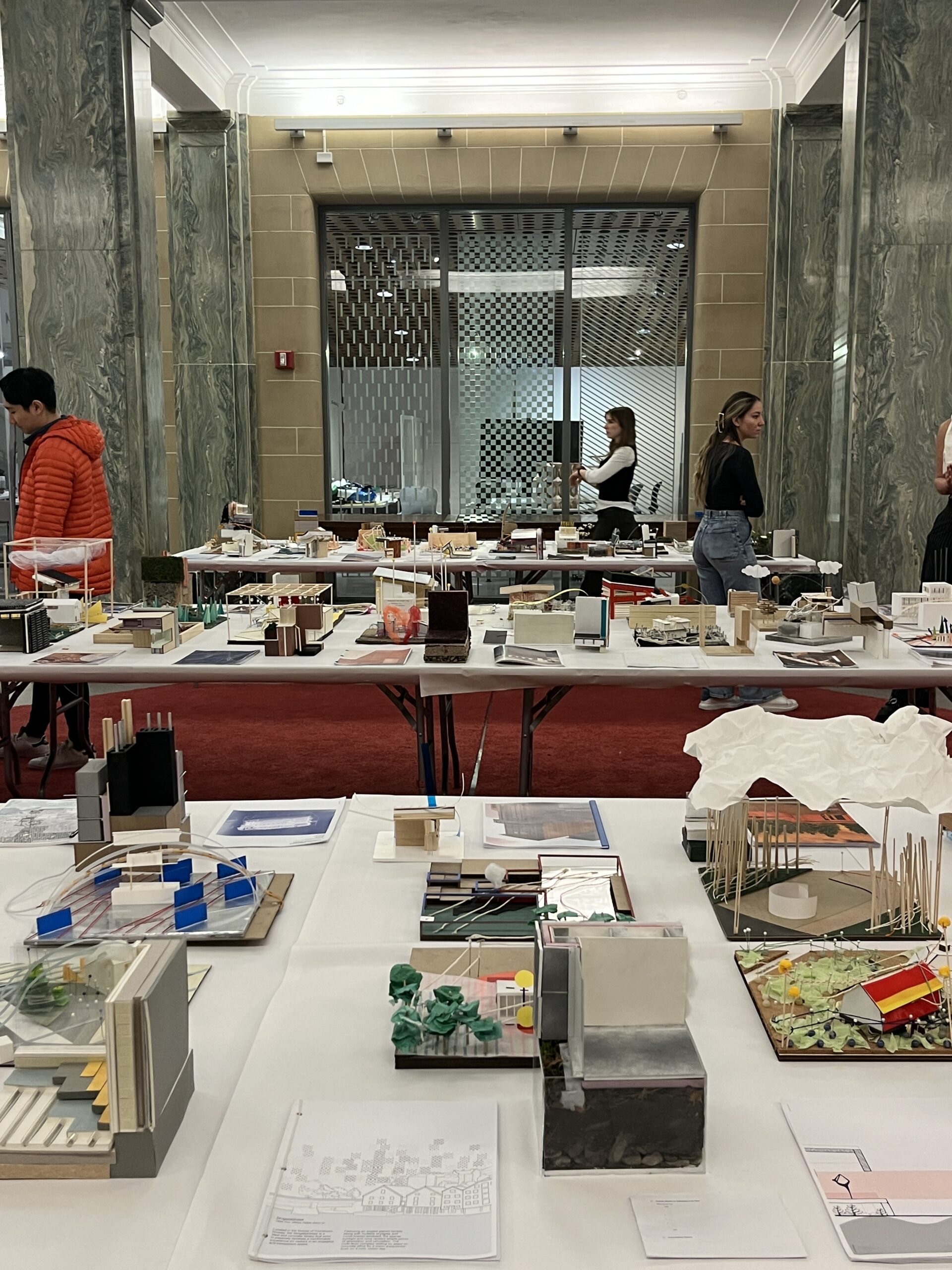
This submission presents a multi-year pedagogical innovation in building systems teaching at the Syracuse University School of Architecture. This work exemplifies pedagogical innovation through its integration of simulation-driven design thinking within a project-based learning framework to teach building science to 3rd year architecture students. This work positions climate simulation software as an active driver of architectural decision-making, challenging students to work with multiple climate factors simultaneously.
The project unfolds across three structured assignments that correlate to real-world architectural project phases: Designing for Climate (concept design), Passive Design in Action (schematic design), and Designing the Envelope (design development), and culminates in a public exhibition where students present both physical models and research books. This sequencing ensures that knowledge compounds progressively, with each phase demanding deeper technical and representational literacy.
In small teams, students design a passive 900 square foot micro-structure, choosing from a selection of globally diverse sites, spanning climates from tropical rainforest to subarctic tundra, and project programs that require climactic considerations, such as gyms, spas, or saunas, to ensure that student engage with distinct environmental challenges, making climate responsiveness a non-negotiable design driver in their work. This deliberately constrained framework forces rigorous engagement with building science principles — thermal performance, moisture control, vapor permeability, and occupant comfort — without the complexity of a larger program obscuring the learning objectives.Course deliverables include an interpretive climate-driven site analysis drawing and site model which illustrate the interaction between the proposed design and multiple climate factors simultaneously, and sectional detail model that demonstrates how the proposed building assemblies respond to climate considerations. These outcomes require students to communicate building science principles through drawings and physical artifacts, and cultivate students who understand building performance not as a compliance checklist but as a generative force shaping spatial and material decisions from the earliest stages of design.
-
![An aerial view of a neighborhood featuring a sports facility with blue courts and a distinct roof shape. Several people are walking along the sidewalk and entering the facility, while a large tree provides shade nearby. In the background, various rooftops and structures are visible, along with a streetlight and some urban graffiti on the wall to the right.]()
Acupuncture Architecture: Small Interventions for Social Mobility
The attitude this project upholds is rooted in slow fieldwork, where unveiling deep layers surrounding an infrastructure is deemed to be crucial for generating a sensible design proposal. Places and buildings hold ghosts of culture and history, and their detailing and wear traces a dialogue with their environment.
This observational exercise is a slow paced research project for a non profit organization that manages public and subsidized schools in Santiago, Chile. It started as a vast proposal of acupuncture like interventions in the fourteen schools. The project stems from a need to thread all the schools at the urban scale, visibilizing this network of educational establishments that exist in vulnerable neighborhoods within the city. These projects intend to act as pinpoints within a large community of institutions, showcasing the non-profits investment in social mobility as their educational ethos.
The schools have been built with a wide array of construction techniques and represent a point in time: socially, politically, and aesthetically. The goal of the fieldwork was to document and categorize the need for infrastructure in each school, and determine a toolkit of materialities and tectonics that can be deployed in all of the case studies.
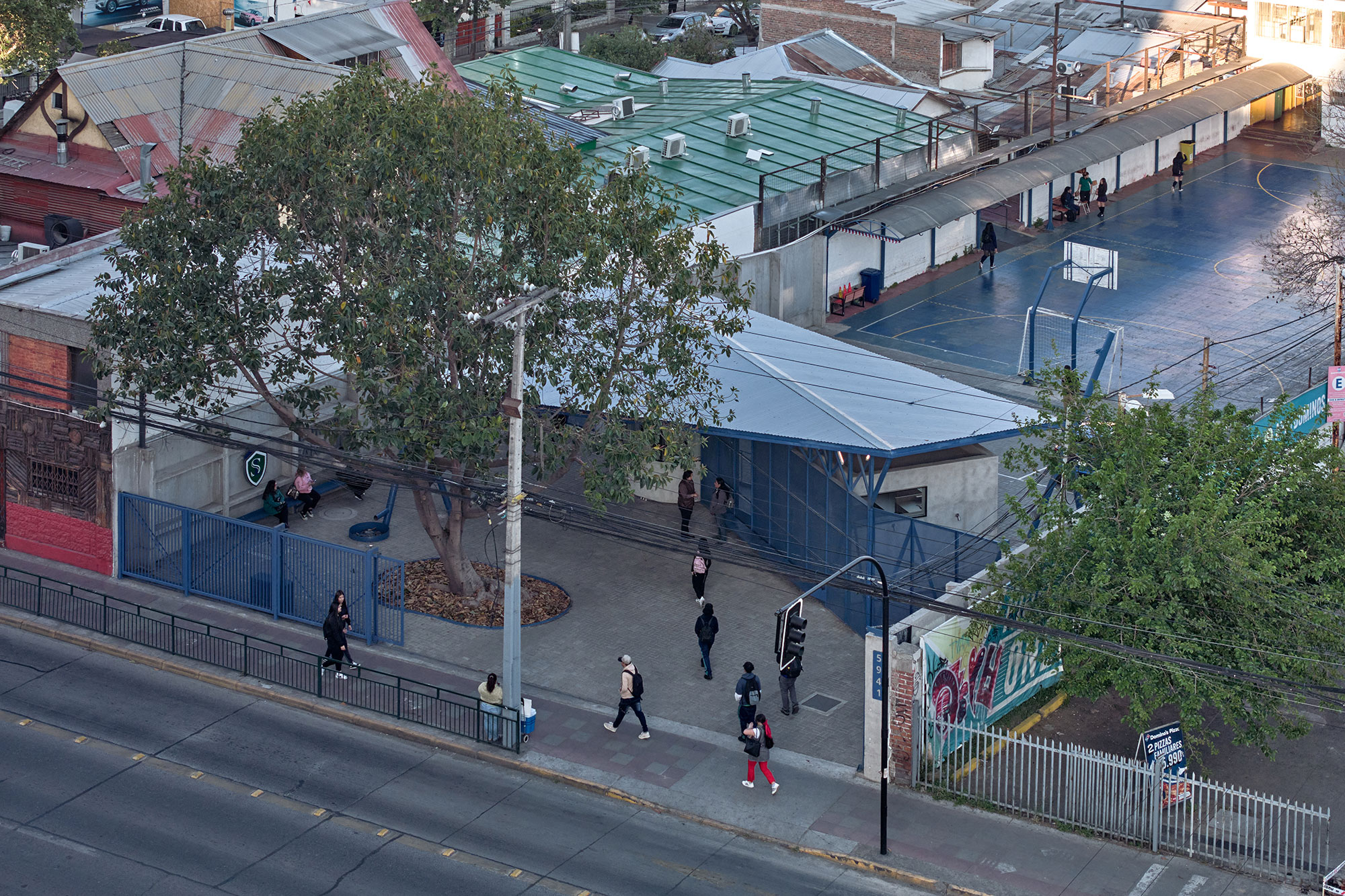
The first of these interventions was the Entrance of Politécnico San Luis completed in 2025, and it is materialized as an entrance that donates a public plaza in one of the main arteries of the city. Designing a new meeting point between the city and the high school created opportunities for interaction, increased activity, and greater visibility, where architecture plays a role as a social, political, and urban catalyst.
The project was developed with an ethos of low-maintenance and bare tectonics, where the color blue calls attention to the Non-profit’s new identity’s color. With an attitude of small renovations, the schools engage in a cost-effective and plausible strategy for long-term progress, where the schools position themselves as stakeholders within the urban fabric by sharing their public space with the city.