Building Science Through Design
By Hannibal Newsom, Magdalena Valdevenito, Xixi Chen, and Anjiang Xu
This submission presents a multi-year pedagogical innovation in building systems teaching at the Syracuse University School of Architecture. This work exemplifies pedagogical innovation through its integration of simulation-driven design thinking within a project-based learning framework to teach building science to 3rd year architecture students. This work positions climate simulation software as an active driver of architectural decision-making, challenging students to work with multiple climate factors simultaneously.
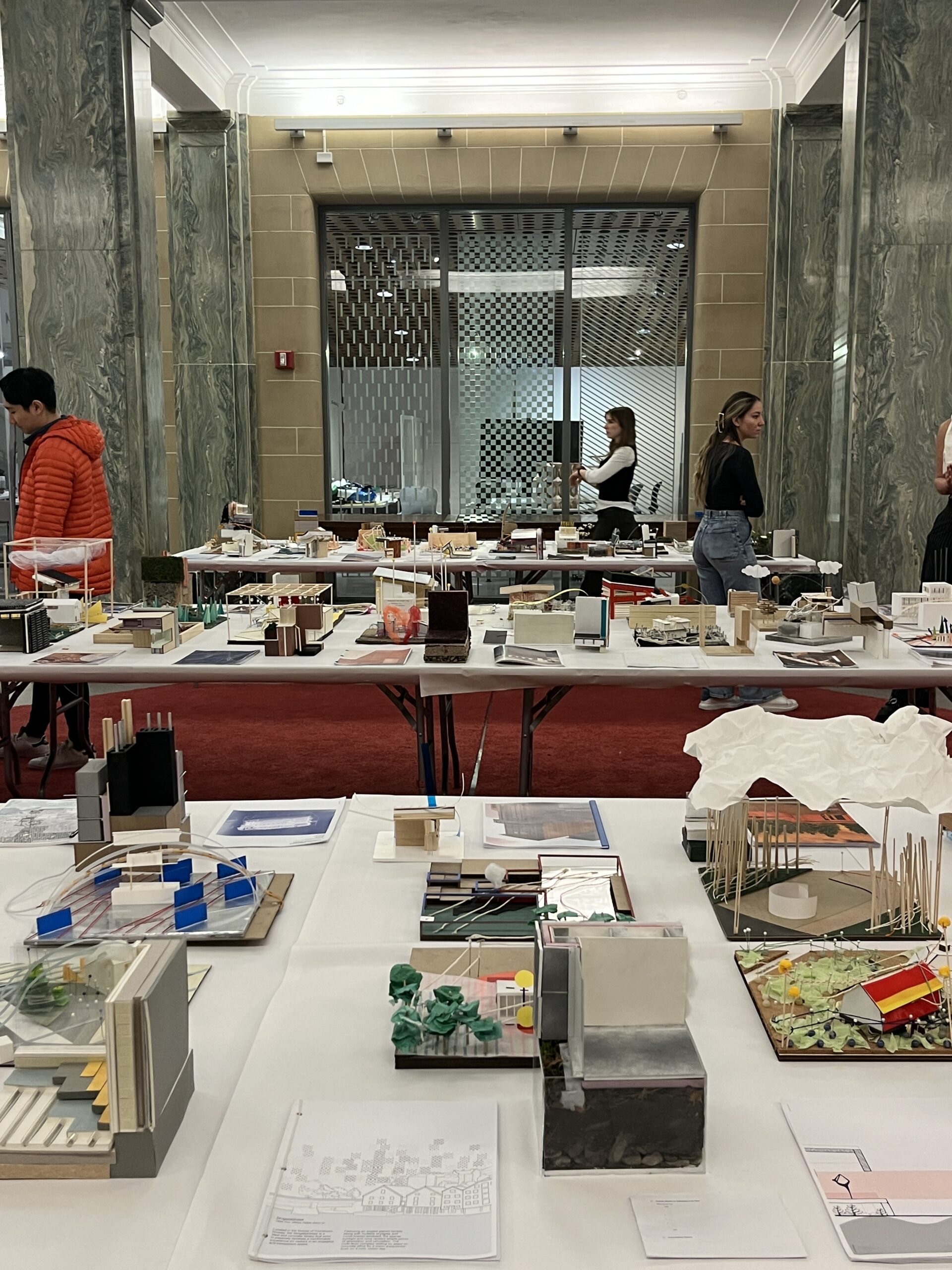
The project unfolds across three structured assignments that correlate to real-world architectural project phases: Designing for Climate (concept design), Passive Design in Action (schematic design), and Designing the Envelope (design development), and culminates in a public exhibition where students present both physical models and research books. This sequencing ensures that knowledge compounds progressively, with each phase demanding deeper technical and representational literacy.
In small teams, students design a passive 900 square foot micro-structure, choosing from a selection of globally diverse sites, spanning climates from tropical rainforest to subarctic tundra, and project programs that require climactic considerations, such as gyms, spas, or saunas, to ensure that student engage with distinct environmental challenges, making climate responsiveness a non-negotiable design driver in their work. This deliberately constrained framework forces rigorous engagement with building science principles — thermal performance, moisture control, vapor permeability, and occupant comfort — without the complexity of a larger program obscuring the learning objectives.
Course deliverables include an interpretive climate-driven site analysis drawing and site model which illustrate the interaction between the proposed design and multiple climate factors simultaneously, and sectional detail model that demonstrates how the proposed building assemblies respond to climate considerations. These outcomes require students to communicate building science principles through drawings and physical artifacts, and cultivate students who understand building performance not as a compliance checklist but as a generative force shaping spatial and material decisions from the earliest stages of design.