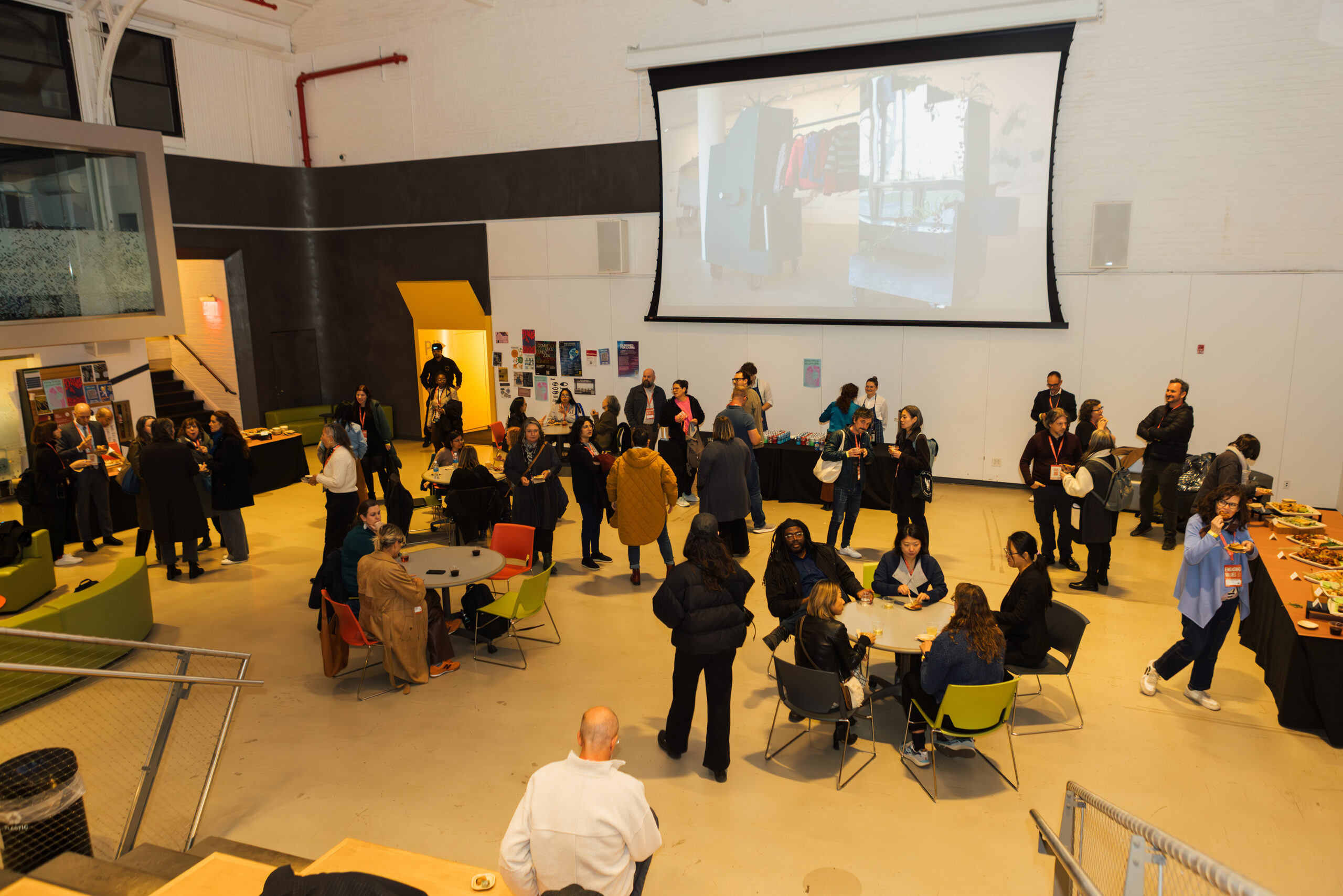
How can art and design facilitate conversation and creative approaches to challenging perspectives, differences, or complex problems?
This was one of the questions guiding the 2025 AICAD Symposium, a week-long exploration of the role of values in art and design education, which was held on Pratt’s Brooklyn campus. Across dozens of presentations, workshops, and panel discussions, educators, researchers, students, and thought leaders reflected on topics such as cultivating civic agency, designing sustainable systems, and reframing assessment.
“The 2025 AICAD Symposium was an important opportunity for Pratt to convene conversations with our peers around what we care about as a community of teachers and practitioners, what we owe to our students, our collaborators, and the public, and what art and design can offer the world today,” said Chris Alen Sula, Pratt’s associate provost for academic affairs.
The Association of Independent Colleges of Art and Design (AICAD), a nonprofit consortium of specialized arts and design colleges in the US and Canada, represents more than 50,000 students across its member institutions. Since July 2024, Pratt President Frances Bronet has served as chair of the AICAD board of trustees. She welcomed fellow school presidents and provosts to Pratt’s campus in the days leading up to the symposium for collaborative learning sessions, while the week closed with a celebratory gathering of AICAD post-graduate teaching fellows across the ten years of the program’s history.
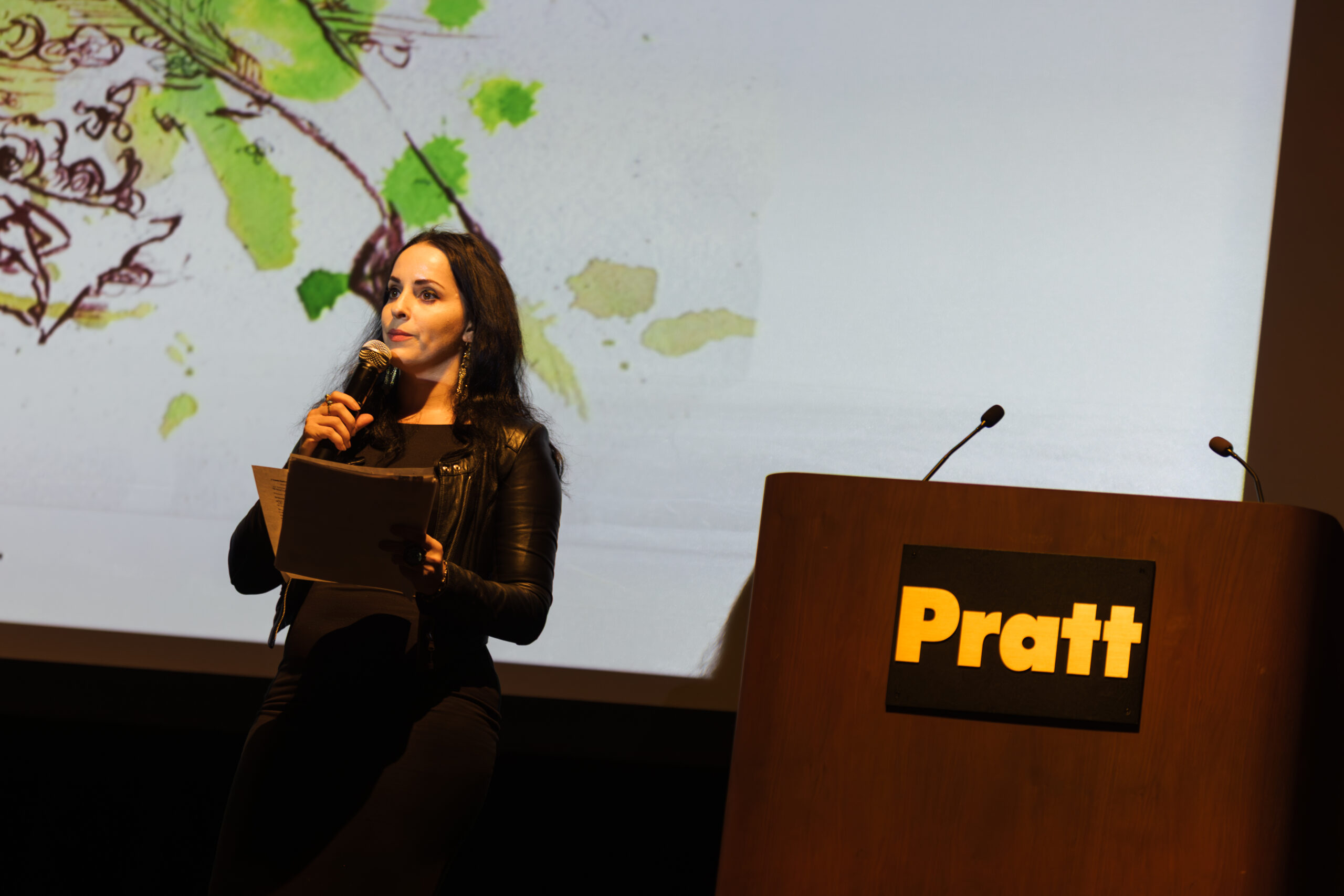
Award-winning illustrator, author, and activist Molly Crabapple gave the keynote address on the power of art and design education in a world of rapid change, from artificial intelligence to the climate crisis.
“What do we value in this world?” Crabapple asked. “First, before anything else, we must value our own humanity. Art is intertwined with what it means to be human and to be human is to create.”
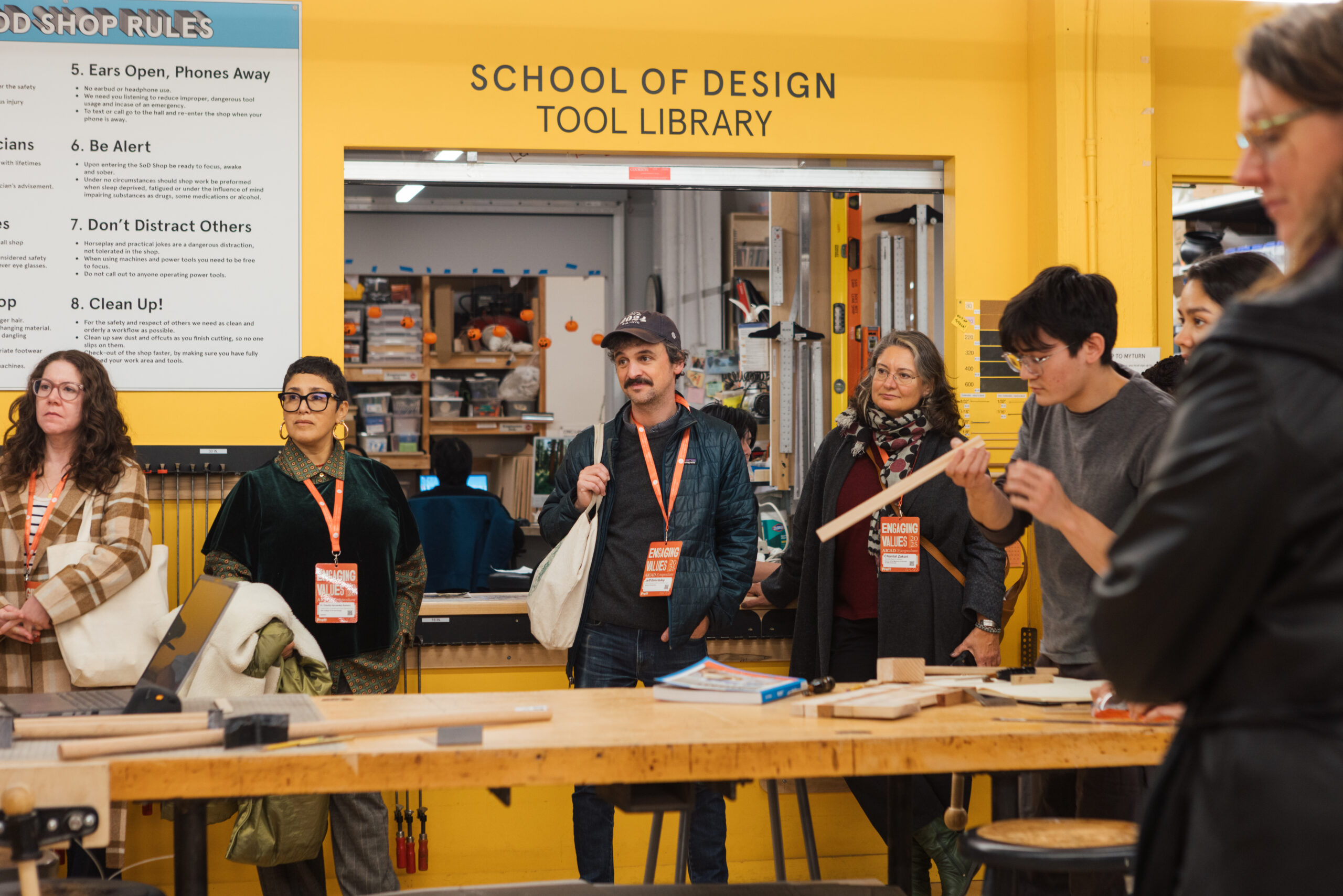
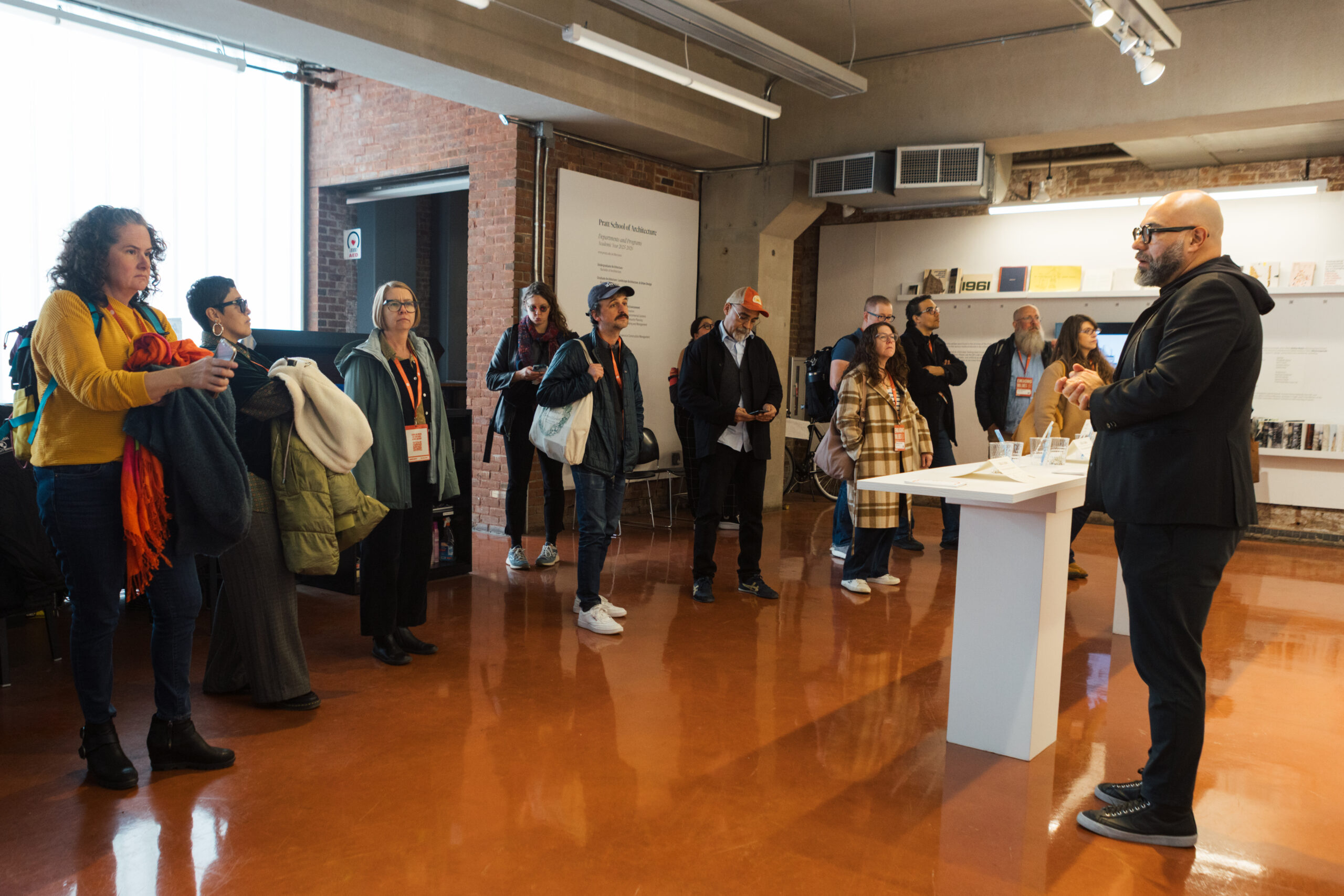
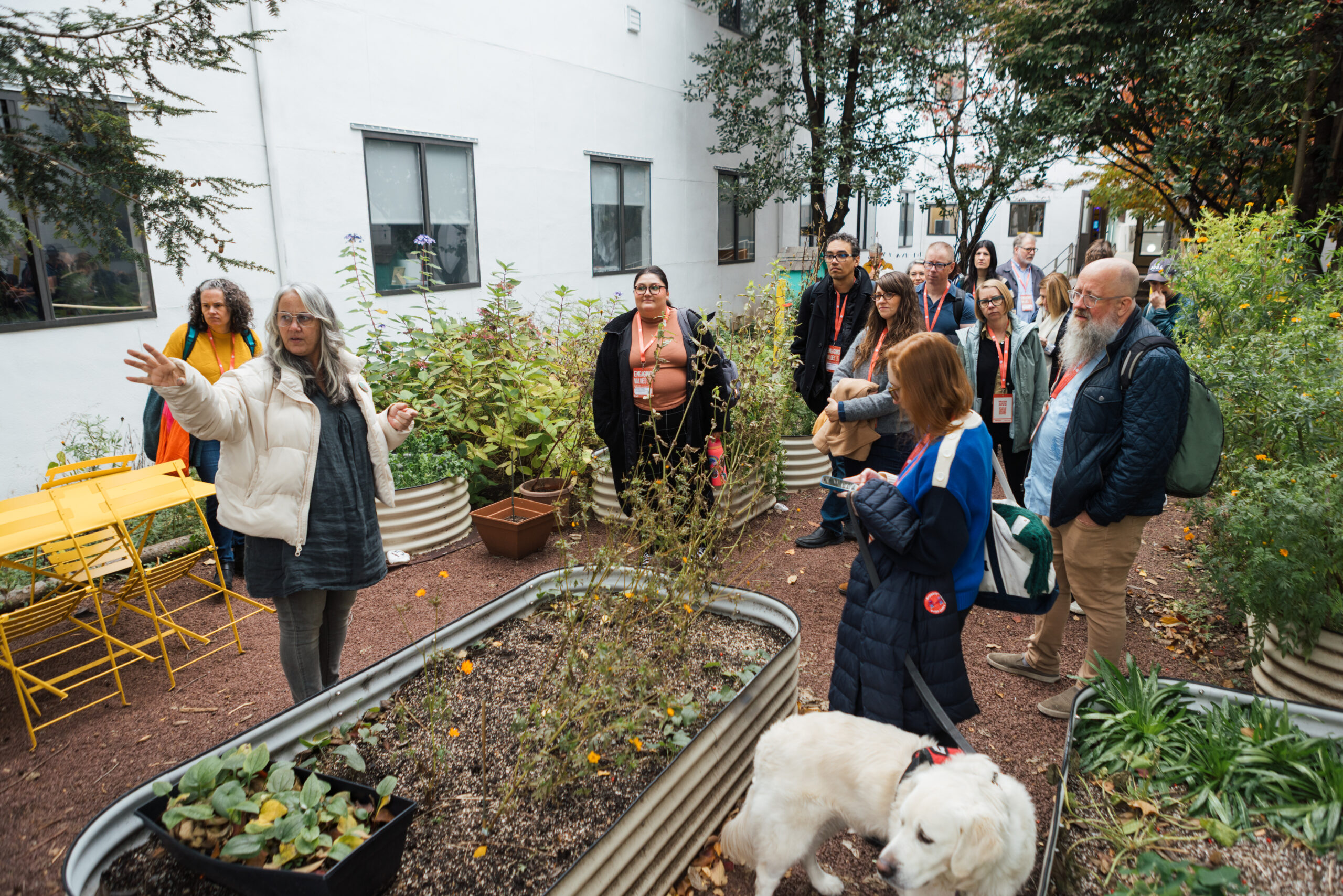
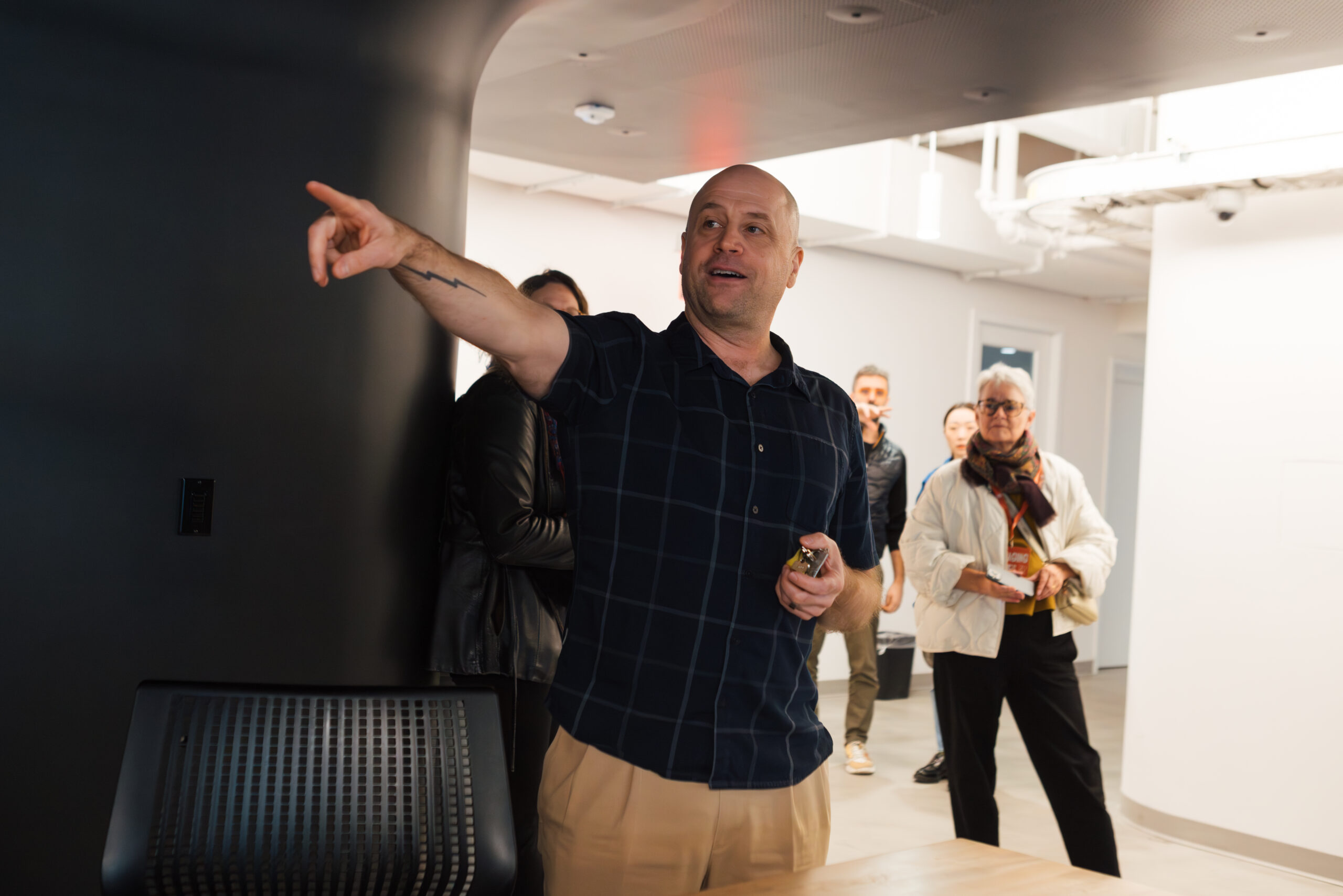
Throughout the symposium, attendees toured Pratt’s shops and labs, learned about its approach to research and grants, and engaged with dozens of Pratt faculty who shared insights from their research practices and classroom experiences. With faculty and staff deeply involved in programming, Pratt played an integral role in bringing this year’s symposium to life.
For example, in the “From Extraction to Enrichment: Designing Across Disciplines to De-Risk Futures” session, professors Innocent Ekejiuba, visiting assistant professor of creative enterprise leadership, Xue Bai, visiting associate professor and assistant chair of creative enterprise leadership, and Carl Zimring, professor of social science and cultural studies, discussed what it would mean to reorient design practices around regenerative frameworks, with Zimring asking how design education in the US will change in response to the European Union’s Ecodesign for Sustainable Products Regulation.
Across campus, similar ideas were echoed in “Place-Based Research: Listening and Learning from the Voice of the Land,” where Madeline Rugh, visiting associate professor of creative arts therapy, led participants through an immersive exercise integrating experiential, sensory, and land-based knowledge into creative research. Both sessions underscored the growing effort to integrate climate literacy into art and design education.
Sustainability in AICAD schools will be further explored at the Partnership for Academic Leadership in Sustainability (PALS) Annual Summit held virtually and on Pratt’s Brooklyn Campus in February.
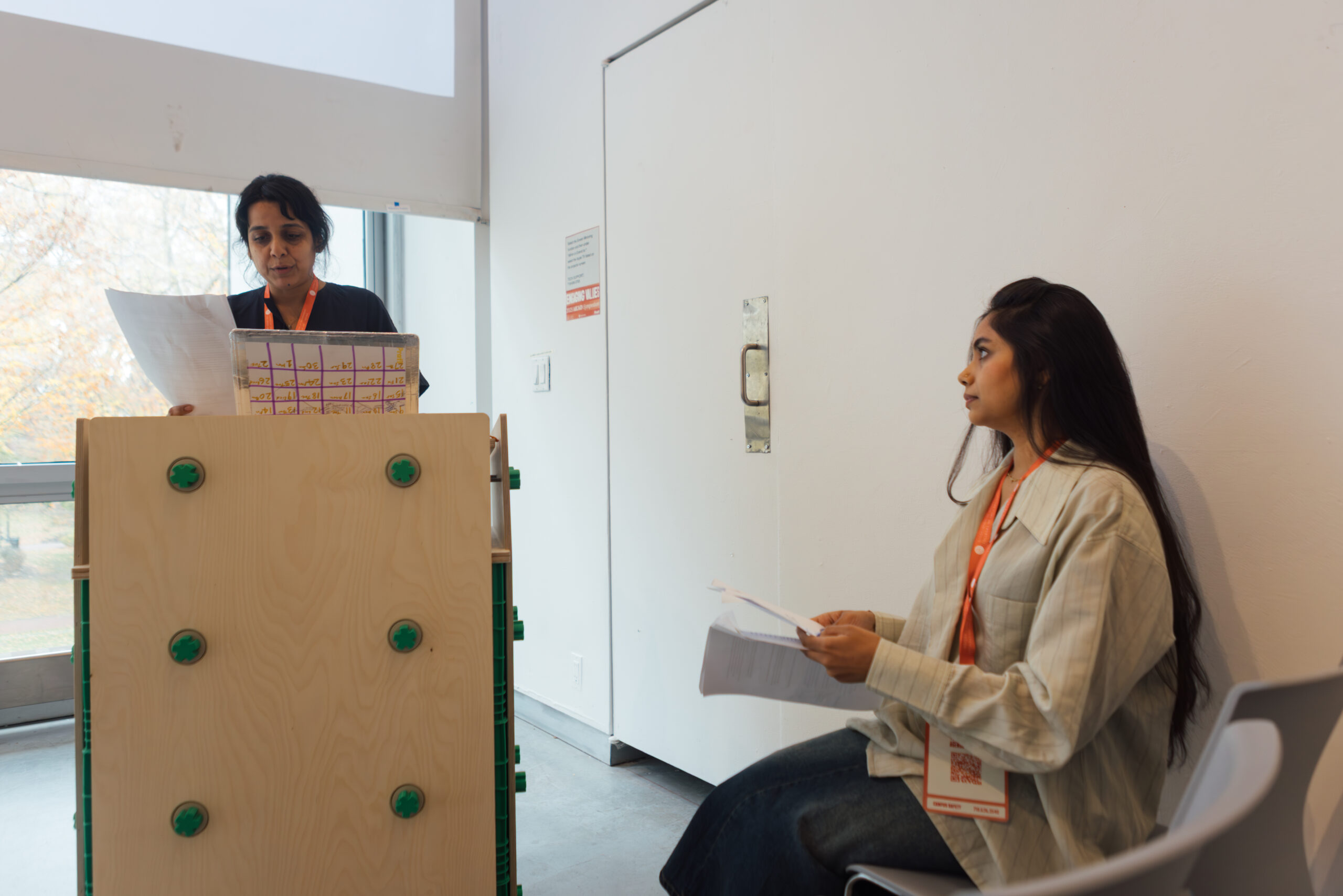
For the “Embodiment and Knowing: A Conversation Across Fields” session, Swati Piparsania, assistant professor of industrial design, and Karin Shankar, associate professor of humanities and media studies, engaged in a conversational performance around how Khayal singing and Kathak dance have influenced their practices, pedagogy, and research, opening up fresh ways to brainstorm and collaborate. This spirit of creative exploration was echoed in a presentation by Jonathan Lin, BFA Communications Design ’25, who shared how discovering his design voice at Pratt enabled him to launch his own design studio shortly after graduating.
A number of sessions explored the role of civic engagement in reshaping institutional and student values. In his presentation, “Course-Based Civic Engagement: Models and Tools That Build Connection,” Michael Kelly, adjunct professor – CCE of undergraduate communications design, shared insights from his work coordinating and evaluating civic-based projects at Pratt. Drawing from interviews, data, and visual mapping, Kelly presented a resource toolkit for faculty to use in the classroom.
Fine Arts Civic Engagement Fellow Alex Strada shared lessons from “Collective Mobilities,” an interactive mutual aid installation that collects donations for people experiencing homelessness. In between sessions, attendees could visit the mobile installation in the Student Union and donate items for later distribution.

In “Living Institutional Values: Co-Design, Community Engagement, and Civic Inquiry,” Irina Schneid, assistant professor of interior design, and Daniel Bergman, senior director of Pratt’s Center for Art, Design, and Community Engagement K-12, showcased a model for community-based design partnerships that center youth voices. Since 2022, their co-design projects have yielded public art installations and long-term relationships between Pratt students and local schools in Brooklyn.
Pratt’s commitment to the study of teaching and learning was on display in sessions such as “Teachers Watching Teaching,” a multi-year initiative in which faculty observed each other’s classroom practice to build a shared vocabulary for teaching across disciplines. In “Rubrics in Action,” Heather Lewis, professor of art and design education, and Kelly Oh, associate professor of art and design education, shared findings from a multi-year development of a holistic academic assessment rubric, highlighting how assessment tools can reinforce what institutions value in student learning.
Similarly, the session on Pratt Integrative Courses discussed how these cross-disciplinary spaces for experimentation help students “acquire and integrate skills and competencies from both studio and general education classes, recombining them in novel and unexpected ways that test, challenge, and expand their creative/critical capacities.”
Throughout the symposium, speakers agreed that engaging values is an ongoing process, a commitment to learning, reflecting, adapting, and connecting across people and disciplines. Whether by reframing how we teach, who we design with, what we assess, or how we organize knowledge, the 2025 AICAD Symposium at Pratt made it clear that values shape everything and can lead to a more just, sustainable, and creative future.