The EcoCultural Design Studio: A Trans-Disciplinary Exploration of Human Cohabitation within Natural Systems in the Context of Acute Climate Change
By Enrique Lanz Oca and David Ling
Accelerating global temperature increases are threatening the survival of communities worldwide through rising sea levels, extreme weather events, and permafrost thaw. This collaborative project advances interdisciplinary research, pedagogy, and community-engaged design through a comparative study of two communities on the front lines of the climate crisis: Quinhagak, an Alaska Native village in the Yukon–Kuskokwim Delta, and the liveaboard community at Garrison Bight Marina in Key West, Florida.
While Quinhagak faces permafrost degradation, coastal erosion, and food insecurity, Key West confronts sea-level rise, hurricanes, storm surge, and increasing pressure on affordable housing. The project has as the main objective the design of two climate-adaptive habitat prototypes that integrate architecture, interior and industrial design, environmental science, and indigenous/community knowledge.
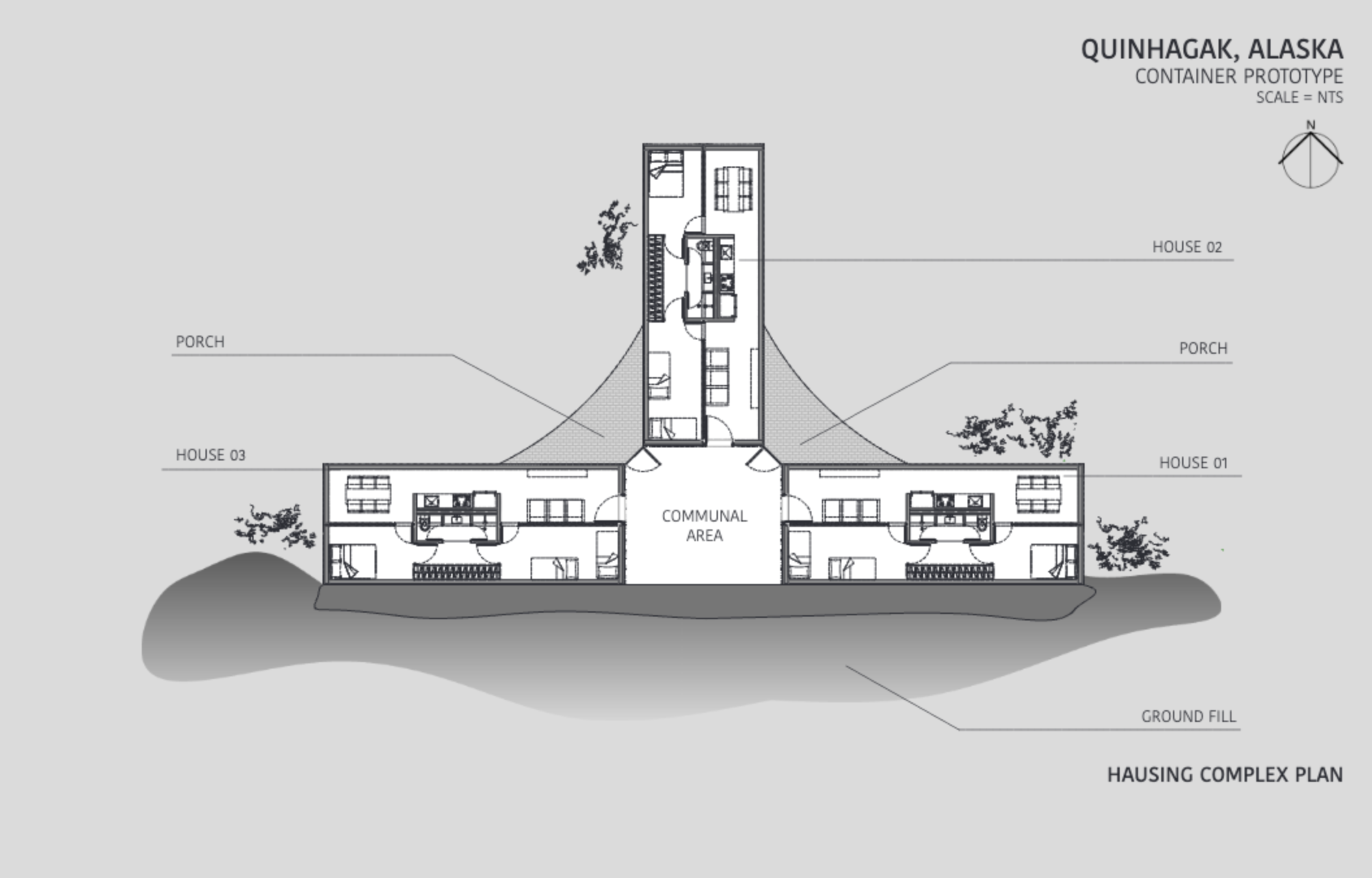
Using salvaged and locally available materials—such as shipping containers, industrial vessels, and reclaimed waste streams—faculty and students will engage in participatory action research, citizen science, and co-design workshops with community members, local tradespeople, and housing organizations. In Quinhagak, faculty-led research will produce a modular, container-based cultural and residential hub supporting housing, food production, renewable energy, education, and cultural continuity.
In Key West, the project will explore floating residential habitats adapted to rising seas through maritime-based construction. Together, these case studies function as a living research platform that advances faculty scholarship, supports curriculum development, fosters cross-departmental collaboration, and strengthens Pratt Institute’s leadership in climate-responsive design and community-engaged research.