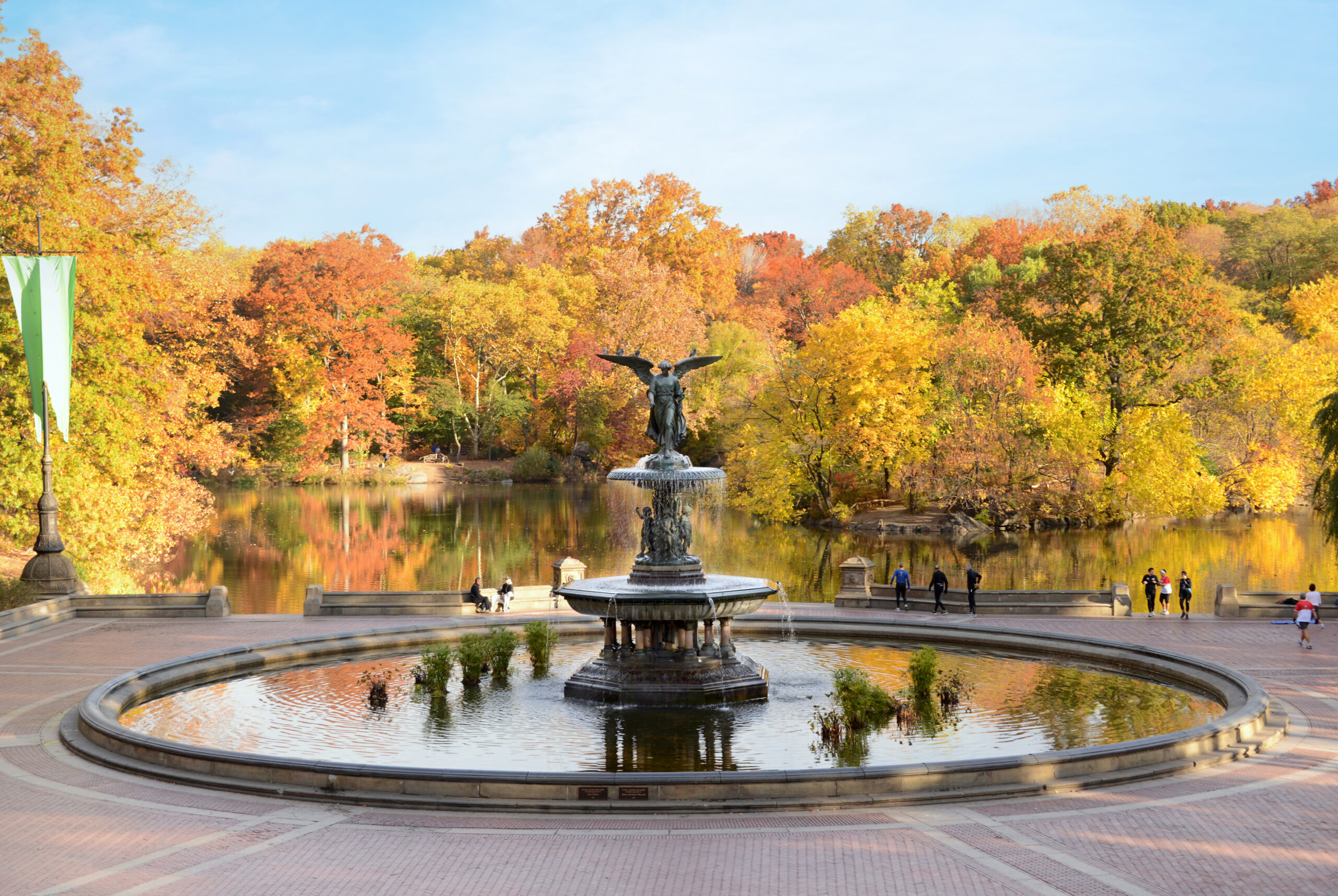
Over four decades, Sara Cedar Miller, MFA Photography ’83, has changed how New Yorkers see Central Park. As its longtime official photographer and historian, she chronicled how the Manhattan greenspace transformed from a neglected place few wanted to visit to the verdant heart of the city. “It was the great privilege of my life to watch this work of art go from being a national disgrace to the national treasure that it was originally back in the 19th century,” she said.
That designed quality of the park, where each vista of rocky outcrops, trees, and water was shaped under the vision of Frederick Law Olmsted and Calvert Vaux, still captivates her even after exploring nearly every inch of its terrain. When Central Park was fully realized in 1873, it allowed New Yorkers from all walks of life to forget for a moment that they were in a city. It was a democratic ideal expressed through nature that inspired the creation of city parks across the country.

“The whole park is entirely manmade, that’s the hard part that people can’t grasp, but it’s my favorite part to share when I give tours,” Miller said. “I talk about the park as a work of art. When we get to the cascade at the top of the park, all of a sudden, people go, ‘Oh, I get it. I feel like I’m looking at a painting.’”
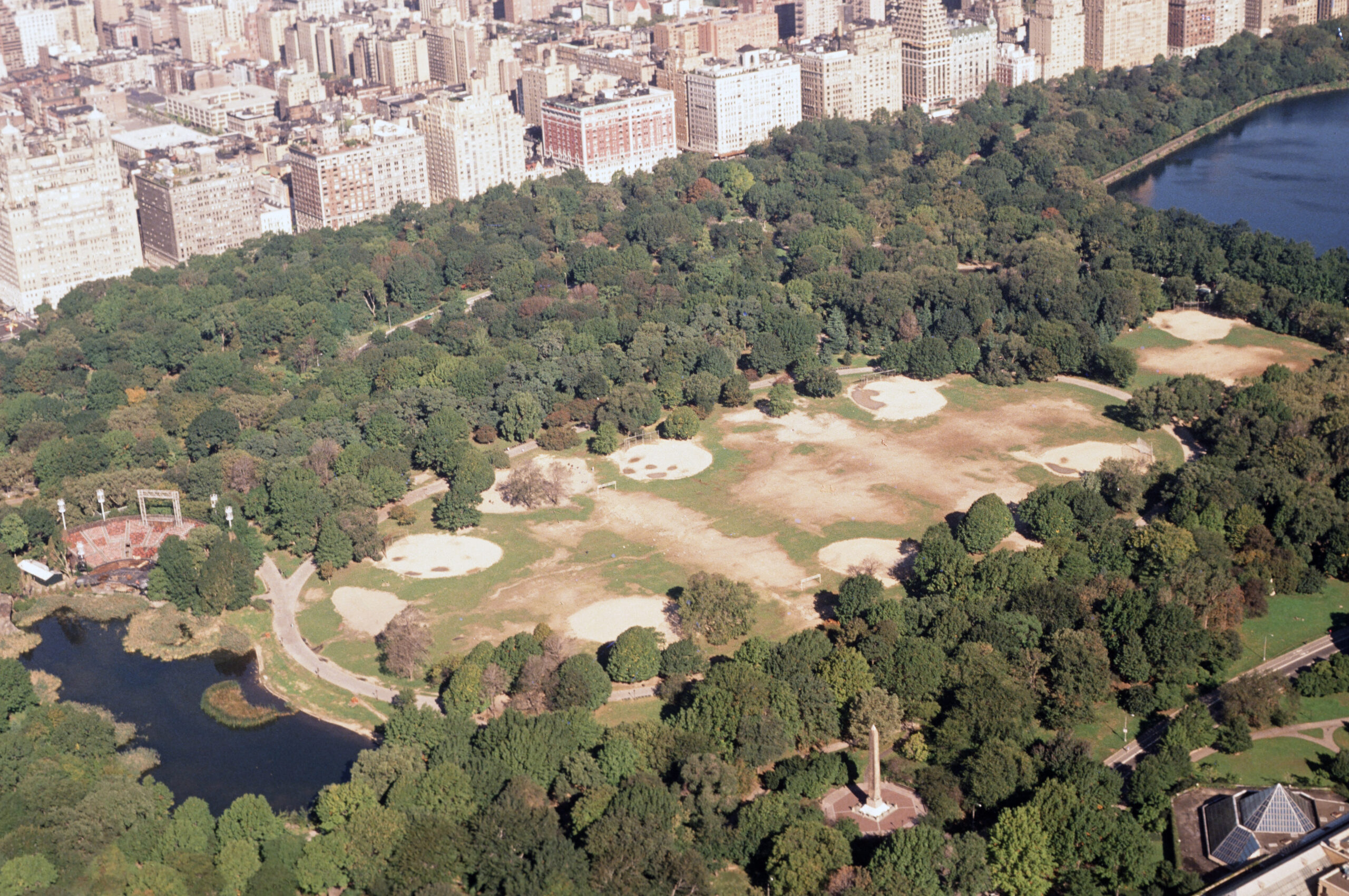
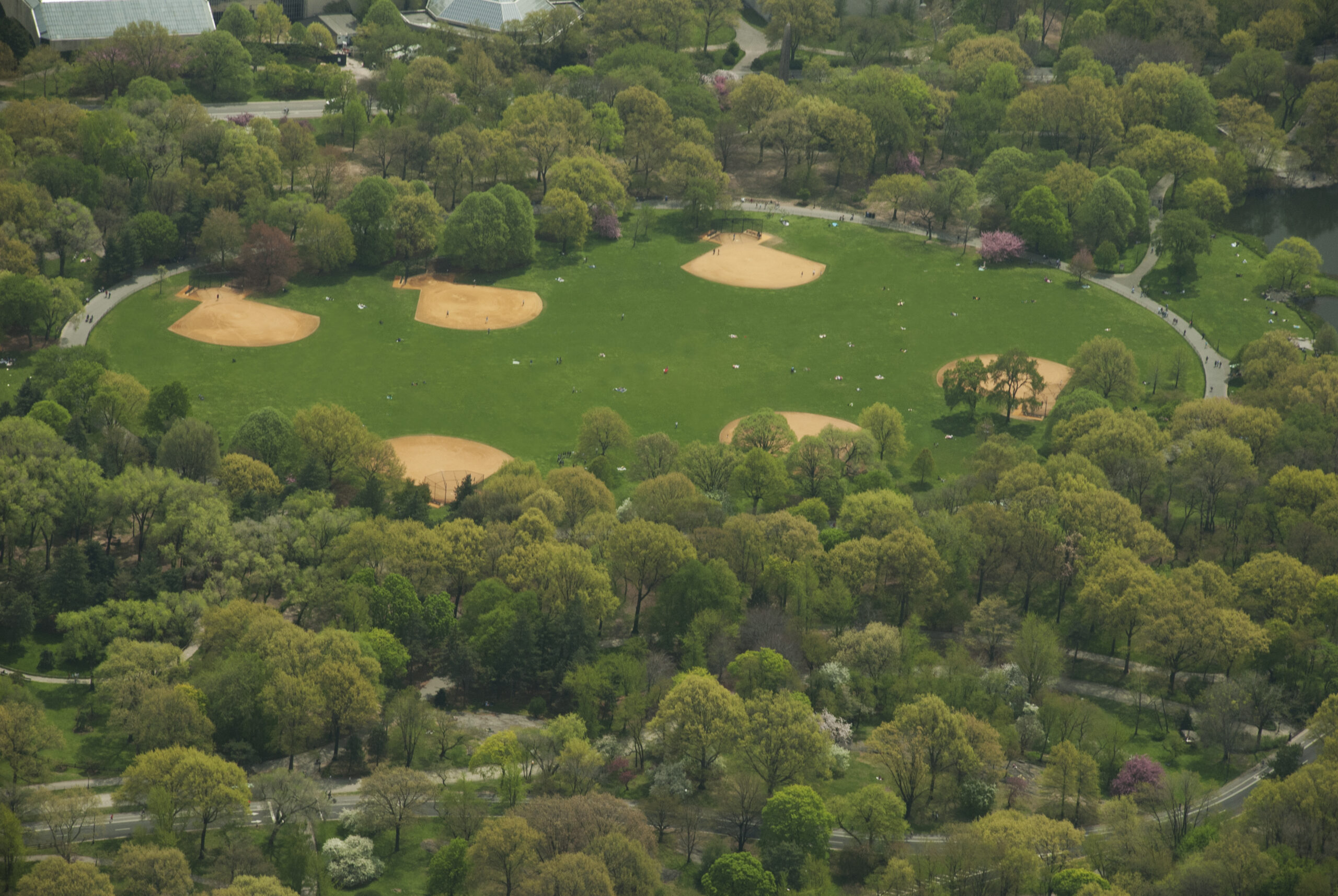
She already had a master’s degree in art history from Hunter College before she studied photography at Pratt Institute. After she graduated, she was working by making slides for artists to share their work with galleries, when she got a call from a Pratt classmate, Cynthia Larson, that changed the course of her career. The job opening was at the still new Central Park Conservancy, which had been founded in 1980 to do what many thought was impossible: rejuvenate the 843-acre landscape, which had radically declined for decades with no management plan for maintaining its nature and infrastructure. Her early photographs captured its deterioration, shocking donors into action. Over the years she visualized the Conservancy’s steady progress in renewing the park. For instance, the sprawling Great Lawn, which had been nicknamed the “Great Dust Bowl” for how it had become more dirt than grass, was restored into a lush landscape.
-
![]() The Great Lawn before . . .
-
![]() . . . and after. Photos by Sara Cedar Miller
“It was a crazy and wonderful experience in that one minute I’d be climbing a tree or being in the mud, and the next be at a fundraising event or party,” she said. “The clothing was a challenge for the job.”
Her photographs helped shift the perception of the park locally and brought wider attention to how advocacy for urban greenspaces mattered. “It’s become a worldwide movement for people to take back their ailing parks, and the Central Park Conservancy was the first and at the heart of that,” she said.
“I talk about the park as a work of art.”
Sara Cedar Miller
Five years into her photographer role, she became the park historian, adding intensive research into the park’s past to her picturing of its present. While she retired in 2017, she remains the park’s historian emerita and has published four books on its history. The most recent is Before Central Park (2022), for which she investigated its geological and social history, including previously unpublished research about the Black landowners of Seneca Village.

She compared how these two aspects of her work balanced each other to the two hemispheres of a brain. “The left side is knowing the ins and outs of the park visually and physically because I walked it almost every day and saw it in every season,” she said. “The right side is the history, and putting those two things together, each one informs the other. I think it made me a better photographer and it definitely made me a better historian.”
Now, following years of capturing the artistry in Central Park’s landscapes, she has returned to her own fine art photography practice, continuing to concentrate on nature but in a more abstract way. She credits her time at Pratt with confirming the importance of making art. “I walked in with a question mark. And I walked out knowing that I was an artist.”