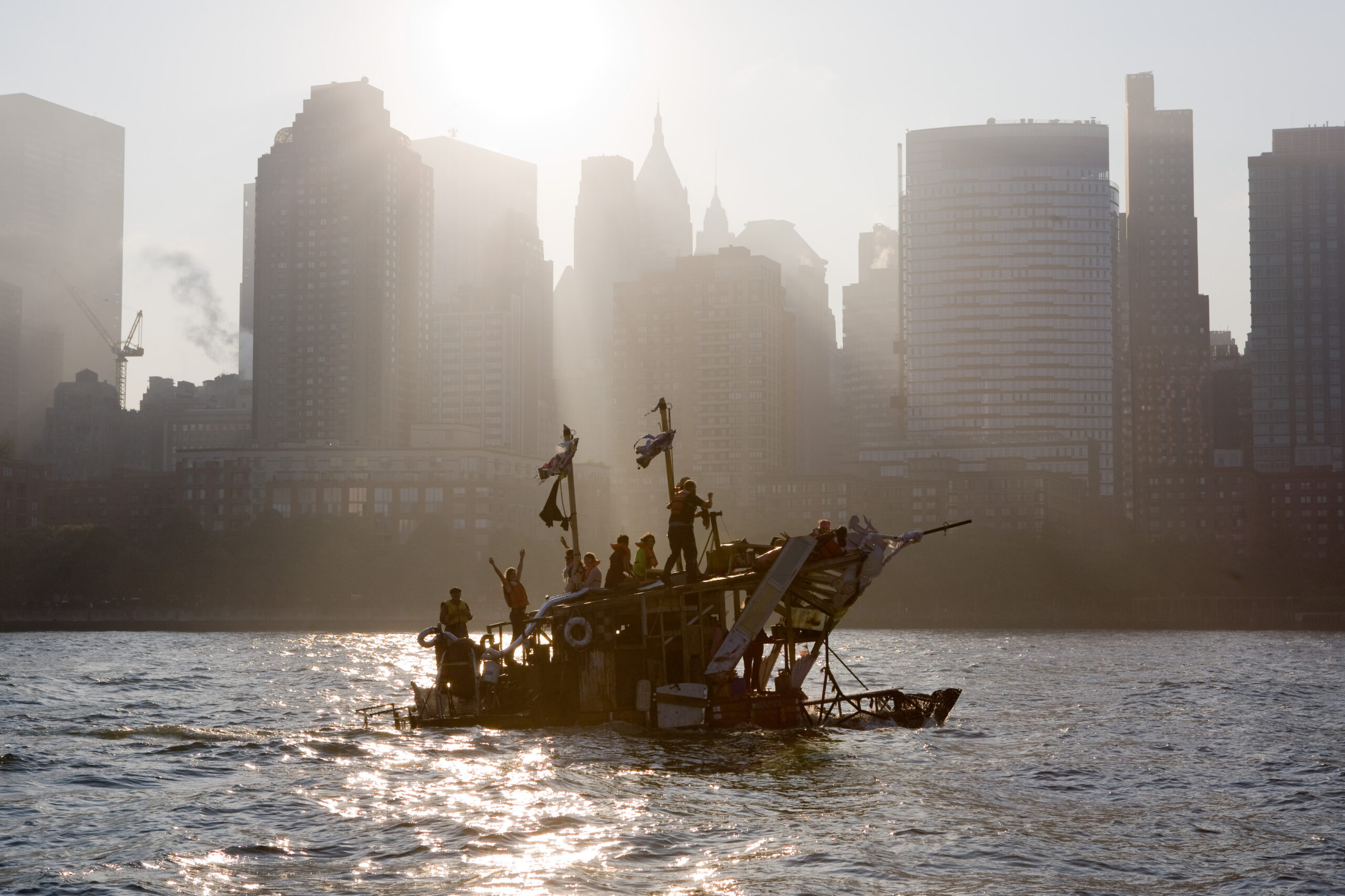
In September 2008, seven handmade boats docked at Deitch Studios on the East River in Long Island City, completing a three-week journey down the Hudson River. These vessels—collectively titled Swimming Cities of Switchback Sea—represented a year of construction, the work of 75 collaborators, and the realization of a decade-long vision of the street artist Swoon (Caledonia Curry, BFA Fine Arts ’02).
Built from scrap wood and discarded materials scavenged from New York City construction sites, the rafts embodied a DIY ethos that seemed to anticipate the precarity ahead. The war in Iraq and growing environmental concerns had already prompted many to question their relationship to resources and consumption. Just weeks after they docked, Lehman Brothers collapsed, triggering the worst economic crisis since the Great Depression.

This project, Swimming Cities of Switchback Sea, had lived in Swoon’s head since her time at Pratt. “I had been talking about this project for 10 years before it ever happened,” she recalled to Prattfolio. At one point, she intuited that her career had gained enough momentum to realize her vision. “Suddenly I felt this energy where I was like, OK, maybe this is really possible now.”
“We together can do something so much bigger than any one person can do by themselves.”
Swoon gained her first experience rallying artists around a shared goal as a student. At the time, Myrtle Avenue was lined with illegally installed billboards. She organized her fellow painters to cover them in art. “That morning where we all did it and everyone’s work came together, it was like this instant change had happened,” she said. She realized that “we together can do something so much bigger than any one person can do by themselves.”

Fast forward. The Swimming Cities crew learned boat-building techniques from the Floating Neutrinos, a group that had previously crossed the Atlantic on handmade rafts. Working in a borrowed abandoned building, Swoon’s volunteers removed nails from lumber while experienced builders guided beginners through construction. Balancing artistic vision with practical demands required compromise, as crew members pushed back against sculptural choices that could result in getting poked with metal while sailing. “Anytime a group of people are trying to do things together, it’s incredibly rewarding and also incredibly time consuming, and usually involves a lot of fighting,” Swoon said. “We were no exception there.”

Despite their ramshackle appearances, the boats were fully registered and inspected. Still, the crew faced constant negotiations with Coast Guard authorities. “They kind of hated us, but sometimes we could get them to see us as lovable ragamuffins,” Swoon said. The vessels projected a sense of lawlessness even when operating within regulations, generating both excitement and fear in the river towns where they docked for performances. The rafts became “living symbols of freedom.”
Swoon once had a dream of a guardian gathering vessels to safety beneath her skirts as the tides rose. This dream came to life as the boats reached Deitch Studios, where they were tethered to a 25-foot paper sculpture of two embracing women, a work titled Switchback Sisters. In a year that would soon demand resilience from everyone, Swimming Cities of Switchback Sea suggested that, even in collapse, refuge could be found in community and creation.