The tension of waiting for a reply to a text, an adrenaline-spiking confrontation in an angry comment section, or the exhaustion of a midnight doomscroll: digital life is rarely just about exchanging information. It’s an emotional obstacle course.
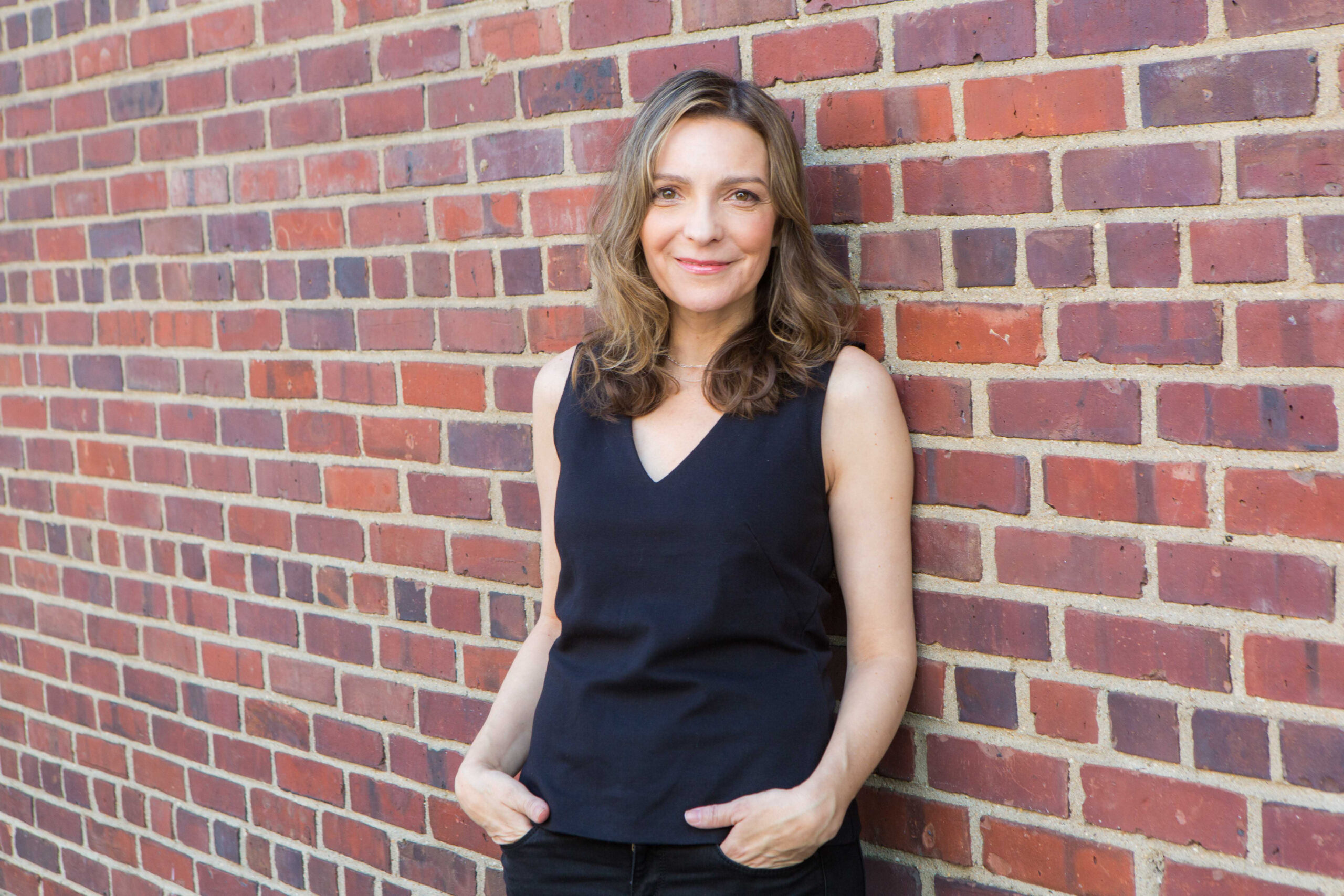
In her new book, All the Feels: How to Stay Human in the Digital Age (Algonquin/Hachette, 2026), Pamela Pavliscak examines how technology quietly reshapes the way we feel. Pavliscak, an expert in human–computer interaction who teaches design, user experience (UX), and how to incorporate AI into product design in Pratt Institute’s School of Information, translates behavioral research into practical tools for everyday life. Her insights are tailored for anyone who has ever felt overwhelmed by a flood of notifications or closed an app feeling more depleted than when they opened it.
Pavliscak connected with Prattfolio to share what it takes to support our emotional well-being in a digitally connected world.

You describe the internet as the “biggest emotional disruptor of our time.” What makes the experience of being online often feel exhausting or overwhelming?
Once the internet stopped being a tool we occasionally used and became a place where a lot of life happens, that’s when it really started to change our emotional lives. Friendships develop there and often get very complicated. We experience love and heartbreak. We grieve and celebrate together online. Basically, as much as we might crave time offline, IRL and URL are part of the same experience now.
Digital environments alter the basic conditions where emotions happen. Partly, this is in design details. A read receipt, originally intended to convey a simple “message received,” can become a tiny referendum on a relationship. An algorithm can expose you to somebody’s wedding, somebody else’s layoff, a war, a corgi meme, and your ex’s vacation before you have even rolled out of bed. We are subject to the whims of the feed, but we also shape the experience through our behaviors.
What surprised me in the research was how inventive people are in response. People create etiquette, jokes, rituals, and workarounds almost as quickly as technology creates new awkwardness. My diary archive, where I collect documentation of people’s digital lives, has included everything from mothers who text their kids from the next room to keep the peace to young people using TikTok as a form of emotional support.
Designers create possibilities and pressures, intentionally or incidentally. People interpret them, resist them, repurpose them, and invent around them. Emotion happens in that exchange. And people aren’t simply absorbing whatever technology does to them. They are constantly figuring out how to live with it.
I love it when internet culture invents the coping mechanism before researchers have even figured out what the problem is.
Pamela Pavliscak
Contrary to many thinkers in the tech space, you don’t recommend that people “digitally detox” or go on “screentime diets.” How did you arrive at this conclusion, and what do you recommend instead?
I began research for All the Feels, expecting there would be a fairly straightforward relationship between time online and well-being. There really isn’t. Recent studies suggest that what we do, why we do it, and how we experience it can tell us more than the raw number of minutes. If you think about your own use, that starts to make sense. Forty minutes talking to your best friend, forty minutes making music, and forty minutes doomscrolling all count as forty minutes of “screen time,” but emotionally they have very little in common.
So I’m more interested in emotional fit than abstinence. I think that’s more sustainable, too. My advice is to pay attention to what leaves you energized and what leaves you agitated or depleted, then change the behavior based on that feeling. Sometimes that means changing notifications. Sometimes you could choose to create an endpoint where one hasn’t been designed, or opt to send a voice note rather than a string of texts.
That approach looks more like choosing how technology fits into your life, rather than occasionally flipping a light switch on or off.

New lawsuits have brought increasing scrutiny on the impact of social media on teenagers in particular. As both a parent and a researcher, what is your perspective on the role that social media plays in the emotional lives of teenagers?
Teenagers deserve particular care because adolescence is already a period when identity is in flux and other people’s opinions carry enormous emotional weight. Social media adds visibility to all that. Who saw it? Who liked it? Who was left out? The ordinary social intensity of adolescence becomes amplified.
At the same time, I’m wary of portraying teenagers as helpless victims of technology. In my research, young people were pretty sophisticated observers of digital life. They developed complex, often unspoken, rules about group chats, location sharing, close-friends lists, and which version of themselves belonged in which space. Something as small as sending a TikTok at midnight can mean, “I’m thinking about you,” without requiring the terrifying vulnerability of actually saying that.
Since social media can intensify social pressures, the legal scrutiny of design features such as infinite scroll and algorithmic recommendation makes sense to me. Recent cases and legislation are increasingly focusing on the design of these systems rather than treating harm solely as a matter of individual self-control. We can’t expect a fourteen-year-old to possess enough self-regulation to counter systems built by teams of adults whose job is to keep people engaged. Of course, all of these issues are extremely relevant to future designers!
Because social media also gives teenagers spaces for friendship, humor, creativity, and identity exploration, I’m not sure blanket bans are the best approach, though. So far, the bans in Australia and the UK haven’t made a significant change in the mental health of teens. That isn’t surprising given that the pressures of modern life extend beyond phone use. And, of course, teens are smart enough to circumvent bans, too.
Pamela Pavliscak on New Digital Feelings and Psychological States
Naming an experience can make it easier to notice and manage. Psychologists call this emotional granularity, which means that the more precisely we can distinguish what we’re feeling, the more options we may have for responding to it. Digital culture has become a real source for identifying new feelings, which I don’t think we fully appreciate.
Here are three of my favorites:
⌚ 💤 😰
Orthosomnia
Sometimes researchers name a phenomenon. Orthosomnia is the anxiety that can develop when tracking sleep starts interfering with sleep itself. Sleep researchers introduced the term when they discovered people get preoccupied with achieving a perfect sleep score. You wake up feeling fine. Then you look at your watch, and the data says you had a terrible sleep, and suddenly you’re exhausted. It does capture one of the stranger paradoxes of digital self-tracking.
🙃 💖 🤝
Ironesty
Culture researcher Greg Dember coined the term ironesty to describe a stance that’s common online. We couch vulnerability in a layer of irony, kind of as self-protection. Once I learned the term, it made me realize how often humor functions as a kind of pressure valve online.
I think the same idea—coming up with a term for something new we experience—applies to AI, too. Right now, we don’t have a lot of language to describe the experience, so I’ve been experimenting. I’ve used epistemological vertigo for the dizzying feeling of not knowing whether something is true. On the more pleasurable end, capability glow is that little rush when AI helps you do something you didn’t think you could do, like code an app in a few hours or create custom background music for a party.
👺 🧀 🗑️
Goblin Mode
Goblin mode is one of those feelings that emerged from internet culture as a cheerful refusal of polished self-presentation. It’s when you give your aspirational self the afternoon off and eat shredded cheese directly over the sink in your grungiest sweatshirt.
I think its popularity is connected to a larger family of what I classify as feral feelings. Bedrot, brat, chaos gremlins, unhinged, match my freak, and other variations keep resurfacing. Even though the actual phrase cycles in and out, the idea holds true. It’s a counterpoint to highly curated online identity. I love it when internet culture invents the coping mechanism before researchers have even figured out what the problem is.