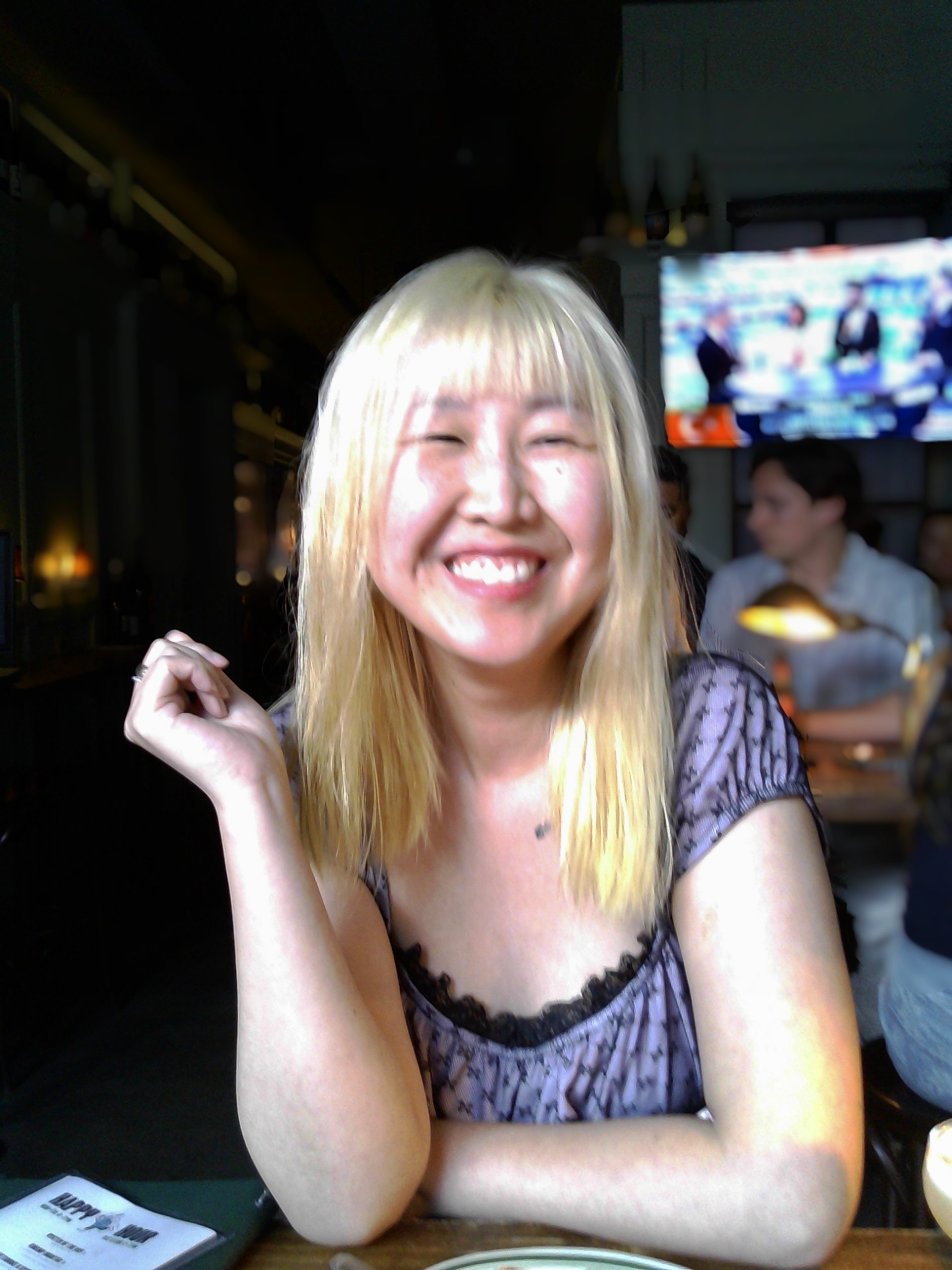
Claire W. Zhang, MFA Writing ’24, was born and raised on the border between China and North Korea. After 10 years in business and graduate study in finance and management, she turned to creative writing in English, her second language.
Now based on Long Island, she edits fiction at The Baltimore Review, with work in The Pinch, Hobart, Third Coast, The Florida Review, Another Chicago Magazine, and elsewhere. Her Chinese-language nonfiction appears in The World in a Day, sponsored by Colm Tóibín, and was a finalist for the RedNote Life Writing Award; she was also longlisted for the 2026 A Public Space Fellowship.
In this Q&A, she talks about leaving a business career for the Pratt Writing MFA, her multilingual writing practice, and how her editorial work informs her understanding of the literary landscape.
What surprised you the most about the transition from a business career to pursuing creative writing?
I actually thought my business experience hurt me at first, because few people shared my frame of reference. At times I felt as if I was always wrong; combined with my second-language background, that could create a perfect storm of misunderstandings and unintended offense.
But I do believe it prepared me for a writing career in a strangely liberating way: writers will be misunderstood, no matter what. What I am responsible for is making sure my language says precisely what I’m trying to say, which means striving for “fundamental accuracy of statement,” as Ezra Pound put it.

What has the experience of writing creatively in a second language been like, and how has it shaped your voice as a writer?
People who speak English as their first language often don’t realize the privilege of being able to create so naturally in a language with enormous global reach (often, of course, because of colonial histories). I resent that fact, but I also envy the accessibility of it.
My own first language is a censored one (not to say English isn’t, though perhaps its censorship is better hidden), so sometimes I feel doubly hamstrung. I think that has made me suspicious of language in general: I’m always aware that the words available to us come with rules about what can be said, what can be understood, and by whom.

How did the MFA program prepare you for a writing life?
The Pratt Writing MFA program has deep roots in activism and social engagement, and I was able to unlearn many of the patterns of thinking I’d acquired from my previous life working in the world of capital. For that I’m grateful.
One particularly important part of that experience was the personal guidance I received from Professor Amir Parsa because of our shared interest in multilingual practices. He saw in me the person I was but had yet to become.

You have a remarkable number of stories published or forthcoming. What does your writing practice look like, and how do you stay so prolific?
I think there’s always a gap between the private process and the public result of artistic creation that many artists are reluctant for others to see. Part of that private process involves figuring out what’s considered “right” and “publishable,” and how one approaches those standards.
My finance instinct tells me to study the system, recognize its patterns, and respond accordingly, just as you would with the stock market, so I submit extensively and keep up with the literary industry. My artist instinct tells me the opposite, so I refuse to let my submission experience dictate what I write.
The result of balancing these two instincts is that I’ve published a few stories in magazines I admire, that I’m never satisfied with the work I’ve done, and that the best story is always the next one.
You’re also an editor at The Baltimore Review. How does working on the editorial side inform your own writing?
The benefit is that I get to see how submissions are read from the other side. It has made me notice all kinds of things that can affect a piece’s chances of being accepted, craft or non-craft, and has given me a more realistic understanding of what has become an overused trope and what writing tricks are no longer effective. It also allows me to see how subjective the process can be.

For someone considering pursuing an MFA, what would you want them to know before they take that leap?
Every MFA program has its own unique sensibility, and it’s important to understand what that sensibility is before deciding where you want to spend those years. While undergraduate programs may help you find yourself, MFAs are usually past that stage. They’re supposed to help you thrive as the person you already are.
Explore Writing programs at Pratt: