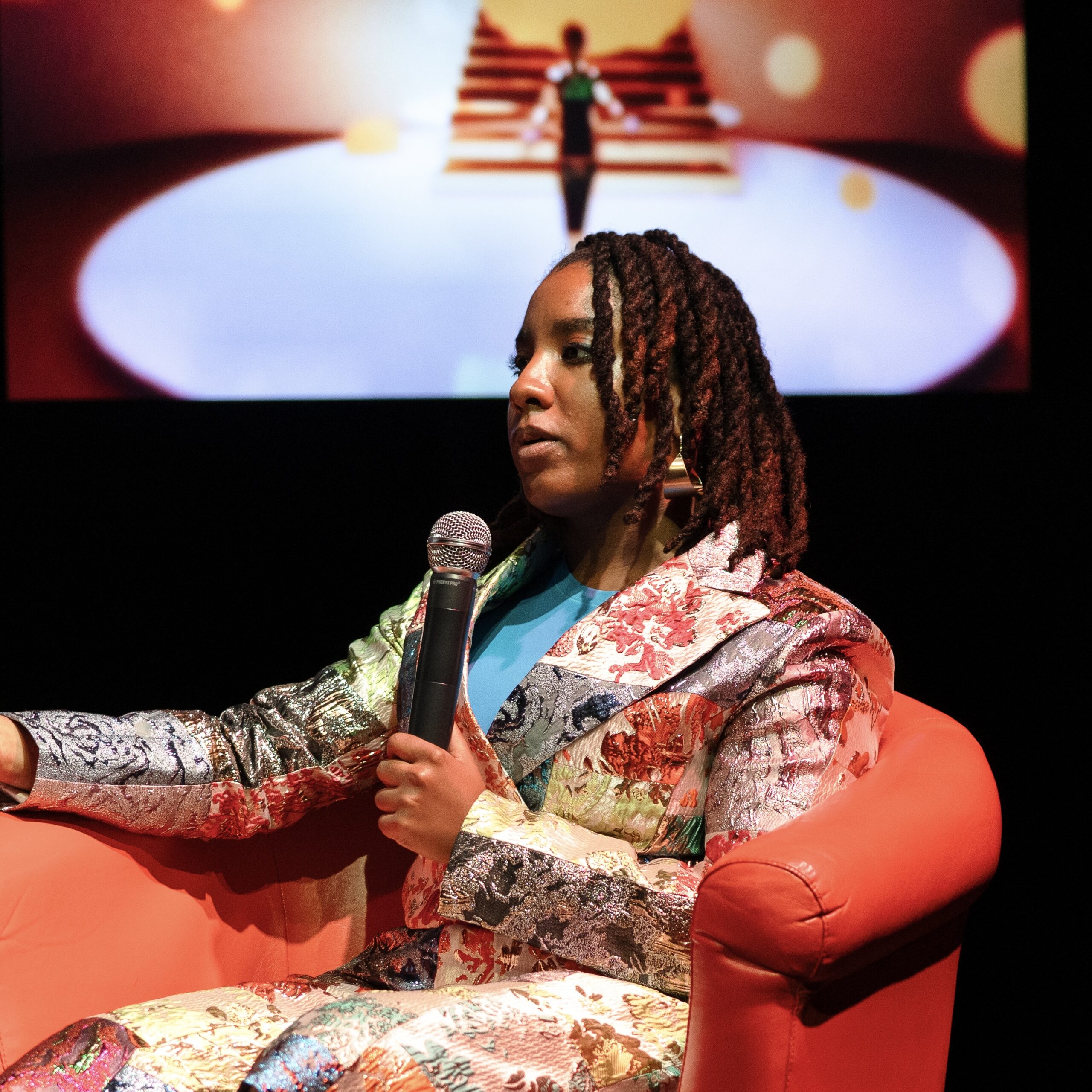
There are more opportunities than ever to create and experience digital art without being tethered to a screen. Projection mapping, LED video wall environments, and motion-controlled interaction are just some of the ways artists, designers, and programmers are pushing its boundaries. Three Pratt Institute digital arts alumni shared how they are working at this intersection of the digital and the tactile and embodied, and why, despite the ubiquity of technology in our lives, there are still exciting ways to use it to foster connection and create new experiences as the physical and digital worlds blur.
Bringing the Museum off the Walls
Like many cultural institutions, the National WWII Museum in New Orleans uses digital interactives to enhance its exhibitions. One signature experience is the Dog Tag Experience, where visitors receive a card embedded with an RFID (radio-frequency identification) chip that personalizes the visit by linking them to the story of a real World War II veteran. At various stations throughout the museum’s Campaigns of Courage pavilion, visitors tap in to follow that individual’s journey and view archival materials and oral histories, and they can revisit the content later through an online portal—extending the experience beyond their time in the museum. It was one of the first projects Stephanie Sassine Balistreri, MFA Interactive Art ’14, worked on after joining Unified Field as an interactive designer in 2014.

“For us, the technology is not the star of the show,” Balistreri says. “It’s more about what is the best way to deliver a story. In museums, people are moving, and they don’t have a long attention span. So for all of our experiences, we ask, What do we want the visitors to take away from this experience in two to three minutes? And if it’s a visitor who wants to dive in deeper, it can also provide that for them.”
Before her graduate studies in interactive art, Balistreri worked as a graphic designer specializing in digital work. Since joining Unified Field, a Brooklyn-based experiential design firm, she has overseen interactive projects that integrate storytelling with technology across museums, libraries, universities, and other cultural institutions. In her role, she shapes not just the interface and visuals but the underlying systems that bring a visitor’s journey to life.
“You can’t write books on the walls, or spoon-feed people every single piece of information you want them to absorb,” Balistreri says. “So what we do is we help visitors connect with the museums, connect with the subject matter, and leave with that enduring connection.”
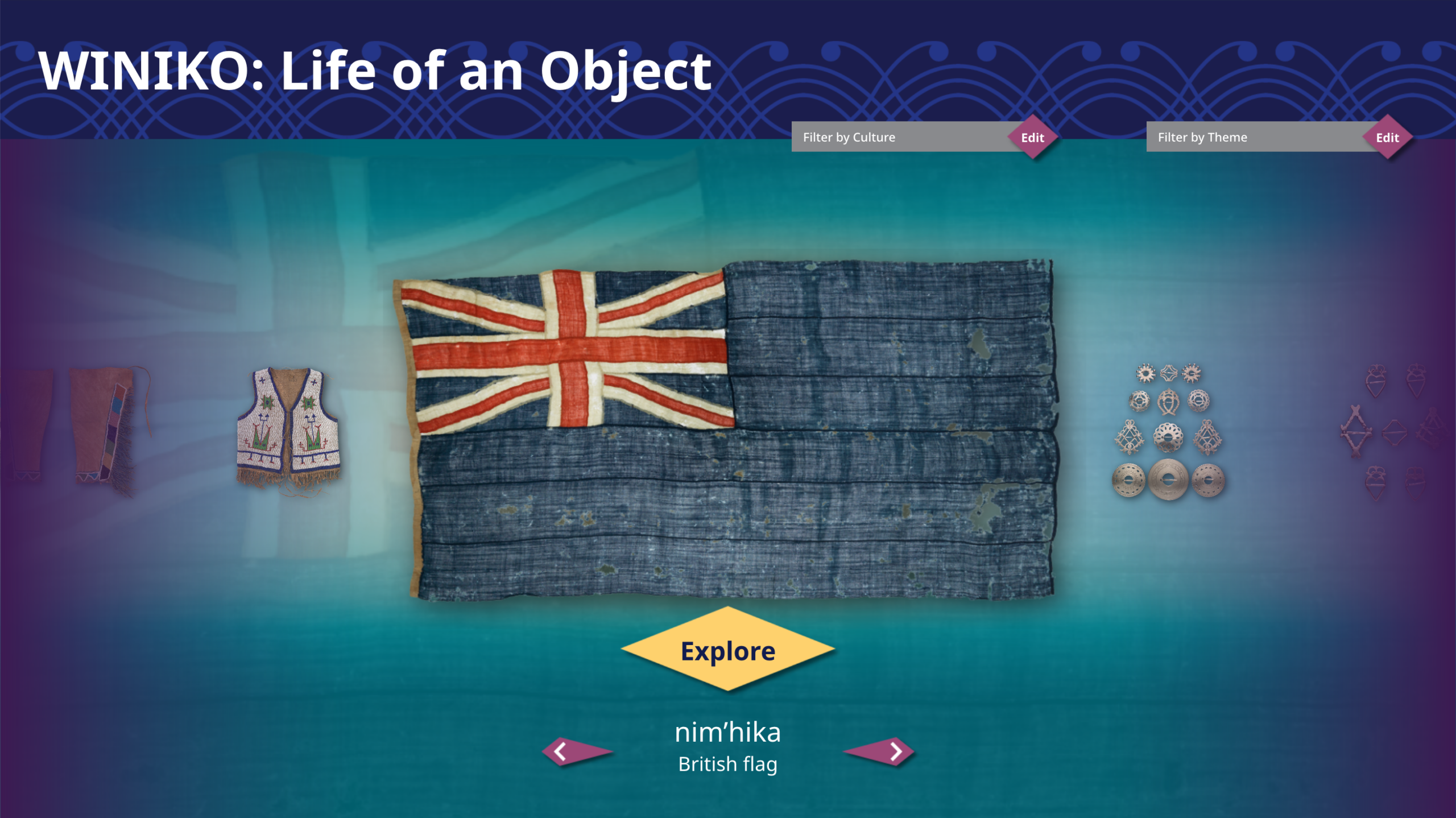
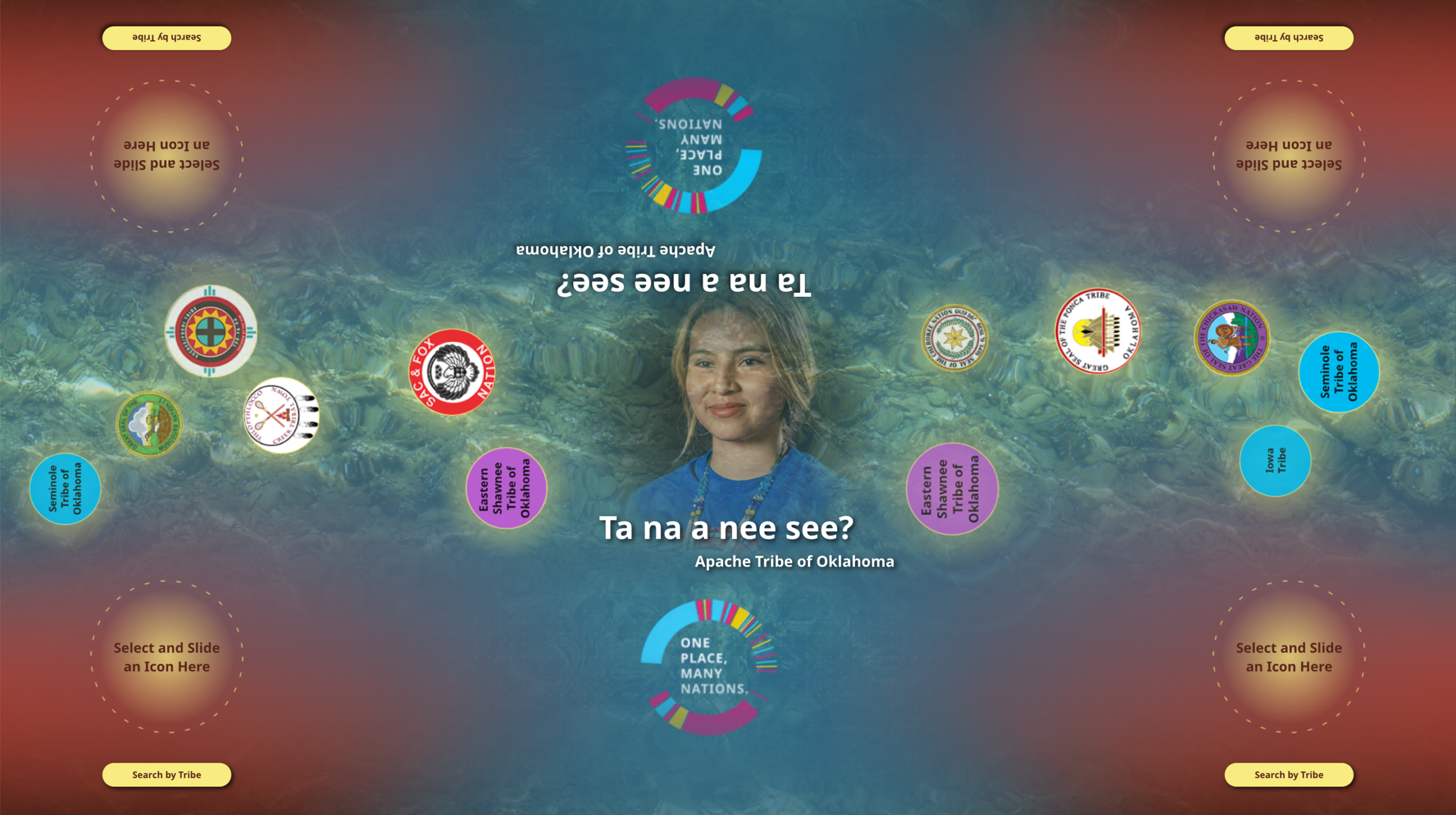
For Oklahoma City’s First Americans Museum, which opened in 2021 and shares the histories and cultures of Indigenous people in the state, that meant using digital experiences for cultural storytelling. Some of Unified Field’s contributions include digital timelines, explorations of the different tribal nations, and interfaces activated by gesture and body movement based on traditional games, as well as searchable databases of objects and veterans. The veterans databases allow families to digitize photos and documents to preserve and honor tribal veterans’ stories, reflecting the museum’s mission to foreground personal narratives.
“The experiences that we’re delivering should feel natural and effortless, and that is where design, and also good programming, comes in,” Balistreri says.

She is also involved in major digital initiatives at the Smithsonian’s National Air and Space Museum in Washington, DC, where ongoing gallery renovations have incorporated large-scale video and interactive media to complement artifacts such as aircraft and spacesuits. These elements help visualize milestones in aviation and space exploration while highlighting contributions from historically overlooked groups, from women mathematicians to pioneering pilots.
“Every single project, even every single exhibit within the same museum, is different,” Balistreri says. “You’re always learning new things, because you are designing for new things.”
Remixing History
Caroline Voagen Nelson, MFA Digital Arts (Animation) ’17 and an assistant professor in digital arts and animation, likewise uses digital experiences to encourage fresh views on history. Her digital art practice incorporates a range of approaches, from animation to projection mapping, to create immersive environments based on extensive archival research.

“It’s very important to me that things feel tactile and that you feel emotionally and physically connected,” Nelson says. “I think now more than ever, especially with the prevalence of AI, things feel even more static and separate. The sense of the human touch is so incredibly important.”
Even her animation work for the screen has this textural quality, such as her short Code Ruth, which uses stop motion, collage, and 1940s archives to tell the story of how her grandparents met through Morse code during World War II.
“I really love learning about these different stories from the past, some of them stranger than fiction,” Nelson says. “I remember thinking, how can I make something inspired by these stories? It was my gateway into animation.”

Nelson was formerly a photojournalist, contributing editorial photography to major magazines. She found that the medium had limits to the stories she wanted to tell, which led her to experiment with stop motion and then pursue her graduate studies at Pratt. She compares her process to “solving a puzzle,” as she fits together fragments of history with various technologies.
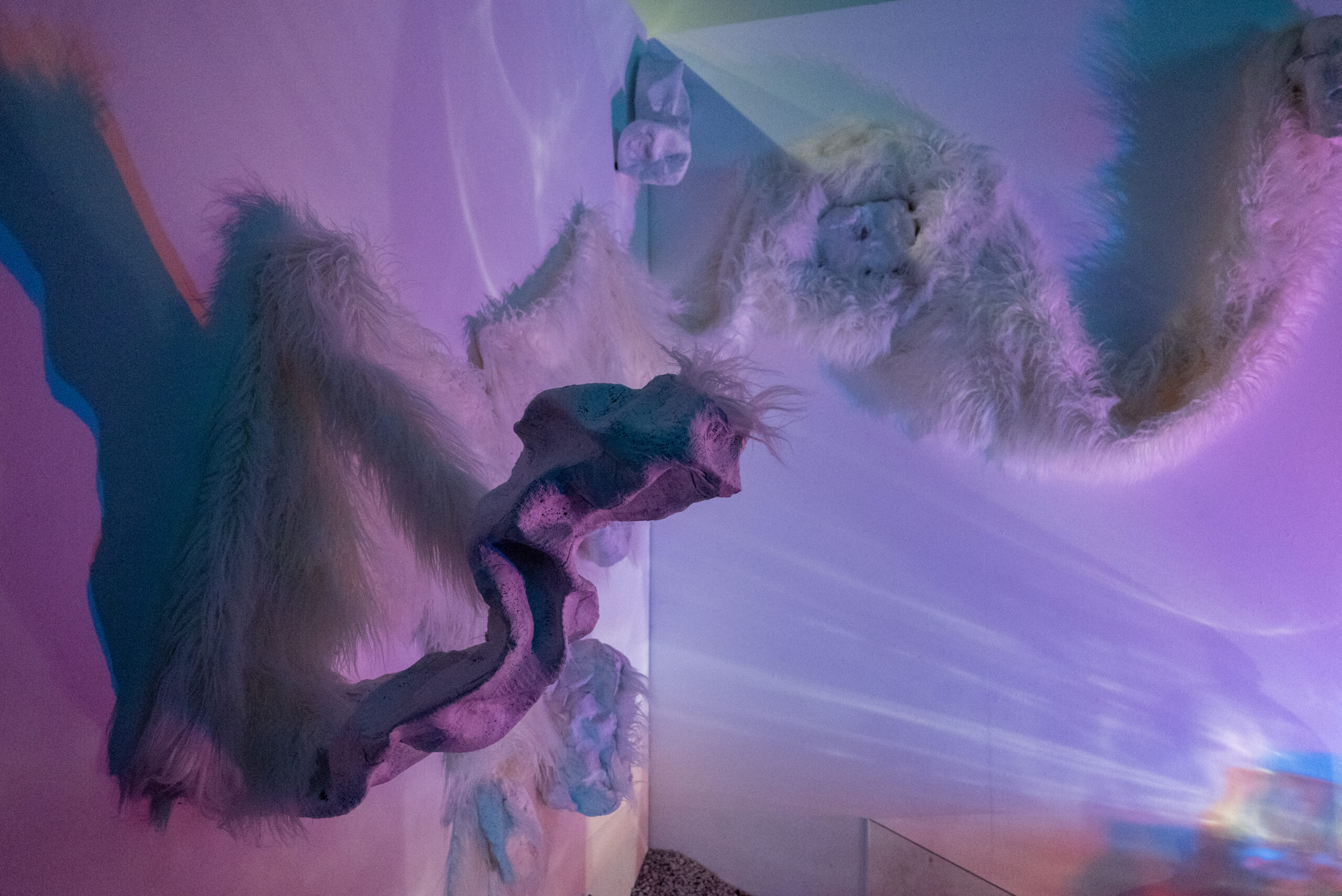
“I feel like with any of the tactile installations, the animation, the sculpture, the digital installation all have to have equal weight of effort,” she says. Alongside the 2020 centennial of the ratification of the 19th Amendment, she created Her Vote, in which animation on the suffrage movement was projection-mapped on a clothing line strung with historic or Edwardian-style garments. For the series currēns, on systems of value, she built a small landscape of takeout containers inspired by amusement park dark rides. Projection mapping animated its path with objects once used as currency, like salt and shells, to consider how our money has become detached from the material world.

“A lot of new technology can feel slapped on if there wasn’t this deep thinking of intent with why are we choosing this surface, this place, this material with this moving imagery,” she says. “I find that there has to be a lot of pre-production, like the deep thought of answering the why. I’ve seen so much projection mapping where it becomes like a template, and it’s not curated to the specificity of the project.”
She’s been working with Pratt students to take this thoughtful approach in a video projection mapping course. In spring 2025, her students exhibited at Brooklyn’s BioBAT Art Space. They prototyped their installations until two group projects were accepted to be featured in the exhibition Water Stories.
“Teaching really deepens my understanding of my own practice,” Nelson says. “Students often come in with ambitious ideas that stretch beyond the assignment, experimenting with techniques that reflect their individual creative visions. I genuinely enjoy working and troubleshooting alongside them, supporting their growth while also learning from their fresh perspectives.”
New Screens for the Big Screen
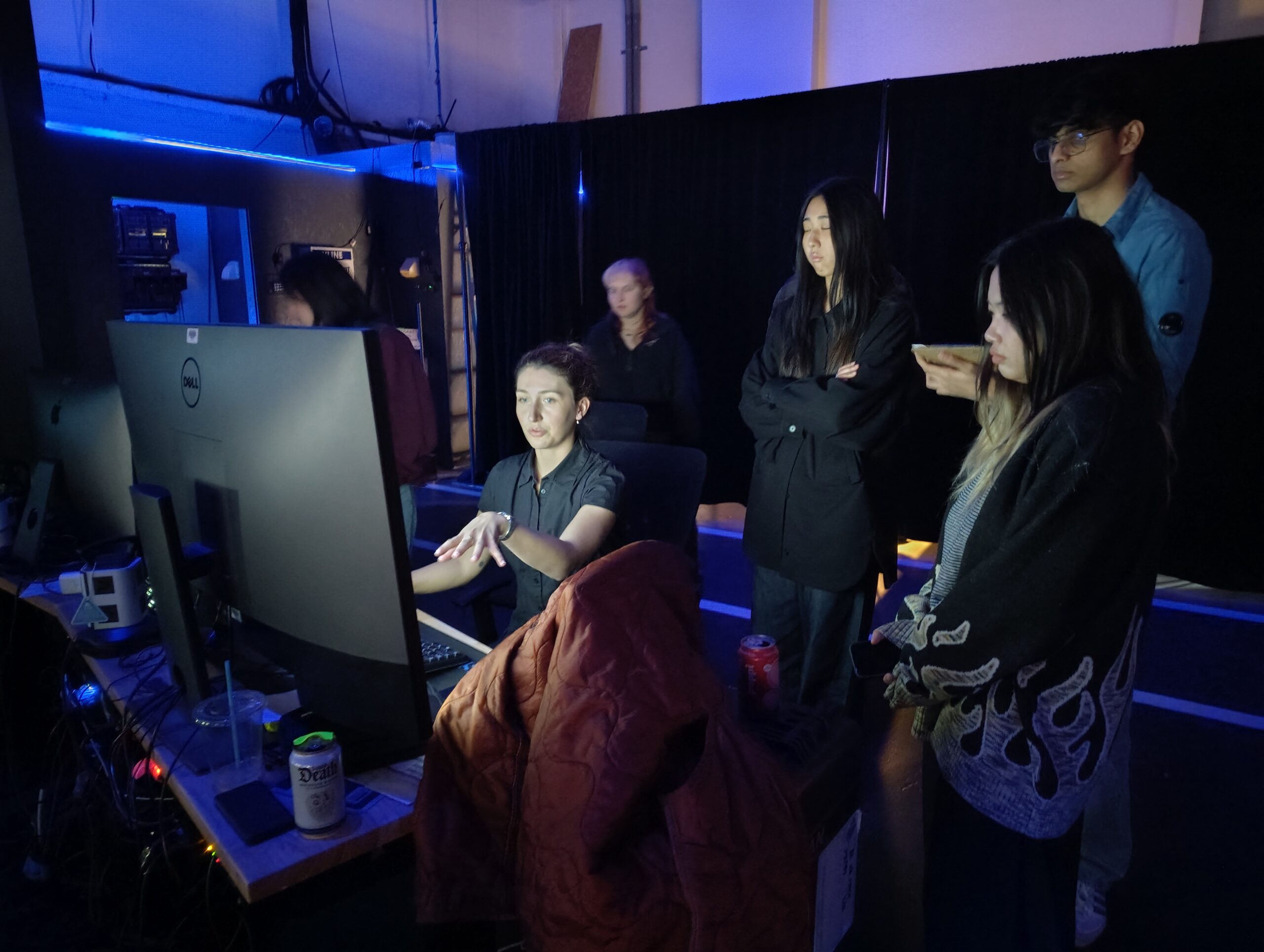
Eve Roth, BFA Digital Arts (3D Animation) ’20, has also been introducing Pratt students to the ways that digital art can augment a physical environment for creative work. She is the director of 3D workflows at 4Wall Entertainment, which has several offices and locations around the country, including stages in Brooklyn’s Gowanus neighborhood and Yonkers. Her focus is on producing in-camera visual effects, where, instead of green screens that are filled in later, high resolution LED walls provide backdrops to television and film that react to actors and narrative in real time. She recently assisted in students’ projects for a Virtual Production class, for which they visited the Gowanus studio.

“I’m typically on set working with DPs and directors and gaffers to set the look of the LED wall that we’re shooting on,” Roth says. “I’ll be communicating back to the programmer controlling the wall. It’s usually used for driving playback, but sometimes we get into the more interesting, fun stuff, which is the 3D, Unreal Engine camera tracking side of things.”
Unreal Engine was developed to render detailed 3D graphics for video games in the late 1990s, and over the years, it’s had expansive non-gaming applications. Roth first encountered it as a student working on an animation project.
“It was kind of an accident,” she explained. “When I was at Pratt, we were doing our thesis films. My friend was taking a game design course and she was telling me about this program that has real-time rendering. It was Unreal Engine.”
After using it for her thesis, she connected with a director at Netflix who was looking for someone to work with Unreal Engine for rendering material for a feature animated film. This led to other roles in production using the technology. It wasn’t until she saw how The Mandalorian was harnessing huge LED walls for its digital fantasy landscapes that she considered the potential for 3D rendering that actively engaged with a physical environment. She joined 4Wall in early 2024, after working at NantStudios in Los Angeles, where she was an operator working on projects that included Westworld.
“The technique has been around for a while, but I started working in the industry just before it got really popular,” she says.

It’s especially useful for fantasy and sci-fi to visualize otherworldly terrain; one of her recent projects was for the forthcoming Steven Spielberg UFO film Disclosure Day. However, she noted that one of its most widespread uses is something far more grounded: driving plates. These are screens that make it look like actors are driving without actually moving. With a program called Disguise generating 2D videos that are played back on the LED walls, the gleam of passing cars can be accurately represented; the lighting on the actor can be responsive, as if they were driving through a city or storm.
“If you start getting into designing a set or something that people are going to be in, you really have to think about the feeling of being in this room and how to make it interesting,” she says.
There is still a lot developing in this field, with possibilities to make the physical and digital sets even more seamless. Roth observed that for students interested in digital arts and production, being exposed to what technologies are emerging is essential, particularly as so much is constantly changing, and what may be experimental now could transform the industry in a few years. As she says of the path of her own career, “All of these experiences have naturally progressed and helped me prepare for the next thing that’s coming.”
Related Reading
Dreamscapes
Prattfolio Story