Lauren Scott
Work Samples
-
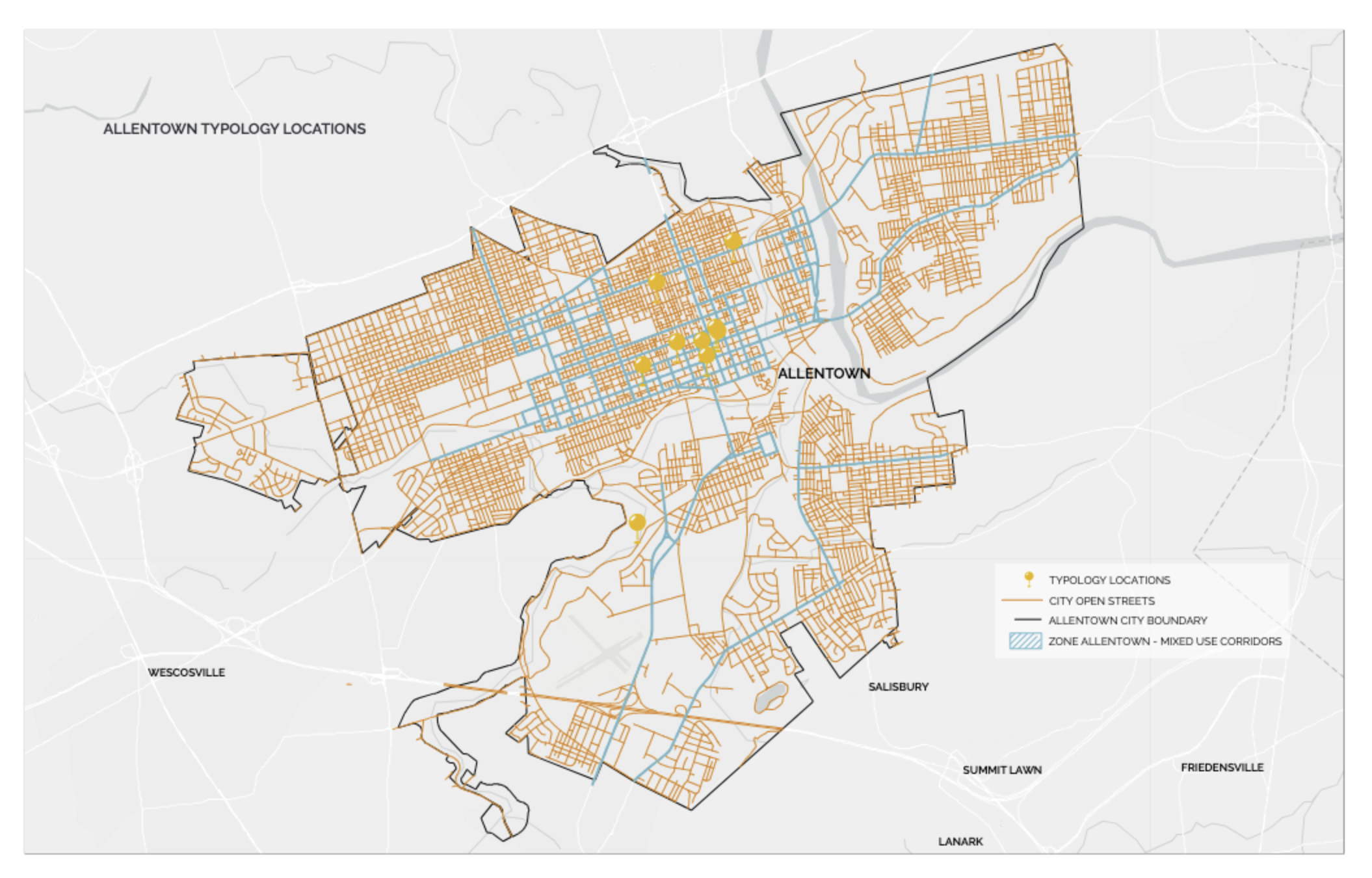
![A map of Allentown showing city streets and boundaries. Key features include various typology locations marked with yellow dots, the city boundary outlined in black, and mixed-use corridors highlighted in blue. The map also includes labels for nearby areas such as Wescosville, Salisbury, Summit Lawn, Friedensville, and Lanark. The overall design is a blend of orange lines for streets against a light gray background.]()
Urban Heat Adaptation in Small Cities
Urban heat increasingly threatens small cities across the United States, creating an urgent need for evidence-based, community-centered approaches to mitigation in these under-resourced contexts. This research addresses the urgent gap between current conditions - where vulnerable populations lack protection from dangerous heat - and future permanent infrastructure by developing interventions that serve immediate needs while informing long-term planning.
Allentown, Pennsylvania presents a compelling case study with one of the highest asthma rates nationally and demographic diversity that raises environmental justice concerns regarding differential heat exposure.
This research investigates urban heat island effects through intensive GIS mapping exercises identifying small city spatial typologies and populations of particular vulnerability. The work develops deployable systems utilizing local, recycled, or off-the-shelf items that non-specialists can build and deploy as needed, supporting Allentown's Climate Action Plan while creating interventions replicable across similar municipalities.
Drawing on principles of spatial agency and participatory design and construction, interventions are positioned as enabling framework rather than monument-building, creating deployable heat mitigation systems capable of responding to local climate flows, material opportunities, and spatial qualities. These rapidly-assembled structures - sunshading systems, water features, and wind management installations - require no specialized expertise to construct or manipulate, inviting communities to adapt interventions as needed.
Critically, these seasonal interventions function as both immediate relief and participatory planning tools. Community stewardship of "temporary" structures generates lived experience and qualitative data about heat vulnerability, spatial use patterns, and intervention effectiveness - invaluable evidence shaping future permanent infrastructure investments.
These interventions can be replicated and adapted across cities, processes and methods communicated through simple instructional drawings. Students act as testbed for buildability, positioning architectural education as active practice in addressing our most urgent environmental challenges while advancing climate justice, equity, and resilient community development.
-
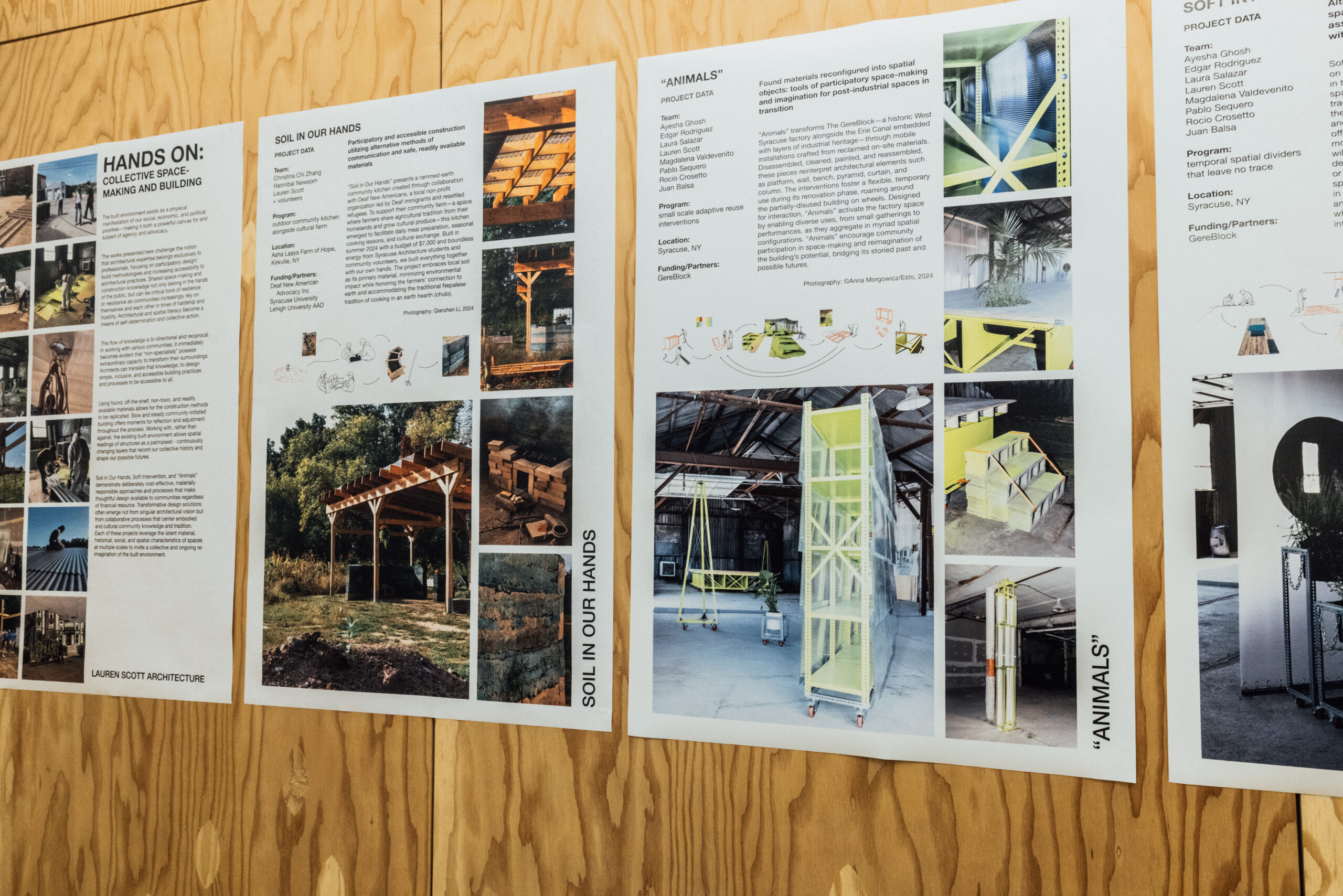
![Photo of an exhibition wall displaying four vertically oriented architecture project posters mounted on a wooden surface. Each poster features a different student or group design under the theme “Hands On: Collective Space-Making and Building.” The posters include project titles such as]()
Hands On: Collective Space-Making and Building
"The built environment exists as a physical manifestation of our social, economic, and political priorities—making it both a powerful canvas for and subject of agency and advocacy.
The works presented here challenge the notion that architectural expertise belongs exclusively to professionals, focusing on participatory design/build methodologies and increasing accessibility to architectural practices. Shared space-making and construction knowledge not only belong in the hands of the public, but can be critical tools of resilience or resistance as communities increasingly rely on themselves and each other in times of hardship and hostility. Architectural and spatial literacy become a means of self-determination and collective action.
This flow of knowledge is bi-directional and reciprocal. In working with various communities, it immediately becomes evident that “non-specialists” possess extraordinary capacity to transform their surroundings. Architects can translate that knowledge; to design simple, inclusive, and accessible building practices and processes to be accessible to all.
Using found, off-the-shelf, non-toxic, and readily available materials allows for the construction methods to be replicated. Slow and steady community-initiated building offers moments for reflection and adjustment throughout the process. Working with, rather than against, the existing built environment allows spatial readings of structures as a palimpsest - continuously changing layers that record our collective history and shape our possible futures.
Soil in Our Hands, Soft Intervention, and “Animals” demonstrate deliberately cost-effective, materially responsible approaches and processes that make thoughtful design available to communities regardless of financial resource. Transformative design solutions often emerge not from singular architectural vision but from collaborative processes that center embodied and cultural community knowledge and tradition. Each of these projects leverage the latent material, historical, social, and spatial characteristics of spaces at multiple scales to invite a collective and ongoing re-imagination of the built environment."