Urban Heat Adaptation in Small Cities
By Lauren Scott
Urban heat increasingly threatens small cities across the United States, creating an urgent need for evidence-based, community-centered approaches to mitigation in these under-resourced contexts. This research addresses the urgent gap between current conditions - where vulnerable populations lack protection from dangerous heat - and future permanent infrastructure by developing interventions that serve immediate needs while informing long-term planning.
Allentown, Pennsylvania presents a compelling case study with one of the highest asthma rates nationally and demographic diversity that raises environmental justice concerns regarding differential heat exposure.
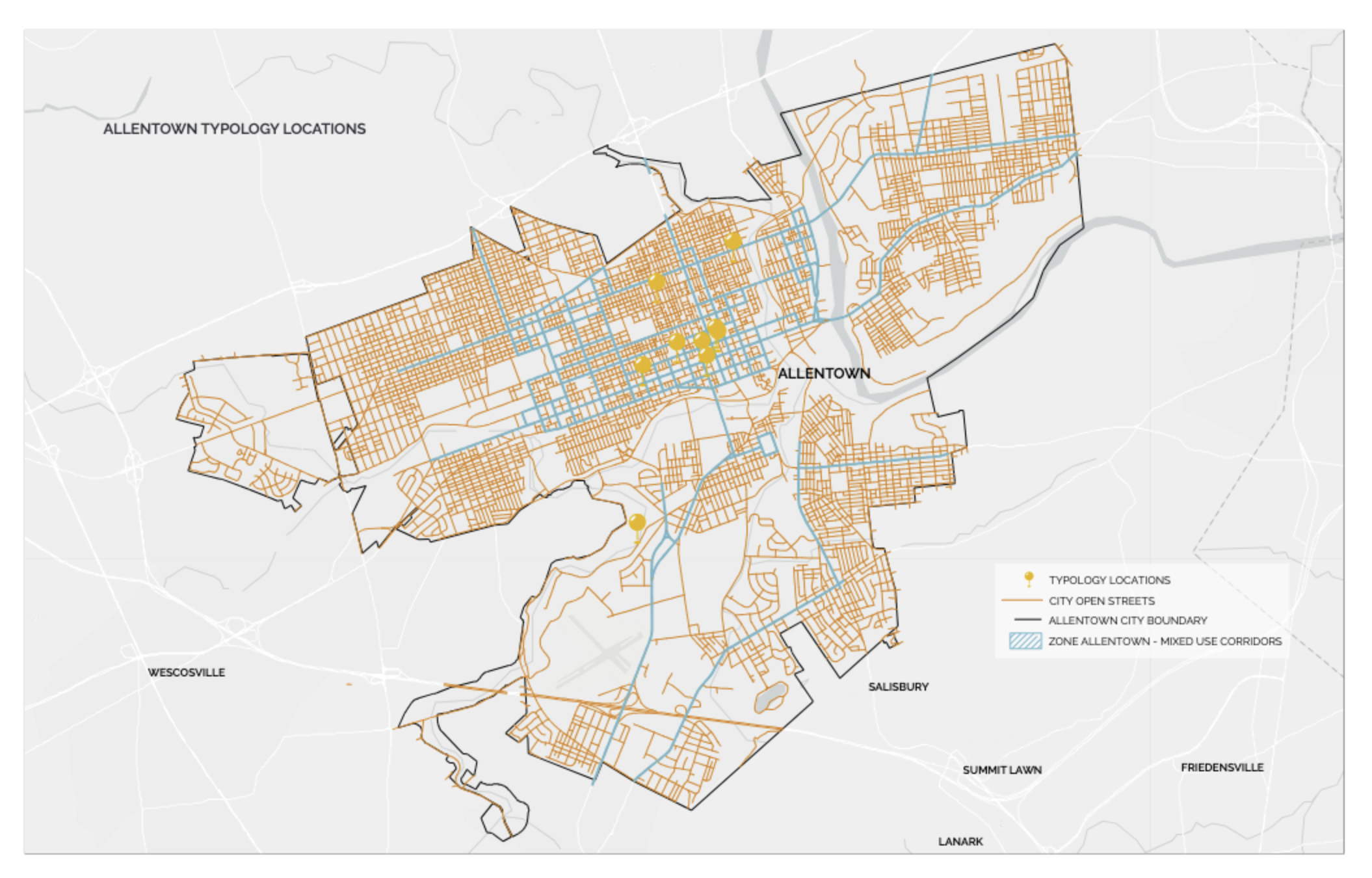
This research investigates urban heat island effects through intensive GIS mapping exercises identifying small city spatial typologies and populations of particular vulnerability. The work develops deployable systems utilizing local, recycled, or off-the-shelf items that non-specialists can build and deploy as needed, supporting Allentown's Climate Action Plan while creating interventions replicable across similar municipalities.
Drawing on principles of spatial agency and participatory design and construction, interventions are positioned as enabling framework rather than monument-building, creating deployable heat mitigation systems capable of responding to local climate flows, material opportunities, and spatial qualities. These rapidly-assembled structures - sunshading systems, water features, and wind management installations - require no specialized expertise to construct or manipulate, inviting communities to adapt interventions as needed.
Critically, these seasonal interventions function as both immediate relief and participatory planning tools. Community stewardship of "temporary" structures generates lived experience and qualitative data about heat vulnerability, spatial use patterns, and intervention effectiveness - invaluable evidence shaping future permanent infrastructure investments.
These interventions can be replicated and adapted across cities, processes and methods communicated through simple instructional drawings. Students act as testbed for buildability, positioning architectural education as active practice in addressing our most urgent environmental challenges while advancing climate justice, equity, and resilient community development.