Esmilda Abreu-Hornbostel
Visiting Associate Professor - Interdisciplinary Studies; SCPS Lecturer
- Department
- School of Design
- School
- School of Design
- eabreu26@pratt.edu
- Phone
- 718.636.3722
Work Samples
-
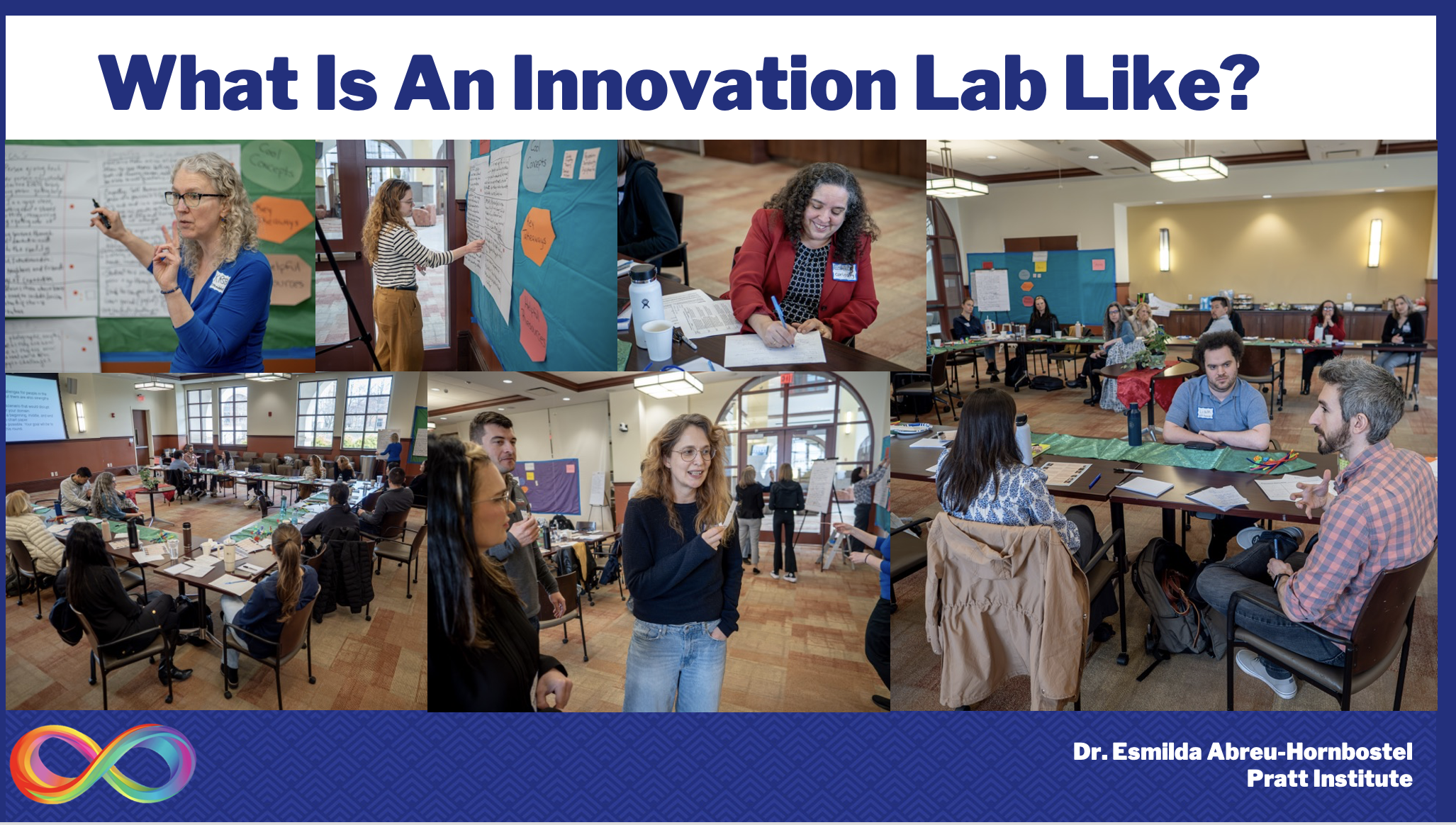
![A collage of images from an innovation lab session, featuring participants engaged in discussions, brainstorming, and writing on large paper boards. The environment is collaborative, with group activities taking place in a well-lit room. Some participants are taking notes, while others are actively sharing ideas. The top portion of the image features bold text asking, "What Is An Innovation Lab Like?" and a blue background with colorful infinity symbols at the bottom.]()
Neurodiversity and Entrepreneurship Innovation Lab
Neurodiversity is increasingly recognized as a competitive advantage, yet organizations struggle to implement truly neuroinclusive practices. This research explores neuroinclusive practices using an Innovation Lab approach, a structured, participatory process. Using previously collected data capturing the thoughts of corporate leaders and professionals across diverse industries, this study will explore emergent themes in fostering neuroinclusive workplaces, studios and platforms. Based on these themes, we can invite participation from stakeholders to expand upon these themes and develop intrapreneurial solutions and entrepreneurial strategies to retain talent and drive value.
● The Innovation Lab is a structured, participatory method designed to share perspectives, generate solutions, and drive meaningful change.
● This intensive collaboration activity engages stakeholders using ideation tools, storytelling, and reflection.This research aims to uncover actionable insights that can inform a career development and neuroinclusive certifications. The purpose is to equip professionals with the entrepreneurial mindset and innovation skills necessary to challenge neuro-normative workplace assumptions, foster environments where neurodivergent individuals can thrive, and drive systemic change.
-
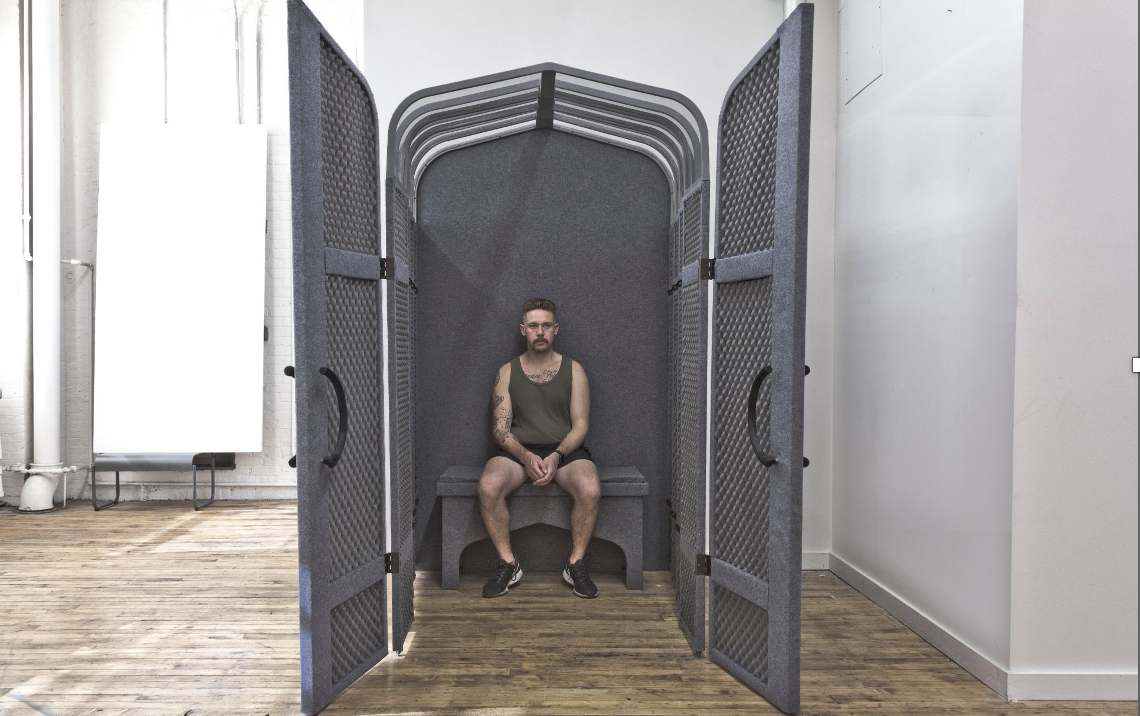
![A man with a tattoo sits on a bench inside a large, open structure with textured walls that create a somewhat enclosed space. The structure has two doors on either side and is located in a bright room with wooden flooring. Natural light streams in from large windows.]()
Rewire
Project Rewire seeks to address critical gaps in therapeutic strategies for mental health and well-being, thereby contributing significantly to the fields of applied neuroscience, psychology and product design. By leveraging data-driven insights, the project investigates how personalized auditory stimuli—sounds, compositions and intonation—affect neurological responses in spaces designed to facilitate therapy. Utilizing tools such as EmotiBit to monitor Electrodermal Activity (EDA) and the OpenBCI Complete EEG Headset for electroencephalography (EEG) capabilities, the project aims to generate actionable data on emotional arousal and valence. This data, validated by neuroscientists, will guide the development of adaptive sensory experiences tailored to enhance cognitive and emotional functioning as well as physical spaces designed for the sensory experiences.
Project Rewire primarily targets veterans of war dealing with Posttraumatic Stress survivors and Traumatic Brain Injury (TBI), exploring the potential for sensory experiences to improve emotional states and cognitive performance. The project brings together a multi-disciplinary team of investigators, including a neuroscientist, and two industrial designers who have studied and worked on the application of cutting-edge technology, engineering and design throughout their careers. Their collaborative work would be effective in addressing the growing societal need to integrate findings in neuroscience in existing therapies and empower therapists with an enhanced toolkit for professional practice. Their important effort in this project is supported by Pratt Institute’s Office of Research and Strategic Partnerships by providing professional guidance of the grant application process and through the disbursement of anticipated funding according to the requirements listed by the Principal Investigators, so that they may successfully mobilize and deploy the resources outlined in their strategy and budget to create innovative interventions for complex real world scenarios.
-
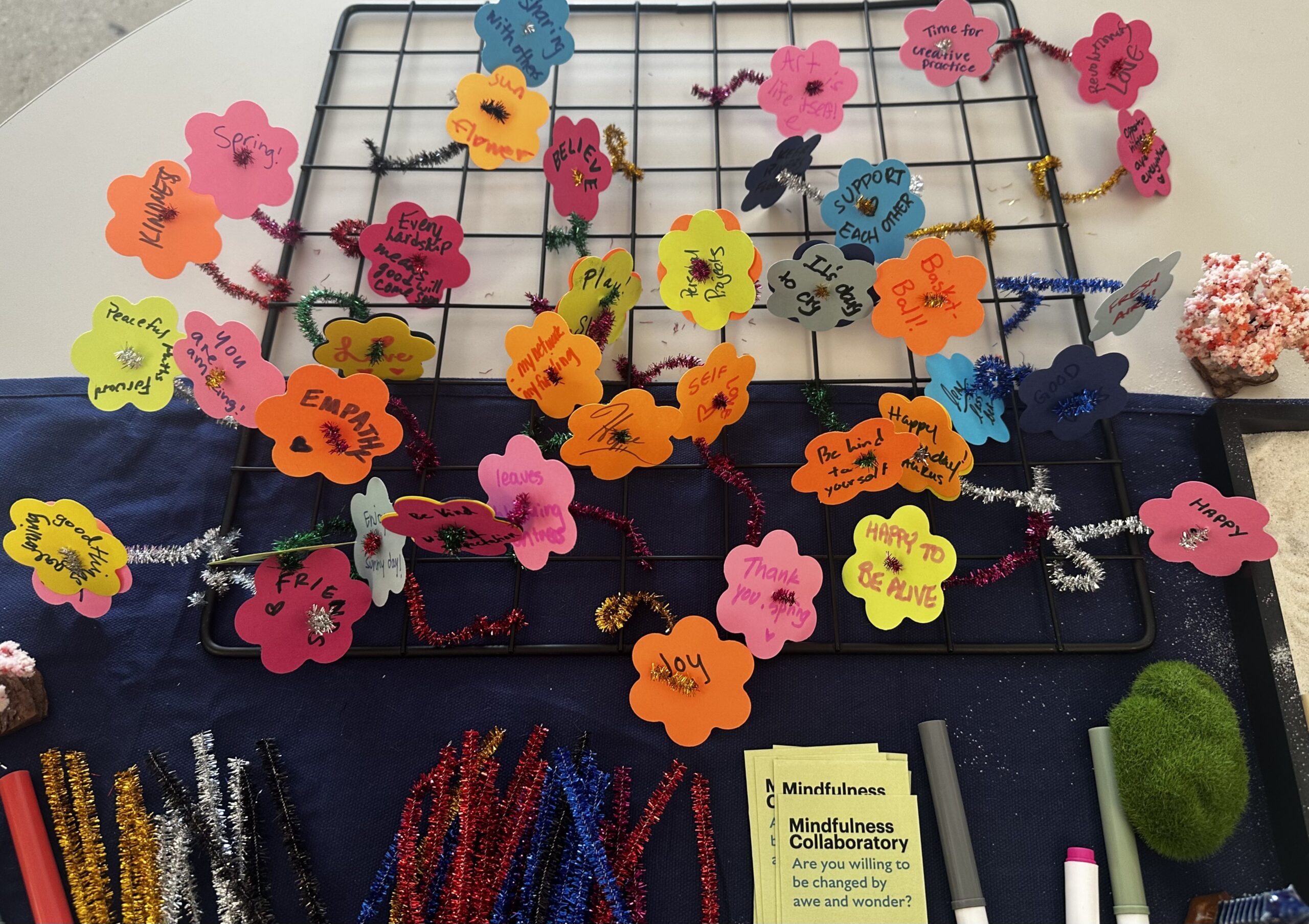
![A wire grid displays colorful flower-shaped notes with handwritten words and phrases, such as "Believe," "Empathy," and "Happy to be alive." Note connectors made of pipe cleaners intertwine the notes. Below the grid, various colored pipe cleaners are spread out alongside a green decorative item and markers. Yellow pamphlets titled "Mindfulness Collaboratory" are also visible, encouraging engagement in mindfulness activities.]()
The Mindfulness Collaboratory
The Mindfulness Collaboratory conducts research, builds communities of practice, offers peer mentorship and support, and teaches programs nationally and internationally. We focus on the study of the inner environment—the mind, body, and lived human experience—as a foundational element of resilient communities, sustainable practices, and thriving creative ecosystems.
We will present the applied research of our Leading with Intention curriculum as it’s developed over the past 4 years showing the impact of developing contemplative practices and leadership skills for creatives, underscored by setting mindful, creative and resilient reflective intentions.
Through both qualitative and quantitative research methods, we have found from our participants: an overall improvement in flourishing; lowered stress; increased happiness, self awareness, ability to focus, productivity, and creativity; and a feeling of having more control over their lives.
Participants have gone on to develop new curriculums, launch businesses, change their career fields, embrace new art practices or return to those they had left behind. We will share the stories of participants who have been able to enhance their well-being, grow in their personal and professional lives, and sustain their practices through the tools learned in this program.
Through the findings from this program, we are in the process of expanding our work to connect with local Brooklyn economic sectors outside of the creative economy.