Claire Ronan
Work Samples
-
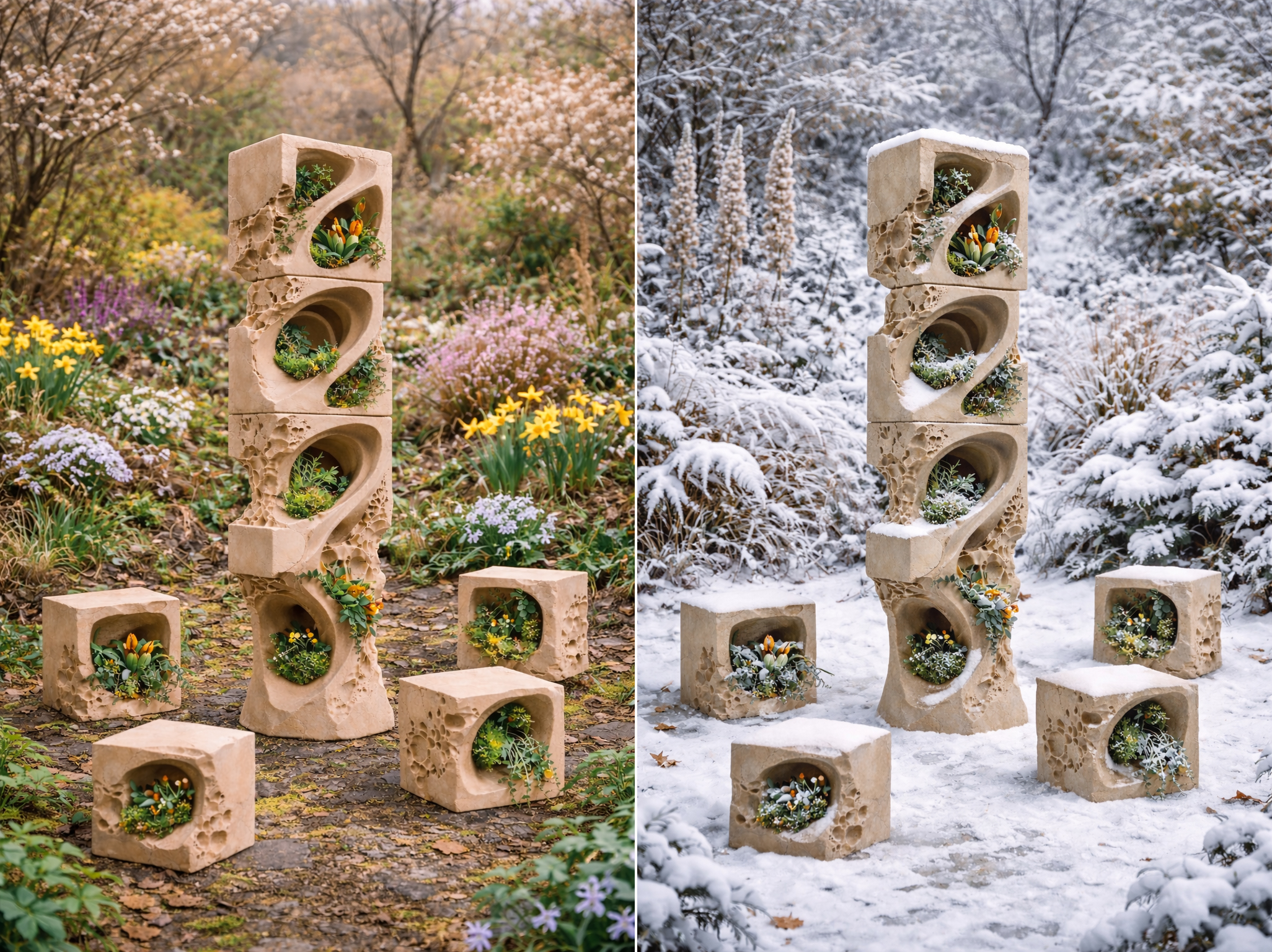
![A sculpture made of stacked, textured blocks is surrounded by flowers in two contrasting seasonal settings. On the left, the scene is vibrant with blooming spring flowers and greenery. On the right, the sculpture is winterized, covered in snow, with plants peeking through. Both images feature the same arrangement, highlighting the seasonal change around the sculptural installation.]()
C.U.L.T.I.V.A.R.T.E. (Community Urban Landscapes Transforming through Interactive Vital Art and Therapeutic Engagement)
C.U.L.T.I.V.A.R.T.E. is a community-driven urban design and public art initiative that reimagines a GreenThumb community garden in East Harlem, New York, as a site for ecological learning, creative expression, and social healing. The project brings together faculty and student researchers from the New York Institute of Technology (NYIT) with neighborhood gardeners and local residents participating in drug addiction recovery programs. Through collaborative workshops focused on urban farming, artmaking, and community health, the initiative advances several United Nations Sustainable Development Goals, including SDG 2 (Zero Hunger), SDG 3 (Good Health and Well-being), SDG 11 (Sustainable Cities and Communities), and SDG 13 (Climate Action).
The project integrates urban agriculture, sustainable materials, digital fabrication, and AI-assisted design within a participatory design framework to co-create a living ecological installation rooted in community narratives and food justice. The installation will incorporate carved pockets and integrated planting beds designed for growing small edibles alongside native plant species selected to support urban biodiversity.
Envisioned as a series of sand binder-jet printed modular elements arranged at varying heights, the installation will function as an experimental habitat system. Over the course of a full year, the project will observe whether these intentionally designed cavities, varying in size, depth, and geometry, can support diverse species commonly found in New York City community gardens, including pollinators, birds, beetles, and other beneficial insects.
Community gardeners play a central role in identifying appropriate plant species and guiding cultivation practices. The project also partners with The Pillars, a local drug addiction recovery organization, to encourage creative expression and gardening as therapeutic practices that support personal recovery and community connection. By introducing advanced design tools and sustainable practices in accessible ways, the project challenges traditional hierarchies of expertise with shared authorship, empowerment, and mutual respect.
Projected Installation Timeline: Summer 2026; design and engagement in progress
-
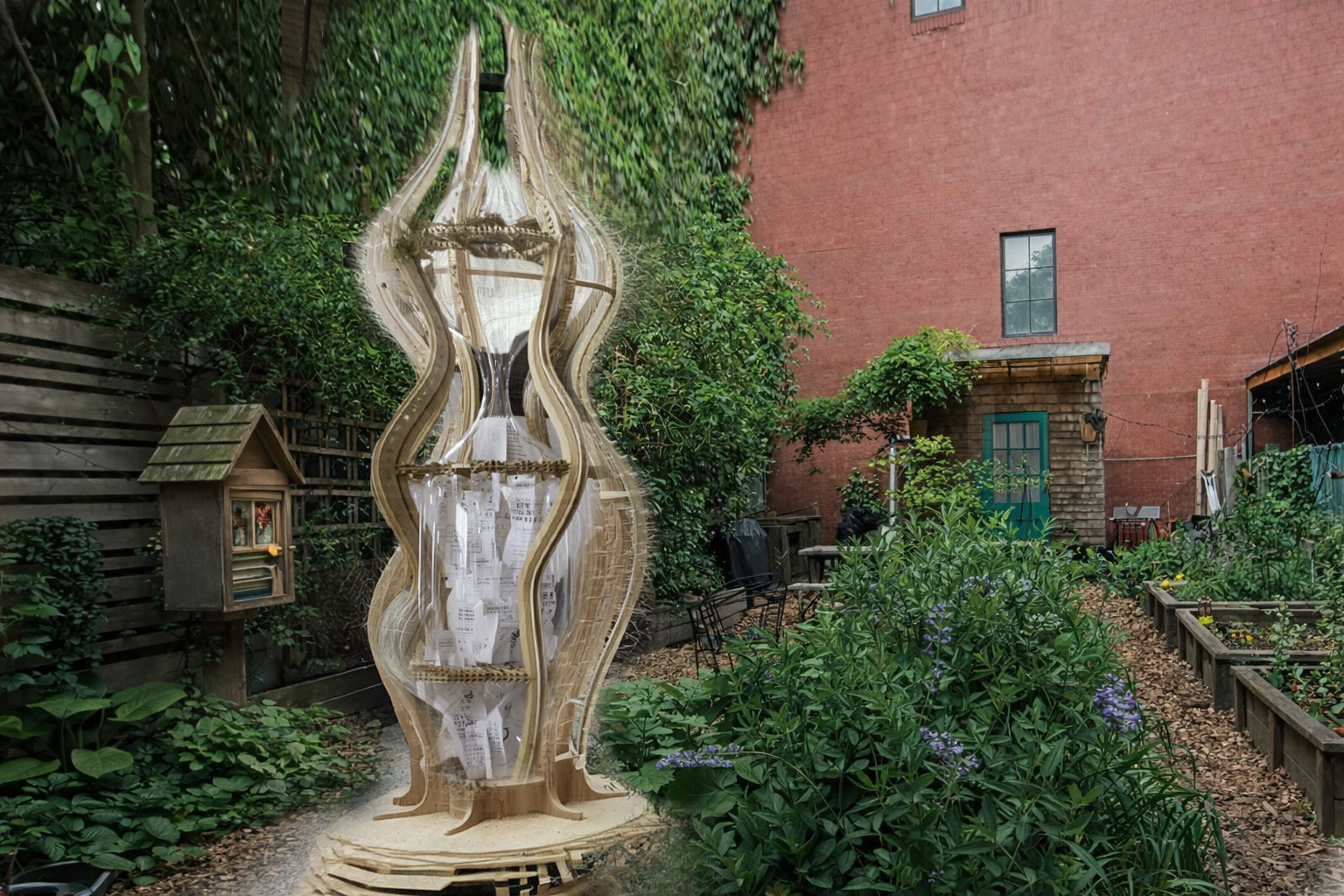
![A unique wooden structure resembling abstract waves stands in a garden filled with green plants and purple flowers. The structure has clear, transparent sections displaying printed pages inside. In the background, there is a small wooden shed with a green door and a brick wall. The setting appears lush and inviting, featuring a stone pathway and garden beds.]()
A.L.L. H.U.M.A.N.S Are Born Equal – Advancing Local Leadership: Harlem’s Urban Metropolitan Architecture Network System
A.L.L. H.U.M.A.N.S. Are Created Equal is a community-led public art and urban design initiative located within a GreenThumb community garden in East Harlem, New York. The project engages faculty and student researchers from the New York Institute of Technology (NYIT), local artists, and neurodiverse residents, particularly individuals on the autism spectrum. A series of participatory workshops integrates art, technology, and community storytelling.
Through community participatory workshops and sustainable digital fabrication methods, the project advances several United Nations Sustainable Development Goals including SDG 3 (Good Health and Well-being), SDG 9 (Industry, Innovation and Infrastructure), SDG 10 (Reduced Inequalities), and SDG 11 (Sustainable Cities and Communities). Generative AI plays a key role in the creative process by enabling rapid ideation, visual exploration, and iterative refinement of design concepts in real time.
The final installation will be constructed from CNC-cut laminated plywood fins that support embedded acrylic domes. Community participants will help determine the objects placed within these domes in recognition of the upcoming 250th anniversary of American independence. These items may include culturally significant artifacts and community-selected objects, potentially including Indigenous references that reflect the layered histories, identities, and cultural heritage of East Harlem and its residents.
Inspired by Harlem’s rich graffiti tradition, the project creates a platform for dialogue at the intersection of identity, public art, and the built environment. Deep community engagement ensures that the installation authentically reflects local culture, fosters inclusivity, and demonstrates an equitable, participatory approach to design practice.
Projected Installation Timeline: May 2026; design and engagement in progress