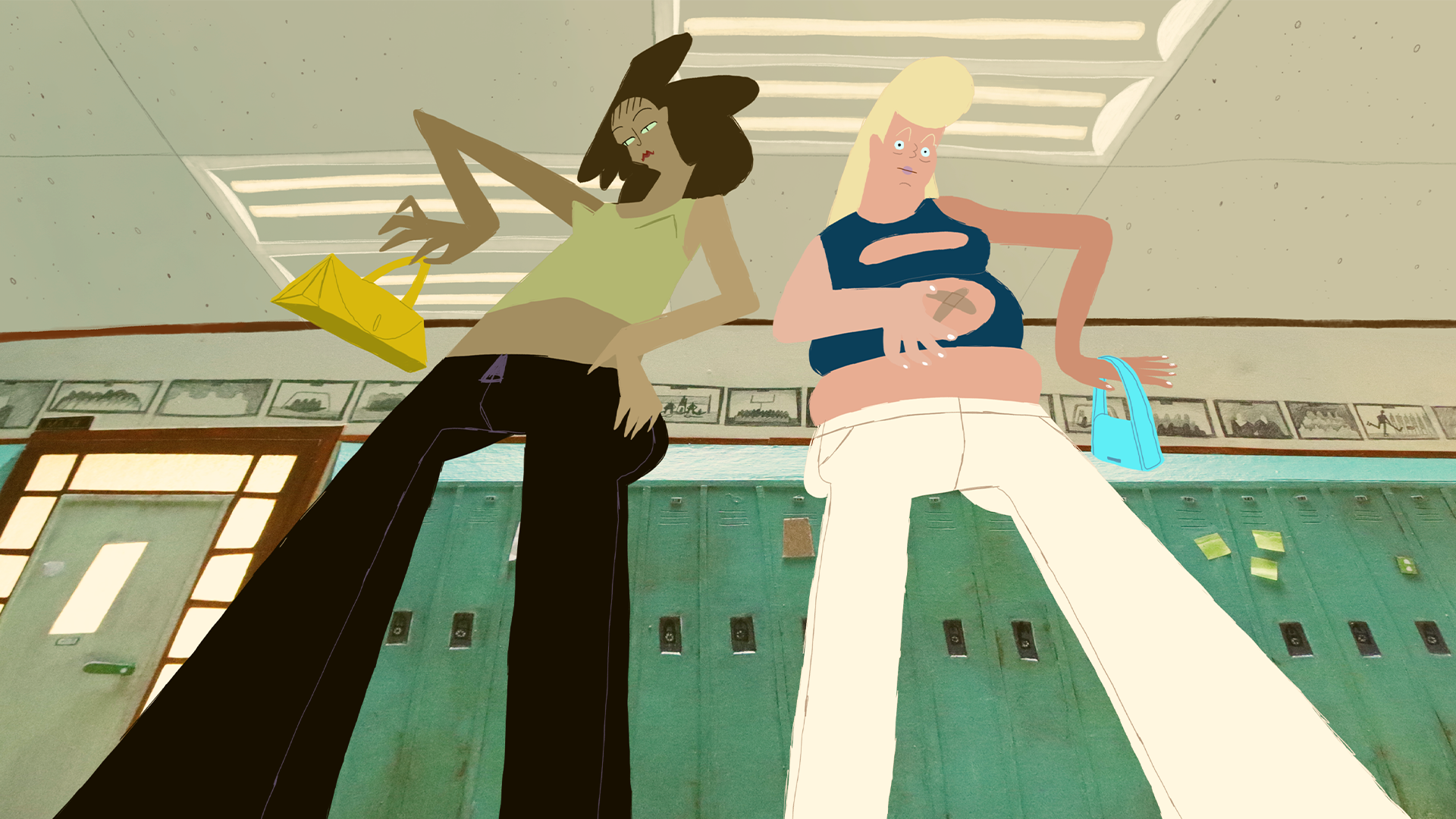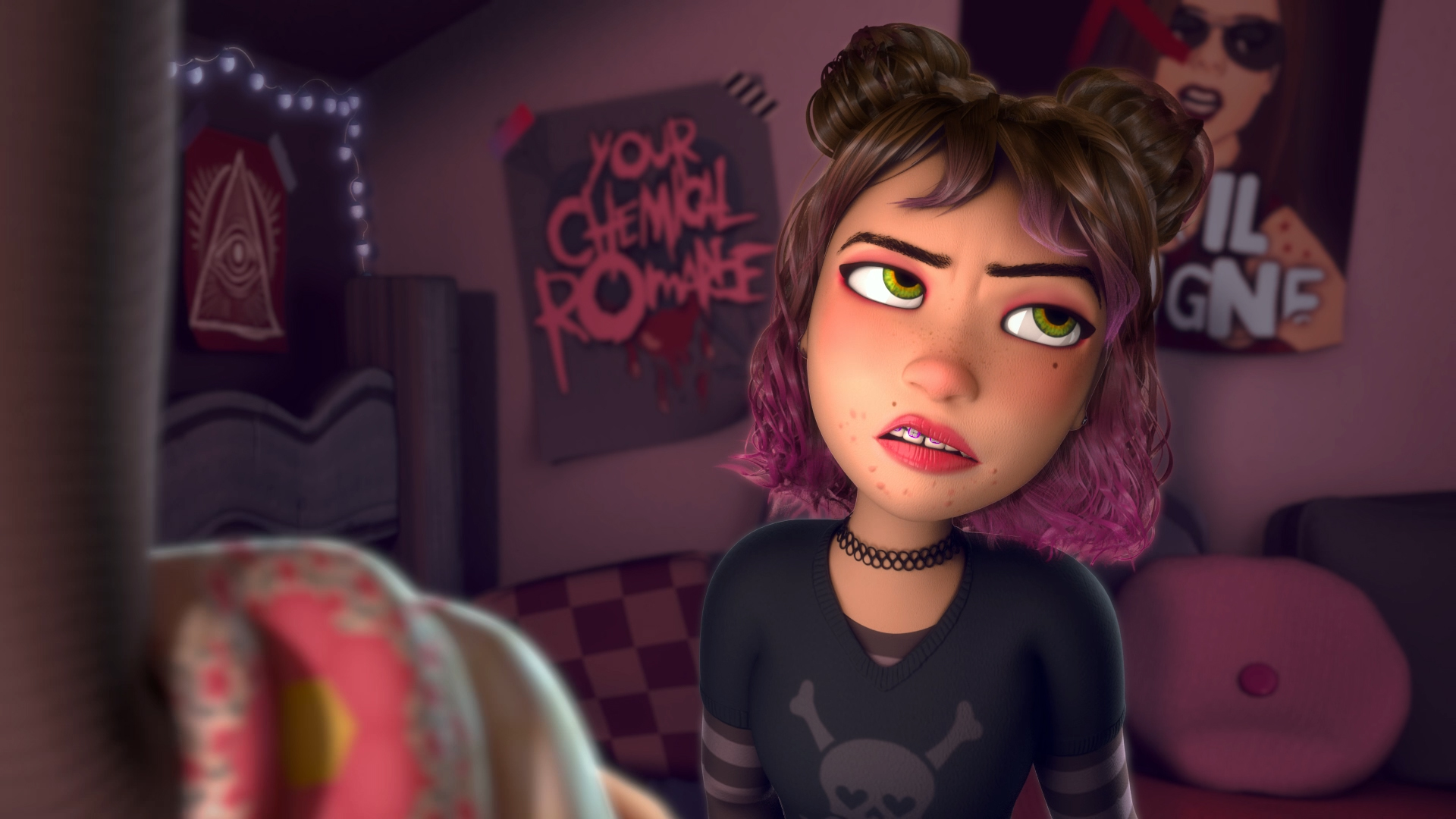
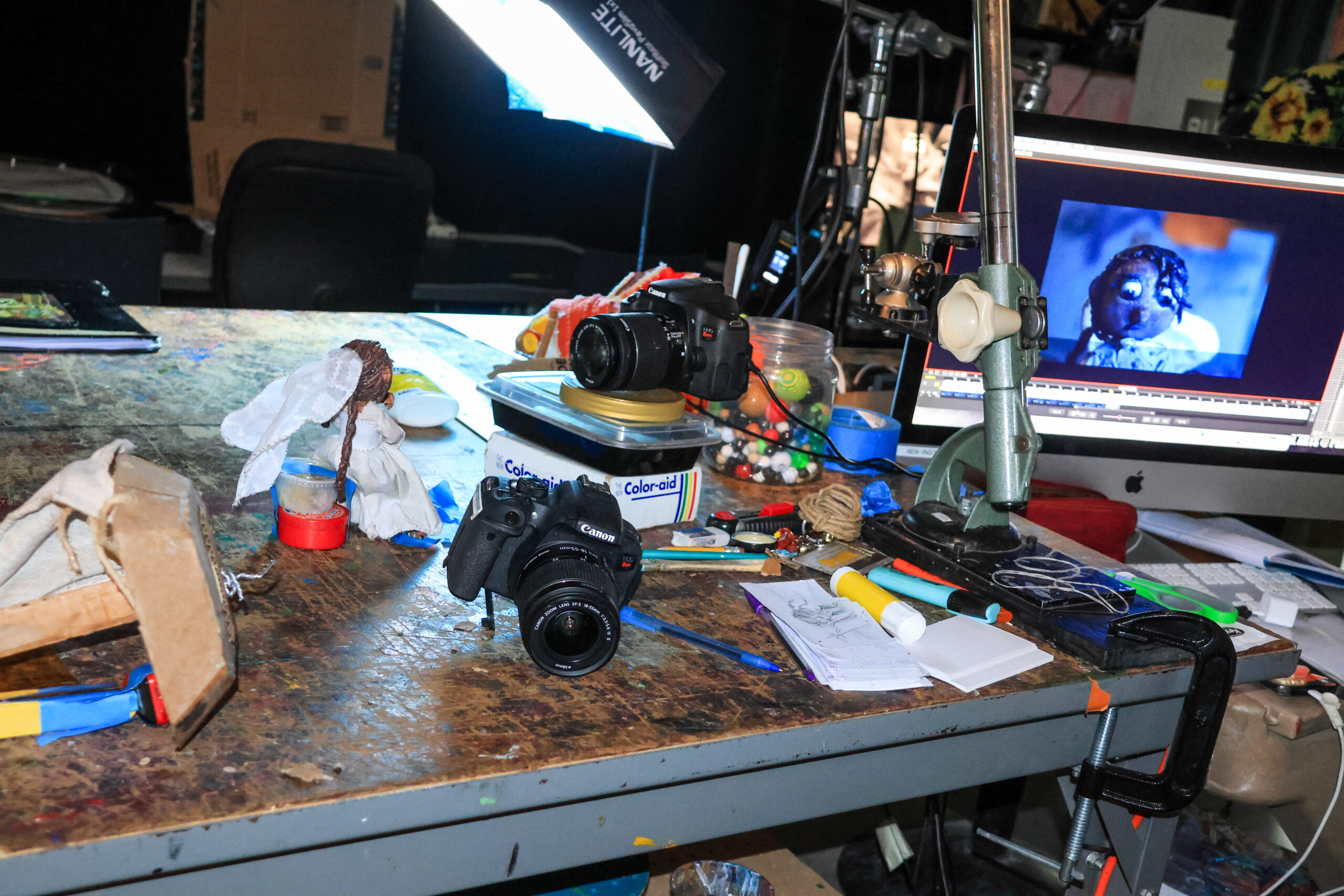
Many artists today are bringing together analog and digital tools to tell technically advanced yet distinctly human stories. One medium that blends these two modes particularly well is stop motion animation, which involves building sets and characters and then using cameras and Dragonframe stop motion software to capture a sequence of frames—making minute adjustments before each new image to simulate movement. Popular stop motion feature films include Henry Selick’s Coraline, Wes Anderson’s Fantastic Mr. Fox, and Guillermo del Toro’s Pinocchio.
Adjunct Associate Professor – CCE of Digital Arts and Animation Robert Lyons (and faculty advisor for Pratt’s Puppet Club) hears from his stop motion students that they particularly enjoy the elements of the class where they are working with their hands and stepping away from computer screens. Lyons, who has been teaching beginner and advanced courses in the art of Stop Motion Animation since the early aughts, sees no signs of interest in the field declining.
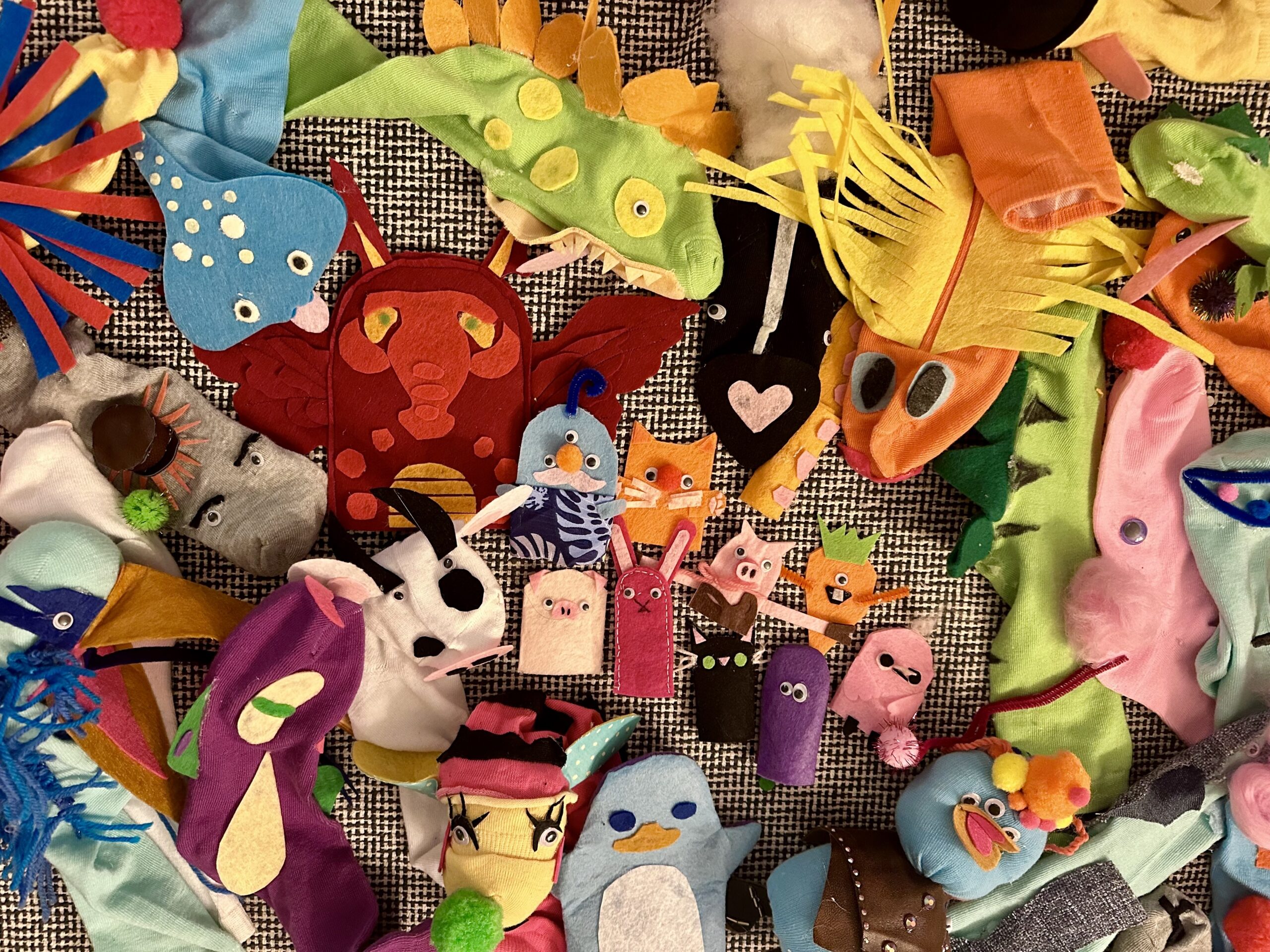
In Pratt’s Department of Digital Arts and Animation, located in Myrtle Hall, students have access to state-of-the-art equipment and studios, including a new green screen room, audio recording and Foley studio, and dedicated stop motion studio, complete with a variety of cameras and puppet movement and support rigs, as well as the woodshop and 3D printing lab located in the Engineering Building. Stop motion calls on a variety of skills, materials, and technical tools, including ideation, fabrication, and production. Puppet characters and sets are crafted with wire armatures and a variety of fabrics, clays, and other materials. Encouraging a sustainable approach, Lyons and his students also make use of materials from Pratt’s Give/Take, free art supplies collected and available in the basement of Steuben Hall, as well as materials found on the streets of Brooklyn, such as building blocks and action figures.

Last year, Pratt organized a trip to the Ottawa Animation Festival, and students returned energized and inspired by contemporary filmmakers. For example, Pingyu Zhang, BFA Digital Arts (2-D Animation) ’26, completed her senior project as a stop motion video with Lyons’s support. Work from Lyons’s classes was also featured in the Stop-Mo Show, which was on view at Pratt’s library this past spring and is in the process of being archived by Kelsey Kiantoro, MS Museums and Digital Culture ’26. Kiantoro’s thesis project aims to preserve a record of the Stop-Mo Show, including the puppets, films, and images featured in the exhibition.
Below, explore films from this past spring’s Advanced Stop Motion class.
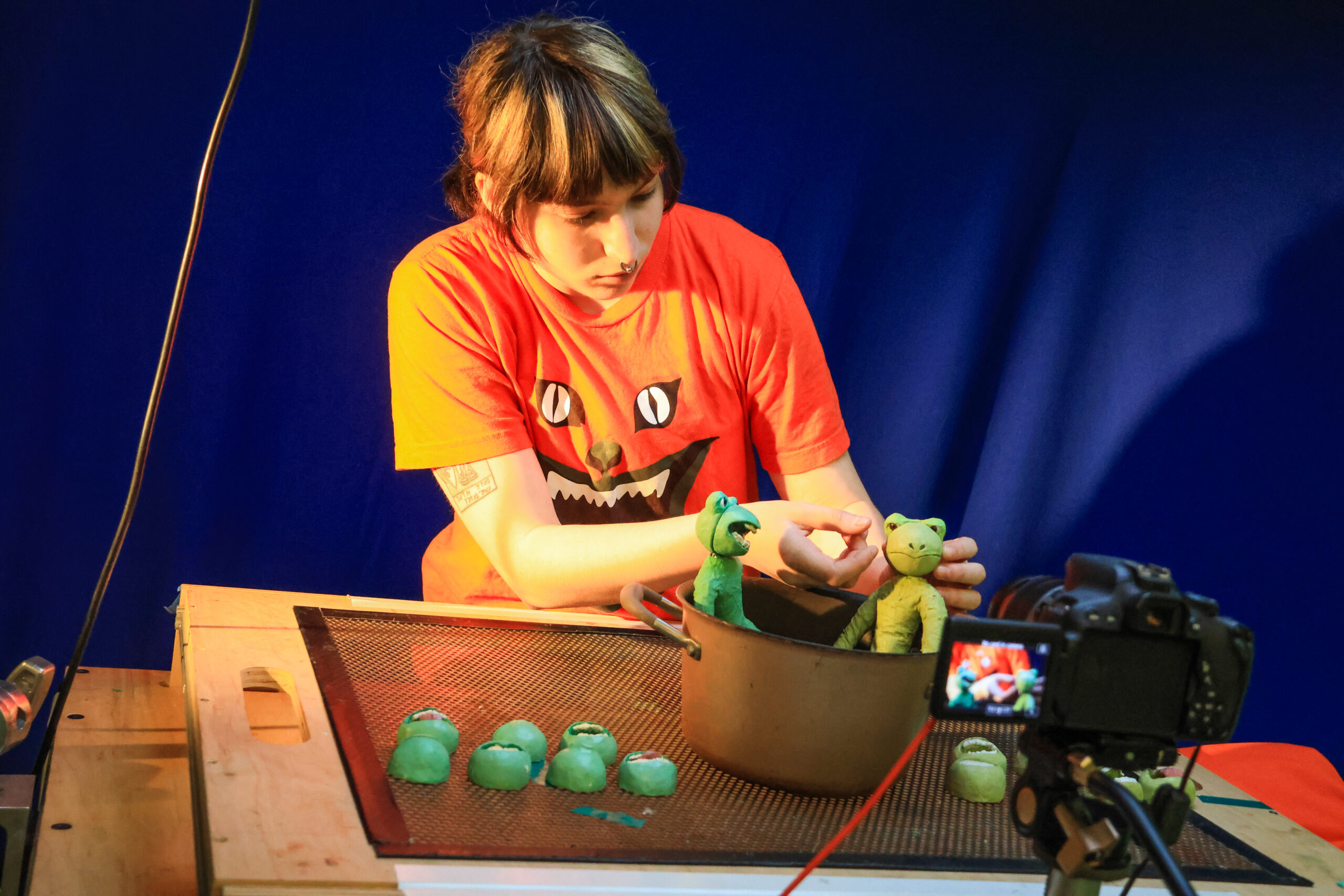
FROGS by Laila Mandel
“FROGS is a stop motion film about misplaced blame,” said Laila Mandel, BFA Digital Arts (2-D Animation) ’28. “The main idea for the film was taken from the saying about a frog in a pot of boiling water. Because the heat is increased gradually, the frog will let itself be cooked alive, oblivious to its dire situation. I was inspired to write the script this winter as rising political tension caused many to argue on social media and in person.”
“Because each frog is focused on blaming the other for their unsuitable environment, they are unable to see beyond the pot to understand that they are both being cooked alive. I wanted to make this film to show that we are all in the same pot, despite our differences.”

“I love stop motion as a medium because I feel that the hand of the creator is strikingly evident in the final cut. Essentially, I think that it is meant to feel as if someone made it. That’s where the charm is, for the viewer. As I step into an industry plagued with fears about artificial intelligence, I am comforted by stop motion. I believe that a robot will never be able to replicate the way that stop motion looks, and I hope that it will never die.”
Down the Drain by Catherine Fenchel
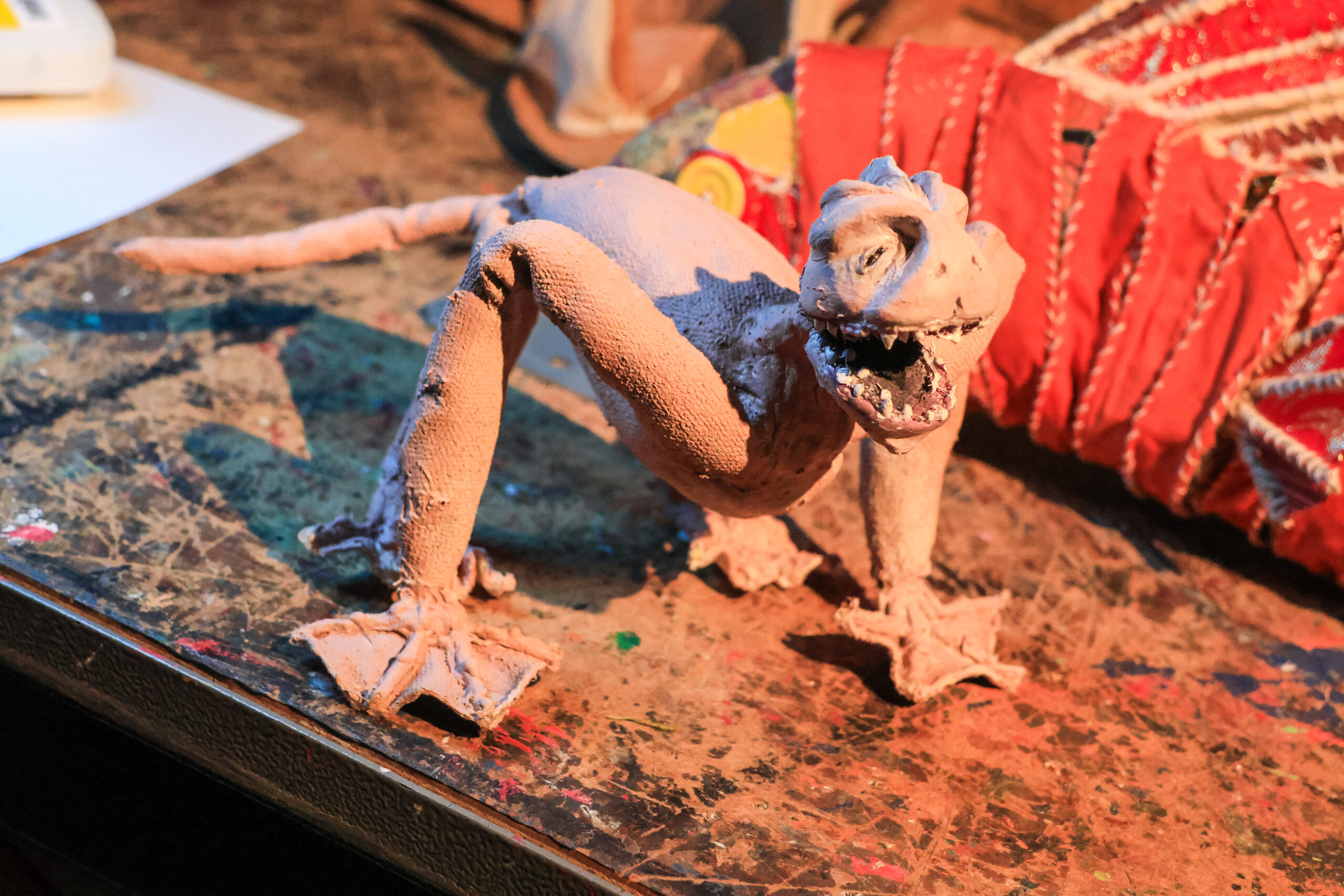
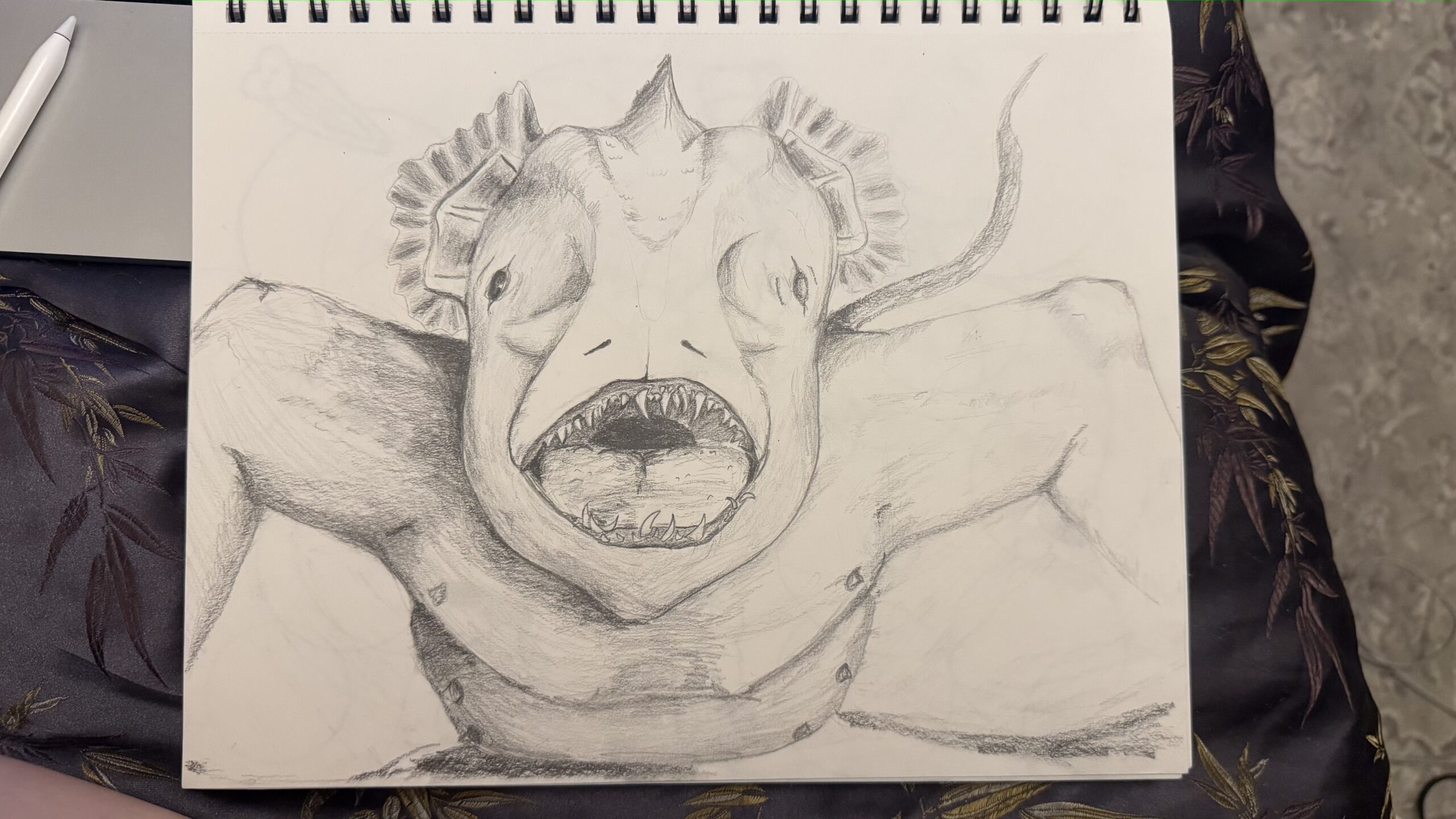
Catherine Fenchel, BFA Digital Arts (2-D Animation) ’27, created Down the Drain, which follows her protagonist, a squeaking robot with blinking lights for eyes. “My film is about two misfits from different backgrounds finding each other in a bad situation and learning that they can rely on each other,” said Fenchel. “A small, partially disassembled robot is thrown out and ends up in a sewer. The robot tries to survive in the sewer and, when it is settled in, has a nightmare about a monster.” The monster turns out to be real, but it is actually a kind creature and shows the robot that beauty can be found anywhere, even in a sewer.
-
![A handmade clay sculpture of a small, humanoid creature resembling a lizard. It has a wide mouth with sharp teeth and a textured body, supported by two legs and a long tail. The figure is positioned on a colorful, paint-splattered surface, alongside a red decorated item in the background. The lighting casts shadows that emphasize the creature's features.]() Monster character by Catherine Fenchel
Monster character by Catherine Fenchel -
![A detailed pencil sketch of a monstrous creature resembling a blend of a fish and a human. The creature has a wide, toothy mouth, large eyes, and fins on its head, with muscular arms and a body positioned in a confrontational stance. The background features a textured surface, and the sketch is situated on a patterned fabric.]() Monster character sketch by Catherine Fenchel
Monster character sketch by Catherine Fenchel
Mildred and Her Cup of Tea by Emily Leeds
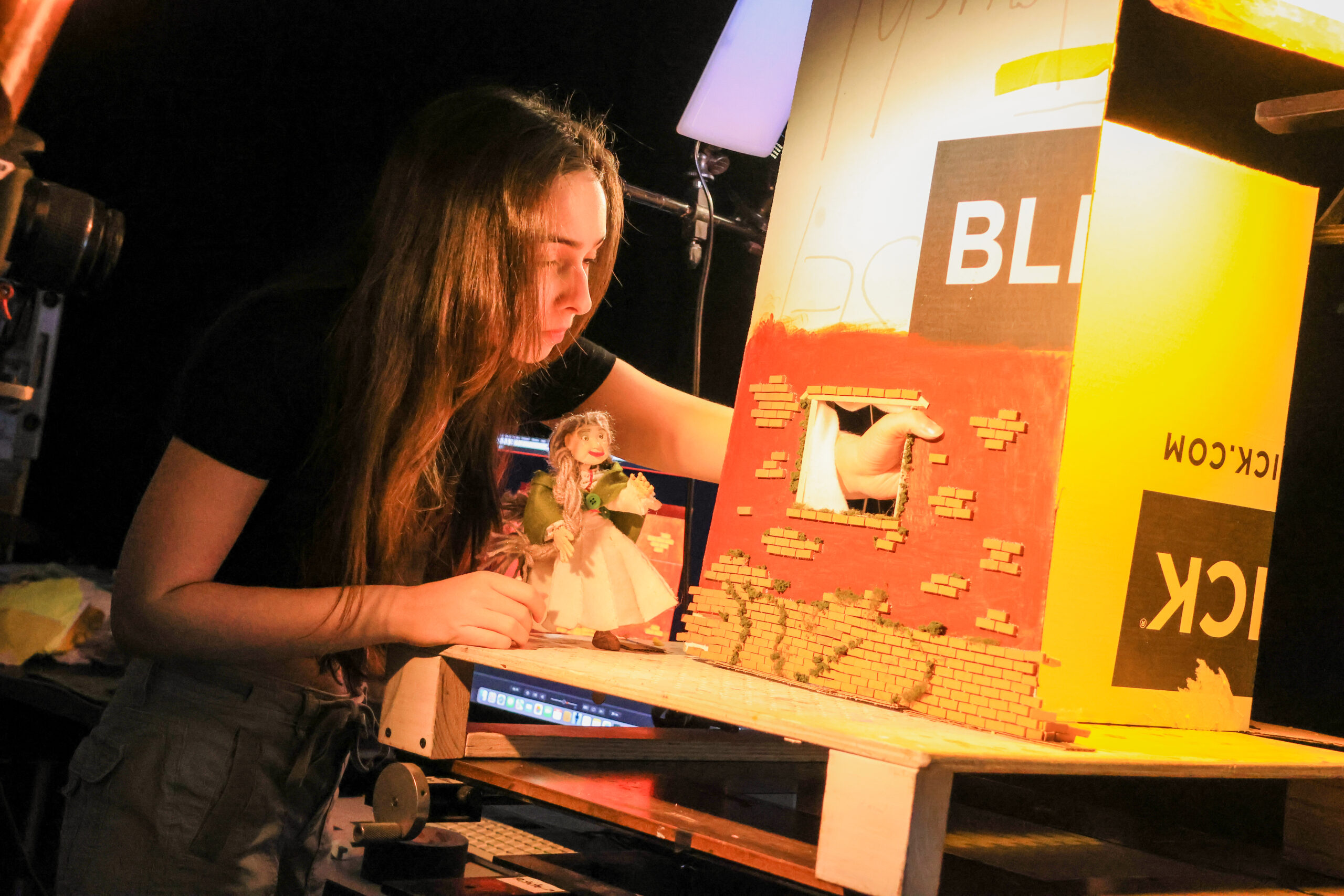
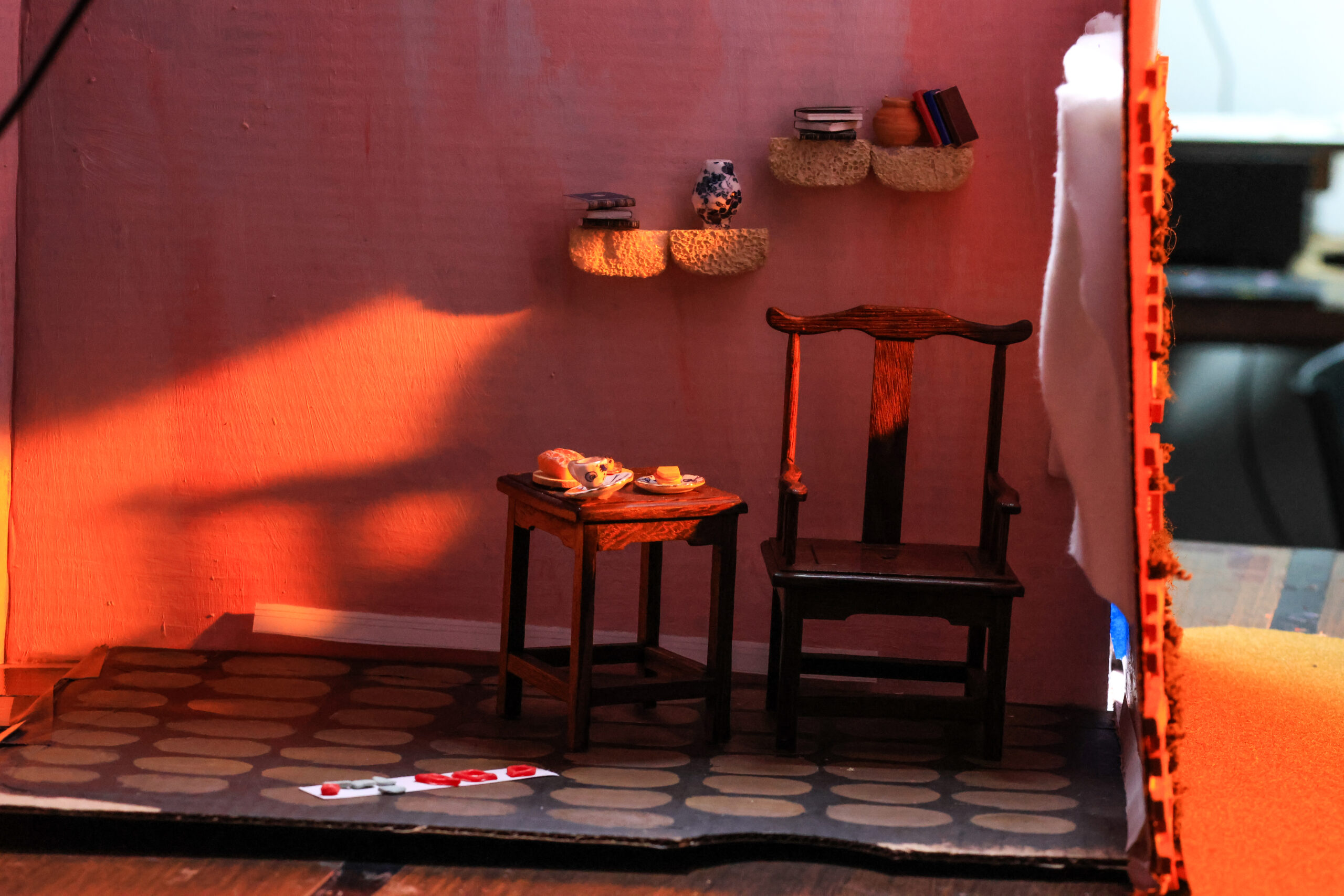
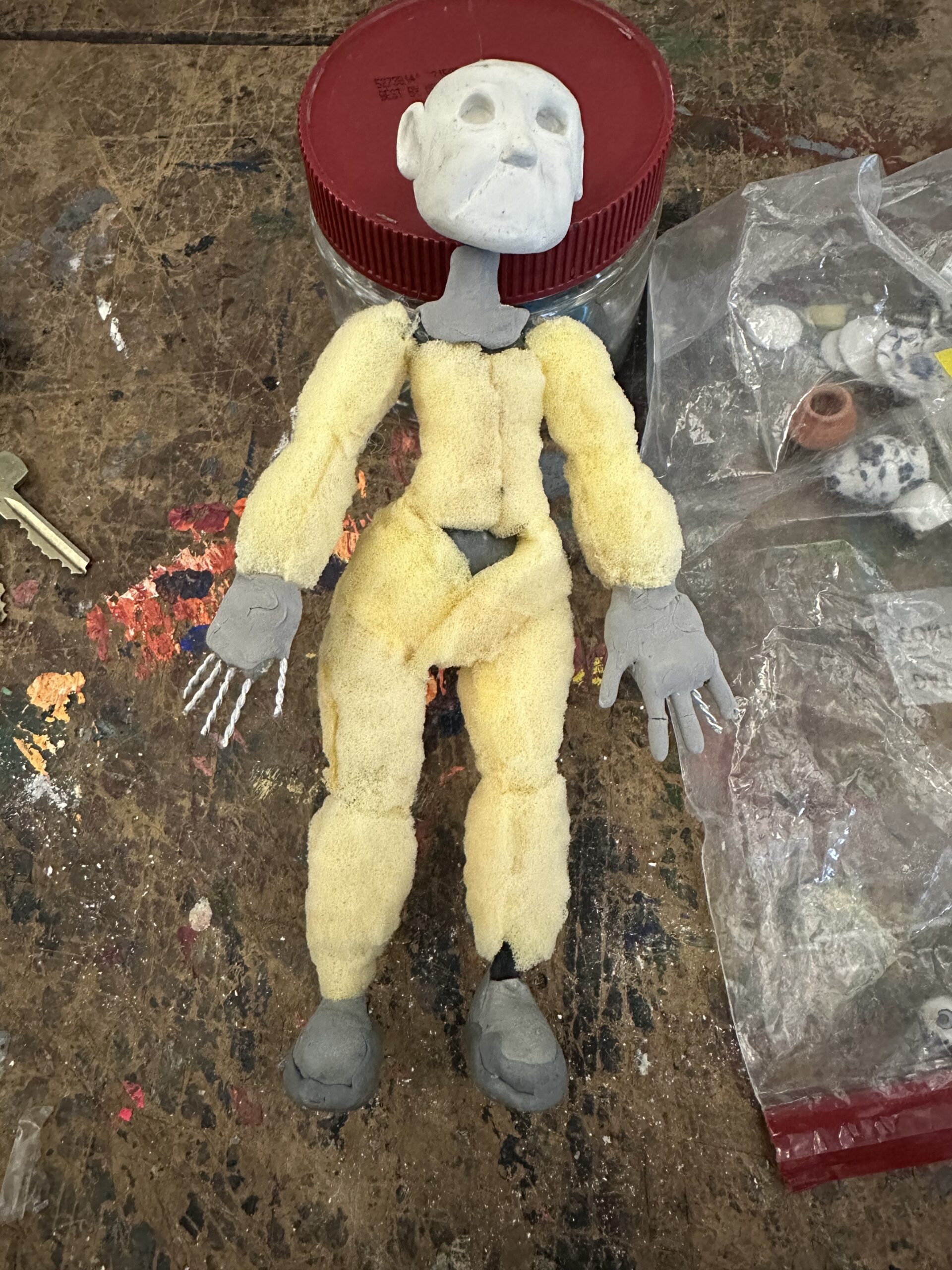
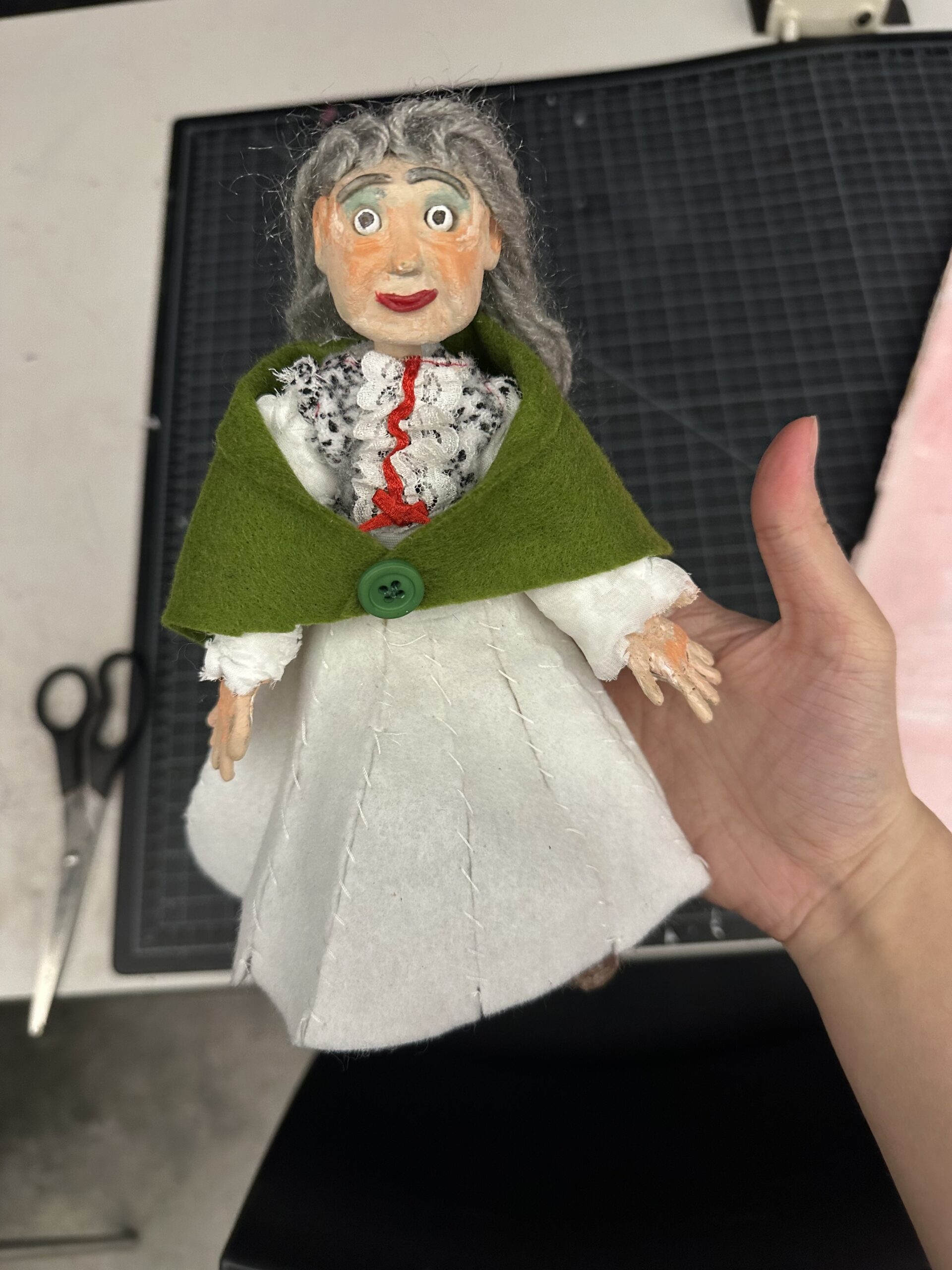
An elderly woman looks out the window and spots a gentleman in the house next door in Mildred and Her Cup of Tea, a short stop motion film by Emily Leeds, BFA Digital Arts (3-D Animation and Motion Arts) ’26. When she steps outside in hopes of catching his attention, the window next door opens to reveal that the man was an illusion—what she thought was a man was in fact a pile of furniture. To depict Mildred’s surprise, Leeds created a range of facial expressions through replacement eyelids and mouths, allowing her to vary her emotions frame by frame.
Sun and Moon by Finn Powell
Finn Powell, BFA Digital Arts (3-D Animation and Motion Arts) ’27, chose to create a music video using stop motion, collaborating with a peer from NYU to compose the music. The film explores the relationship between the sun and the moon. “They are close friends, but the time they have together is fleeting,” said Powell. “I wanted to create something peaceful, symbolic, and intimate. The sun and moon can mean a lot of things to different people but are generally considered to be closely tied.”

Like many of her classmates, Powell appreciates the tactile nature of the art form and getting to see her characters turn into a reality. “I love stop motion because it is very hands-on and requires a lot of precision and creative problem-solving. Additionally, there is a ton of room for intersecting mediums. There is painting, sculpture, animating, storytelling, etc… So, to me it allows me to gain skills in many different pockets of creation.”
Rat Joints by Johann Tafur
The protagonists in Rat Joints by Johann Tafur, BFA Communication Design (Graphic Design) ’27, are two stoner rats, Rocco & Daquan, who live in an apartment with their pet roach, Clip, and occasionally their drug dealer pigeon, Nervous Nelly. “I wanted to make something comical and entertaining to watch, but with a deeper message,” said Tafur about his eccentric characters.

For Tafur, stop motion represents “the culmination of all art, combining the physical and digital into one medium.” Tafur plans to expand Rat Joints into a series of skits, and post-graduation, he hopes to bring these skills to the fabrication industry, working on puppets and armature or set design.
FISH! by Ana Carolina Lau Cigüeñas
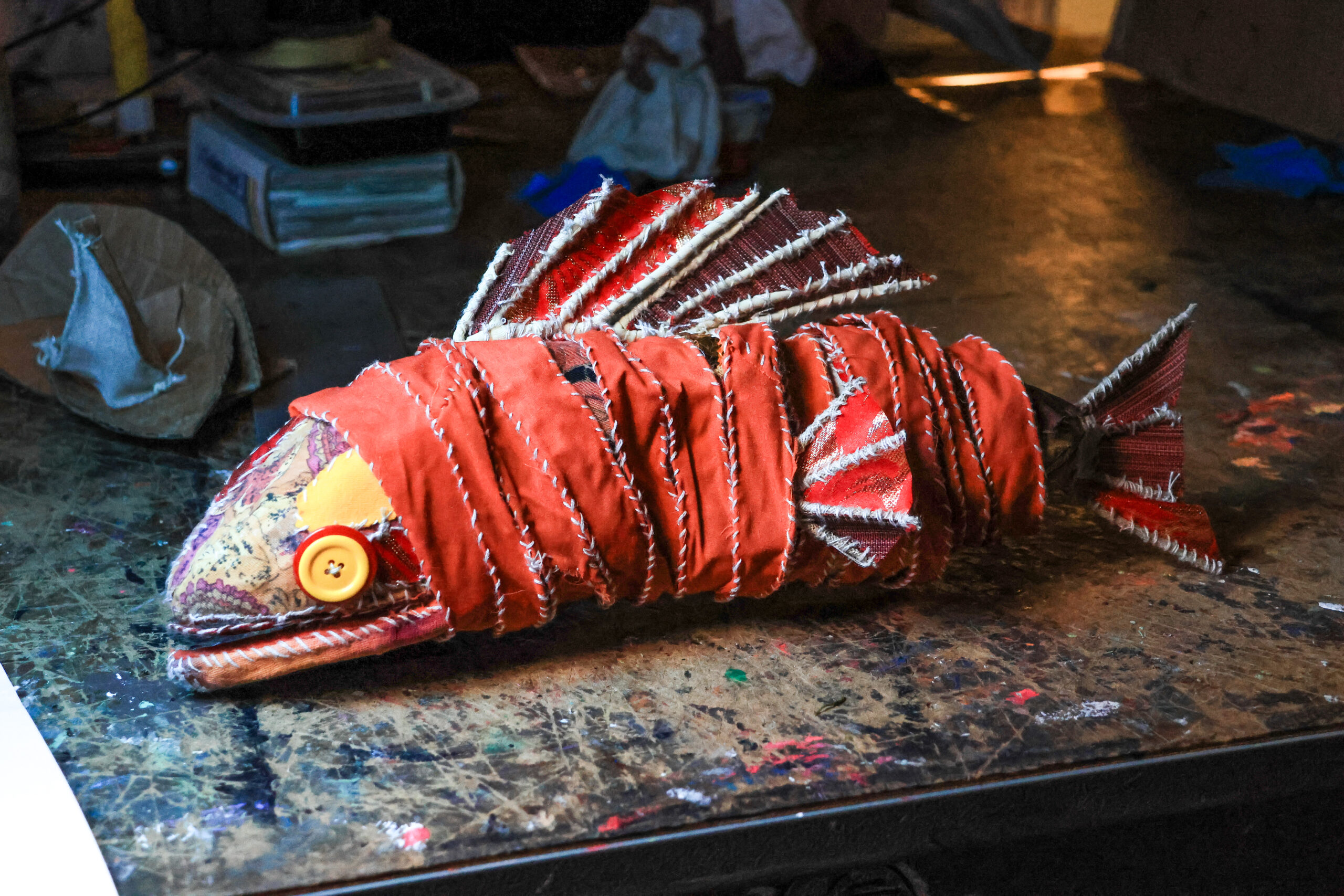
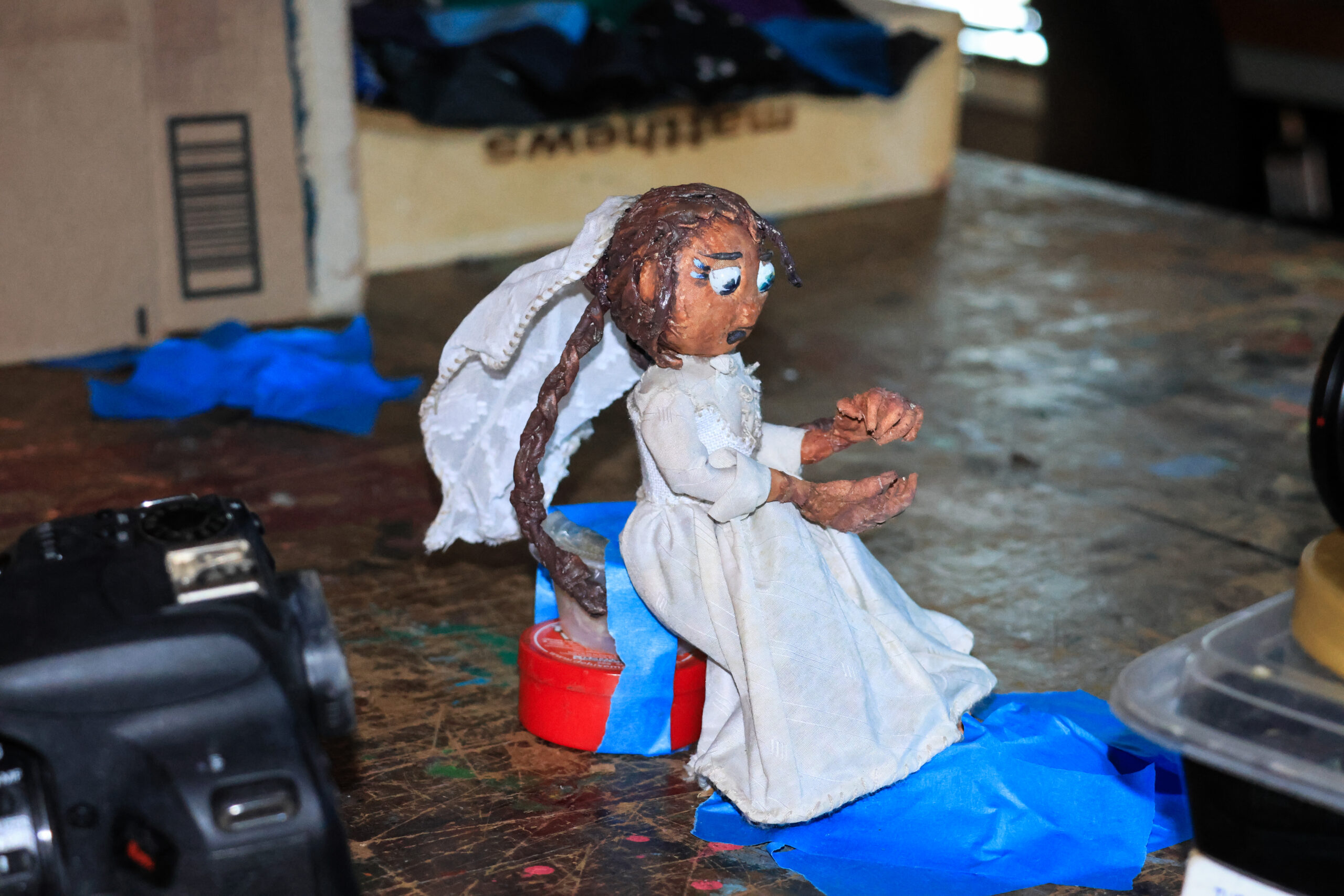
Ana Carolina Lau Cigüeñas, BFA Digital Arts (2-D Animation) ’28, wrote her film FISH! about a woman running away from home to escape her marriage. She steals a boat and sets off, eventually encountering a giant magical fish who follows her in the water. “As both woman and fish journey on, they forge an unlikely friendship,” said Lau Cigüeñas.
-
![A person sits at a cluttered table, resting their chin on their hand, wearing a paint-splattered white t-shirt. In front of them is a large, handmade fish sculpture made of red material and a small doll dressed in white. A camera and various art supplies are visible on the table, with a colorful drawing board covered in sketches and doodles in the background.]() Ana Carolina Lau Cigüeñas, BFA Digital Arts (2-D Animation) ’28, with her stop motion characters
Ana Carolina Lau Cigüeñas, BFA Digital Arts (2-D Animation) ’28, with her stop motion characters -
![Two individuals are engaged in a creative activity at a workspace cluttered with art supplies. One person, wearing a colorful floral shirt, is using a red tool on paper, while the other, wearing a paint-splattered shirt, watches closely. The background features various art materials and equipment in a warmly lit studio environment.]() Adjunct Associate Professor Robert Lyons and Ana Carolina Lau Cigüeñas, BFA Digital Arts (2-D Animation) ’28, in Advanced Animation
Adjunct Associate Professor Robert Lyons and Ana Carolina Lau Cigüeñas, BFA Digital Arts (2-D Animation) ’28, in Advanced Animation
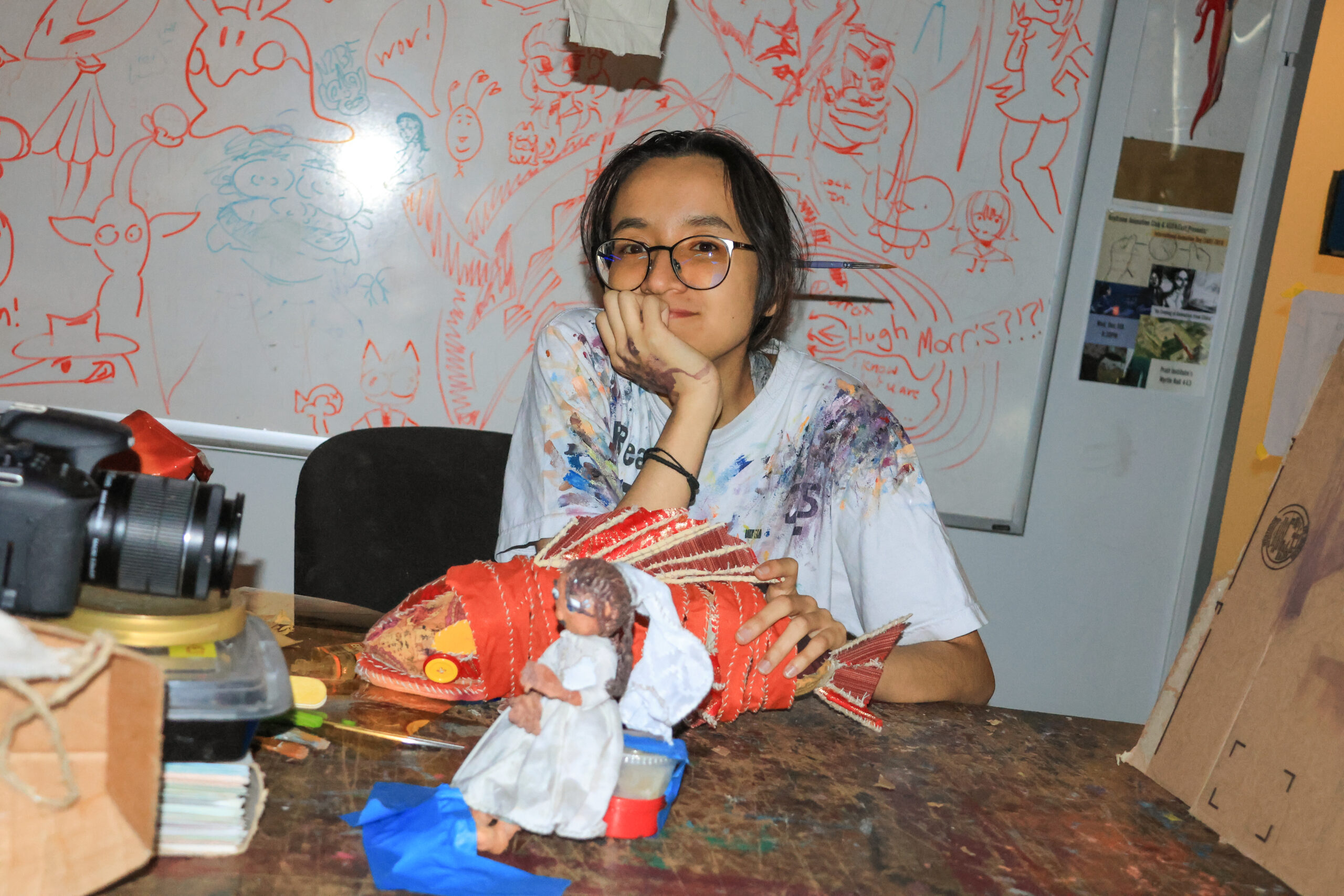
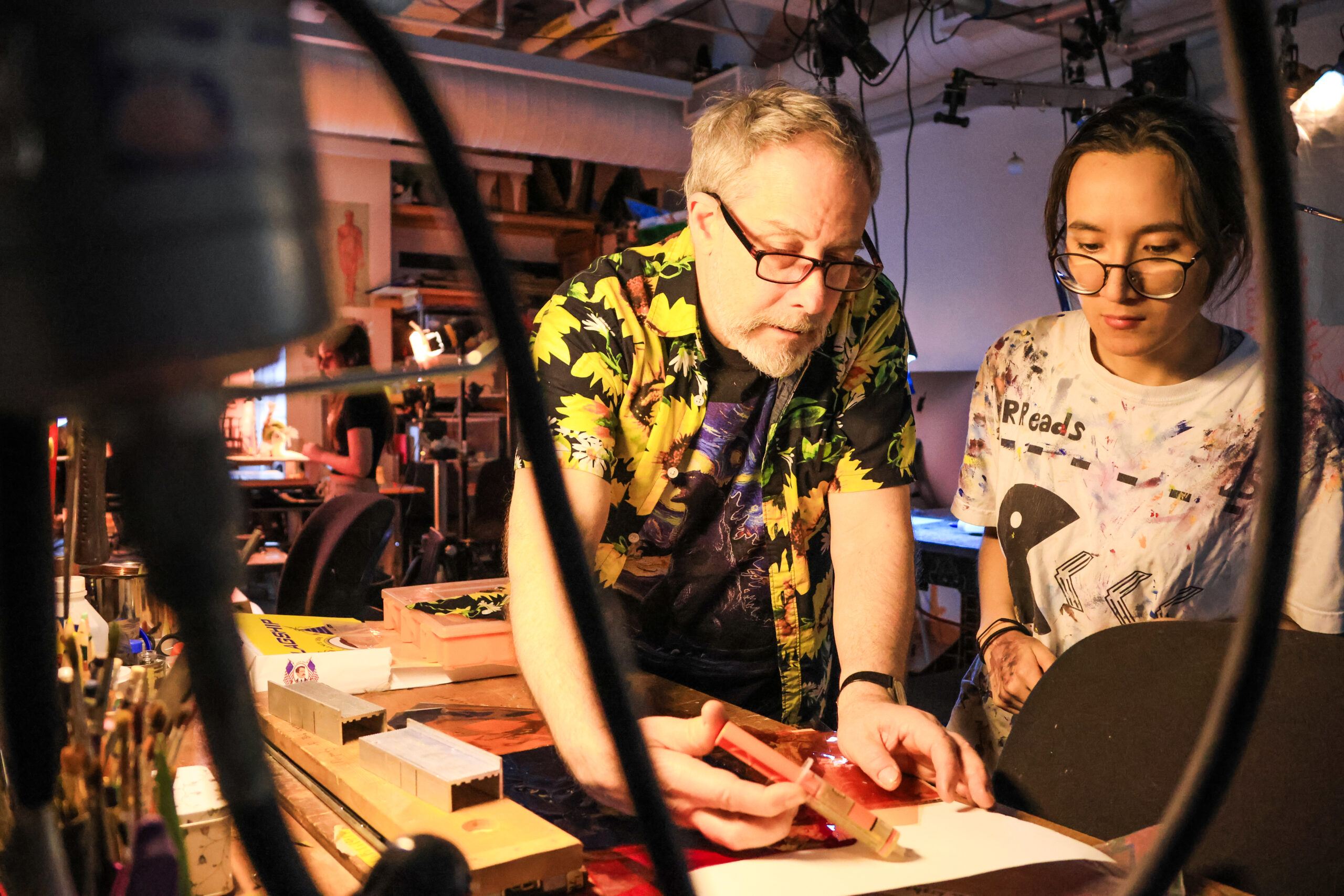
Lau Cigüeñas crafted her set entirely from cloth. The fish, too, is made of colorful fabrics. “I’m from Lima, Perú, and in South America, textiles and textures are very important both culturally and historically,” she said. “As the woman continues on her journey, her white dress is stripped away to reveal a beautiful, colorful skirt underneath. The fish is also a catalyst for this transformation. It eggs her on and baits her into fighting over and over, in so doing revealing more of the woman’s real nature.”
She added, “In trying to recreate worlds in miniature, you really have to reinvent how you use a lot of materials, and the novelty of that can just make the world a far more interesting place to live in.”
Puppets from the films in this article are currently on display in Myrtle Hall, 4th floor lobby, outside the elevators. In the fall, the films will also be screened on loop near the display.