Mudbrick Materials Study
By Uzma Z Rizvi and Greg Sheward
In an age of rising digital technologies, we have found ourselves pushing towards new forms, material and process. We believe we must revisit materials and methods dating back way before the Industrial Revolution.
A time when the craft and precision was a handmade artform. Digital technologies, like mold-making and robotic 3d printing allow us to regain the aspect of precision and repeatability but material responsibility is still in our hands; it is to study, learn, and expand upon the past to create a more informed future of making.
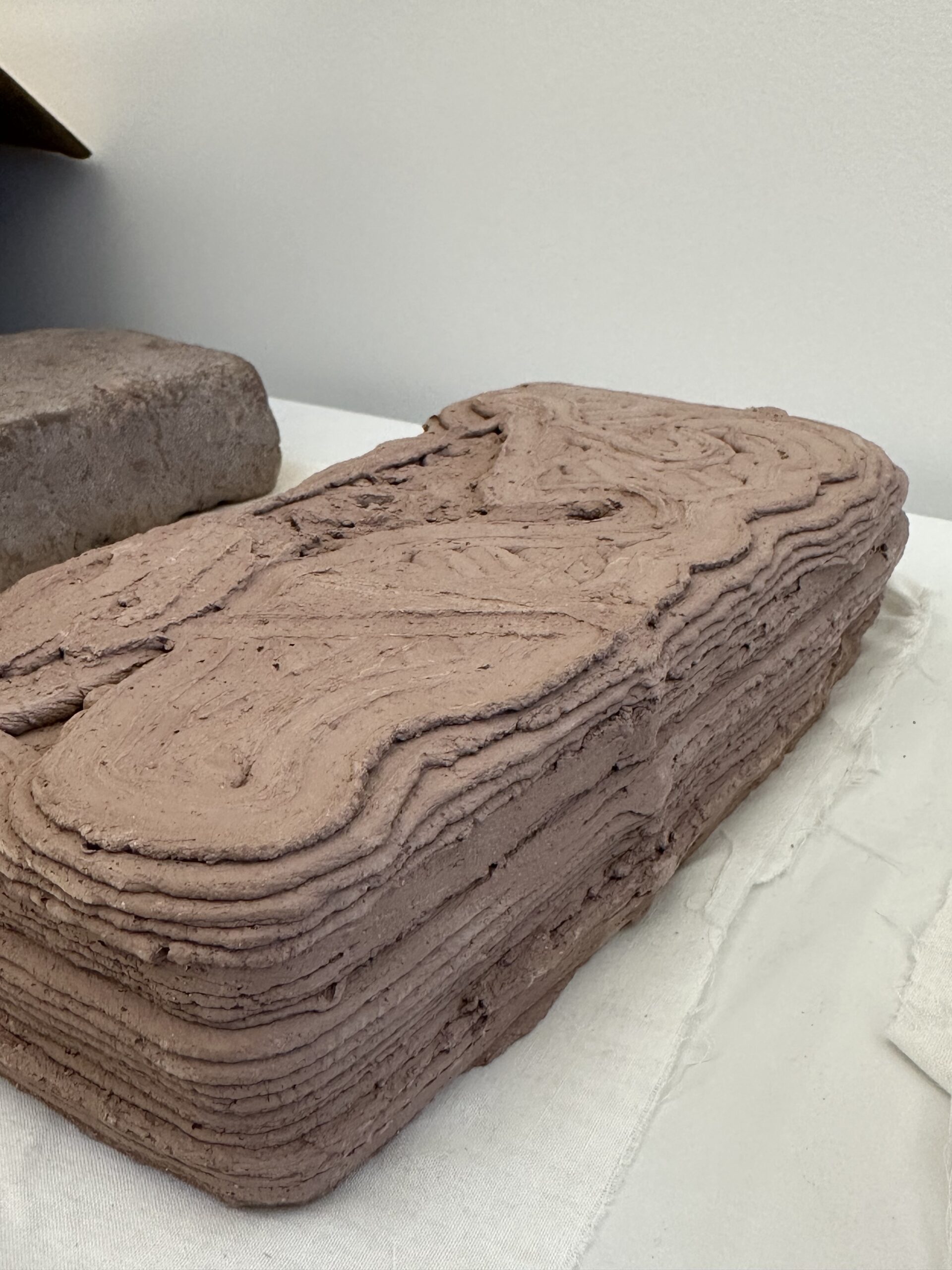
The site of MohenjoDaro provides a remarkable sample set of an ancient city entirely made of baked mudbrick. Utilizing similar mixtures as the ancient bricks, this materials study has the capacity to inform contemporary sustainable architecture models, as well as providing the possibility to create new materials and forms for the conservation of the archaeological site.
Now in our second year of experimentation, LIAVH's mudbrick materials study is continuing to expand recipes for the bricks, as well as 3d printing prototypes of extruders to see if they work more effectively with the consistency of mud that we are trying to print.