Coal Ecologies and the Fragility of Heritage: Development, Extraction, and the Changing Landscapes around Harappa
By Komal Niazi and Uzma Z Rizvi
This study presents findings from my doctoral ethnography conducted in Harappa, Punjab, focusing on the transformative impacts of coal-based development projects on the ecological and cultural environments surrounding the archaeological site of Harappa.
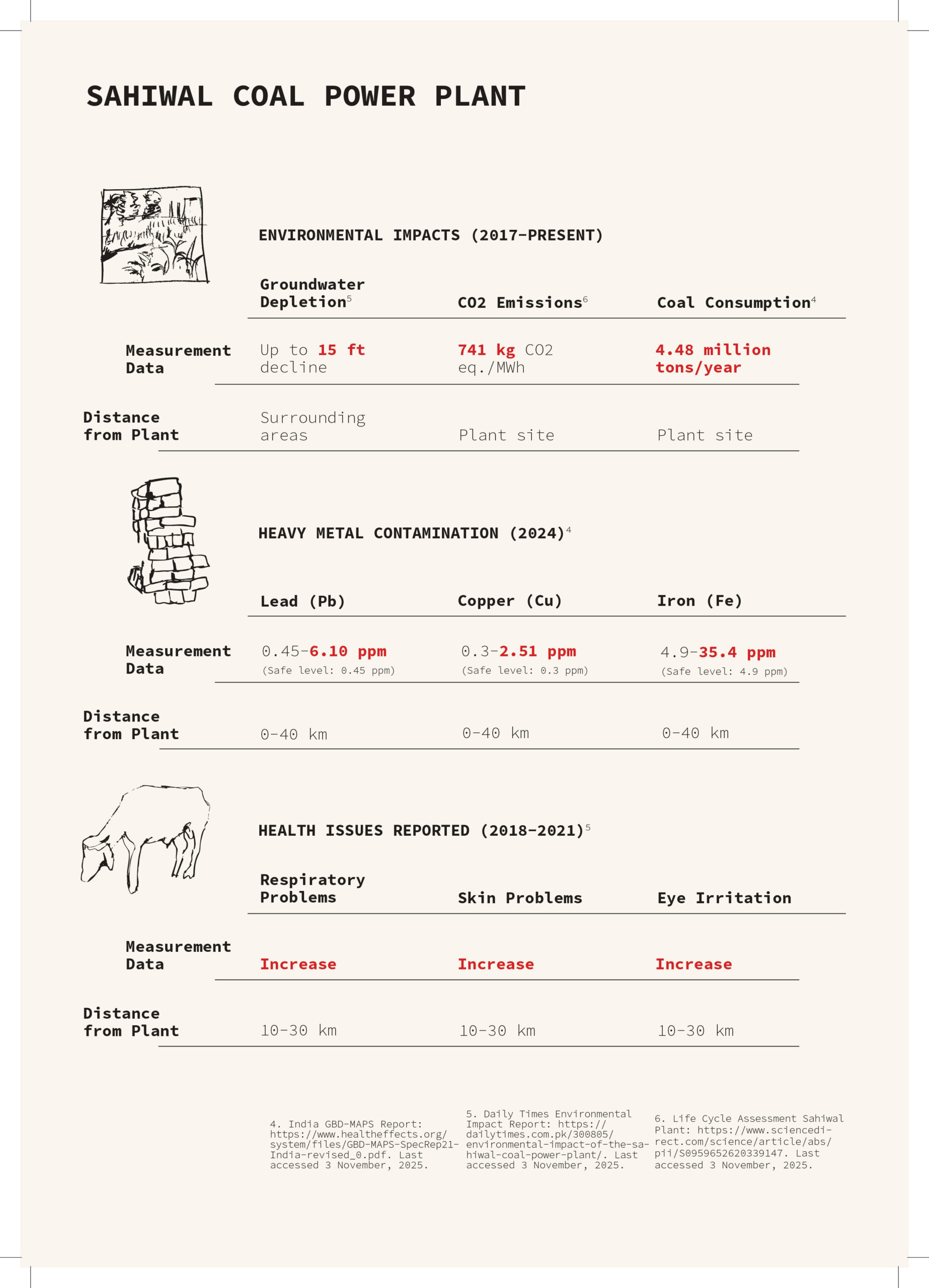
Drawing on my research regarding the Sahiwal Coal Power Plant—Pakistan’s largest undertaking linked to the China-Pakistan Economic Corridor (CPEC)—I analyze the repercussions of state-led development discourse, land acquisition processes, and the implementation of extractive infrastructures. These factors have catalyzed new forms of environmental stress within a region historically emblematic of the Indus Civilization’s agrarian legacy.
Utilizing a methodical combination of ethnographic fieldwork, oral histories, and archaeological perspectives on landscape transformation, this paper elucidates how coal ash contamination, water diversion practices, soil degradation, and industrial pollution create insidious and cumulative damage that endangers both contemporary communities and the archaeological record of deep time.