
Each year, the Pratt Senate’s Recognized Research Award honors faculty whose work exemplifies the highest standards of scholarly and creative practice. The committee evaluates submissions on the scope and methodology of the research, its impact on contemporary conversations in the field, and its capacity to push across disciplinary boundaries, creating new pathways for knowledge to grow and merge.
We’re proud to spotlight the 2026 winner and honorable mentions—faculty members whose work stood out for its rigor, relevance, and deep commitment to bringing research back into the classroom and into the world.
2026 Recognized Research Award Winner
2026 Recognized Research Award Honorable Mentions
Research
Cisco Bradley is a scholar of the social and cultural history of the music of the African diaspora. As the director of the Music and Migration Lab at the Pratt Institute, he has recorded over 500 oral history interviews with practitioners of Black music in the United States, Africa, and across the globe. The lab also is in the process of building the most comprehensive database on the historical geography of Black music ever assembled with the aim of furthering our understanding of when, where, and how African music spread across the American landscape culminating with the Black musical renaissance of the twentieth century in the form of blues, jazz, and other musical forms. Multiple books and a documentary film series are currently in preparation as a result of this work.


About Cisco Bradley
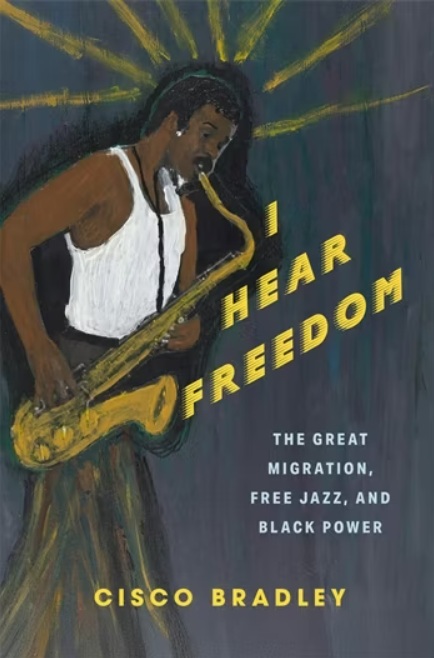
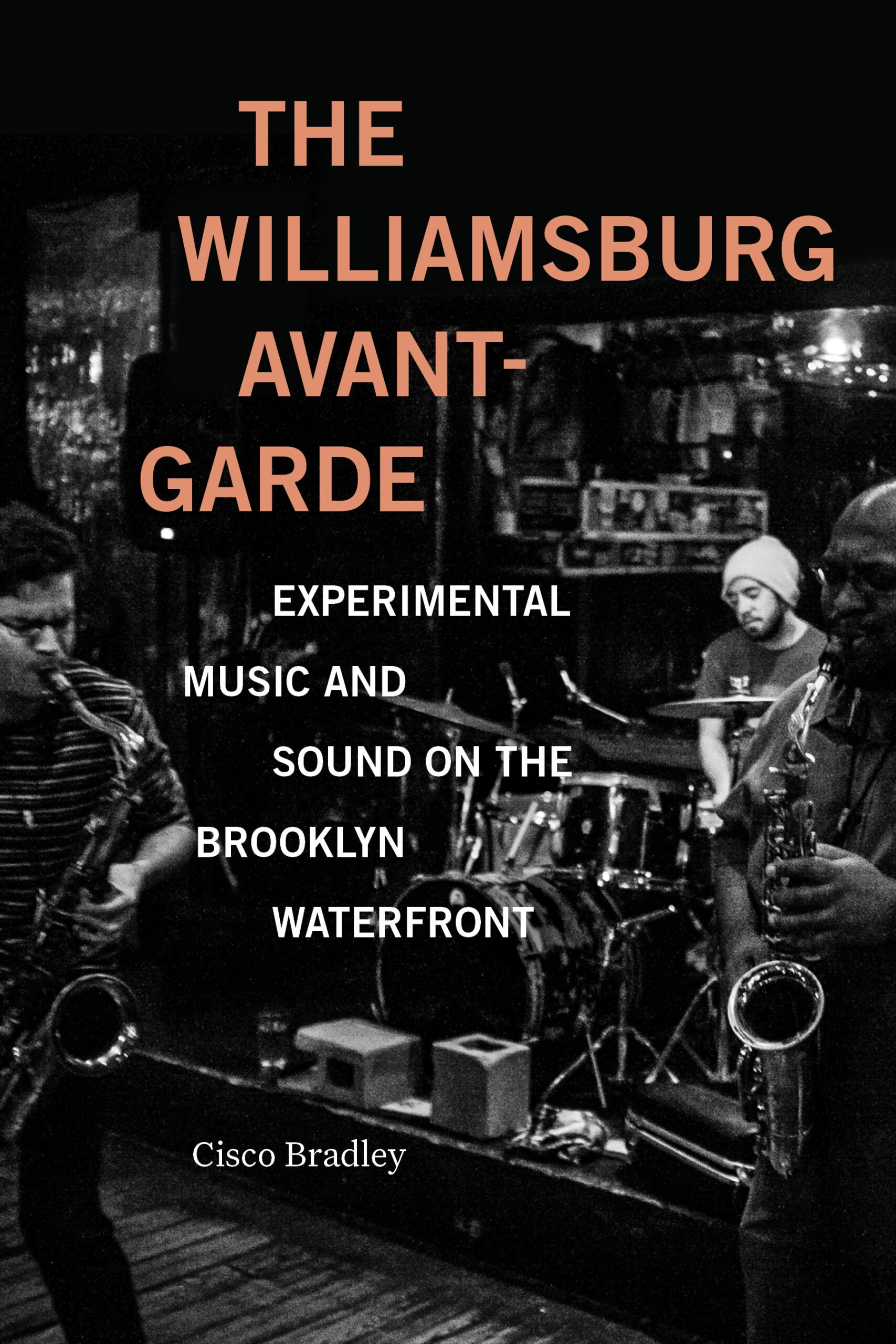
Cisco Bradley is professor of history and director of the Music and Migration Lab at Pratt Institute. He is the author of four books, including I Hear Freedom: The Great Migration, Free Jazz, and Black Power (Columbia University Press, 2026), The Williamsburg Avant-Garde: Experimental Music and Sound on the Brooklyn Waterfront (Duke University Press, 2023), and Universal Tonality: The Life and Music of William Parker (Duke University Press, 2021). He is also the director of the documentary short film, Take Me to Fendika (winner of four best documentary awards including at Cannes FIFI 2025), which he made in collaboration with two Pratt students, Aston “Setshi” Ford (director of photography and associate director) and Eric Rosario (graphic design). Bradley has received fellowships and grant support from the John W. Kluge Center at the Library of Congress, the New York State Council of the Arts, the Charlotte W. Newcombe Fellowship from the Institute for Citizens and Scholars, and the Fulbright program. He has served as the founding editor of Jazz Right Now since 2013.
Research
May Joseph is a climate researcher who examines the interstices of land and sea. Much of her written work explores oceans, islands, and riverine and deltaic ecologies in a comparative historical approach. At the center of her inquiry is the question of livability and adaptability for island cities such as New York City. Joseph is interested in how New York is transforming its landscape and environmental surroundings in the face of rising seas and escalating climate events. Her artistic practice applies these questions to site-specific performances located along rivers, oceans, and water bodies around New York City as well as across other islands and river cities of the world. These investigations shape her walking classes at Pratt Institute where they probe the environmental and coastal histories of New York’s changing landscapes.

About
focusing on global water issues, based in New York City. Joseph is professor of Social Science and Cultural Studies at Pratt Institute. She has written widely on water ecology, global environmentalism, performance studies and critical ocean studies. She is the author of Aquatopia (2022); ghosts of lumumba (Poetics Lab, 2020); Sealog: Indian Ocean to New York (Routledge, 2019); Fluid New York: Cosmopolitan Urbanism and the Green Imagination (Duke University Press, 2013); Nomadic Identities: The Performance of Citizenship (Minnesota, 1999) and coeditor of Aquapelagos: Integrated Terrestrial and Marine Assemblages (with Philip Hayward, Routledge, 2025); Terra Aqua (with Sudipta Sen, 2023); and Performing Hybridity (with Jennifer Fink. Minnesota, 1999). Other edited volumes include Islands of Refuge (Island Studies, 2022); Nomadic Identities (Island Studies Journal, 2021); Islands, History and Memory (Island Studies Journal, 2020); Coloniality and Islands (Shima 2019); Social Text # 124, Spring 2015; City Corps (Journal of Space and Culture), New Hybrid Identities (Women and Performance, 1995) and Bodywork (Women and Performance, 1999). Joseph has created site-specific decolonial performances along Dutch and Portuguese maritime routes. She is the editor of three book series, Critical Climate Studies (Routledge); The Routledge Ocean and Island Studies Book Series (Routledge); and Kaleidoscope (Routledge). Learn more at www.mayjoseph.com.
Research
Irene Lopatovska’s research is guided by two central themes: emotion and resilience. Her work on emotion evolved from studying affect in human-computer interaction and information behavior to examining the personalities, humor, and social perceptions of AI chatbots and conversational agents. Through this research, she seeks to better understand how technologies can be designed to ethically support users’ immediate and long-term emotional needs. During the COVID-19 pandemic, her research expanded to include resilience and how technology can help mitigate the effects of social isolation and crises, particularly for adolescents and communities affected by war and disruption.
About
Irene Lopatovska is a professor in the School of Information at Pratt Institute, where she has been a faculty member since 2006. She earned a Ph.D. from Rutgers University. Dr. Lopatovska has authored over 50 publications, often in collaboration with students. Her work appears in leading journals, including the Journal of the American Society for Information Science and Technology, Information Processing & Management, Journal of Documentation, and Journal of Librarianship and Information Science. Her recent work examines personality dimensions of AI chatbots, and the role of libraries in fostering resilience during crises such as the Russia–Ukraine war. Dr. Lopatovska is an active leader in the information science community through editorial service, conference leadership, mentorship, and curriculum development. She has received numerous awards and grants, including Fulbright Scholar Grants and the Association for Information Science and Technology Distinguished Member Award. More information about her work can be found on her website.
Research
Cristina Pattuelli’s research is driven by a fundamental question: what happens when cultural knowledge is freed from the containers that have long defined its boundaries — the catalog record, the finding aid, the institutional collection? She applies semantic methods to create knowledge graphs that model cultural and historical material as dynamic, relational systems, making visible the networks of artistic collaboration, influence, and exchange, and the works they produced, that conventional representation systems cannot surface. Linked Jazz transformed jazz oral histories into a graph of professional and personal connections among musicians, revealing a rich web of relationships that no traditional access system could expose. A dedicated strand of this work, Women of Jazz, foregrounds the contributions of women musicians whose presence in the historical record has been long neglected. This work has since expanded into the E.A.T. Knowledge Graph, in collaboration with the Robert Rauschenberg Foundation Archives, which maps the interdisciplinary ecosystem of Experiments in Art and Technology — the pioneering 1960s initiative that brought together artists and engineers at the frontier of creative and scientific practice. These are among the many projects carried out through the Semantic Lab at Pratt’s School of Information, a research collective where students and alums engage in the full research process.

About
Cristina Pattuelli is professor at the School of Information at Pratt Institute, where she teaches courses in Knowledge Organization, Art Documentation, and Artists’ Archives. She is the founder of the Linked Jazz project and co-director of the Semantic Lab, a research collective dedicated to transforming cultural archival sources into linked open data and knowledge graphs. Her research interests sit at the intersection of Information Science, Digital Humanities, and Art History, exploring new modes of cultural heritage representation to facilitate discovery and foster new research questions. Her work includes collaborations with the Weeksville Heritage Center, Harvard University’s I Tatti Center for Italian Renaissance Studies, Carnegie Hall Archives, and the Robert Rauschenberg Foundation. A recipient of the Jesse H. Shera Award for Distinguished Published Research, she has written extensively on semantic technologies in cultural heritage. She holds a Ph.D. in Information and Library Science from the University of North Carolina at Chapel Hill, and degrees in Philosophy, Cultural Heritage Studies, and Archival Science from the University of Bologna.