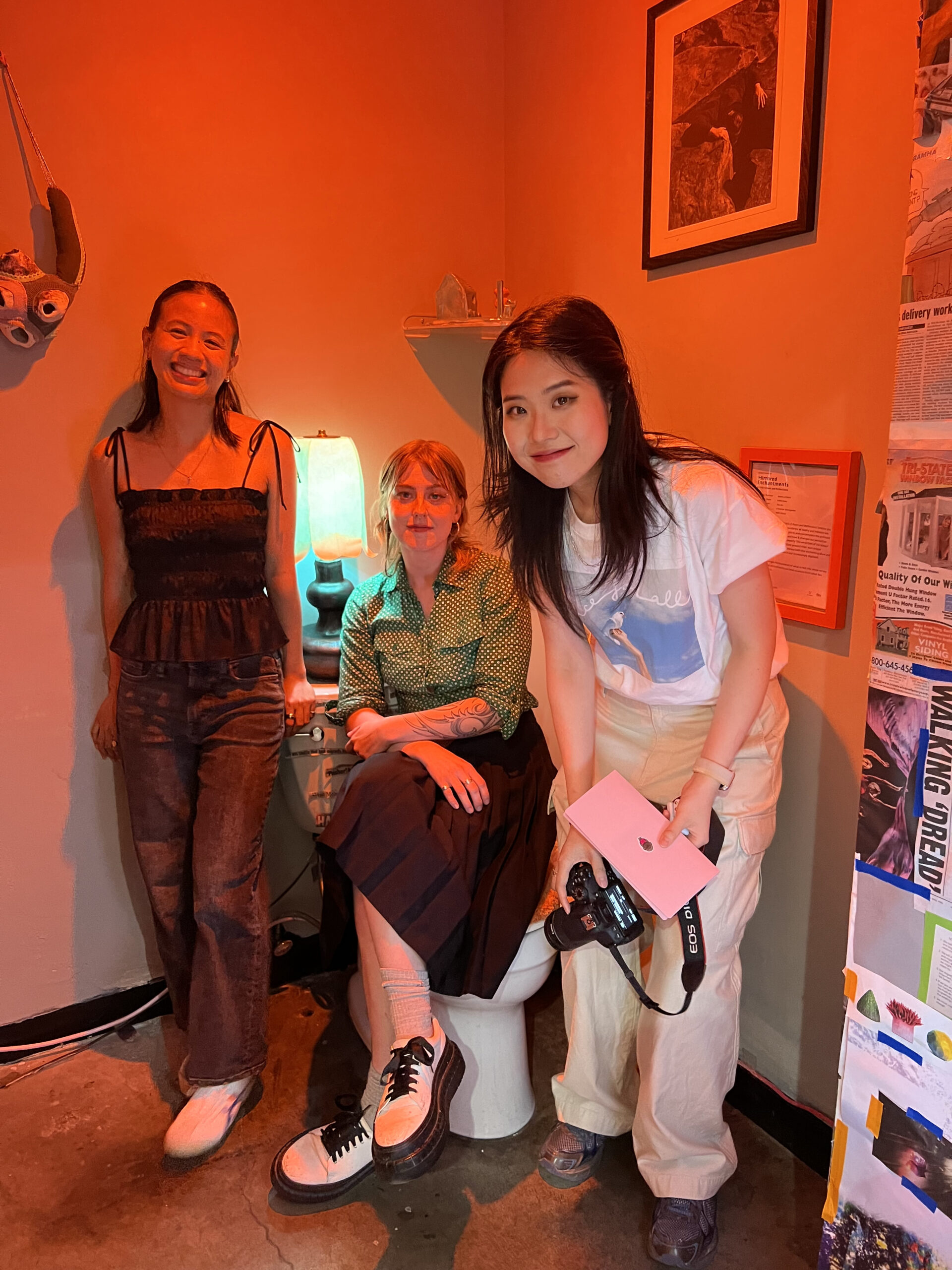
Flush Gallery, an independent, artist-run gallery for emerging artists, takes its name from both the idea of a sudden rush of intense emotion and the fact that its first show was held in a Pratt alumna’s apartment bathroom.
Its founders, Elle Gillette and Xiangni Song, both MFA Fine Arts ’22, met during a time when communities were being formed and reformed in unexpected ways during the COVID-19 pandemic. Gillette, a multimedia artist studying integrated practices and Song, a painter and illustrator exploring the depths of perception, both worked as monitors in Pratt’s print shop and bonded over their love of illustration and doodling during their free time. It was in the shop where printmaking technician and instructor Caitlin Riordan taught them about an era of Pratt history that would open up new ideas about community-building among artists.
“Caitlin introduced us to the 1980s underground art scene at Pratt,” Gillette reminisced. Decades ago, Pratt students utilized different spaces outside of the classroom and traditional gallery settings to showcase their work, including the basement of the print shop on campus. Gillette and Song were inspired to tap into the spirit of a grassroots collective for artists in less-expected spaces. Their goal was to “build something that brings artists together to foster community, not competition.”
Gillette and Song were interested in recontextualizing spaces they already had access to, including Gillette’s East Village studio apartment. Subverting the white-walled gallery norm, Flush Gallery was born in Gillette’s apartment bathroom.

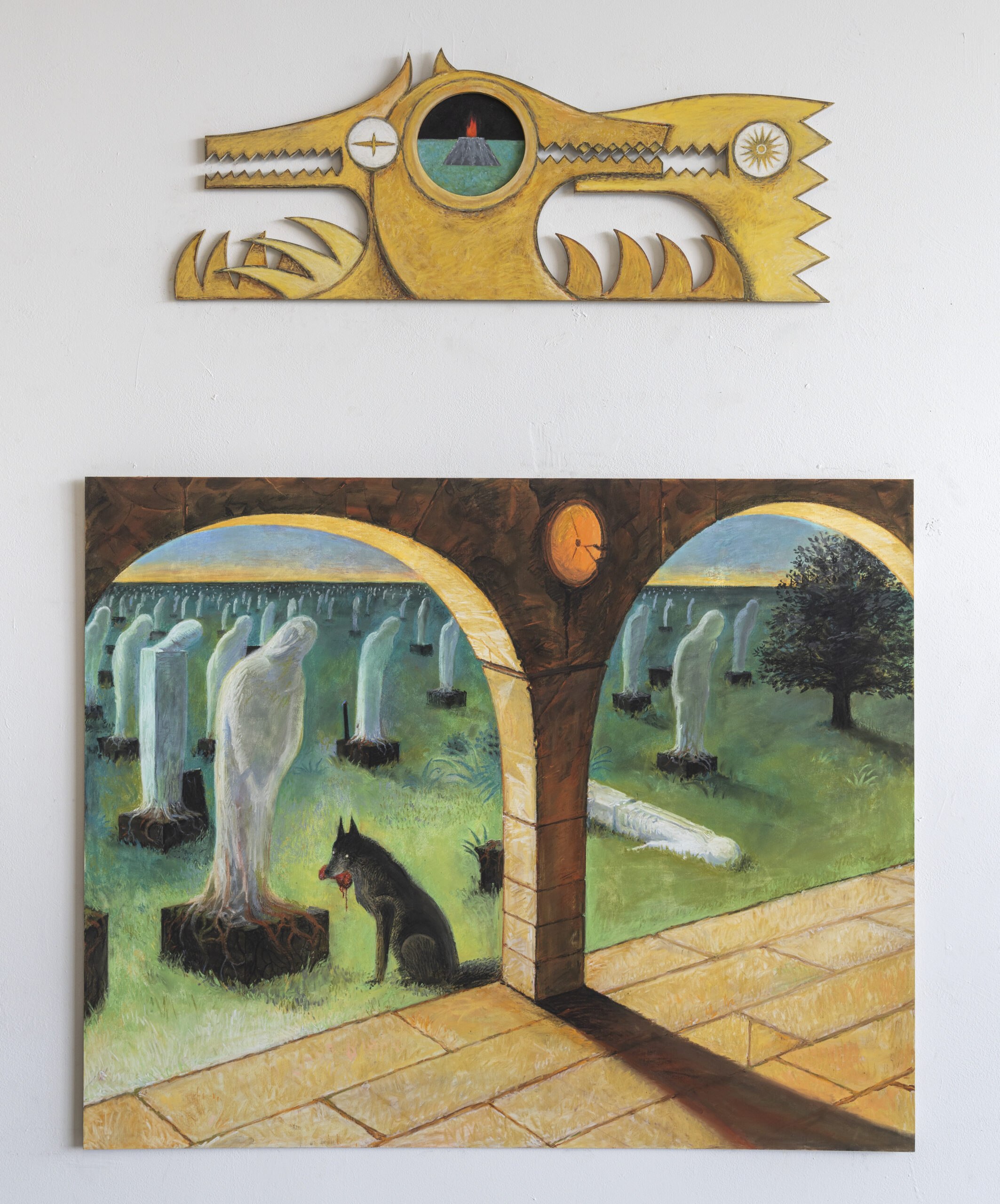
Gillette and Song invited Pratt students to participate in Flush through an open call, spread through word of mouth and social media. “I went to MFA thesis shows and reached out to Pratt professors,” Gillette said, and the pair posted dimensions of the space and photos of areas that could accommodate all different kinds of works to generate submissions. About 30 people came to the first show, titled Intimacy, which included small-scale sculpture, photography, prints, painting, and mixed-media works.
The grassroots sense of community that Intimacy generated set the stage for future exhibitions. Keeping with the tradition of using bathroom space in different locations, Flush showcased a growing roster of artists from the Pratt community and beyond in two subsequent shows, Mimicry as Enchantment (2023), held at Ed. Varie in the East Village, and Moral Injury (2024), held at Hercules Art Studio in Tribeca.
While Song has stepped back from Flush to focus on her own practice, Gillette continues to work with their shared vision to build community and consider the types of spaces where we view and interact with art. Along with Flush’s show Conditions in January 2026, Gillette is thinking of ways in which the gallery can be more accessible to all digitally.
Gillette also welcomes her fellow artists to help behind the scenes at Flush. “Artists in our shows can be involved as much or as little as they want,” Gillette said. Like it was for her and Song, she believes Flush offers a great opportunity to engage with a creative community that’s invested in one another’s success.
When asked if she had advice for up-and-coming creatives, Gillette emphasized that artists should use their resourcefulness and creativity to their advantage if and when they encounter constraints: “Use whatever tools are available to you right now, be curious and unafraid of failure,” especially when trying something completely new. It’s also important to build and maintain connections as you start out, she says: “Your friendships will take you where you want to go.”
Three Flush Gallery Exhibitions

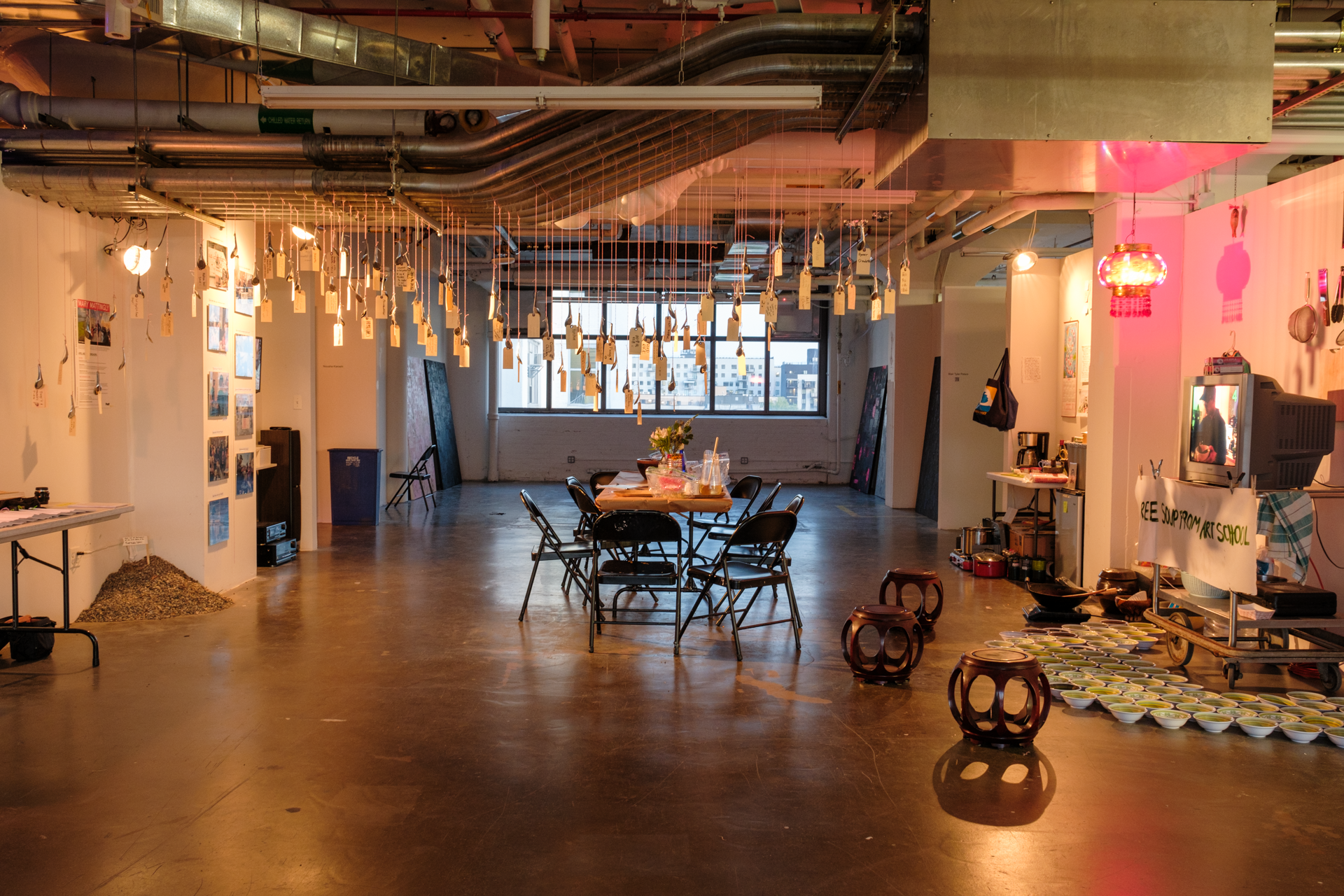
Mimicry as Enchantment, 2023
Ten artists’ works explored the themes of mirroring, identity, reflection, and transformation of reality in the red-lit bathroom of Ed. Varie, an East Village gallery.

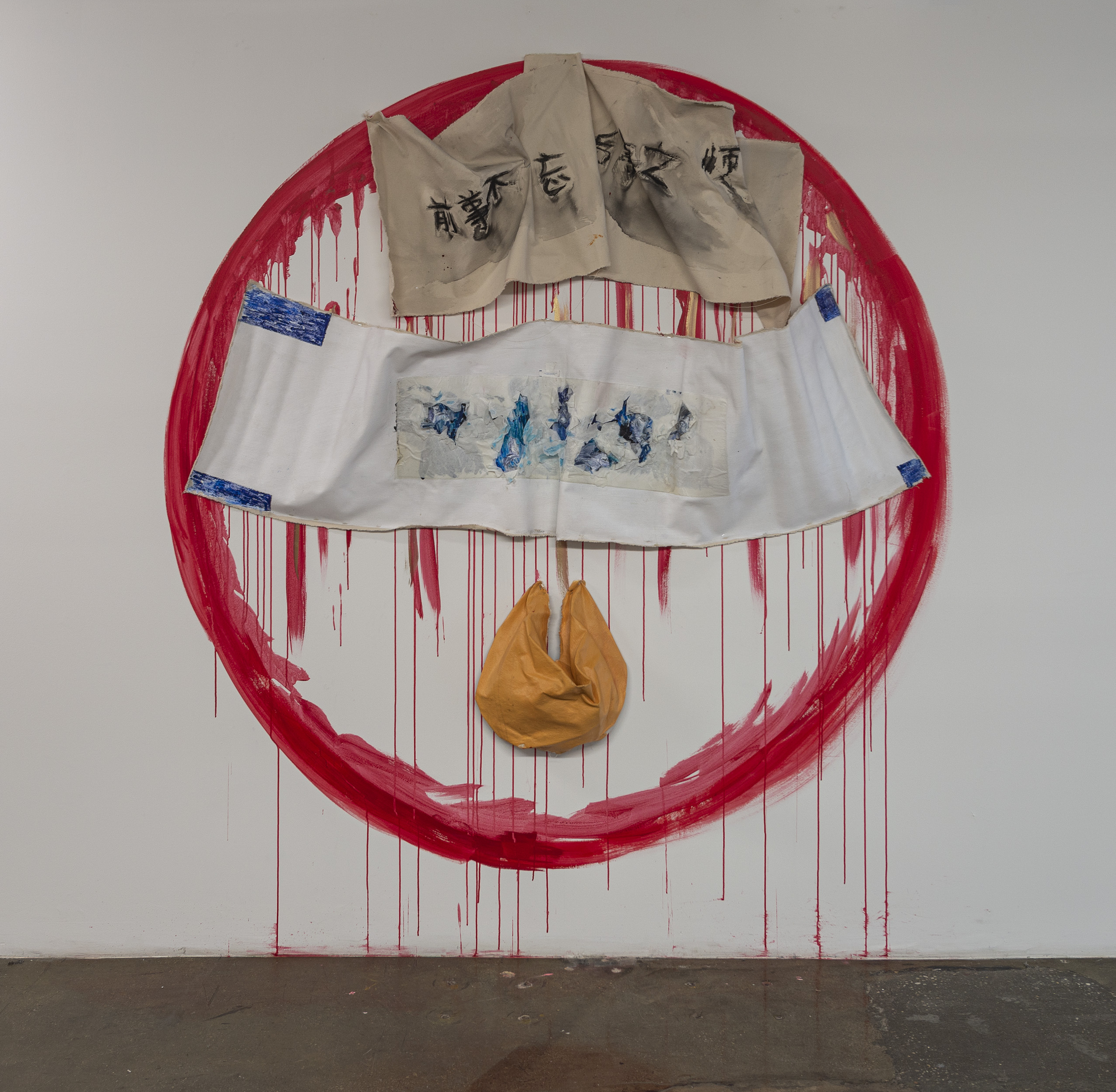
Moral Injury, 2024
Flush Gallery’s third show examined the portrayal of conflict and suffering in our image-saturated era. The exhibition addressed the various internal harms that arise from exposure to actions or events that are in conflict with one’s moral beliefs.

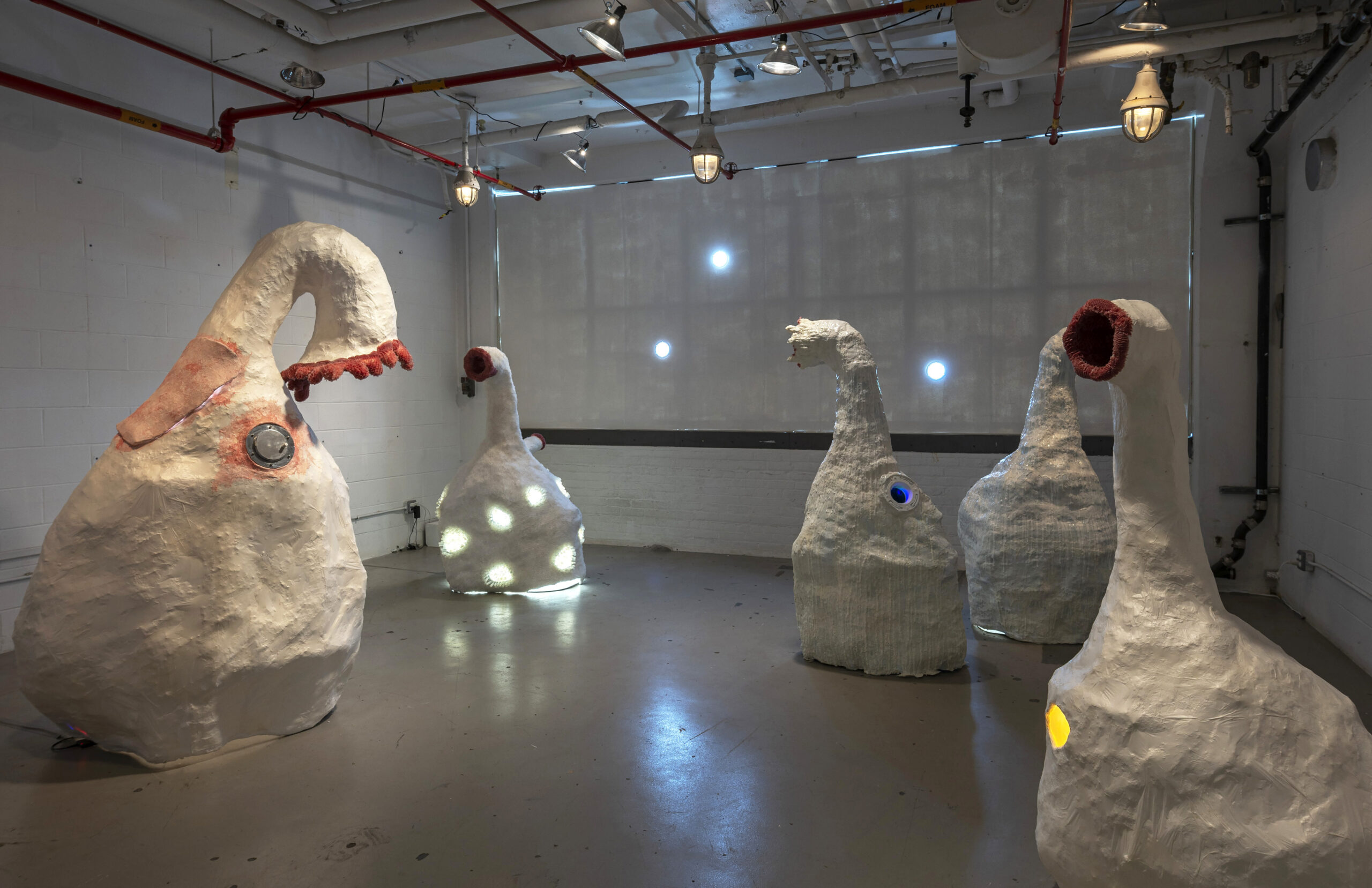
Conditions, 2026
Conditions explored the notion of “compacity,” or as Gillette defines it, the condition of being dense, bound, and contained. The works assembled asked what it means to pack the infinite into the finite, compressing sprawling narratives, sensations, or histories into intense, compact vessels.