Saddqa Saeed Bahidrah
- School
- School of Architecture
Work Samples
-
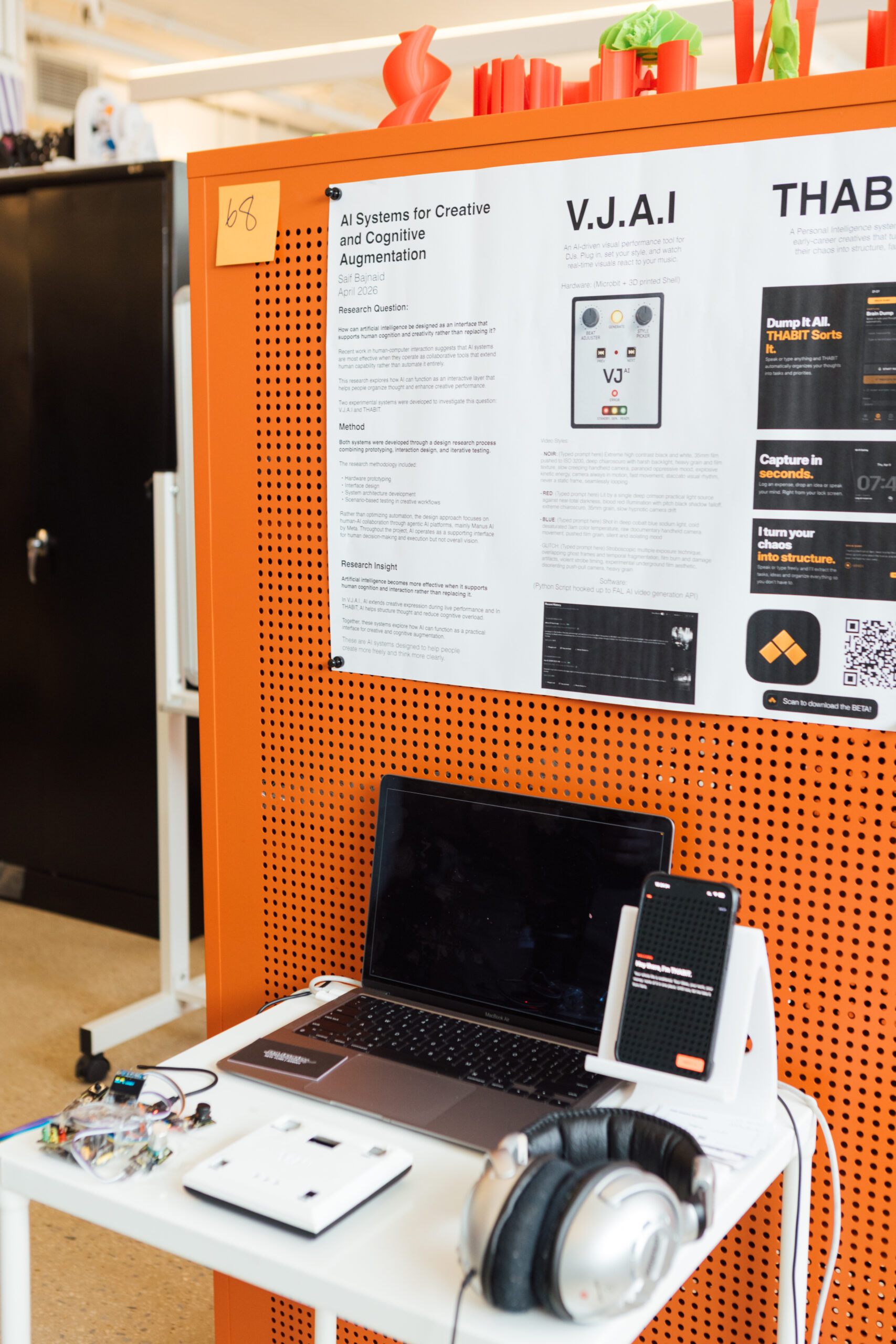
![Exhibition display featuring a poster titled “AI Systems for Creative and Cognitive Augmentation” mounted on an orange perforated panel. Below the poster is a table with a laptop, smartphone on a stand, electronic components, cables, and over-ear headphones, indicating an interactive technology or research project setup.]()
(Agri)Culturing A Community: Using Agricultural Byproducts to Build Neighborhoods
(Agri)culturing a Community investigates how agricultural waste can be reintroduced into the built environment as both a construction material and a catalyst for civic engagement. Framed as a research-driven design inquiry, the project examines the environmental, spatial, and social implications of transforming crop residues and food waste into architectural systems.
Situated on a 63,000-square-foot industrial site in the Bronx, the proposal operates as a regenerative campus that integrates a food waste recycling facility, biomaterial production spaces, community education programs, and productive farmland. The architectural framework is organized around a retrofitted brick factory, where food waste processing and material fabrication occur in tandem. A community learning center overlaps this industrial core, spatially linking research, production, and public access to foreground transparency in material cycles.
The research component focuses on the development and testing of bio-based composites derived from corn husks, cornstalk leaves, and crushed eggshells sourced from agricultural partners. Through iterative prototyping, material mixing, pressing, and performance observation, these byproducts were evaluated for density, texture, adhesion, and potential architectural application. The resulting composites were translated into cladding panels, pavers, and façade systems, embedding material experimentation directly into the building envelope.
By positioning architecture as both infrastructure and laboratory, the project proposes a closed-loop system in which agricultural residue becomes a local resource for construction. This work contributes to ongoing discussions around circular design, embodied carbon reduction, and community-centered material innovation. Ultimately, the research suggests that agricultural waste can operate not only as a sustainable alternative material, but as a framework for connecting ecological systems, design practice, and public participation.
-
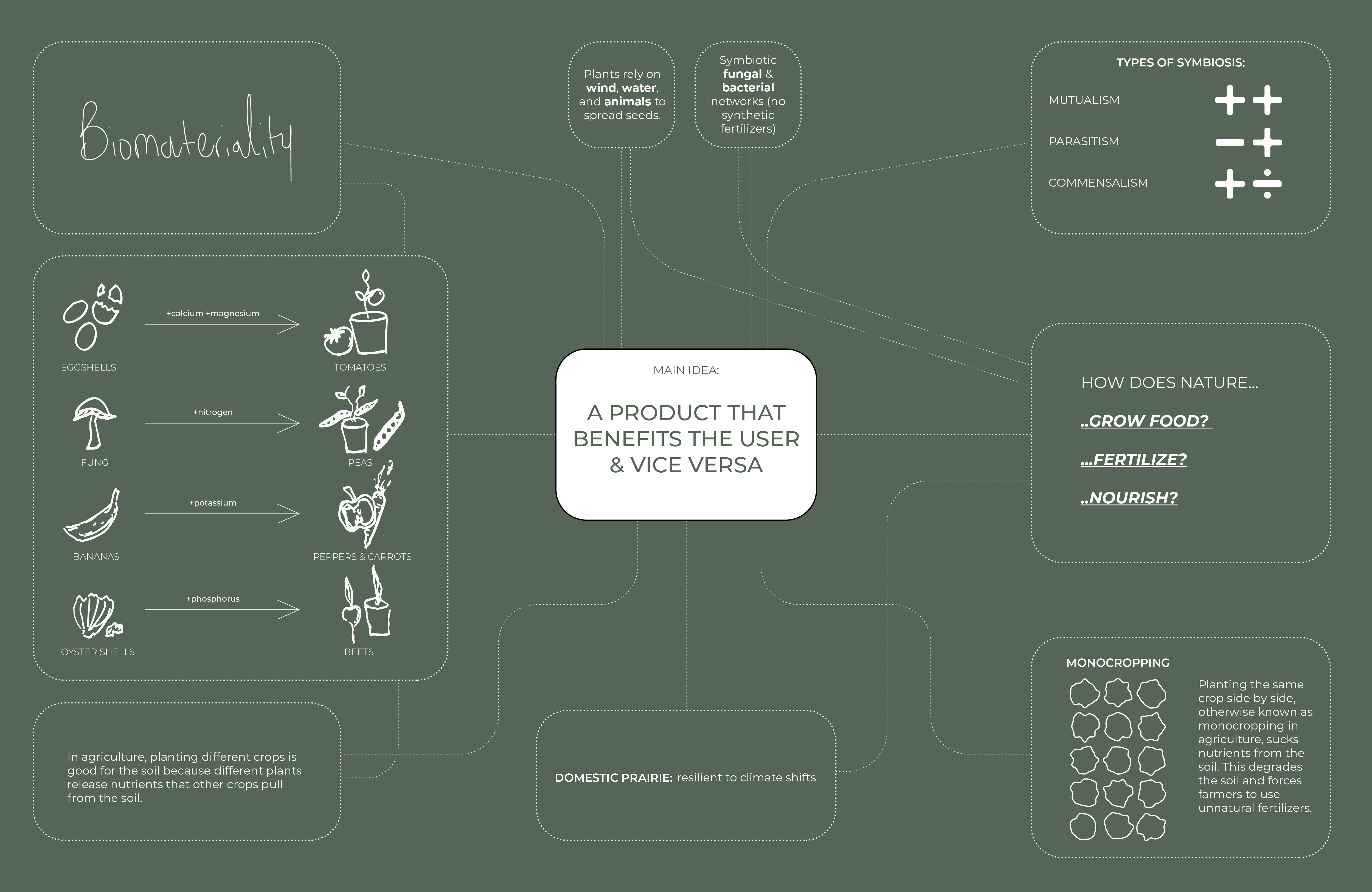
![A green-toned infographic illustrating a biomimicry-inspired product development mind map. At the center, the main idea reads: “A product that benefits the user & vice versa.” Radiating from this are interconnected concepts and questions such as]()
Root Cause: A Study of Symbiotic Biomaterials for Self-Fertilizing Planters
"Root Cause: A Material Development and Study of Naturally Fertilizing Planters" explores the potential for biomaterials to create a symbiotic relationship between the product, the user, and the environment. This project aims to develop a planter made from biodegradable materials embedded with natural fertilizers like crushed eggshells, fungi, and banana peels—materials that decompose over time, releasing nutrients into the soil. The goal is to design a product that not only supports plant growth but also improves soil health through its own breakdown, mimicking natural cycles of nutrient replenishment found in undisturbed ecosystems.
This work-in-progress is part of my Industrial Design course, Prototypes 2, and is rooted in research around agricultural sustainability and the limitations of monocropping. Modern agriculture relies heavily on synthetic fertilizers, which strip the soil of nutrients and create long-term damage. This project challenges that cycle by introducing a closed-loop system where the planter material itself becomes a source of nourishment.
The project engages with broader conversations about sustainable agriculture, food insecurity, and urban resilience. By targeting urban dwellers with limited access to fresh produce and growing space, the design introduces a scalable, modular solution that encourages community participation. The planters could be connected with neighbors, creating shared growing networks and fostering collective learning about natural soil enrichment.
The work seeks to bridge the gap between product design and agriculture by creating a functional yet educational product—one that teaches users how to integrate food waste into soil health while addressing the environmental challenges of modern food production.