Moein Shashaei
Adjunct Assistant Professor

Adjunct Assistant Professor
Twisting Growth: An Experimental Rope Fabrication Machine for Bio-Derived Materials
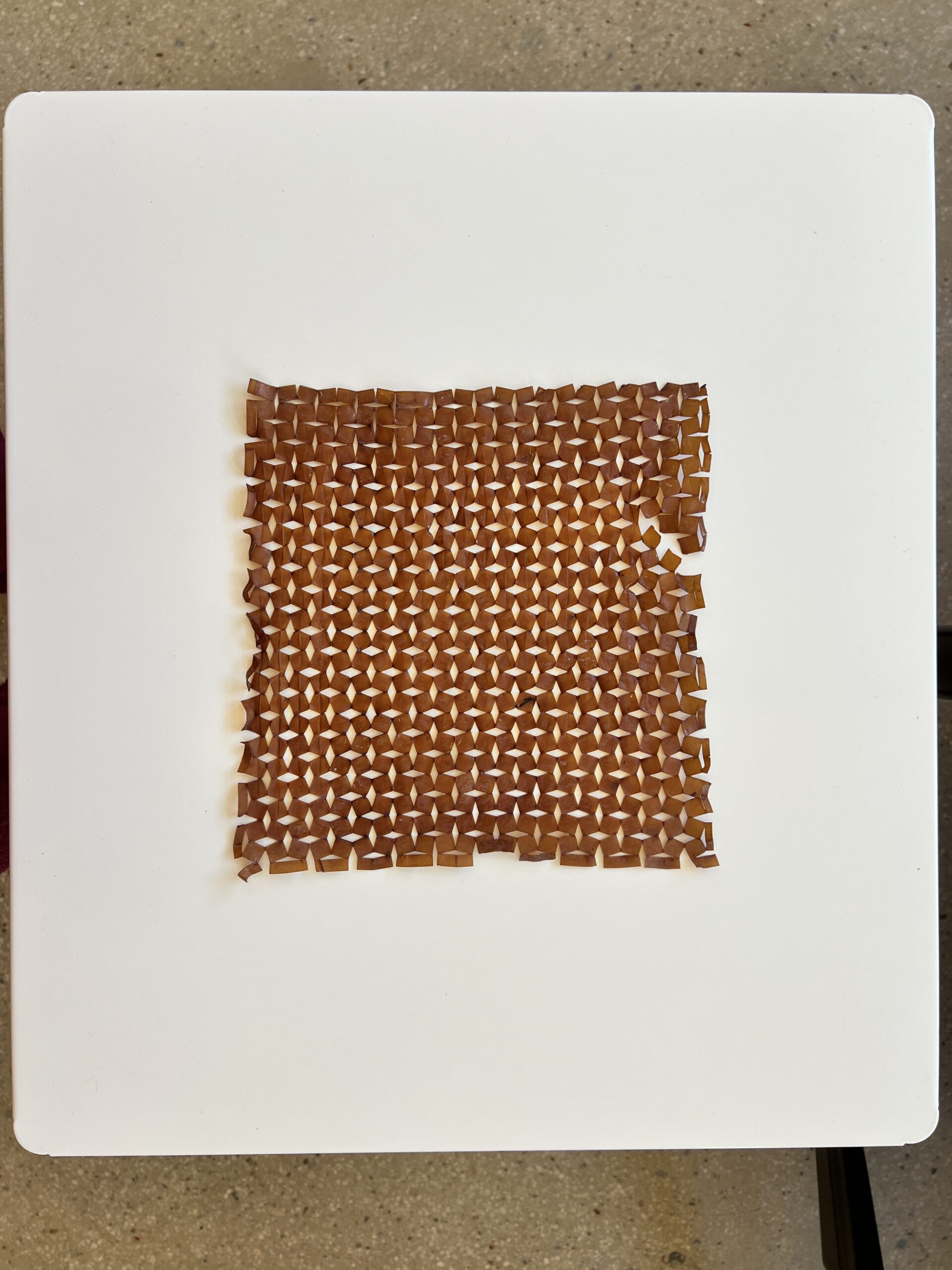
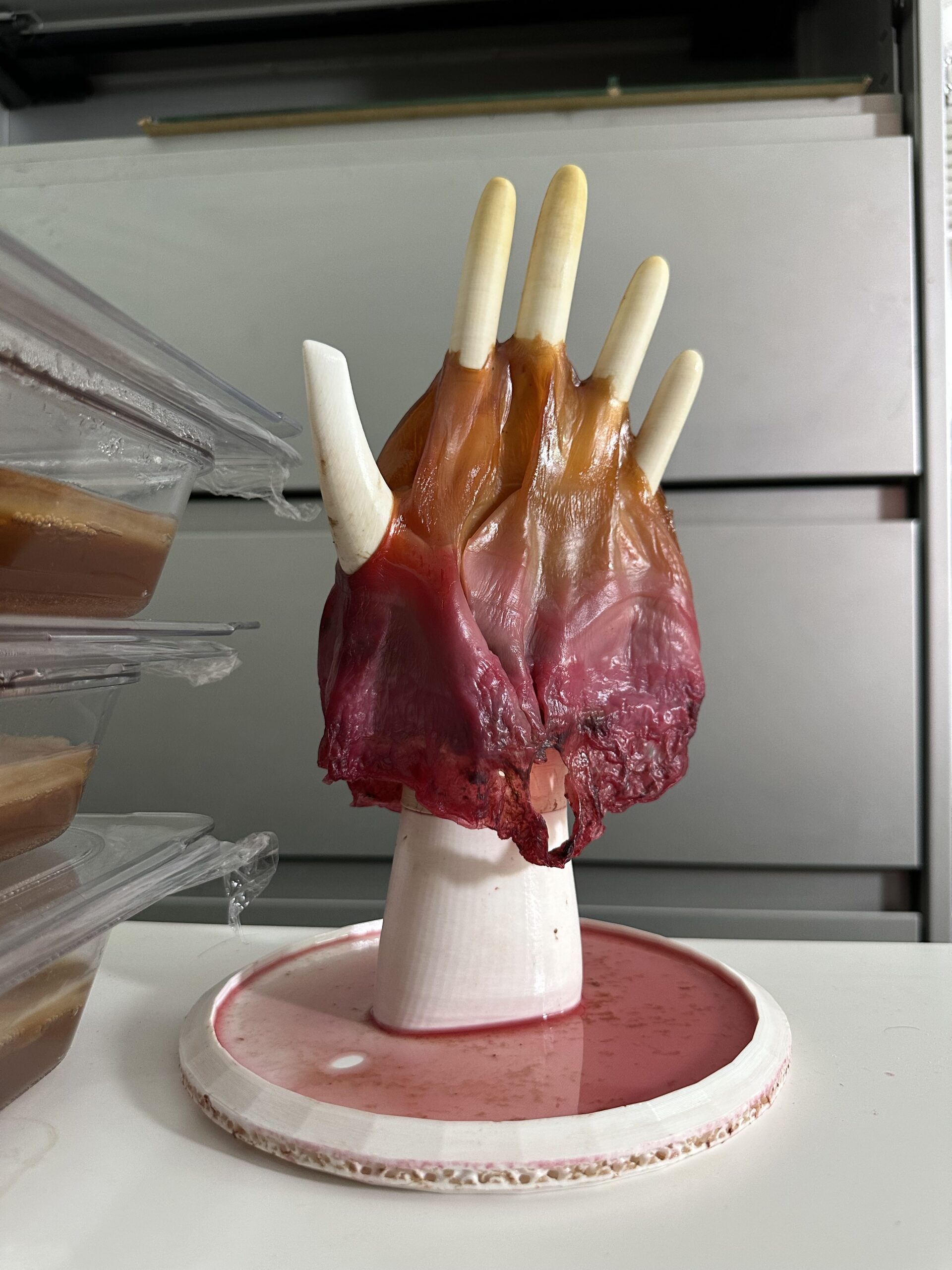
This project explores how emerging bio-derived materials can be transformed into structural systems through experimental fabrication. The research focuses on SCOBY (Symbiotic Culture of Bacteria and Yeast), a living biomaterial cultivated through fermentation that can develop into flexible sheets and fibrous structures. Through material experimentation, the project investigates SCOBY’s potential as a biodegradable alternative to conventional materials such as plastic, paper, and leather.
To explore how these soft and unconventional materials might be processed into larger assemblies, the project develops an experimental rope fabrication machine. The device employs a dual rotational mechanism in which multiple strands rotate around their own axes while simultaneously orbiting a central axis, allowing thin strands to be continuously twisted into stable rope structures.
Designed through iterative prototyping—including digital modeling, custom 3D-printed components, and mechanical testing—the machine functions as a research tool for studying how biological growth and mechanical fabrication can intersect. By translating flexible strands into continuous rope elements, the project proposes a workflow that moves from cultivation to fabrication, connecting living material processes with experimental production techniques.
Together, these investigations present a series of material experiments that bridge biology, design, and mechanical systems, exploring alternative approaches to sustainable material fabrication.
SCOBY Project
"The SCOBY Project explores the use of Symbiotic Cultures of Bacteria and Yeast (SCOBY) as a living, growable material for interdisciplinary design, education, and sustainable making. Rooted in fermentation science, biomaterial experimentation, and community-engaged pedagogy, the project spans research, public workshops, and the development of tools such as the SCOBY STEAM Learning Kit. Through hands-on cultivation and transformation of SCOBY into biodegradable sheets, the project invites students, artists, and educators to consider new relationships between living systems, material culture, and environmental care.
This work sits at the intersection of biofabrication, critical design, and socially engaged art and education. It contributes to growing conversations in design research about post-human making, symbiosis as a framework for community, and the potential of non-extractive, living materials to reshape how we teach, create, and think about sustainability. In the classroom, SCOBY becomes a platform for embodied learning, experimentation, and reflection—offering a model for interdisciplinary curricula that unite STEM with social and ecological inquiry.
The impact of the SCOBY Project lies in its potential to shift how we frame material innovation—not as a purely technological pursuit, but as a relational, ethical, and educational practice. It opens space for collaborative inquiry into more reciprocal ways of making with nature and offers both speculative and practical pathways for transforming the future of design education."