The International Society for Theoretical Psychology (ISTP), will host its 2026 conference at Pratt Institute’s Brooklyn Campus, which is located on Lenapehoking, the traditional and unceded homeland of the Lenape people, past, present, and future.
We warmly invite scholars from theoretical psychology and neighboring disciplines—philosophy, sociology, anthropology, literature, the arts, and beyond—to submit their contributions and join us at Pratt Institute in Brooklyn, New York, from Monday, June 8 to Friday, June 12, 2026. Whether through theoretical reflection, conceptual analyses, or creative interventions, we seek diverse perspectives that critically engage with the conference theme. Contributions beyond the conference theme are also welcome.
At the heart of the conference lies the question: What is the role of theory in dark times? Theoretical psychology has long sought to understand the human condition, yet in moments of global crisis, theory itself becomes a site of political resistance. The conference will examine how theory functions as a political force, shaping narratives of power, ideology, and agency. It will address the political implications of psychological theory, asking how psychological concepts, often regarded as neutral or apolitical, become entangled with broader social and political dynamics.
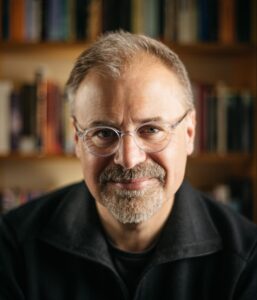
Roger Frie
Hope in an Age of Destruction: From Vulnerability to Resistance
Is there a place for hope in an age of wanton destruction?
What might the ability to maintain hope in the face of cruelty and despair tell us about the human condition?
Drawing on a series of illustrations, from global political activists to intellectual refugees from Nazi Germany in the 1930s, we will examine what it means to move from a position of vulnerability to resistance amidst the cruelest of circumstances. We will distinguish hope from optimism and consider the ethical responsibility we have toward others. Above all, we will examine the role of sociality and compassion for countering forces of destruction and maintaining a sense of humanity. The kind of hope we will describe emerges out of vulnerability but is oriented toward action and purpose and the betterment of society.
Roger Frie is University Professor of Psychoanalysis and Education at the University of Vienna in Austria, Affiliate Professor of Psychiatry at the University of British Columbia, and Professor Emeritus at Simon Fraser University in Vancouver, Canada. He is also Faculty and Supervisor at the William Alanson White Institute of Psychiatry, Psychoanalysis and Psychology, and the NYU Postdoctoral Program in Psychotherapy and Psychoanalysis, and associate member of the Columbia University Seminar on Cultural Memory in New York.
He is a clinical psychologist and psychoanalyst in private practice as well as a trained historian and social philosopher and brings both of these perspectives to bear in his publications. He is author most recently Wounds of Silence: Legacies of Genocide and Racial Violence (Oxford 2026), Edge of Catastrophe: Erich Fromm, Fascism and the Holocaust (Oxford 2024) and Not in My Family: German Memory and Responsibility after the Holocaust (Oxford 2017). His most recent edited book is Culture, Politics and Race in the Making of Interpersonal Psychoanalysis (Routledge, 2022). He is additionally co-editor of Contemporary Psychoanalysis and was previously an editor of Psychoanalysis, Self and Context.
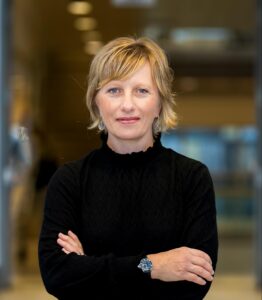
Alexandra Rutherford
“Off the couches, into the streets!” Psychology and social change in the long 1960s
No period in recent United States history is quite as iconic as the “long 1960s.” Extending from the mid-1950s into the 1970s, these years saw the rise of the Black Power, Women’s Liberation, and Gay Rights movements in the context of intense anti-Vietnam war activism and a vibrant counterculture. How did these social movements influence psychology, and how did psychology contribute to social change? In this talk, I describe and reflect on a current collaboration with the National Museum of Psychology in Ohio to design an exhibit that weaves together the intense sociopolitical upheaval of this period with developments in psychology. The disciplinary formations of Black psychology, feminist psychology, and lesbian and gay psychology emerged during this time to enrich, challenge, and transform psychological understandings of what it means to be human. In returning to the 1960s, we explore how the psychological and the political intersected, and imagine the role of psychology in the next social revolution.
Alexandra Rutherford is a Professor in the Department of Psychology at York University in Toronto. She uses critical historical and qualitative approaches to analyze the development and contemporary status of the human sciences. Alexandra is interested in how psychologists have used their scientific ‘expertise’ to impact society and how, in turn, social and political factors have shaped the nature of this expertise and its influence. In her current project she examines the relationship between feminist psychology and policy in the United States from the 1940s-present.
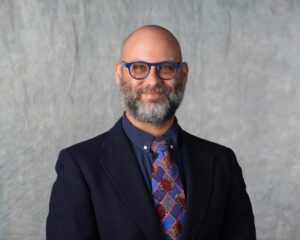
Robert Beshara
The Invention of the Unconscious in Egypt: A History of Psychoanalysis
My presentation reevaluates the history of psychoanalysis by challenging the Eurocentric narrative that the unconscious was ‘discovered’ in 19th-century Vienna. By integrating Walter Benjamin’s historical materialism with Freudo-Lacanian theory, I posit the unconscious as a nonlocal truth—an interminable haunting that bridges Ancient Egyptian psychospiritual practices with the modern clinic. The theoretical framework utilizes Benjamin’s concepts to dismantle linear historicism, treating Egyptian history instead as an unconscious field of symptoms. This lens transforms key historical moments into a constellation of active symptoms and messianic ruptures against the Egyptian state’s repetition compulsions. I argue that the unconscious was not reinvented by Freud, who utilized Ancient Egyptian structural scaffolding to map the psyche. Furthermore, the paper traces how mid-20th-century Egyptian intellectuals integrated Freudian thought into a pre-existing landscape of Islamic philosophy and Sufi psychology. By framing the unconscious as a pluriversal structure, the paper ultimately seeks an intellectual redemption that rescues the Egyptian unconscious from being a mere mimetic version of its European counterpart.
Dr. Beshara is an artist first and a scholar second, so in a sense, his thinking as a scholar is grounded in being an artist. As such, while his terminal degrees are in film & psychology, he creatively draws from a variety of fields in his scholarship in a transdisciplinary fashion. He has expertise in psychoanalysis, decoloniality, terrorism studies, Islamophobia studies, discourse analysis, and film/media studies. His research praxis is based on a commitment to human scientific approaches, which include radical qualitative research methods, critical theory, and world philosophy & history.
Michael Bamberg (Clark University, USA), Dan Boscov-Ellen (Pratt Institute, USA), Nandita Chaudhary (Federal University of Bahia, Brazil), Carolin Demuth (Aalborg University, Denmark), Yasuhiro Igarashi (Yamano College of Aesthetics, Japan), Luka Luçić (Pratt Institute, USA), Desmond Painter (Stellenbosch University, South Africa), Ernst Schraube (Roskilde University, Denmark), Paul Stenner (Open University, United Kingdom), Luca Tateo (University of Oslo, Norway), Thomas Teo (York University, Canada), Tania Zittoun (University of Neuchâtel, Switzerland)
Organizing Committee: Beth Bingham, Josh Bowker, Lina Jacob Carande, Aurelia Casey, TzuYun (Ivy) Chen, Martin Dege, Tomoaki Imamichi, Karolina Koczynska, Luka Lucic, Kristina McCarthy, Paul Mossner, Petra Parčetić, Claire Park, Renata Strashnaya, Irene Strasser