Ways To Stretch a Flag: Experiments with Generative Design Systems and Semiotics
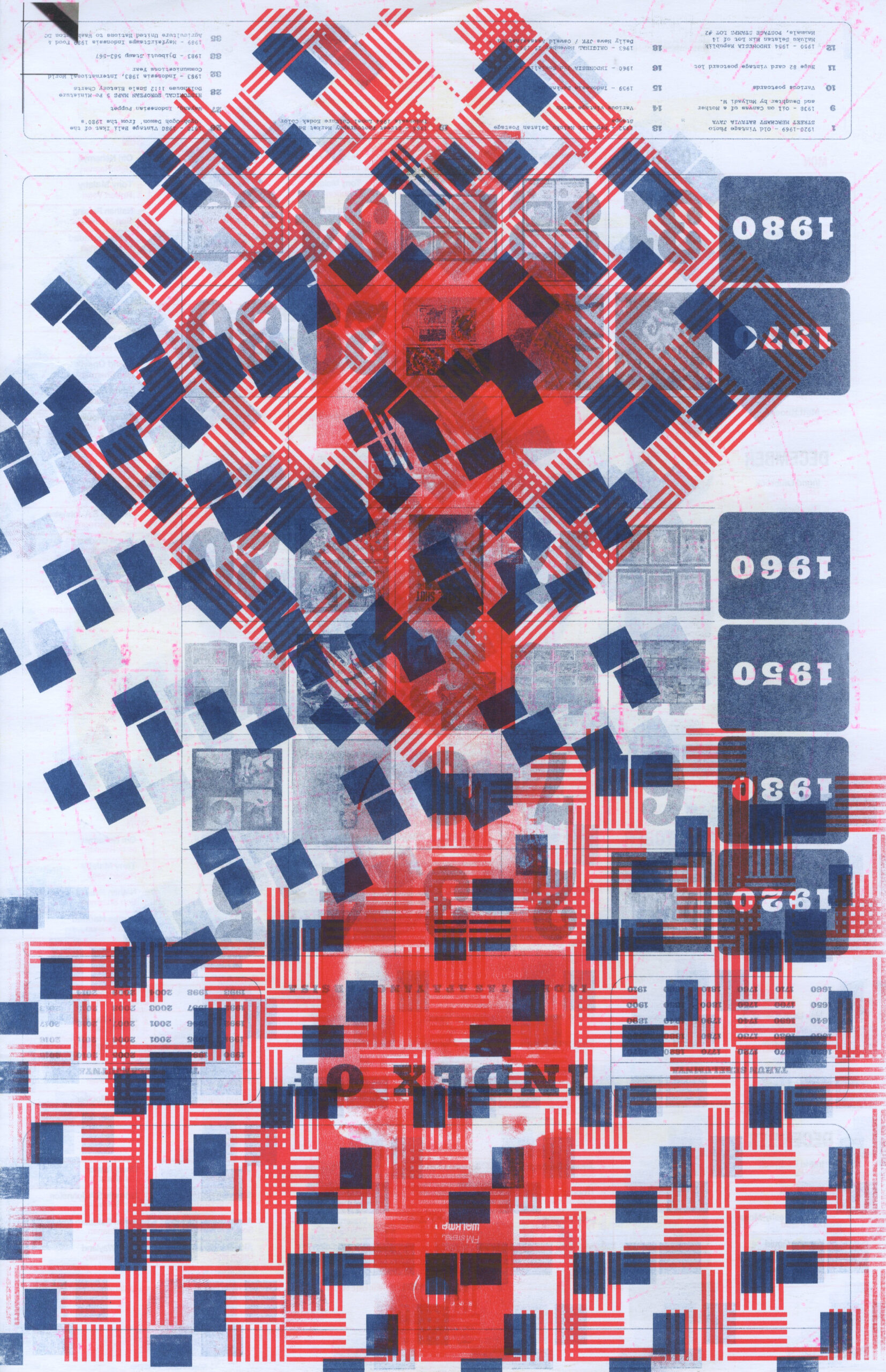
By Nick Berray
Ways to Stretch a Flag investigates how printmaking can function as a generative design system, that produces iterations by working with physical constraints rather than algorithmic instruction. By taking the American flag as a base symbol and subjecting it to riso printing's inherent misregistration, color layering, and structural repetition, this project asks: what happens to meaning when a legible sign is stretched into pure pattern, and then back again?
This project celebrates how analog processes offer something distinct from their digital counterparts: indeterminacy rooted in material resistance and play rather than code. As AI-generated imagery becomes ubiquitous, I want to understand how craft-based iteration can produces meaningful results, as an ethical and pedagogical question, not just an aesthetic one.
Nick Berray