Valuable Objects Reimagined
By Amy Verrier

7th and Final Iteration (Cardboard, Paper Mache and Acrylic Paint)
Thematic Curriculum
| Unit Plan Topic | Valuable Objects Reimagined Working within the world of repurposing materials allows students to engage in topics about sustainability and the effects their waste production can have on the environment. Pairing the importance of sustainability and waste with the world of fashion, fibers and textiles allows students to think about their daily habits of clothing usage and their growing interests in fashion and apparel. In this unit, students will be able to explore ideas about what we find to be valuable in the world and what we consider to be waste. Through creating a stuffie inspired by a personal belonging, students can reimagine how old personal items that we value can be reinvented. |
| Grade Level | 4th Grade |
| Enduring Idea | Repurposing is Reimagining When we repurpose we imagine how we can use what others consider waste. We reimagine a new life for a discarded object or material that has meaning to us and the world. |
| Key Concepts | Reimagining is a form of repurposing. Reimagining makes the discarded valuable. Reimagining is a form of creativity and sustainability. Reimagining is finding value where others might see waste. Reimagining is transformation with intention. |
| Rationale | Through creating a pectoral relief sculpture with paper mache and acrylic paint, students will be able to transform 2-dimensional materials into 3-dimensional structures with their hands and understand that artwork could hold feelings and that the process of art-making could be a method to address or respond to these feelings. |
| Unit Essential Question(s) | How can we find value where others might see waste? What do we find valuable about our old toys and belongings? How can we reimagine the objects of value to us through repurposing? How can we draw with fabric and thread? What can we do with our waste besides throwing it away? How can we transform with intention? |
| Unit Learning Objectives | Students will be able to explore new ways to use their fabrics scraps besides throwing them away. Students will be able to draw a design and create stuffed objects with fabric and thread. Students will be able to reimagine objects of value. Students will be able to make a valuable three dimensional object out of invaluable materials. Students will understand the purpose of repurposing. Students will understand the ways artists can help the environment through their work. Students will understand what makes something valuable to them. |
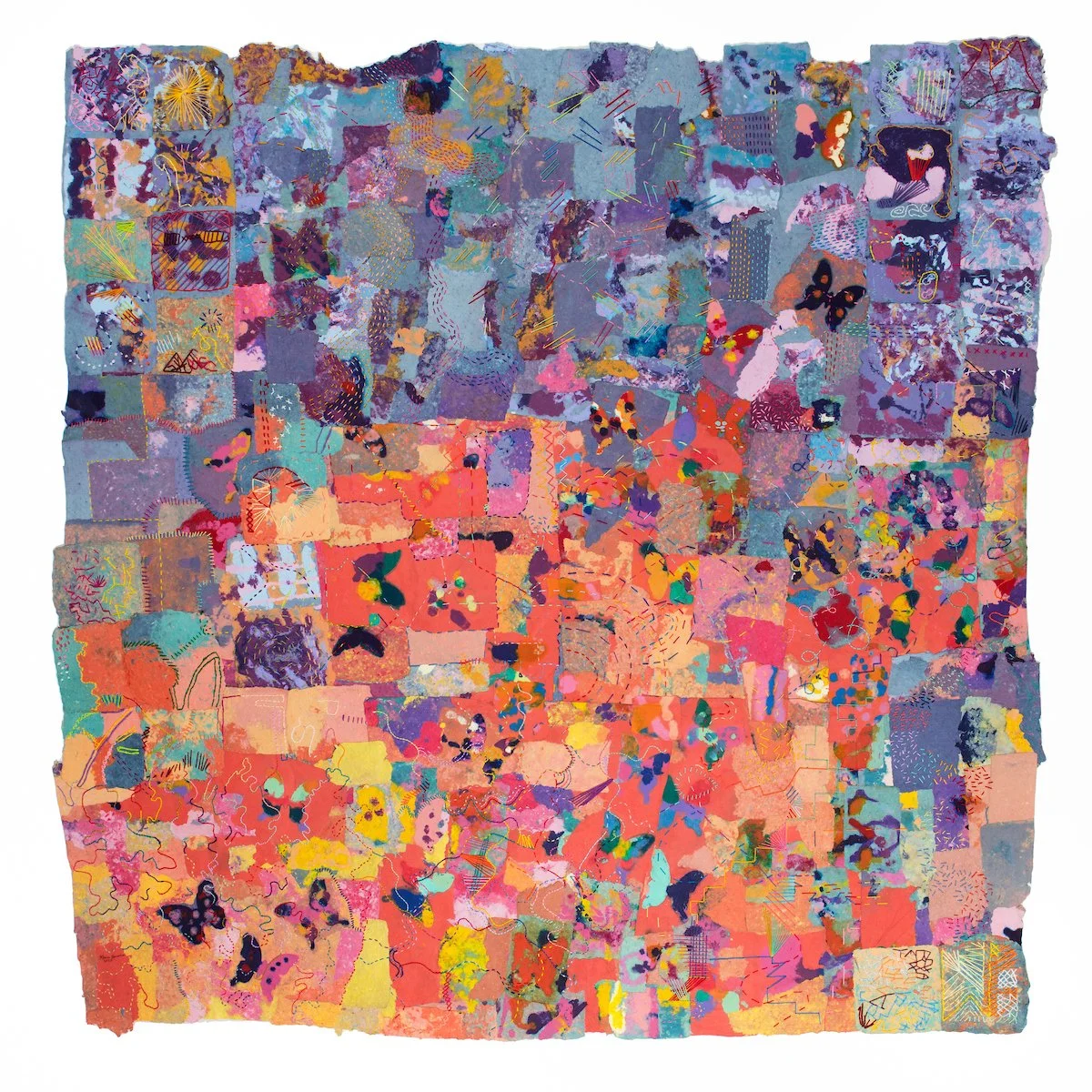
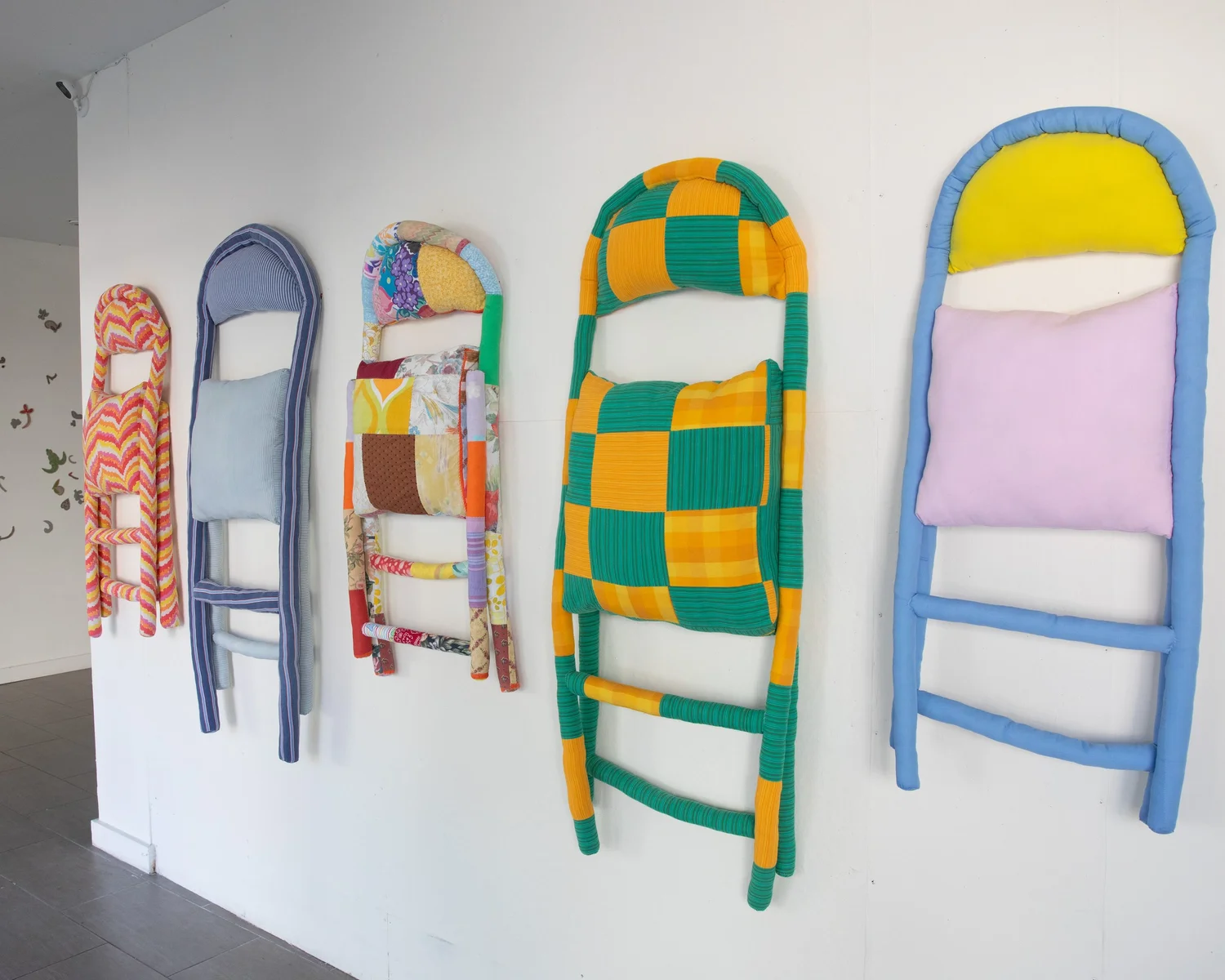
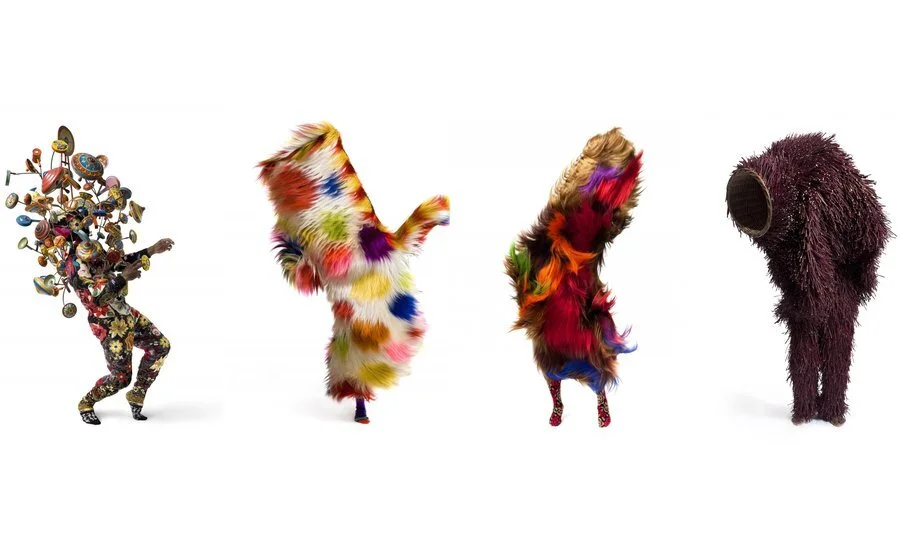
Image #1 : Amalia uses a multitude of stitch types in order to create their embroidery. Students will be exploring how to create different line types through their embroidery, and Amalia demonstrates this skill strongly within this artwork
Image #2: Baxter explores the creation of everyday objects into stuffed objects. Students will be exploring creating a stuffed object based on a valuable object, so having exposure to artwork that shows that any object can be transformed is valuable throughout this project
Image #3: Cave explores a variety of textures, materials and objects throughout the creation of his Soundsuits. Exploring the way we can use different fiber materials in our work will encourage students to work with their materials in new ways

Lesson Summaries at a Glance
| Lesson 1 | Fabric Exploration Through exploring old fabric waste and garments and watching a powerpoint of multiple fabric uses students will learn about their daily fabric usage while reflecting on what materials have value to them and understand that their fabric uses have an impact on their daily lives. |
| Lesson 2 | Straight Stitch Sampler Through hand sewing a stitch sampler with embroidery needles, embroidery threads, embroidery hoops and muslin scraps students will learn that there are three main types of stitches that artists can make and will understand that lines can be built through stitches. |
| Lesson 3 | Directional Stitching: Introducing Movement to Stitch Through expanding on their stitch samplers by introducing different line variations with embroidery needles, embroidery threads, embroidery hoops and muslin scraps students will learn new embroidery techniques and will understand that they can invoke movement and create different line shapes using a needle and thread. |
| Lesson 4 | Valuable Item Research Through journaling and partnered discussions with writing prompts and sketchbooks students will learn that talking and writing about valuable objects helps deepen their understanding about what objects they find personally valuable and will understand that certain objects have deep meaning to them. |
| Lesson 5 | Embroidered Valuable Object Through continued embroidery exploration and short sketching exercises with needle, thread, fabric and markers, students will learn that they can draw their valuable object using needle and thread and will understand that embroidery can be used to create finished drawings. |
| Lesson 6 | Introduction to Soft Sculpture Through writing exercises and exploration of soft sculpture students will learn about what objects they find to be valuable in their lives and understand how transforming an object into a soft stuffie creates a stronger personal connection with the object. |
| Lesson 7 | Valuable Object Sketch Through sketching exercises students will learn how and to translate a three-dimensional object into two dimensional sketches through observing multiple angles and viewpoints and will understand that this process helps deepen their understanding of the valuable object. |
| Lesson 8 | Fabric Selection & Color Through exploration of fabric students will learn that selecting fabrics for their stuffie will involve color and texture and understand that artists plan the shape, color and texture of three dimensional objects through selection of materials. can be factored into their planning sketches. |
| Lesson 9 | Sewn Collage Through working with their selected fabric based on their design sketches students will learn how to cut and embroider their base shape and will understand how hand embroidery can enhance the meaning of the shape. |
| Lesson 10 | Sewn Collage Continued Through drawing with fabric and thread students will learn how to finalize their top layer of their stuffie. They will be exploring more finalized project examples and artworks to review. |
| Lesson 11 | Soft Sculpture Creation Through joining their layers together students will learn how to incorporate the blanket stitch and how to stuff the form and will understand how their soft sculpture takes on three dimensional elements. |
| Lesson 12 | Reflection & Finishings Through reflections on the process so far, students will learn how reflection can help them understand more about the importance and value of the object that they have created and will understand that artists reflect on their work at different stages in the making process. |
Supporting Project Example

Artwork/Resources
| Lesson #3: Directional Stitching: Introducing Movement to Stitch | |
|---|---|
| Lesson Summary Statement | Through expanding on their stitch samplers by introducing different line variations with embroidery needles, embroidery threads, embroidery hoops and muslin scraps students will learn new embroidery techniques and will understand that they can invoke movement and create different line shapes using a needle and thread |
| Question of the Day: | What line types can we create with embroidery? |
| Tools and Materials | Tools Embroidery needles Scissors 8” Embroidery hoop Materials 6 String Embroidery thread 10” midweight muslin square Fine point Markers Washaway Frixon Markers |
| Lesson #3: Directional Stitching: Introducing Movement to Stitch | |
|---|---|
| Learning Objective | Students will be able to Use hand embroidery to sew zig zagged and curved lines Sew hand embroidery stitches at a variety of intentional stitch lengths Students will understand that: The length and direction of each embroidered stitch can change the look of the embroidery Exploring length and directionality in stitches can invoke the feeling of movement |
| Standards | Strand 1: Art making exploration of directional lines such as horizontal, vertical, and diagonal and ability to create a variety of visual textures through mark making |
| Academic Language | Curved Line: A line that bends or arcs instead of going straight, creating smooth, rounded shapes. Embroidery: The art of decorating fabric using a needle and thread to create patterns, designs, or images. Directionality: The way a line, stitch, or pattern moves or points across a surface, guiding the viewer’s eye in a certain path. Line Types: Different kinds of lines used in art or stitching, such as straight, curved, wavy, zig-zag, thick, thin, or dashed. Stitch Length Variation: Changing the length of stitches (short or long) to create different textures, details, or visual effects in embroidery. Wavy Line: A line that moves in a smooth, flowing up-and-down pattern, like waves. Zig-Zagged Line: A line made of sharp angles that quickly change direction back and forth. |
| Questions | What line types can we create with embroidery? Why would we want to draw on our fabrics? |
Supporting Project Example

Fabric Swatch Sketchbook Entry
Repurposed Fabric and Sketchbook
5″x14″
2026
| Lesson 1: Fabric Exploration | |
|---|---|
| Lesson Summary Statement | Through exploring old fabric waste and garments and watching a powerpoint of multiple fabric uses students will learn about their daily fabric usage while reflecting on what materials have value to them and understand that their fabric uses have an impact on their daily lives. |
| Question of the Day: | In what ways do we incorporate fabric in our daily lives? |
| Tools and Materials | Materials: Scrap Fabric Writing Pencil Sketchbook |
| Learning Objectives | Students will be able to: Identify a variety of fabric types that they use in their daily lives Describe why certain materials have value to them Students will understand that: Different fabrics have different purposes in our lives Past memories of and experiences with various materials can make them valuable to us |
| Academic Language | Fabric Waste:Leftover pieces or scraps of fabric that remain after cutting or sewing a project, which might be discarded or reused in other creations. Memorable: Something that is easy to remember or leaves a strong impression because it is meaningful, unique, or emotionally impactful. Texture: The way a surface feels or looks like it might feel, such as rough, smooth, soft, or bumpy. Valuable: Something that has importance, usefulness, or worth |
| Questions | In what ways do we incorporate fabric in our daily lives? How do we find value in fabric materials? |
Throughout this process, my mentor suggested I expand my questions to incorporate more “why” questions rather than focusing on “how” questions. My project is heavily technical, so I approached my question development from the mindset of “how do we do this?”.
This caused me to forget to think about “why are we doing this?” which is equally important for students to be thinking about while completing their projects. My revisions have allowed me to add a couple of new essential questions to my unit plan to incorporate more why-based questions and help further deepen student understanding.
As a very technical maker, this has helped my personal practice to remind myself to step back and remember why I create the way that I do so that I can now better help my students throughout their creative process.
-
Amy Verrier
Amy Verrier received her BFA from the School of the Art Institute of Chicago and is currently in the process of completing her MA in Art and Design Education from…