Product Architecture Method: Architectural Thinking for Digital Product Design
By Hasan Hachem
By leveraging architectural thinking for digital product design, this design process is a model for structuring the creation of digital products and information systems. The methodology emerged through cross-disciplinary experimentation between architecture and digital design.
Digital product design today draws from influential frameworks such as design thinking, human-centered design, agile development, and the Double Diamond. These models support research, ideation, and iteration, however, many contemporary design challenges involve complex information systems - platforms, institutional websites, and digital tools that coordinate multiple audiences, workflows, and layers of interaction. Designing these systems requires thinking beyond interfaces and experiences to the structure and operation of entire digital environments.
Architecture provides a useful lens for approaching this complexity. Architectural practice organizes projects across multiple scales - from understanding context and site conditions to defining spatial organization and detailing construction. Similarly, digital environments exist within a broader technological infrastructure of networks, servers, and data systems. Viewing digital products as structured systems allows designers to consider how information, interactions, and components operate as a system of systems.
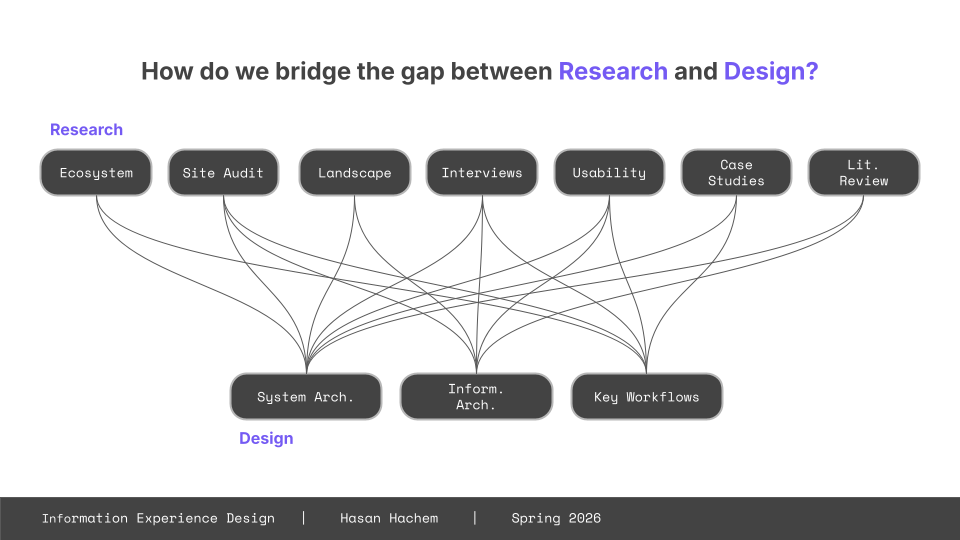
The Product Architecture Method, developed over several years while teaching a graduate studio at Pratt Institute, adapts architectural principles to digital product design. In Projects in Information Experience Design, student teams collaborate with real organizations to design and prototype digital systems such as websites, platforms, and service interfaces. The course applies a structured process - Align, Explore, Design, Evaluate, Refine, Deliver - translating architectural design phases into a framework for digital development.
Across multiple studio iterations, the methodology has helped students produce more structured, feasible, and impactful systems, demonstrating how cross-disciplinary design approaches can strengthen both design education and professional practice.