Pratt Textile Research Lab
By Kerry Ryan
The Textile Research Lab (TRL) at Pratt Institute investigates how textile materials are produced, how they function, and how material choices shape environmental and industrial outcomes. At a time when the majority of garments are made from petroleum-derived polyester and millions of tons of textiles are discarded each year, the lab focuses on building a deeper understanding of fibers as material systems rather than surface aesthetics.
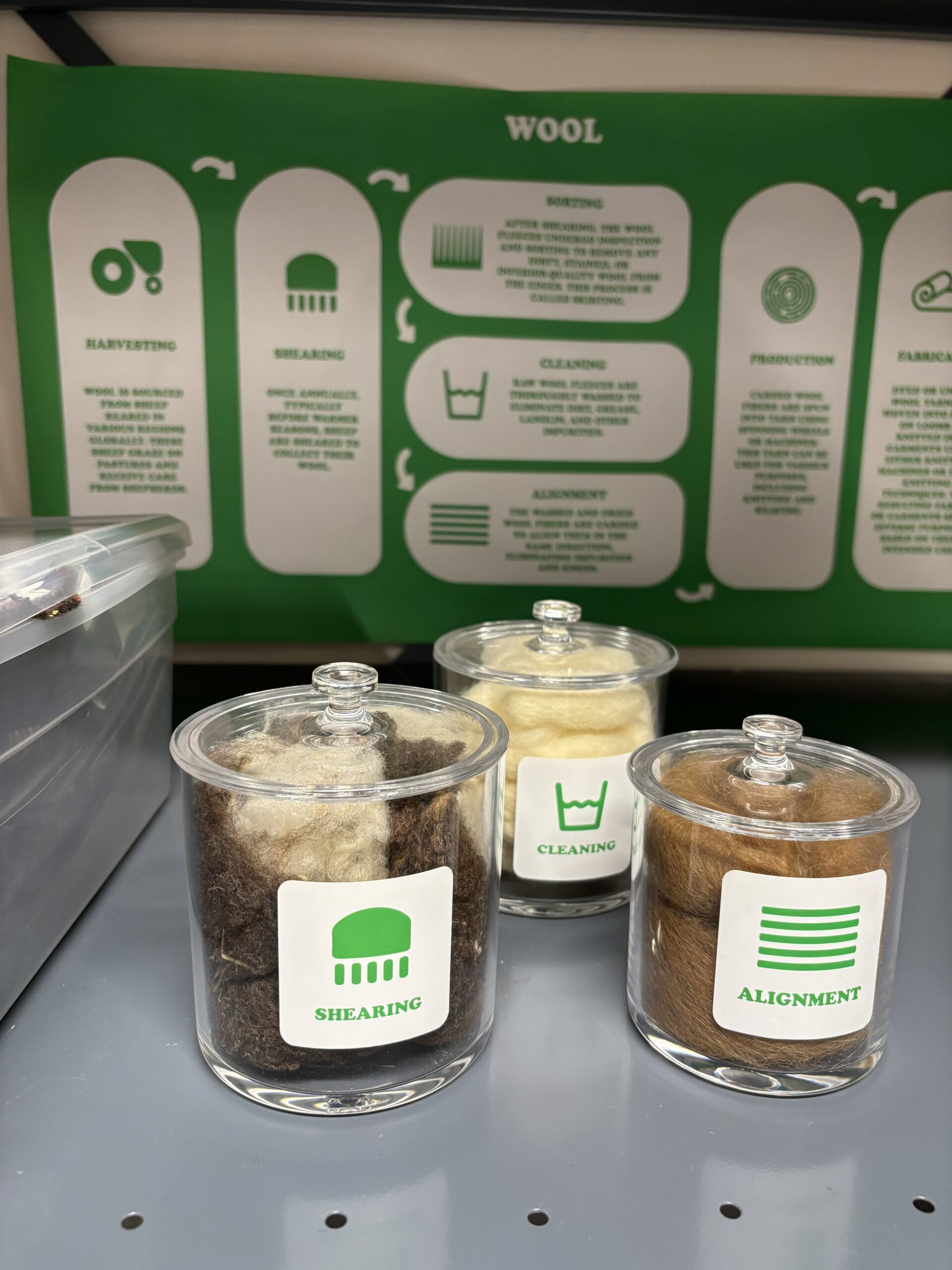
TRL integrates fiber science, historical textile knowledge, and hands-on material investigation into fashion education. Students and researchers examine fibers at multiple scales to understand how they function in practice. This work includes studying fiber morphology under magnification, identifying fiber composition, and analyzing the molecular distinctions between synthetic polymers and natural protein- or cellulose-based fibers. Through direct observation, comparison of fiber samples, and examination of textile construction, students investigate how different fibers behave in relation to durability, structure, and environmental breakdown.
Rather than focusing solely on aesthetics or surface qualities, the lab encourages students to examine how fibers are grown, synthesized, processed, and finished—and how these decisions influence performance, longevity, and potential end-of-life pathways. This approach connects fiber chemistry and material origin to real-world use and environmental consequence.
The lab also investigates the historical development of textile materials. Through archival research and comparative material study, students examine heritage fibers such as wool, flax, cotton, and silk alongside industrial and synthetic fibers developed during the twentieth century. These comparisons reveal how textile systems evolved in relation to agriculture, industrialization, and global production.
In addition to historical research, TRL explores emerging textile technologies including bio-based polymers, recycled fibers, and next-generation biomaterials. As the lab develops, these investigations will expand to include additional material testing and collaborative research with engineering and material science partners.
Through these activities, the Textile Research Lab builds materials literacy—the ability to understand what textiles are made of, how they behave, where they originate, and where they ultimately go.
-
 Fashion Designer, Design Entrepreneur – Kerry Ryan has worked in all facets of the Fashion Business since graduation. With expertise in design and technical, she has worked in Women’s, Men’s…