Exploring student use of Generative AI tools in prototyping physical computing projects.
End-user development (EUD) describes an approach to technology design and development in which end users are empowered to craft and customize designed objects throughout their lifecycle. In shifting design and development power towards end users, numerous challenges emerge in how we, as information system designers, may support end users in evolving their systems in use.
Approaches such as trigger-action programming, visual programming environments, and design tutors, among others, have been employed to create a flexible environment in which end users can design their own system behaviors to meet their emergent needs. These supportive tools are particularly necessary in physical computing projects where end users must grapple not only with software, but also with hardware, wiring, and other aspects of design unique to physical computing.
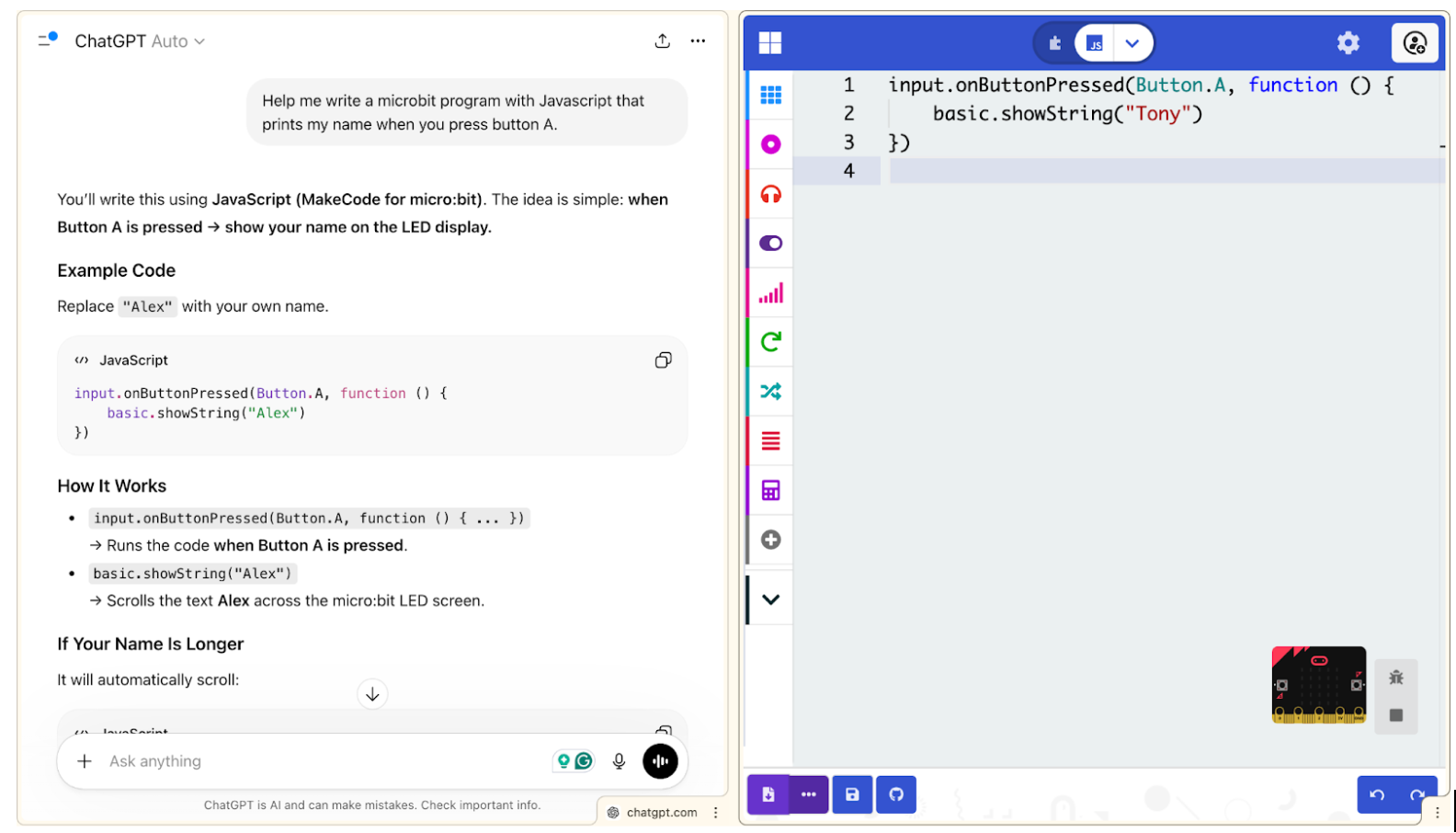
This work naturally intersects with new developments and possibilities introduced by GenerativeAI (GenAI), particularly in how GenAI can serve as a personalized coding assistant and design tutor. To this end, the purpose of this in-progress research work is to explore how students use generative AI tools to support ideation, problem-solving, and prototyping in physical computing projects.
Using the BBC micro:bit, a low cost physical computing prototyping board, the study aims to understand how AI-assisted development influences students’ design processes during hands-on prototyping activities.
-
Monica Maceli is Associate Professor at Pratt Institute School of Information, focusing on emerging technologies in the information and library science domain. She earned her Ph.D. and MSIS from the…