Distributed Care Hubs: Rethinking Disability Care Policy Through Participatory Research
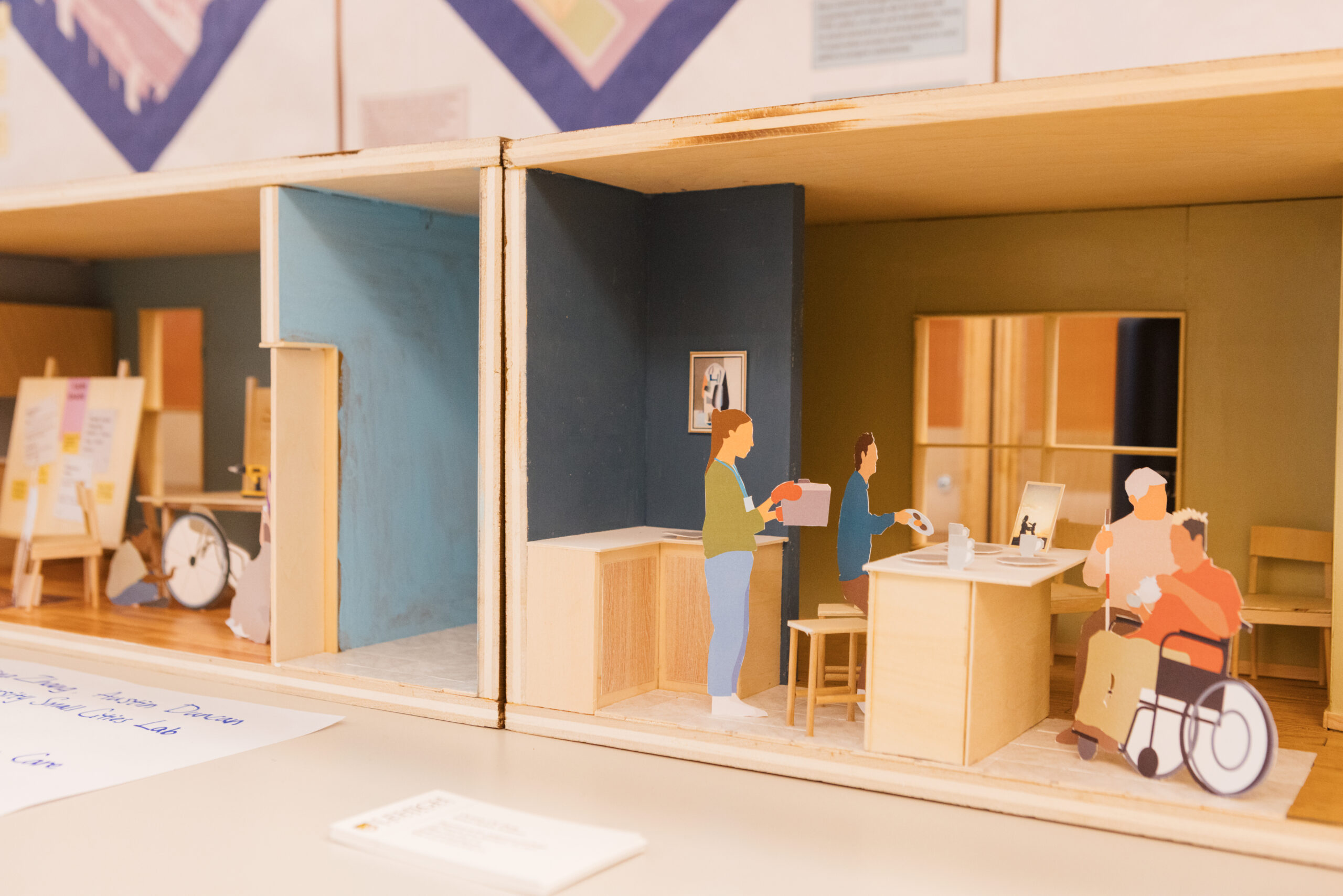
This project introduces the concept of distributed care hubs to describe the informal, relational infrastructures through which disabled people sustain everyday life amid insufficient formal care systems.
Drawing on participatory research we conducted in Bethlehem, Pennsylvania—combining community mapping, ethnographic interviews, and computational analysis—we use drawings and models to show how community-built care emerges through ordinary social interactions, shared spaces, and reciprocal relationships. Distributed care hubs reveal that disability care and everyday sociality are inseparable; they challenge independence-centered policy frameworks by foregrounding interdependence as a universal human condition.
Yet these hubs remain precarious, functioning as compensatory mechanisms shaped by systemic failures that force disabled people into informal survival arrangements. We outline policy implications that differentiate community-controlled care from responsibilities that must remain within formal systems, arguing for infrastructures that support integration rather than substitution.
Ultimately, we demonstrate how community-generated care practices can guide more equitable, interdependent futures in disability policy and design.