Decoding Mental Health Conversations with GenAI
By Irene Lopatovska and Marc Lobo
We report on a study that analyzed mental health-related conversations with GenAI, along with user feedback on these conversations. Participants conversed with the GenAI chatbot about mental health issues they experienced for one week and recorded their interactions in a structured diary. Participants also shared their impressions of the interactions in an end-of-study focus group.
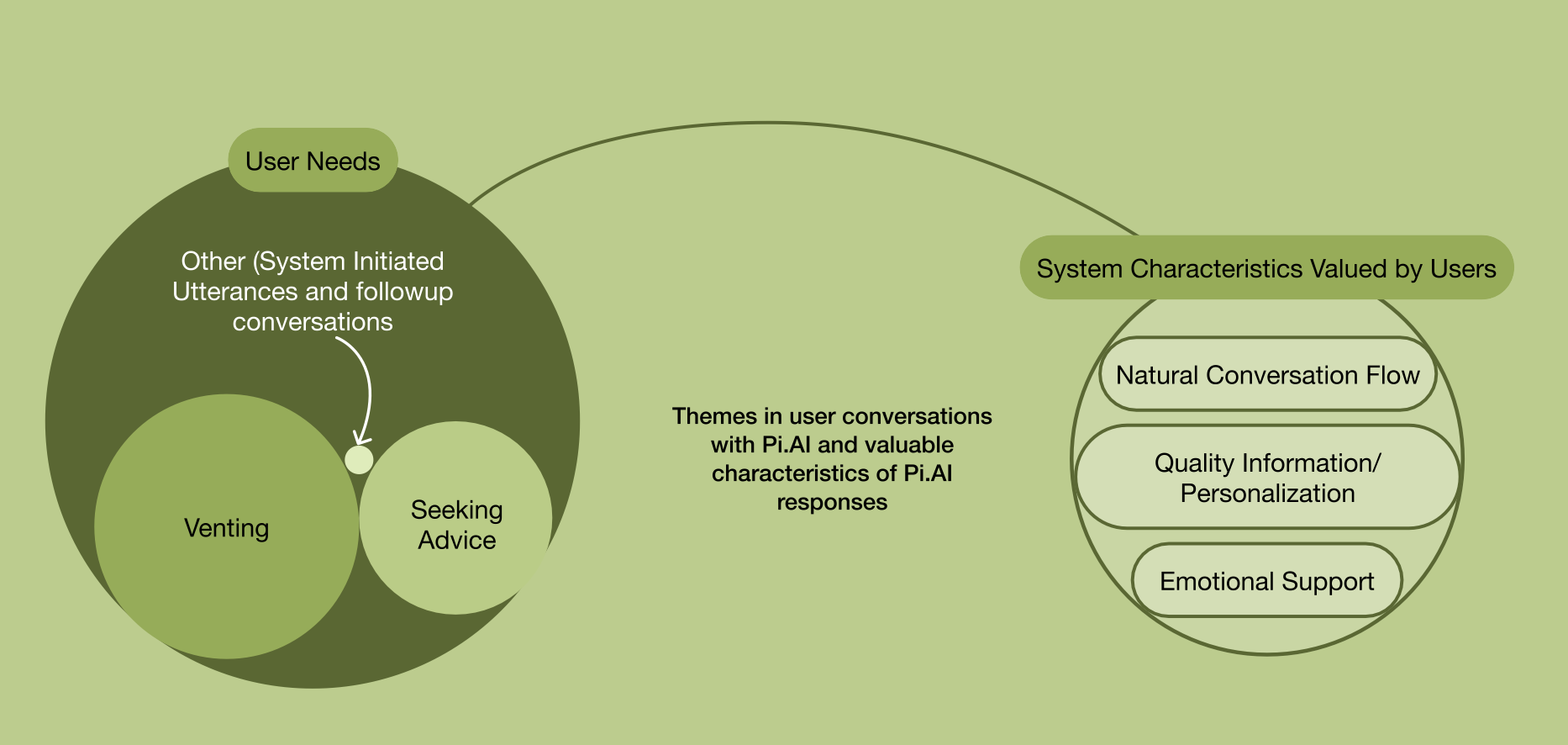
Thematic analysis was applied to the qualitative data of participants’ reports of interactions. Analysis revealed that the primary input types included venting negative emotions and seeking information.
System-generated responses included empathy/acknowledgment, information, and/or follow-up questions to continue the conversation. In assessing AI responses, participants valued emotional support, the system’s ability to produce a natural conversational flow, and its ability to offer personalized information.
Participants praised the system's ability to recall and build on prior conversations.
Participants expect GenAI to provide support that balances emotional validation with high-quality information, delivered through a human-like conversational flow.
The study brings users’ voices into the scholarship of mental health chatbots. The initial classification of the types of user needs, translated into inputs and GenAI responses, can inform further work on developing system requirements and testing mechanisms for system performance in the mental health context.