Biomimetic Potential of Fish Scales in Medical and Sustainable Design Applications
This project investigates the structural, aesthetic, and biomedical potential of fish scales as a multifunctional biomaterial across medical, wearable, and artistic applications. Traditionally considered waste within the seafood industry, fish scales are rich in collagen and possess a naturally layered, flexible yet protective architecture. My research explores how this overlooked biological material can be recontextualized through design.
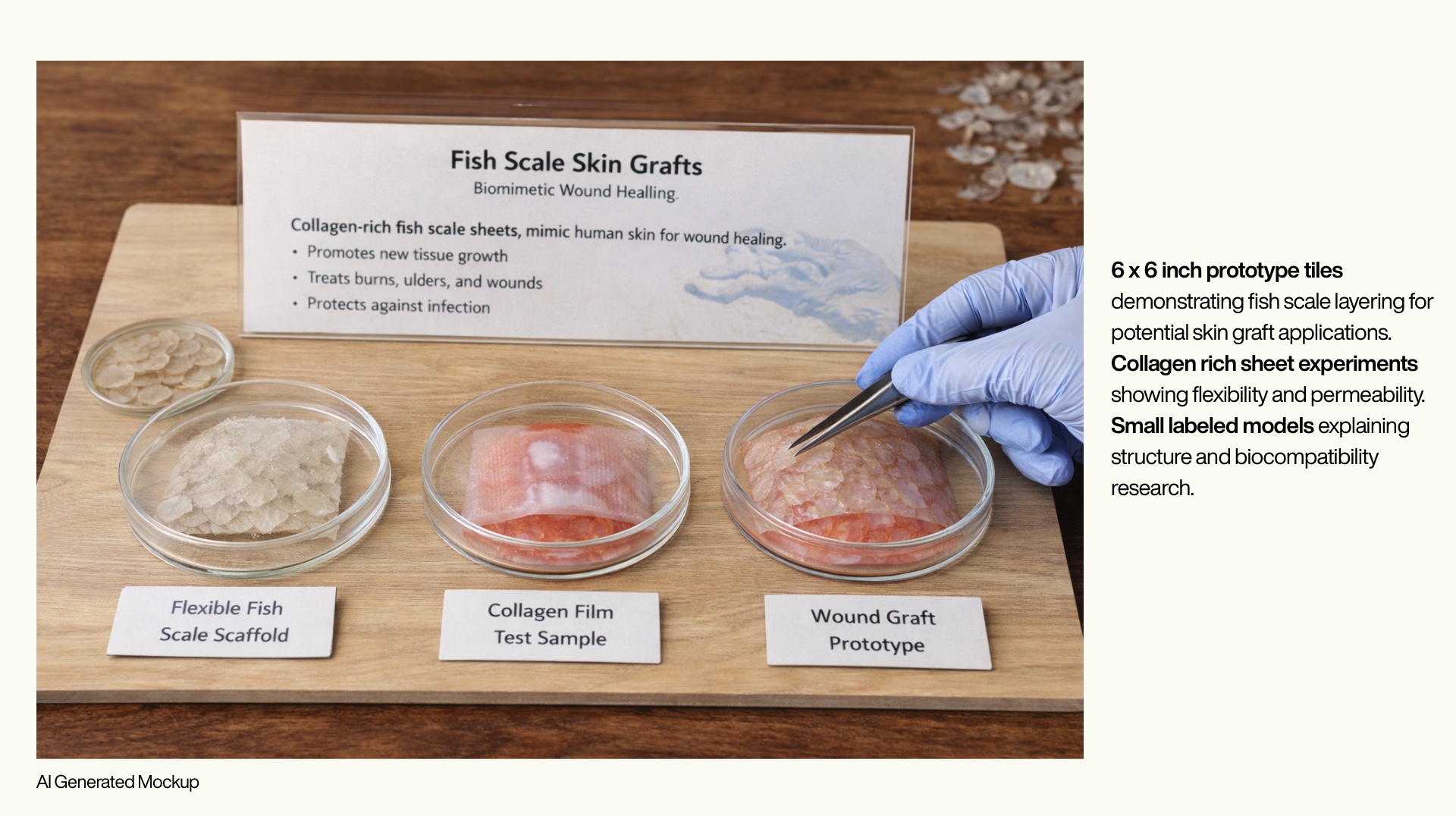
In the medical context, I am studying the viability of fish scales as a potential material for skin graft applications. Due to their collagen composition and biocompatibility, fish scales have shown promise in wound healing research. I will explore how their structural properties; thinness, flexibility, and permeability, can be adapted into temporary graft systems or protective wound coverings that support regeneration while maintaining breathability and protection.
Beyond clinical applications, I am investigating fish scales as a sustainable material for jewelry and wearable design. By cleaning, treating, and reshaping the scales, I aim to highlight their translucency, iridescence, and natural patterning, transforming biological waste into objects of adornment that celebrate material origin rather than conceal it.
Additionally, I will experiment with incorporating fish scales into bioplastic composites, analyzing how they can reinforce or texture biodegradable polymers. This phase of the project explores their mechanical contribution and potential use in lightweight, structural components.