A Real American Horror Story: Lessons in Legibility, Caroline Byrne
Medium: Digital
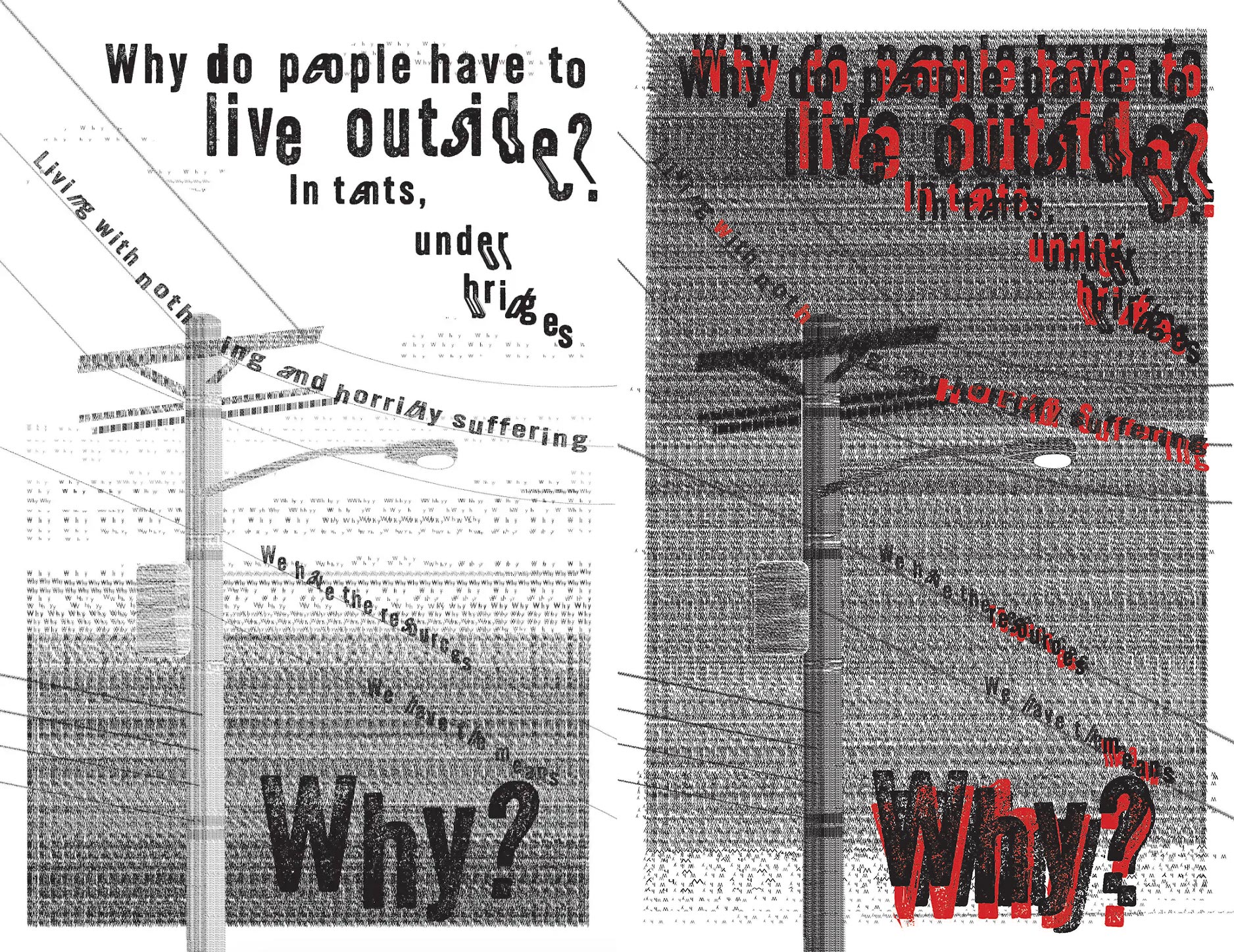
"A Real American Horror Story: Lessons in Legibility" is a typographical illustration of lyrics from "Why?" by Oklahoma sludge metal band Chat Pile. Known for droning guitar tones, heavy bass, and lyrics that evoke the sense of dread found only in America's heartland, this piece centers the morose and bleak nature of their music and lyrical subject.
For an assignment in Adobe Indesign regarding legibility/illegibility in type, the first illustration uses legible type, emphasizing the main title and adjusting the kerning and leading of a repeated "why" plea to create varying values. The scene shifts both in time and legibility in the second, as the type is now heavily distorted and chaotic. Meant to be illegible, the second requires a struggle to read and evokes feelings of frustration and discomfort. Maybe it forces a second look at the first piece to truly understand or it's simply glossed over for its difficulty.
These feelings and actions are what we have become accustomed to when faced with our country's homeless population. As the richest nation, our level of homelessness is shocking, yet it is our apathy that is even more shocking. As our country undergoes changes, we have to expand our sense of compassion and duty of care, as we are all closer to being homeless than we are to being billionaires.”