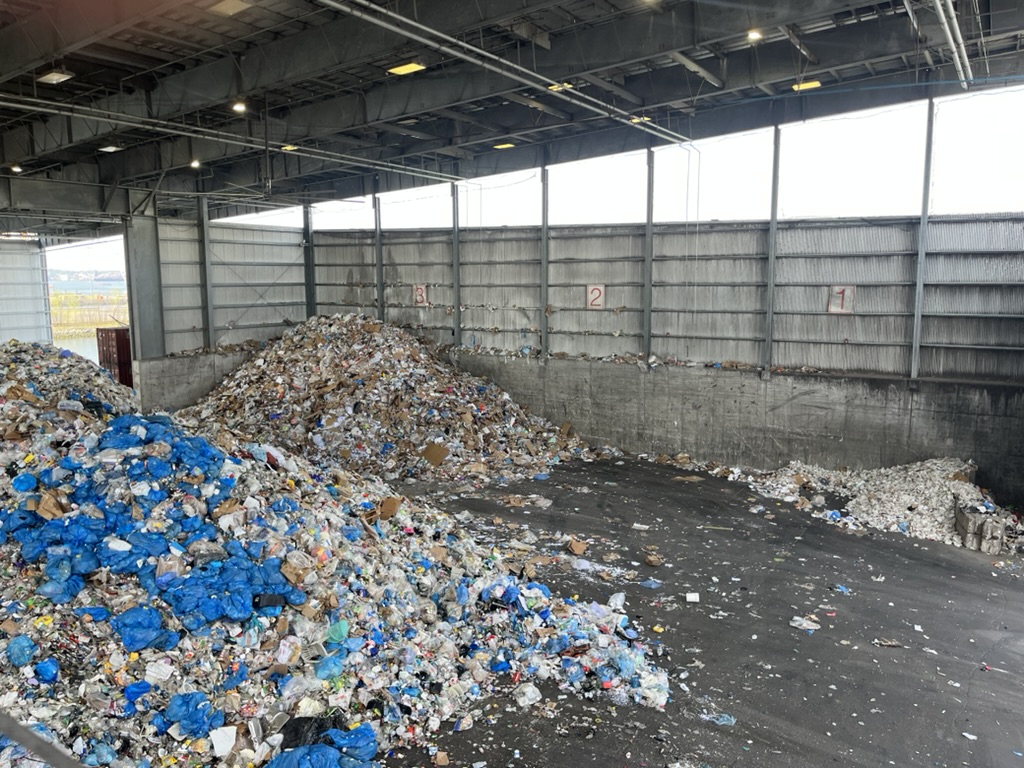
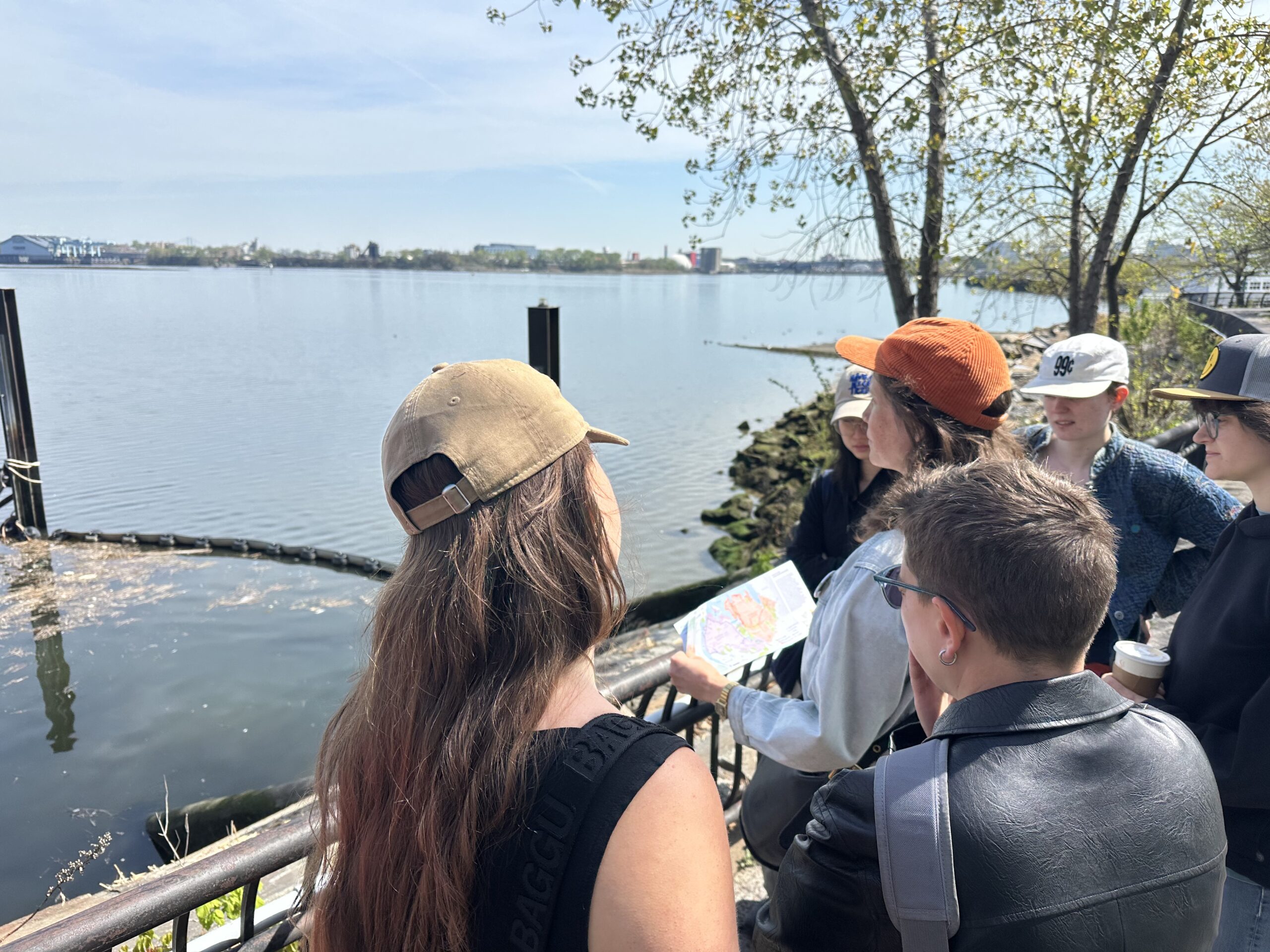
On a sunny Thursday in April, students gazed over a railing at two giant piles of trash—more precisely, one pile of paper products and the other of plastics and metals—which represented less than half a day’s worth of recyclable waste from parts of Brooklyn and Manhattan. Just beyond the mounds, the Hudson River glistened.
The class trip to the Sunset Park Material Recovery Facility in Brooklyn was a natural extension of the Studio in Social Practice course taught by Fine Arts Civic Engagement Fellow Alex Strada. Strada, who has collaborated with the Department of Transportation, the Department of Homeless Services (DHS), the Parks Department, and the NYC Department of Cultural Affairs in her own creative work, is no stranger to city infrastructure or the bureaucracy that supports it.
This spring, her course centered around a collaboration with the Sanitation Foundation (SF), the official nonprofit partner of the New York City Department of Sanitation (DSNY), encouraging the undergraduate and graduate students in the class to think deeply about materials, urban infrastructure, waste systems, and opportunities for reuse in their lives, their city, and their own artistic practices. These partnerships between Pratt and city government stemmed from Strada’s embedded role within NYC government as a public artist in residence, a role she has held since 2022.
Through site visits, conversations with DSNY and SF staff, and workshops with visiting artists, students examined the material and social life of the city’s waste streams while exploring how discarded materials can be transformed through interdisciplinary artistic practice.
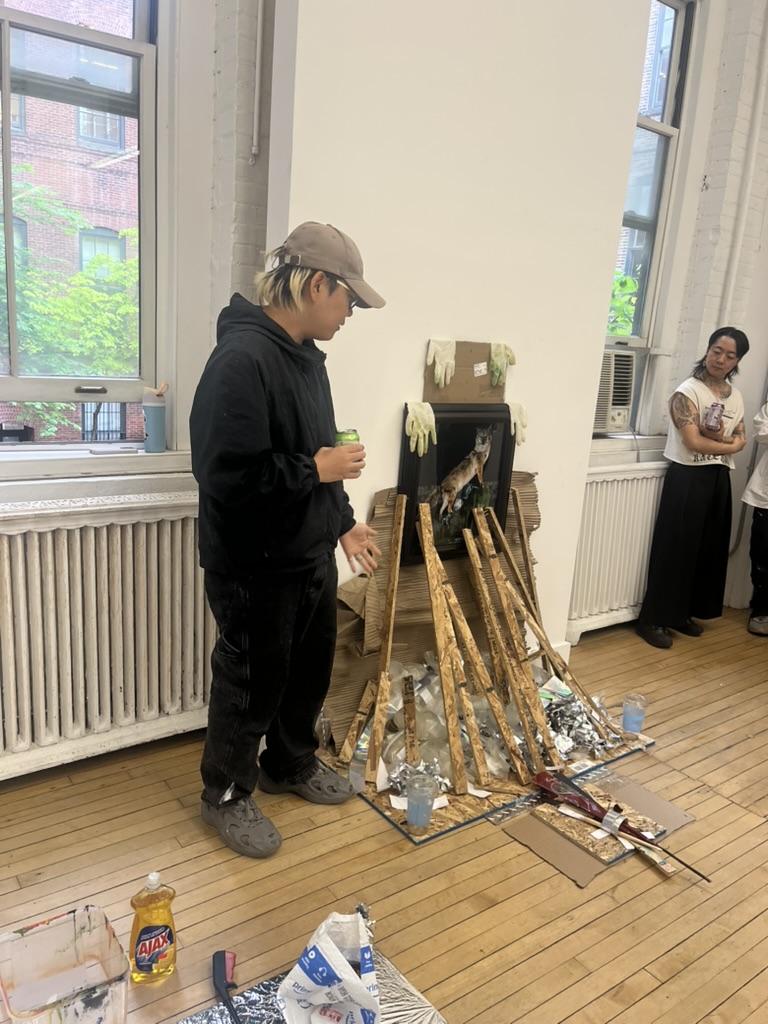
“This has undoubtedly been one of the best classes I’ve taken at Pratt Institute,” said Zheming Jennings Yang, MFA Fine Arts (Sculpture) ’26, whose culminating project After Party looked inward at his own art practice. Having just completed his MFA thesis project, Yang collected the waste and discarded materials generated during the process of producing his final exhibition. By highlighting the byproducts of artistic production, Yang positioned artists as actors within the production of pollution and critically reflected on the relationship between these discarded materials, the finished artworks, and their value.
Mona Li, BArch ’26, designed and printed a waste-sorting guide to help people in her building understand the best ways to deal with their trash, where to put recyclables, and how to compost in the city. The pamphlet breaks down the process to make the information more accessible to New Yorkers.

Sally Rifkin, MFA Fine Arts (Painting) ’27, took on the everyday object of the receipt, which both records our consumption and adds to our waste. Rifkin broke down old receipts and reconstituted the material into paper, which she screenprinted on top of, creating a meta mega-receipt. Rifkin notes that 620 million pounds of receipt paper are used each year, consuming the equivalent of three million trees, most of which ends up in landfills. Her receipt “tallies up various costs in the waste economy—including the healthcare tolls of BPA exposure, the cost of exporting trash out of the city, and the health implications of living near garbage incinerators—and how disproportionately those impacts fall on Black and Brown communities.”

Meanwhile, Beca Acosta, MFA Fine Arts (Integrated Practices) ’27, operated a “Repair” Shop, which aims to fix “the aura of an object” by transforming it aesthetically and therefore emotionally. Working with personal objects that “clients” provided, Acosta reimagined them into artworks that could be cherished rather than discarded. Acosta was also recently awarded a 2026 Ox-Bow Residency to continue her creative practice.

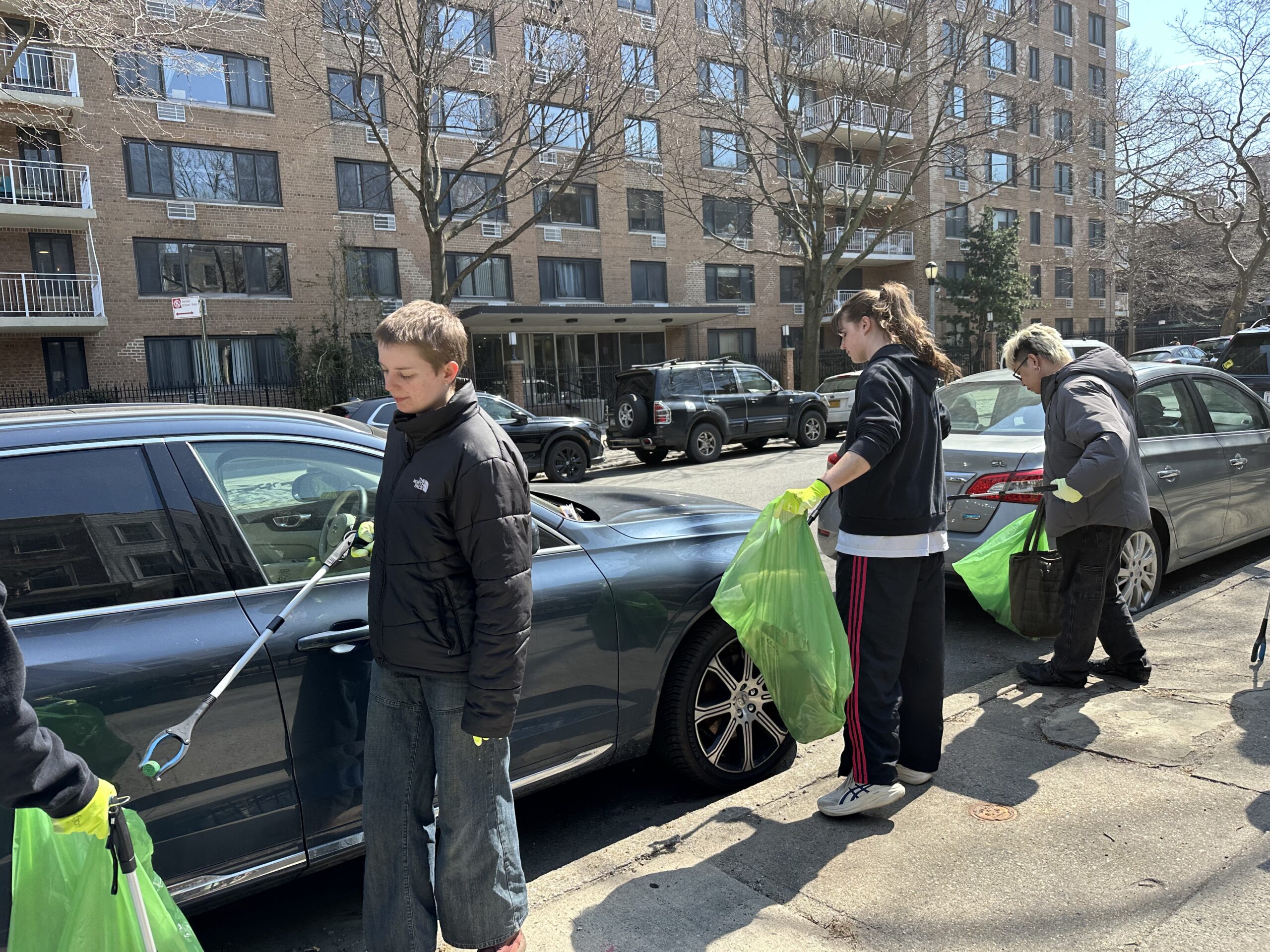
Other students chose to organize trash pick-ups around campus, reimagine wasted public space, or stage performance art that draws attention to our relationship to disposable objects. Drawing on learnings from readings, guest lecturers, and class visits around the city, students aimed to harness the material potential of waste through socially engaged, artistic interventions. The course culminated in an exhibition titled Reimagining Waste.
In addition to developing the Studio in Social Practice class at Pratt, Strada has spent the two-year fellowship creating projects that enhance the public good, including Collective Mobilities, which brought mutual aid to Pratt’s campus, and Public Address, a multi-borough public artwork commissioned by the Storefront for Art and Architecture developed through collaborative workshops Strada leads with residents and staff in New York City homeless shelters.
Interdisciplinary artist and educator Kamau Amu Patton will be stepping into the Civic Engagement Fellowship role in the fall, picking up and extending the mission of the fellowship to foster interdisciplinary collaboration across the Institute and forge relationships with external communities and organizations. Strada will continue teaching at Pratt with a similar course, City as Studio. In partnership with DSNY, the course will explore New York City as both site and catalyst for artmaking that engages public space, infrastructure, and communities.