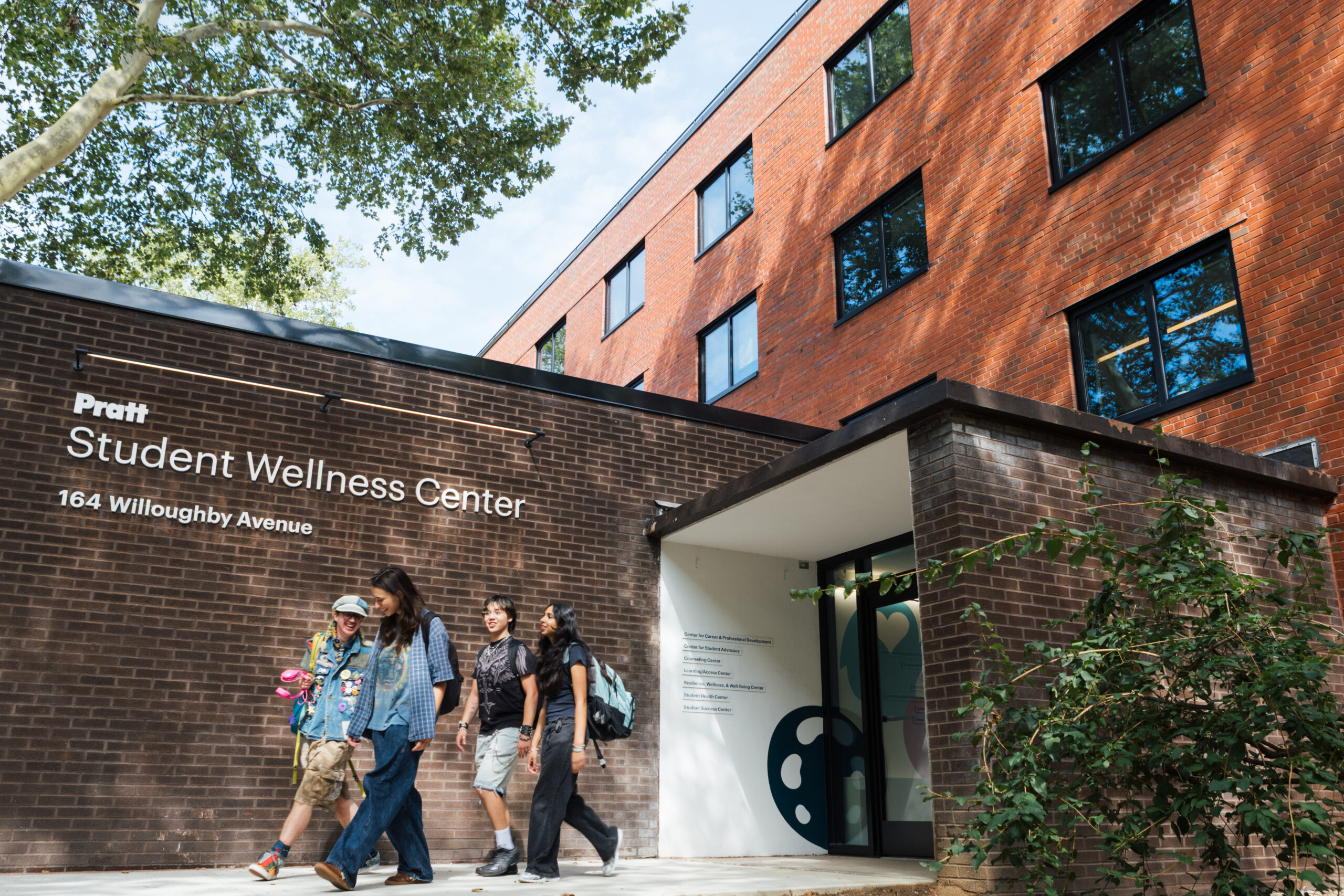
Heading into the new semester, Pratt students on the Brooklyn campus can walk into the newly opened Student Wellness Center for all things health and wellness, from counseling and health care to academic and career support.
The four-story, 25,000-square-foot hub, with an occupiable cellar, brings together health, counseling, wellness, and success services in one central location across from the Rose Garden. Designed by award-winning New York firm FXCollaborative, the transformed building creates a welcoming space where students can easily find the care and resources they need.
Providing these essential services in an integrated model under one roof means students will spend less time navigating systems and buildings and more time getting holistic support to grow academically, creatively, and personally throughout their time at the Institute.
“The opening of the Student Wellness Center marks an important milestone for Pratt and reflects our belief that supporting student wellness and well-being is central to our educational mission,” said Pratt Institute Assistant Vice President of Student Health and Wellness Debbie Scott. “By bringing health, counseling, and student support services together in one accessible location, we’re investing in an environment where students can more easily access care and fully engage in their academic and creative work. This center reflects our commitment to ensuring every student has the support they need to thrive during their time at Pratt and as they prepare for their future.”
A One-Stop Center for the Whole Student

The redesigned building encompasses several existing services, including: Health Services, Counseling Services, the Learning/Access Center, the Center for Career and Professional Development (CCPD), Student Success, Student Advocacy, the Resilience Wellness and Well-being Center, and the Pratt Pantry.
Services such as Student Support and Care Coordination, the Learning/Access Center, and the Resilience Wellness and Well-being Center help students navigate personal, financial, and health-related challenges. By reducing barriers and expanding access to resources, these programs support persistence and well-being, with wellness program participants showing a 96.9 percent re-enrollment or graduation rate, according to the recent Pratt Student Affairs Impact Report 2026.
Health Services further supports students through clinical care, prevention, and health education, helping them make informed decisions and remain engaged in their academic work. With high awareness and increasing utilization, it plays an important role in sustaining student well-being.
The Counseling Center offers students a confidential place to seek support as they navigate stress, academic pressures, and other personal challenges. Students are able to get help tailored to their needs and remain engaged in their academic, creative, and campus lives.
Through tutoring, coaching, and early intervention tools, Student Success programs improve day-to-day and long-term academic performance, with 94 percent of students reporting increased academic confidence after tutoring and strong re-enrollment rates among those who seek support, according to the student affairs impact report data for 2026.
Career development is also integrated into this ecosystem. Through advising, internships, and employer engagement, the Center for Career and Professional Development helps students translate their education into professional pathways and career success.
Wellness at Pratt is about finding flow and restoration—fueling the body, strengthening study habits, and building connections. Together, these and other efforts contribute to a broader culture of belonging and engagement fostered through Student Involvement, Residential Life, and Athletics, ensuring that students feel connected, supported, and able to thrive throughout their time at Pratt.
Construction of the Student Wellness Center was supported by the generosity of parents, staff, trustees, and institutional funders, including a transformative gift from Pratt Trustee Anne Edwards and generous support from the Booth Ferris Foundation.
Building for the Future
The building that now houses the Student Wellness Center had previously been repurposed for administrative purposes. Rather than replace it, the existing structure was reworked, preserving its architectural legacy while reducing the environmental impact associated with new construction.
The building’s human-centered design was shaped by close collaboration with Pratt’s student affairs and wellness teams. From the moment students enter, the space is intended to feel intuitive and supportive, with a central reception and waiting area, improved circulation, a relocated ADA-compliant elevator, and clearer wayfinding. The building’s icons were designed with help from June Lee, BFA Communications Design (Graphic Design) ’21.
Throughout the building, careful attention has been paid to balancing privacy and openness. Counseling and consultation rooms incorporate acoustic insulation and sound masking to ensure confidentiality, while dimmable lighting and a dedicated calm room support a wide range of needs. Shared spaces are designed to feel warm and inviting, with natural materials, soft textures, plants, and student artwork contributing to a sense of comfort and belonging.

Sustainability is embedded in both the materials of the building and long-term systems strategy. Wood elements throughout the building are made from sustainably harvested ash sourced from local watersheds, including trees lost to the invasive Emerald Ash Borer—repurposing material that would otherwise go to waste—and finishes were selected in alignment with LEED principles.
The building has also been designed to be electric-ready, supporting Pratt’s long-term transition away from its central steam plant and toward a low-carbon campus infrastructure, aligning with institutional and citywide climate goals.
“Pratt’s campus has a long history of adaptation, and this project gave us an opportunity to build on that legacy in a way that directly supports student life today,” said Michael Syracuse, partner at FXCollaborative. “Every decision—from clarifying the entry sequence to calibrating acoustics, lighting, flooring, and materials—was shaped by a holistic understanding of wellness. The result is a center that feels distinctly Pratt: resourceful, tactile, student-centered, and designed to support both individual care and a stronger sense of campus belonging.”
As Pratt continues its approach to health and wellness, the new center provides a visible and accessible home for that work, one that students can turn to in moments of need and return to as part of their daily lives on campus.