Panel Discussion: “Beyond Digital: Bodies, Birds & Discarded Technologies”
September 2, 2026 6:00 PM – 8:00 PM
Online and Pratt Manhattan Campus, Room 201, 144 West 14th Street New York, NY 10011
Beyond Digital: Bodies, Birds & Discarded Technologies
Join us for a panel discussion, moderated by curator Elena Soterakis!
Bringing together artists Taezoo Park, Nate King, and Karolina Rojas, this conversation explores the shifting boundaries between human bodies, nonhuman life, and technology. Through embodied experience, ecological relationships, and the reanimation of discarded technologies, the artists challenge familiar distinctions between the living and nonliving, natural and technological.
At the center of the conversation is the question: What do we consider intelligent, and who—or what—gets to have agency?
Pratt Manhattan Campus
Room 201
144 West 14th Street, NY, NY
6–8pm
This event is being presented in conjunction with our current exhibition, Beyond Digital: Living Systems & Distributed Intelligence. While this panel discussion is free and open to the public, we do require RSVPs due to the limited number of available seats. Please use the link below to reserve your seat.
About the panelists:
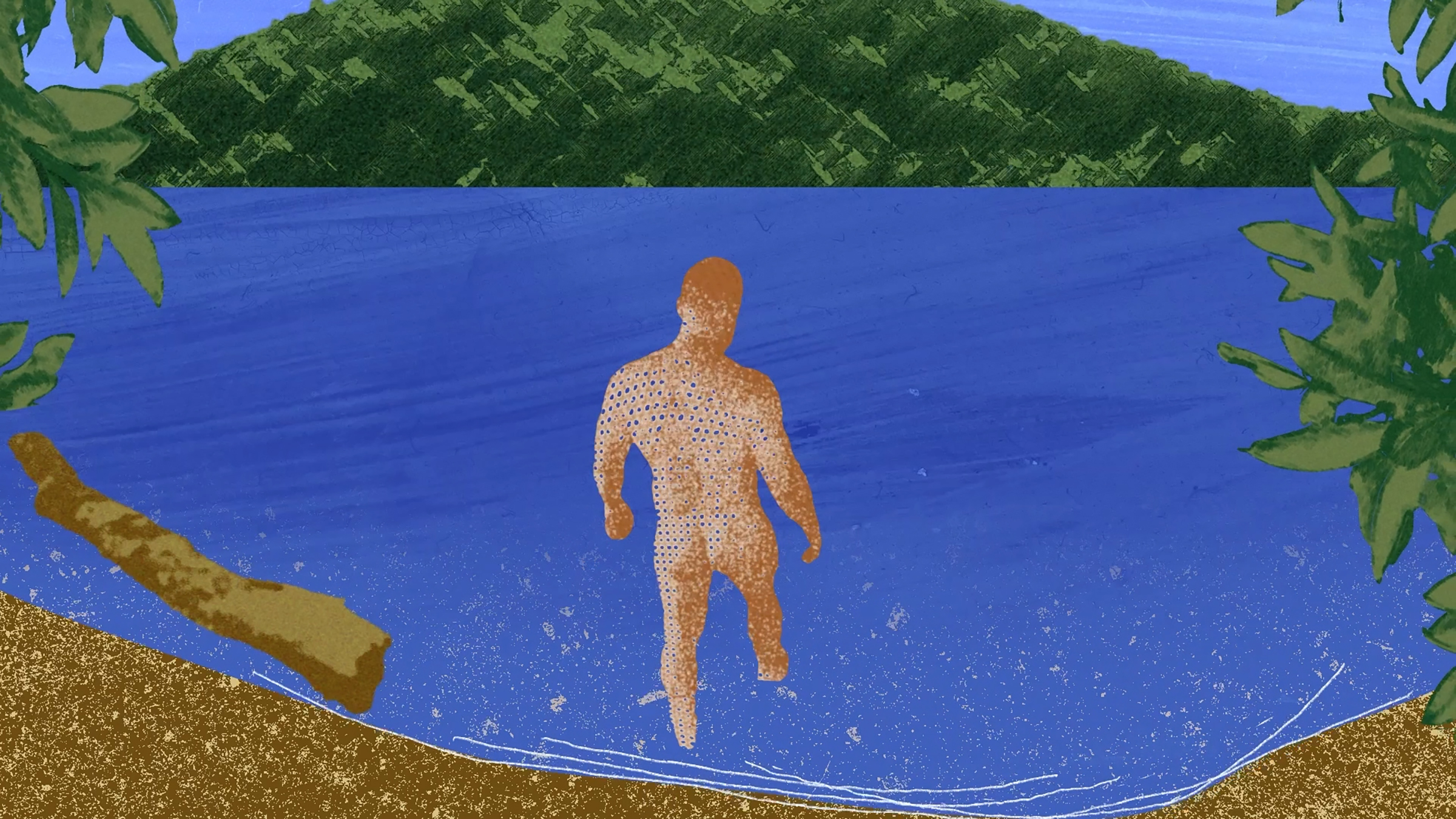
Nate King is an artist and educator living in Blacksburg, Virginia, and teaching animation at Virginia Tech. His work has screened nationally and internationally, including at Outfest Los Angeles LGBTQ+ Film Festival and Vancouver Queer Film Festival. King worked heavily on his film Tiger Lily Mountain Pass while attending Stove Works Artist Residency, Haystack Mountain School of Craft, and Cha North Artist Residency.
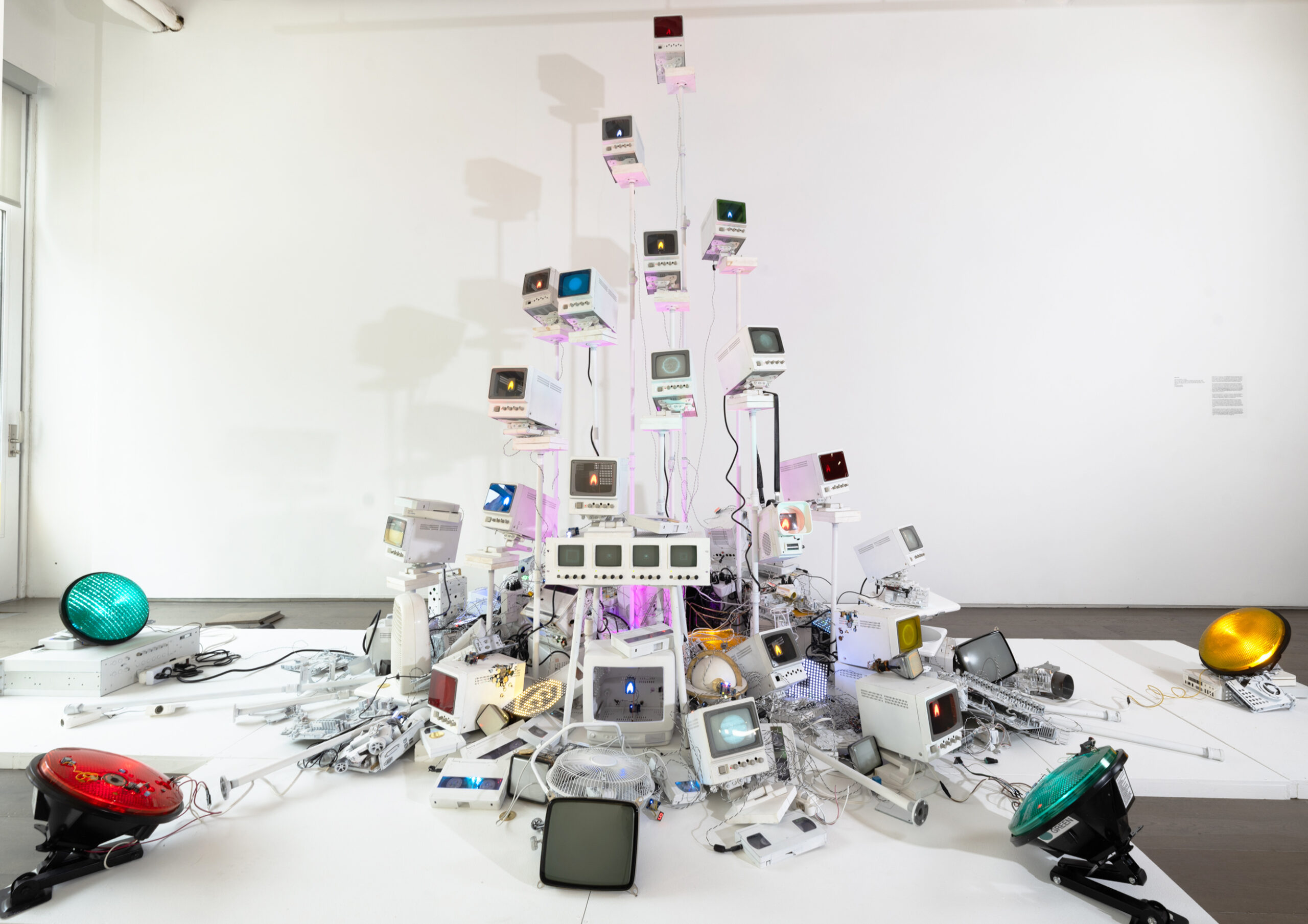
Taezoo Park is a Korean-born, New York–based artist and digitologist whose practice began in 2008 with the observation of abandoned CRT televisions on the streets of New York. This experience became more than a simple encounter: it was a phenomenological and existential engagement with technology as a responsive entity situated within its context and conditions. Park’s ethnographic and hands-on research—collaborations with social scientists at Cornell University, a residency at the LES Ecology Center, and restoration work on Nam June Paik’s artworks—underpins his methodical and existential approach. His work has been exhibited at the World Trade Center in New York and during Miami Art Week. Park teaches interactive and new media art at Pratt Institute’s Department of Digital Arts.
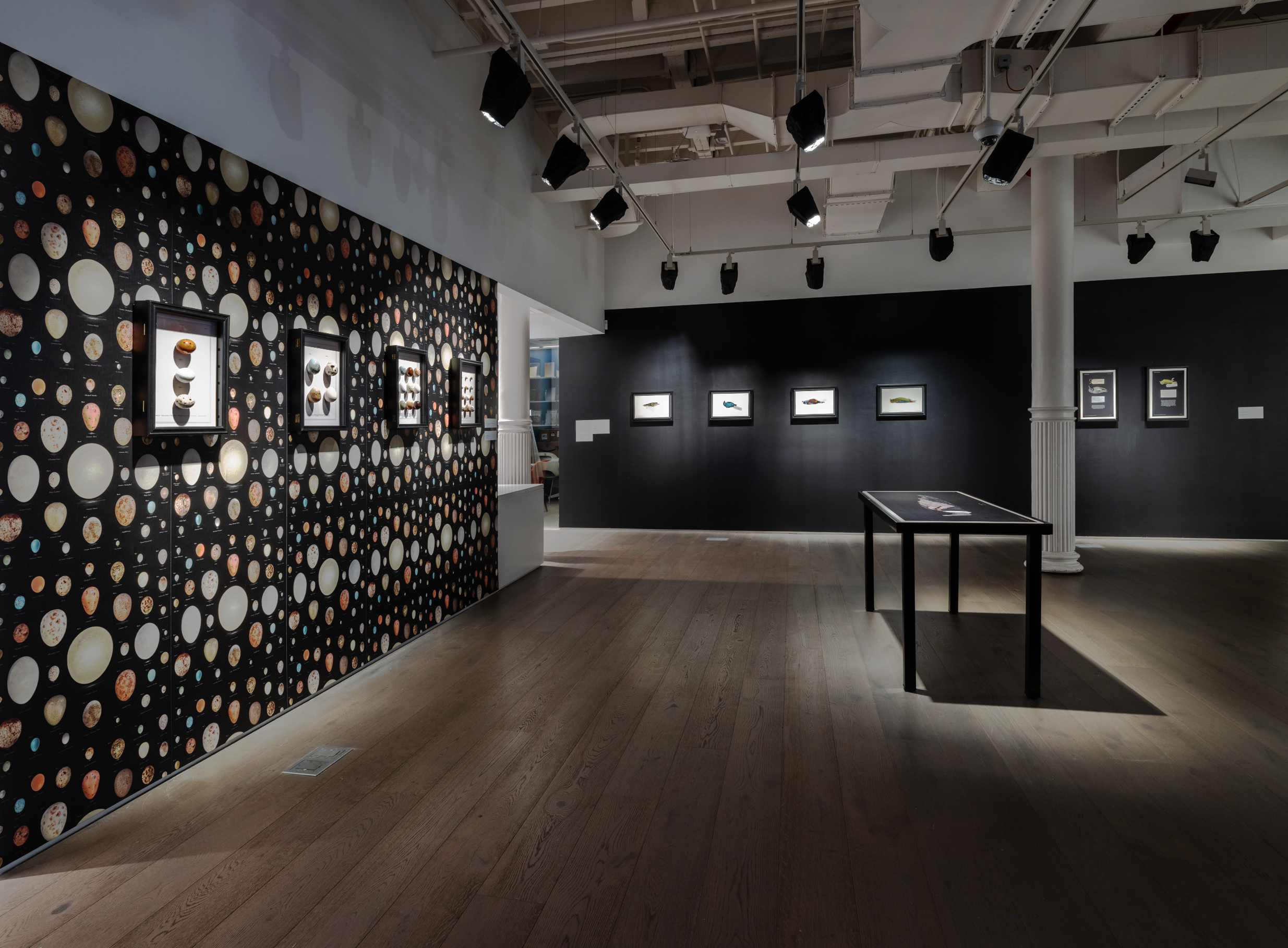
Karolina Rojas (Carolina Rojas) is a Colombian artist, educator, and designer based in New York. Through drawings, assemblages, ceramics, and installations, she reinterprets natural history representation within a contemporary critical framework. Her artistic and pedagogical work has been exhibited across the United States, Colombia, Canada, Spain, and the Netherlands. Rojas is a Fulbright doctoral candidate in Art and Art Education at Teachers College, Columbia University, where she serves as an adjunct faculty member and design fellow. Previously, she was an assistant professor at Universidad de Los Andes School of Design in Bogotá for ten years. She is the author of Ilustrados: Fanzine Collection (Ediciones Uniandes, 2015) and “Illustrating Practices by Illustrating Birds” (Antípoda, 2016). Her research has been presented at academic conferences such as the College Art Association (CAA), the National Art Education Association (NAEA), Arts in Society, LearnxDesign, and the Visualizing Science Symposium. Rojas holds an M.F.A. in Digital Arts from Pratt Institute, a Specialist Degree in Design and Television Production from Pontificia Universidad Javeriana, and a B.A. in Electronic Media and Time Arts from Universidad de Los Andes, Colombia.
About the moderator:
Elena Soterakis is an artist, curator, and co-founder and director of BioBAT Art Space — an interdisciplinary nonprofit exhibition space and experimental research laboratory embedded within a biotechnology incubator at the Brooklyn Army Terminal. Since founding BioBAT in 2019, she has built a platform where artists, scientists, and researchers work in collaborative dialogue, producing exhibitions and programs that engage ecological, technological, and planetary questions. Her practice sits at the intersection of biological systems, technology, and civic infrastructure, positioning art as a form of active research rather than illustration. Through this work she advances bioart and experimental design as serious modes of inquiry — opening new ground between disciplines.
-
![]() Karolina Rojas, installation view of Beyond Digital at Pratt Manhattan Gallery. Courtesy of the artist. Installation photograph: Jason Mandella Photography.
Karolina Rojas, installation view of Beyond Digital at Pratt Manhattan Gallery. Courtesy of the artist. Installation photograph: Jason Mandella Photography. -
![]() Taezoo Park, 2023-04-22 (Rebirth – II), 2023, CRT TV monitor, mount, Raspberry Pi, Arduino, LED matrix, pipe, chair, speaker, traffic light, LED light, U-matic tape, Beta tape, VHS tape, multi-strip, relay, The Clapper, wire, and various abandoned technology on wood panels, dimensions variable. Courtesy of the artist. Installation photograph: Jason Mandella Photography.
Taezoo Park, 2023-04-22 (Rebirth – II), 2023, CRT TV monitor, mount, Raspberry Pi, Arduino, LED matrix, pipe, chair, speaker, traffic light, LED light, U-matic tape, Beta tape, VHS tape, multi-strip, relay, The Clapper, wire, and various abandoned technology on wood panels, dimensions variable. Courtesy of the artist. Installation photograph: Jason Mandella Photography.