LAND BACK as Indigenous Theory and Activist Practices
November 20, 2026 12:30 PM – 2:00 PM
Higgins Hall, HHN 304, 61 St. James Place, Brooklyn 11238
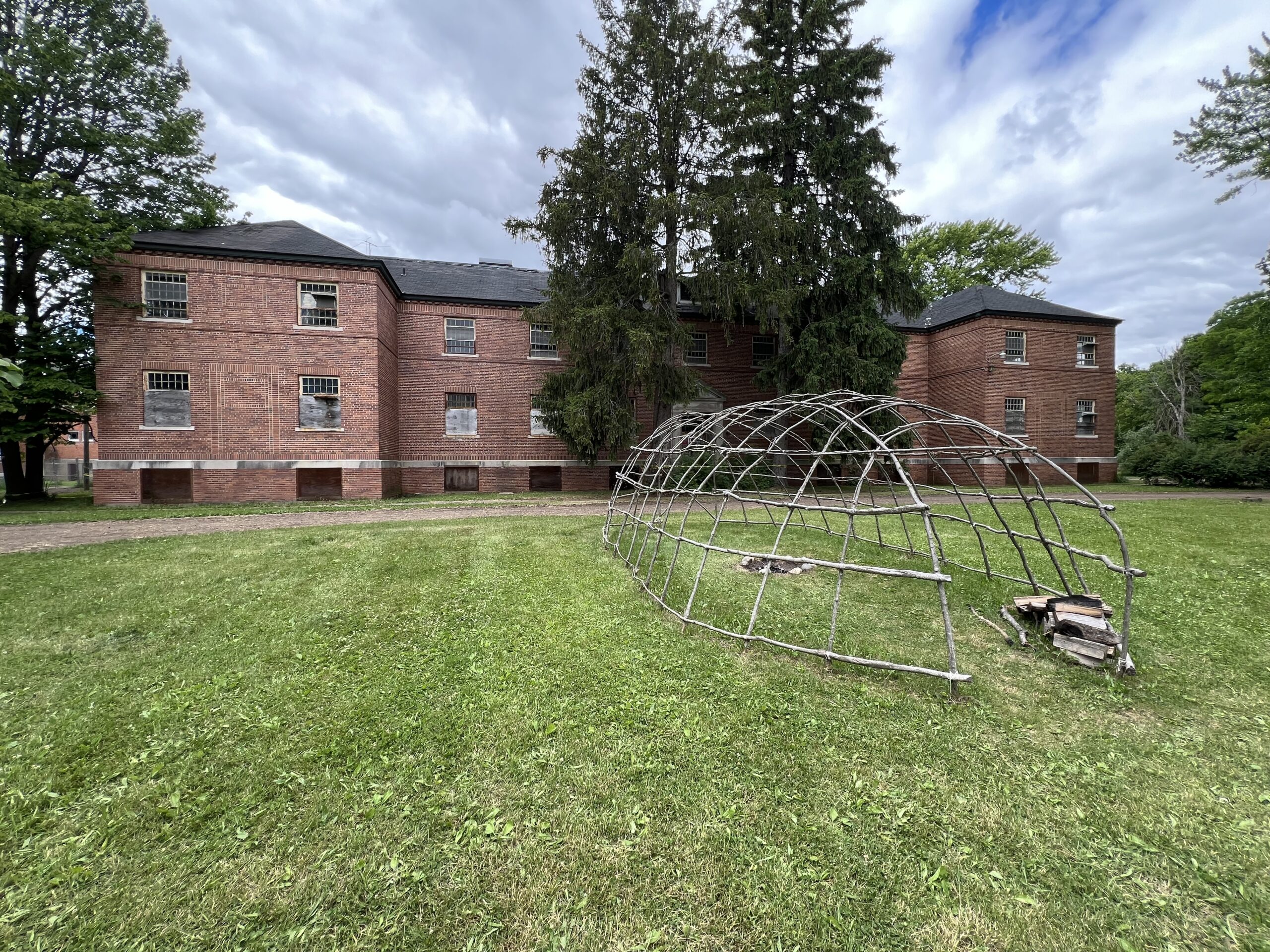
The abstraction of land is an extractive practice by which land ceases to be a living, interconnected ecosystem and instead becomes a symbol of state authority. “Land Back as Indigenous Theory and Activist Practice” seeks to present, from a variety of perspectives, a panel of scholars and practitioners who will show the ways in which, in indigenous territories, land is returned to the people. From the Arawak Caribbean archipelago of Édouard Glissant to the Muskogee (Mvskoke) towns of Alabama to the role that the Great Lakes might serve in the impermanent material culture of the Anishinaabeg: each speaker will present a theory of land that centers in relational, imaginative practices. The panel highlights the ways in which Indigenous territories, with their distributed cultures, linguistic ritual centrality, and enduring place-based ways of learning, constitute a spatial expression of sovereignty, continuity, and resistance.
Fernando Luiz Lara is Professor of Architecture in Stuart Weitzman School of Architecture at the University of Pennsylvania. He works on theorizing spaces of the Americas with an emphasis on the dissemination of design ideas beyond the traditional disciplinary boundaries. Framed by decolonial theories, Lara has written widely about issues that pertain to the built environment of our continent.
His latest publications include Spatial Theories for the Americas (2024); Street Matters: A Critical History of 20th Century Urban Policy in Brazil (with Ana Paula Koury, 2022); Excepcionalidad del Modernismo Brasileño (2019); Modern Architecture in Latin America (with Luis Carranza, 2015); and The Rise of Popular Modernist Architecture in Brazil (2008). Among the many books he edited are Decolonizing the Spatial History of the Americas (2022) and Spatial Concepts for Decolonizing the Americas (with Felipe Hernandez, 2023).
Jacob Boatman is AICAD Fellow and Assistant Professor of Architecture at Parsons The New School for Design. He holds an MArch from Rhode Island School of Design. His research addresses his ancestral Muskogee village in Alabama and shows the ways in which his return has set into motion processes that challenge Euro-American frameworks of property, preservation and urban growth.
Christian Hart Nakarado is Assistant Professor of Ecological Design at Wesleyan University and co-founder of Slow Build Studio, a design, research, and architecture practice based in New Haven, CT. He is a member of the American Indian Council of Architects and Engineers, and is an enrolled member of the Sault Ste. Marie Chippewa of Michigan.