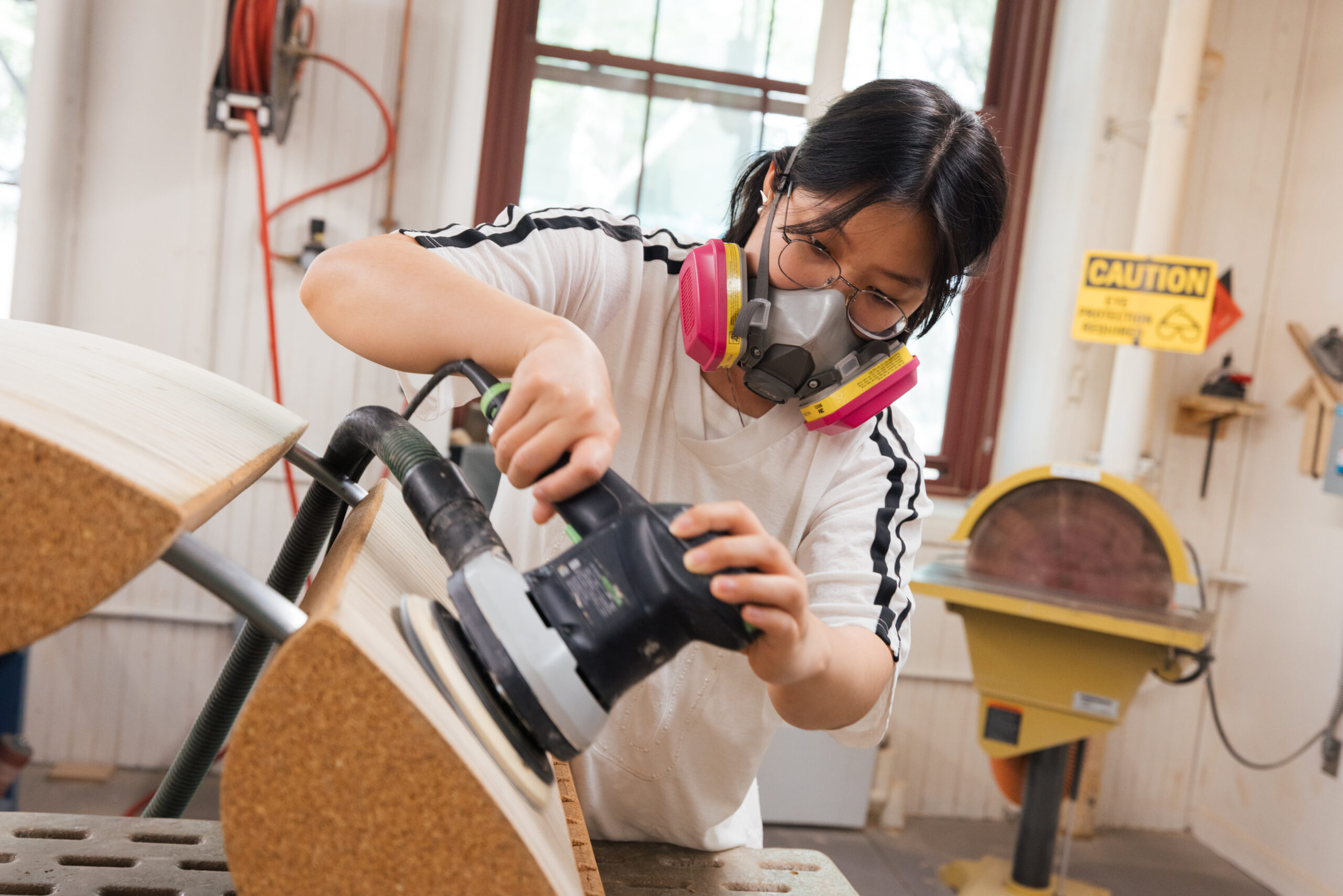
As creators, we are often in contact with hazardous materials and equipment that when used incorrectly or without proper precaution may have long-term impacts on our health and ability to continue in our art-making practices. This guide brings awareness to common safety concerns and provides tips and resources for helping protect yourself and those around you when creating your art and is not meant as a comprehensive guide of all materials and equipment.
You can also learn more about physical and mental well-being by engaging with other programming and initiatives led by the Resilience, Wellness and Well-being Center. Follow us on instagram @HealthyPratt to stay up to date on our latest offerings!
This page is an introductory wellness resource meant to support student safety and awareness, provided for general informational purposes only. It is not a substitute for formal Environmental Health and Safety (EHS) guidance. Students and staff must always defer to shop-specific rules, Standard Operating Procedures (SOPs), Safety Data Sheet (SDS) reviews, hazardous waste procedures, ventilation reviews, and official employee safety programs.
General tips
These are the everyday habits that make a big difference. No matter what you’re working on, keeping these general safety practices in mind will help you stay alert, prevent accidents, and create a safer, more mindful environment.
- Be aware of your surroundings: people, obstructions, messes.
- Use PPE to protect against inhalation, ingestion, and skin absorption.
- No food or drinks in spaces with hazardous materials or dust.
- Label and store hazardous materials properly.
- Never reuse a hazardous container for food.
- Dispose of materials properly don’t pour everything down the sink or toss in the trash.
- Use ventilation for odorous or hazardous materials, and alert others.
Staying safe in the studio or at home starts with knowing your materials, tools, and surroundings. Whether you’re working with chemicals, using power tools, or just cleaning up, these basic safety guidelines can help prevent accidents and protect your health. Click through each section to learn what to look out for and how to stay safe while creating.
- Always read labels and Material Safety Data Sheets (MSDSs).
- MSDS covers hazards, safe handling, storage, and emergency actions.
Look for seals:
AP = certified non-toxic
CL = contains hazardous materials
Processes can create hazards from normally safe materials. Example: Welding releases fumes, uses UV/IR light, hot particles.
Follow safety rules for all power tools:
- Use only as intended.
- Inspect tools before use.
- Use sharp tools dull ones cause more accidents.
- Cut/carve away from yourself.
- Don’t remove guards or safety features.
- No loose clothes, jewelry, or long hair near moving parts.
- Wear closed toed shoes (some settings may ask for specific types of shoes such as ones with rubber bottoms or other types of specifications).
- Stay focused; avoid tools if tired or distracted.
- Do not operate power tools when tired.
- Do not operate power tools when on medications that may make you drowsy.
- Don’t distract others using tools.
- Read manufacturer instructions.
- When working in a lab always refer to the specific instructions and guidance they have posted. If you are unsure of this information, find a monitor to ask.
- Learn the rules of your shop ask monitors if unsure.
- Avoid working alone when using hazardous materials/equipment. If needed, inform someone to check on you periodically.
- Use ventilation:
- Toxic/flammable/irritant materials: work near vent hoods.
- Confirm vents are working; stay close to the draw zone.
- General ventilation can help dilute lower-toxicity materials. Ensure air moves away from you.
- Even in a well ventilated area, be sure to take periodic breaks to leave the space.
- If you feel light headed or dizzy: cease the activity, leave the area to get fresh air, and hydrate to help flush toxins from your system. If your symptoms do not go away, or if you experience chest pain, difficulty breathing, or severe vomiting, contact Campus Safety to assist you in getting medical care.
Use new, labeled, good-condition containers. Never use breakable, food, or loose-lid containers for chemicals. Never use a container you used for storing or working with materials for food. Art materials leech into the container and cause contamination even after being cleaned.
Storage guidance:
- Acids in low cabinets near use areas.
- Flammables in fire-resistant storage cabinets or OSHA approved containers.
- Contaminated rags in sealed waste bins found in various lab and studio spaces around campus. Do not use a regular trash bin as the rags may spontaneously combust. If you do not have access to these, either let them dry out completely outdoors (under supervision) or store in a metal container filled with water.
- Spontaneously combustible oils in water-filled containers.
- Clean your space: label and store materials, tidy tools, clean spills.
- Sweep/vacuum regularly; use wet mop or HEPA vacuum for hazardous dust.
- Wash hands and arms thoroughly. Never wash with solvents.
- Change out of work clothes and wash them separately.
- Use lifts or mechanical help when moving heavy objects.
- If lifting manually: bend knees, keep feet close, back straight, head up, lift with legs.
- Avoid twisting with your back while lifting.
- Repetitive motion can cause long-term injuries. Take breaks and stretch.
Pictograms
Pictograms are standardized hazard symbols required by OSHA’s Hazard Communication Standard (HCS) as part of chemical labeling. These red-bordered icons appear on a white background and alert you to specific risks such as flammability, toxicity, or corrosion. Each pictogram represents a type of hazard and appears only once per label, even if multiple hazards apply. Most of these pictograms are part of the Globally Harmonized System (GHS), designed to help you quickly identify and understand chemical dangers. Always check labels for these symbols before using any materials in the studio to ensure safe handling.
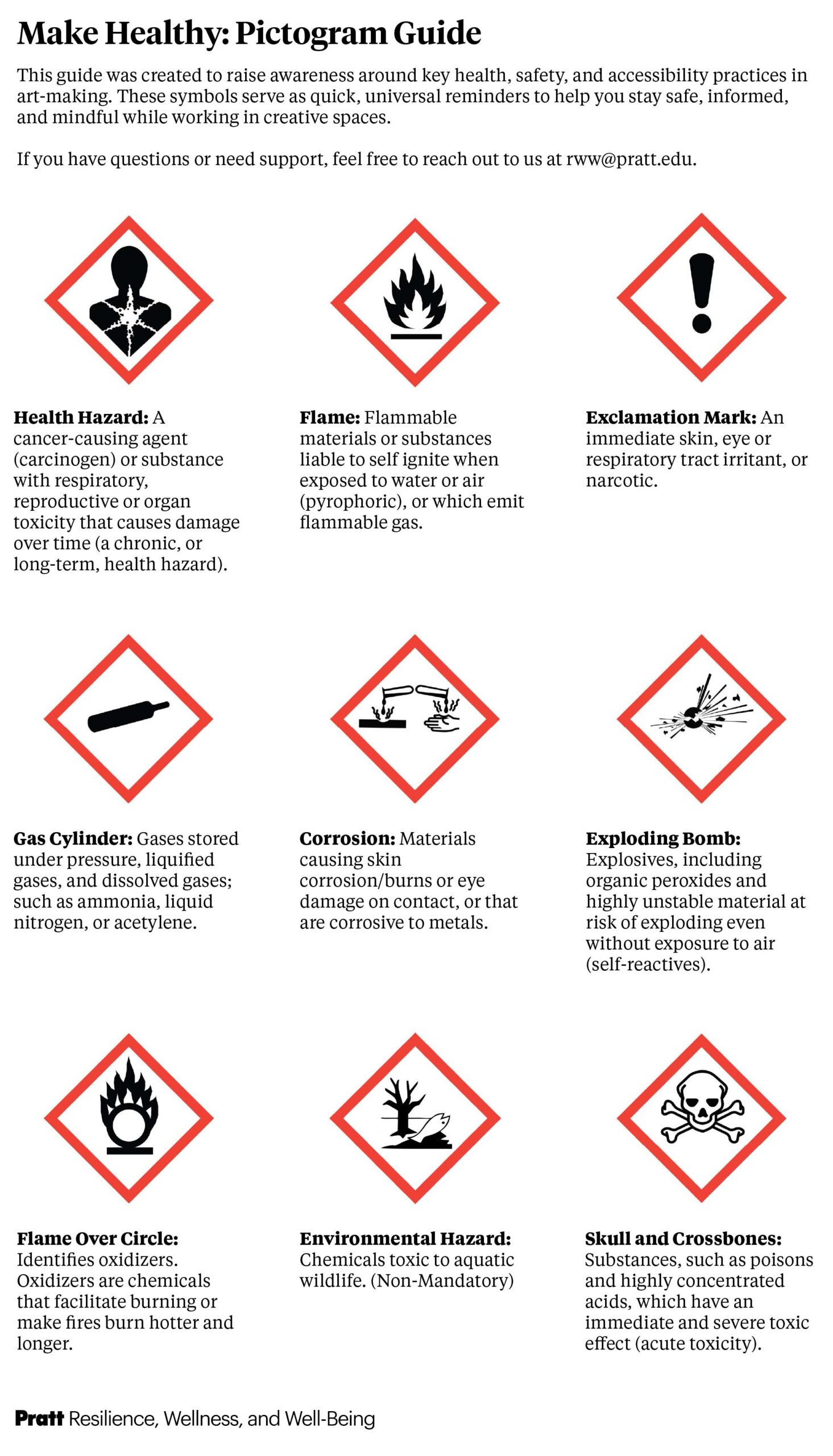
You can download the full pictogram guide as a PDF to refer to anytime. A Spanish version is also available for bilingual access https://www.osha.gov/sites/default/files/publications/OSHA3491QuickCardPictogram.pdf
Browse Art Category
Art-making can involve hidden risks, some with long-term effects on your health. This section helps you understand the specific hazards tied to different materials and techniques, and how to work safely with them. Take your time and read carefully as the information can be detailed. You can also use the keyword search to go directly to the process or material you’re using. Knowing what you’re working with isn’t just about staying safe today, it’s about protecting your future as a maker.
1.1 Pigments
Hazards:
- Poisoning occurs when toxic pigments are inhaled or ingested. Ingestion can happen when eating, drinking, or smoking in your work area, through inadvertent hand-to-mouth contact, or pointing the paintbrush towards the lips. Inhalation can come from spraying, heating, or sanding.
- Beware of toxic inorganic pigments white lead, or flake white (basic lead carbonate). Lead pigments can cause anemia, gastrointestinal problems, peripheral nerve damage (and brain damage in children), kidney damage, and reproductive system damage. Other toxic pigments such as cadmium, chrome yellow and zinc yellow, may lead to lung cancer and may cause skin ulcerations and allergic reactions (such as rashes). In addition lamp black and carbon black may contain impurities that can cause skin cancer.
Note: The long-term hazards of the modern synthetic organic pigments have not been well studied.
Precautions:
- Obtain Material Safety Data Sheets (MSDSs) on your paints to find out what pigments you are using. This is important because the color name on the tube doesn’t always match the actual pigments inside. Manufacturers may use the same name even if they change the ingredients.
- Use the least toxic pigments as possible. Do not use lead or carcinogenic pigments.
- Avoid mixing dry pigments whenever possible. When mixing dry pigments, do so inside a glove box (a box with a glass or plexiglas top and holes in the sides for arms) or inside a laboratory-type fume hood.
- Wet mop and wipe all surfaces when using dry pigments.
- Avoid using dishes, containers or utensils from the kitchen to mix and store paints and pigments. Do not use a container used to store paints and pigments for any other purpose.
1.2 Water-Based Paints
Water-based paints (water color, acrylic, gouache, tempera and casein) can be thinned and cleaned with just water.
Hazards:
- Refer to the section above for pigment hazards.
- All water-based paints contain a preservative to prevent mold or bacterial growth. Although present in small amounts, certain preservatives may cause allergic reactions in some people.
- Acrylic paints contain a small amount of ammonia. Some sensitive people may experience eye, nose and throat irritation from the ammonia. Acrylics and some gouaches contain a very small amount of formaldehyde as a preservative. People already sensitized to formaldehyde can experience allergic reactions. The amounts can vary from manufacturer to manufacturer.
- Casein paints use milk casein (milk protein) as a binder. Casein can be dissolved in ammonium hydroxide. Ammonium hydroxide is moderately irritating through skin contact and highly irritating through eye contact, ingestion, and inhalation.
Precautions:
- See section above for precautions when mixing dry pigments.
- If you add your own preservative, avoid using sodium fluoride, phenol, or mercury compounds. For tempera, a small amount of pine oil works for short periods of time.
- If you experience eye, nose, or throat irritation while using acrylics, opening a window is usually sufficient; if not try a window exhaust fan.
- While mixing casein paints using ammonium hydroxide use a window exhaust fan to provide ventilation.
- Wear gloves, goggles, and a protective apron when handling ammonia. Work near an eyewash station if possible, if not, know where the nearest access to clean water is.
1.3 Non Water-Based Paints
Oil paints, encaustic and egg tempera use linseed oil, wax, and egg respectively as vehicles. Solvents are often used as a thinner and for cleanup. Turpentine and mineral spirits (paint thinner), for example, are used in oil painting mediums for thinning and for cleaning brushes. Alkyd paints use solvents as their vehicle. In addition, many commercial paints used by artists also contain solvents.
Hazards:
- See section above for pigment hazards.
- Inhalation Risks – Inhalation of solvents can cause various issues for short periods and chronic exposure.
- Acute inhalation of high concentrations can cause narcosis, which can include symptoms of dizziness, headaches, drowsiness, nausea, fatigue, loss of coordination, coma, as well as respiratory irritation.
- Chronic inhalation of large amounts of solvents could result in decreased coordination, behavioral changes and brain damage. Chronic inhalation of turpentine can cause kidney damage and respiratory irritation and allergies.
- Encaustic painting involves suspending pigments in molten wax. Overheated wax produces flammable vapors and decomposition fumes, which are strong respiratory irritants.
- Odorless mineral spirits and turpenoid (in which the aromatic hydrocarbons have been removed) are less hazardous options.
- Ingestion of either turpentine or mineral spirits can be fatal. In the case of mineral spirits, this is usually due to chemical pneumonia caused by aspiration (breathing in) of the mineral spirits into the lungs after vomiting.
- Skin Irritation and allergic reactions: All solvents can cause defatting of the skin and dermatitis from prolonged or repeated exposure.
- Natural resins (copal, damar, rosin, Japanese Lacquer) may cause skin irritation or allergies. Rosin dust can cause asthma.
- Turpentine can be absorbed through the skin and cause skin allergies.
- Epoxy paints consist of an epoxy resin component containing the pigment, and a hardener component. The epoxy resin may contain diglycidyl ethers. Diglycidyl ethers are irritants that may cause bone marrow damage and are suspected carcinogens. Epoxy hardeners may cause skin and respiratory allergies and irritation.
Precautions:
- Whenever possible replace turpentine or ordinary mineral spirits with the less toxic odorless mineral spirits. Mineral spirits is also less flammable than turpentine, since its flashpoint is over 100 F (38 C), while turpentine has a flashpoint of 95 F, (35 C).
- Apply the same health and safety considerations for the use of “citrus” or “pine” solvents. These are quite irritating to the skin and eyes.
- Artists should set up their easel about 3 feet from a window with a fan at work level, pulling solvent vapors away from their face. Ventilation is necessary only while the solvent is evaporating from the canvas, not during the drying process when the oil paint is oxidizing.
- Techniques such as turpentine washes will require a lot of ventilation because they result in the evaporation of large amounts of solvents in a short period of time. Use acrylic paint as a substitute for underpainting.
- Wear neoprene gloves while cleaning brushes with mineral spirits or turpentine.
- Remove paint from your hands with baby oil, and then soap and water.
- Heat wax to the minimum temperature needed for proper flow of the paint. Do not heat with an open flame or hot plate with exposed element.
- During pregnancy and nursing, switch to water-based paints to avoid exposure to solvents.
1.4 Airbrush, Spray Cans and Spray Guns
Artists use many products in spray form, including fixatives, retouching sprays, paint sprays, varnishes, and adhesive sprays. Airbrush, aerosol spray can and spray guns are used.
Hazards:
- Spraying solvent-based paints is a serious fire hazard.
- Spray mists release droplets into the air that often contain solvents along with the pigments.
- Aerosol spray paints have an additional hazard besides pigments and solvents. They contain propellants, usually isobutane, and propane, which are extremely flammable and have been the cause of many fires. Other aerosol spray products (such as retouching sprays, spray varnishes, etc.) release solvents, propellants, and particulates when sprayed.
- Airbrushing produces a fine mist which is a serious inhalation hazard because artists work so close to their artwork. Airbrushing solvent-containing paints is especially dangerous.
- Spray guns are less common in art painting but usually involve spraying much larger quantities of paint than either spray cans or airbrush.
Precautions:
- See the section above for precautions with pigments.
- Try to brush items rather than spraying if possible.
- Use water-based airbrushing paints and inks rather than solvent-based paints.
- Use spray cans or an airbrush in a spray booth.
- If ventilation is not adequate, then respiratory protection is necessary while air brushing or spraying.
- Never try to spray paint by blowing air from your mouth through a tube. This can lead to accidental ingestion of the paint.
1.5 Dry Drawing Media
Dust-creating media such as charcoal and pastels are often fixed with aerosol spray fixatives, and media such as crayons and oil pastels which do not create dust.
Hazards:
- Compressed charcoal sticks use various resins in a binder to create the color. Although charcoal is considered a nuisance dust, inhalation of large amounts of charcoal dust can create chronic lung problems. A major source of charcoal inhalation is from the habit of blowing excess charcoal dust off the drawing.
- Colored chalks are also nuisance dusts. Individuals who have asthma sometimes have problems with dusty chalks, but this is a nonspecific dust reaction, not a toxic reaction.
- Pastel sticks and pencils consist of pigments bound into solid form by a resin. Inhalation of pastel dusts is the major hazard. Pastels can contain toxic pigments such as: chrome yellow (lead chromate) which can cause lung cancer; and cadmium pigments (which can cause kidney and lung damage and are suspected human carcinogens). Blowing excess pastel dust off the drawing is one major source of inhalation of pastel pigments.
- Beware of older pencils, over 10 years ago, yellow pencil exteriors included lead chromate paint; however, this has since been eliminated as a risk. While this is not a high risk, be aware of possibility of the hazard.
- Both permanent and workable spray fixatives used to fix drawings contain toxic solvents. Solvents are released into the air when sprayed, often right on a desk or easel. In addition you can be inhaling the plastic particulates that comprise the fixative itself.
- Never try to spray fixative by blowing air from your mouth through a tube. This can lead to accidental ingestion of the fixative.
Precautions:
- Use the least dusty types of pastels, chalks, etc. Asthmatics in particular might want to switch to oil pastels or similar non-dusty media.
- Crayons and oil pastels do not present an inhalation hazard, and thus are much safer than pastels. Some oil pastels can contain toxic pigments, but this is only a hazard by accidental ingestion.
- Use a spray booth that exhausts to the outside when using spray fixatives. If use of spray fixatives is occasional, you can use them outdoors with a NIOSH-approved respirator equipped with organic vapor cartridges and dust and mists filter for protection against inhalation of solvent vapors and particulates. An exhaust fan removes organic vapors and particulates from the air.
- Don’t blow off excess pastel or charcoal dust with your mouth. Instead tap off the built up dust so it falls to the floor (or paper on floor).
- Wet-mop and wet-wipe all surfaces clean of dusts.
- If inhalation of dusts is a problem, a respirator may be appropriate.
1.6 Liquid Drawing Media
This includes both water-based and solvent-based pen and ink and felt tip markers.
Hazards:
- Permanent felt tip markers and some drawing inks contain solvents. Xylene, which is a highly toxic aromatic hydrocarbon, is the most common ingredient; newer brands often contain the less toxic propyl alcohol (although it is an eye, nose and throat irritant).
Precautions:
- Use water-based markers and drawing inks if possible.
- Alcohol-based markers are less toxic than aromatic solvent-based markers.
- Use good dilution ventilation (e.g. window exhaust fan) when working with solvent-based drawing inks and permanent markers.
Never paint on the body with markers or drawing inks. Use cosmetic colors for body painting.
2.1 General Chemicals
This includes the use of inks, pigments, solvents, and acids used in various processes.
- Inks consisting of pigments suspended in linseed oil may be hazardous if ingested in large amounts due to small amounts of toxic heavy metals.
- Oil vehicles are flammable when heated and rags soaked in these oils may ignite by spontaneous combustion.
- Inhaling or ingesting pigment can lead to poisoning. The main hazard is accidental ingestion of pigments due to eating, drinking or smoking while working, or inadvertent hand to mouth contact. Certain pigments are linked with more severe hazards:
- Chromate (chrome yellow and zinc yellow), cadmium, lamp black, carbon black, and chrome pigments are linked to: allergic skin reactions, anemia, gastrointestinal problems, peripheral nerve damage (and brain damage in children), kidney damage and reproductive system damage, lung cancer, and skin cancer.
- Solvents can be harmful through a number of different interactions
- Inhalation in high concentrations can cause dizziness, nausea, fatigue, loss of coordination, or coma. This can also increase the chances for mistakes and accidents.
- Many solvents are toxic if ingested. Swallowing an ounce of turpentine can be fatal.
- Most solvents, except chlorinated hydrocarbons, are also either flammable or combustible.
- Repeated or prolonged skin contact with solvents can cause defatting of the skin and resultant dermatitis. Many solvents can also be harmful through skin absorption.
- Acids:
- Concentrated acids are corrosive to the skin, eyes, respiratory system and gastrointestinal system. Dilute acids can cause skin irritation on repeated or prolonged contact.
- Chromic acid is a skin sensitizer, suspect carcinogen, and oxidizer.
- Phenol is highly toxic by skin absorption and ingestion. It may cause severe kidney damage, central nervous system effects and even death if absorbed in large amounts.
- Hydrofluoric acid is highly toxic and can cause severe, deep burns which require medical attention. There is no immediate pain warning from contact with hydrofluoric acid.
- Concentrated nitric acid is a strong oxidizing agent and can react explosively with other concentrated acids, solvents, etc. Nitric acid gives off various nitrogen oxide gases, including nitrogen dioxide which is a strong lung irritant and can cause emphysema.
Precautions:
- Know what materials are used. Obtain the material safety data sheets (MSDSs) on all products used.
- Choose the least toxic options available: avoid lead-based pigments, try denatured or isopropyl alcohol, avoid concentrated acids, etc.
- Storing Materials:
- Store solvents safely in a flammable storage cabinet. Never store in food or drink containers and always label clearly. Keep minimum amounts of solvents on hand and purchase in the smallest practical container size.
- Store concentrated nitric and chromic acids away from organic materials. Always store concentrated nitric acid separately even from other acids.
- Do not use an open flame to heat linseed oil, linseed oil, varnishes, or burnt plate oil. Take normal fire prevention measures (e.g. no smoking or open flames in work areas).
- Place oil-soaked rags in self-closing disposal cans and remove from the studio each day. An alternative is to place the oil-soaked rags in a pail of water.
- Avoid mixing dry pigments whenever possible. Wear a NIOSH-approved toxic dust respirator when mixing dry pigments.
- When working with solvents: Use adequate ventilation, do not allow smoking, open flames, or other sources of ignition near solvents, and wear gloves to avoid skin contact. (Baby oil is a great substitute for cleaning ink off hands).
- When working with acids:
- Wear appropriate gloves, goggles and protective apron or lab coat
- Use an enclosed hood or slot, slot exhaust hood or window exhaust fan at work level (if unavailable wear a NIOSH-approved respirator with acid gas cartridges)
- When diluting concentrated acids is to add the acid to the water, never the reverse.
- If acid gets on your skin, wash with lots of water. In case of eye contact, rinse the eyes with water for at least 15-20 minutes and seek medical attention.
- Have a class B fire extinguisher in the area. If ordinary combustible materials are present, you may need a Class ABC fire extinguisher.
2.2 Lithography
Lithography uses either zinc and aluminum metal plates or stones for printing. It involves use of a variety of chemicals to make the image ink-receptive and non-image areas receptive to water and ink-repellent.
2.2.1 Plate and Stone Preparation
Hazards:
- Acids used include phosphoric, nitric, acetic, hydrochloric, hydrofluoric and tannic acids. More concentrated acids are corrosive, and even dilute acid solutions can cause skin irritation from prolonged or repeated contact. Hydrofluoric acid and phenol are the most dangerous to use.
- Lithotine, kerosene, and mineral spirits are skin and eye irritants and inhalation can cause intoxication and respiratory irritation.
- The solvents contained in vinyl lacquers can include highly toxic isophorone and cyclohexanone. Methyl ethyl ketone (MEK) is often used as a thinner and is considered moderately toxic.
- Dichromate salts may cause skin and nasal ulceration and allergic reactions, and are suspect cancer-causing agents.
- Rosin dust may cause asthma and allergic dermatitis. There is the hazard of explosion from the buildup of rosin dust, in enclosed rosin boxes, around an ignition source.
- Talcs may be contaminated with asbestos and silica.
- Airbrushing drawing materials or using spray enamel paints is more hazardous than drawing with a brush because the inhalation hazard is higher.
Precautions:
- Obtain the MSDS for all materials used.
- See Acids and Solvents sections for the precautions with acids and solvents.
- Use the least toxic solvents. Never use gasoline. Lithotine and mineral spirits are less toxic than the more irritating kerosene.
- Use asbestos-free talcs such as baby powders.
- Avoid dichromate-containing counteretches and fountain solutions if possible. Do not use hydrofluoric acid or phenol.
- Wear appropriate gloves, goggles and a protective apron when mixing or using concentrated acids.
2.2.2 Printing and Cleanup
In Lithography, solvents are used to make image corrections on the press, to remove images, and to clean the press bed and rollers.
Hazards:
- Some roller cleaners and glaze cleaners can contain chlorinated hydrocarbons such as perchloroethylene and methylene chloride. Most chlorinated solvents (except 1,1,1-trichloroethane) have been shown to cause liver cancer in animals and are therefore suspect human carcinogens. In addition perchloroethylene can cause liver damage, and methylene chloride heart attacks.
Precautions:
- Know materials used. Obtain the MSDS for all solvents. See Solvents section for the precautions with solvents.
- Choose products that do not contain chlorinated solvents whenever possible.
- For small scale solvent use in correcting images or cleaning the press bed using lithotine or mineral spirits, dilution ventilation (e.g. window exhaust fan) is sufficient.
2.3 Intaglio
2.3.1 Etching
Etching involves use of dilute nitric acid, Dutch mordant (hydrochloric acid plus potassium chlorate) or ferric chloride to etch the zinc or copper (respectively) metal plate. Resists such as stopout varnishes containing ethyl alcohol, grounds containing asphaltum or gilsonite and mineral spirits, rubber cement, and rosin or spray paints for aquatinting are used to protect unetched parts of the plate. Sometimes, soft grounds contain more toxic solvents.
Hazards:
- See Solvents section for the hazards of solvents. 1,1,1- trichloroethane found in some soft grounds is moderately toxic by inhalation under normal conditions but may cause fatalities at very high concentrations.
- See Acids section for the hazards of acids. In particular nitric acid etching releases the respiratory irritant nitrogen dioxide which has poor odor warning properties. Flammable hydrogen gas is produced during the etching process.
- Mixing hydrochloric acid with potassium chlorate to make Dutch mordant produces highly toxic chlorine gas. Potassium chlorate is a key ingredient in many pyrotechnics, and is a potent oxidizing agent. It can react explosively with organic compounds, sulfur compounds, sulfuric acid or even dirt or clothing. On heating it can violently decompose to oxygen and potassium chloride. Storage and use are very dangerous and require special precautions especially when mixing.
- Rosin dust and asphaltum dust (also sometimes used) are combustible. Sparks or static electricity have caused explosions in enclosed rosin and aquatint boxes. Rosin dust may also cause asthma and dermatitis in some individuals.
- Inhalation of solvents and pigments can result from use of aerosol spray paints.
Precautions:
- Obtain the MSDS for all materials used.
- See Solvents and Acids sections for specific precautions.
- Use Dutch mordant with extreme caution. A safer substitute for etching copper plates is ferric chloride (iron perchloride). Acidic solutions may still be formed if ferric chloride is mishandled, but does not have the dangers of handling concentrated acids. Ferric chloride solution might cause minor skin irritation from prolonged contact.
- Use local exhaust ventilation (e.g. slot or enclosed hood) for ground or stopouts application.
- Use a local exhaust ventilation during acid etching. See section on precautions for Acids for more information.
- Rosin (or asphaltum) boxes should be explosion-proof. Use spark proof metal cranks, explosion-proof motors, or compressed air. Don’t use hair dryers to stir up rosin dust.
2.3.2 Other Techniques
Drypoint, mezzotint and engraving use sharp tools to incise lines in metal plates.
Hazards:
- Be cautious and aware while using sharp tools.
- Long-term use of these tools can cause carpal tunnel syndrome, which can cause numbness and pain in the first three fingers. Severe cases can be incapacitating.
Precautions:
- Keep tools sharp, store them safely and always cut away from yourself.
- When possible, clamp down plates to avoid slippage.
- Minimize the chance of carpel tunnel syndrome by choosing tools with wide handles, avoiding tight grips, and doing hand flexing exercises during regular rest periods. Set work table height so wrist flexing motions are minimal.
2.3.3 Printing and Cleanup
Intaglio inks contain pigments, treated linseed oil and modifiers. A variety of solvents (including mineral spirits, alochol, lithotine, turpentine, etc) are used for cleanup of inking slabs, the press bed, and cleaning the plate.
Hazards:
- Preparing your own inks from dry pigments can involve inhalation of toxic pigments. See Pigments section for the hazards of pigments.
- See Solvents section for the hazards of solvents. The large amount of solvents used in plate cleaning makes it more hazardous than cleaning inking slabs or press beds.
- Lithotine, turpentine, or oil-soaked rags can be a spontaneous combustion hazard if improperly stored.
Precautions:
- See Pigments and Solvents sections for the specific precautions for pigments and solvents.
- Use NIOSH-approved respirators with organic vapor cartridges if ventilation is not adequate.
2.4 Relief and Other Printing Processes
Other printing processes include relief printing, collagraphs, monoprints, and plastic prints.
2.4.1 Relief Printing
Relief printing techniques include woodcuts, linoleum cuts and acrylic platesp. These techniques involve cutting away of plate areas that are not to be printed. Relief inks can be oil-based or water-based.
Hazards:
- Some woods used for woodcuts can cause skin irritation and/or allergies. This is particularly true of tropical hardwoods.
- Accidents involving sharp tools can result in cuts.
- Wood carving and cutting tools can cause carpal tunnel syndrome. Which can cause numbness and pain in the first three fingers. Severe cases can be incapacitating.
- Caustic soda (sodium hydroxide) is sometimes used for etching linoleum. It can cause skin burns and severe eye damage if splashed in the eyes.
- In linoleum etching, hazardous solvents are used in stopouts and resists and for cleaning up after printing with oil-based inks. See Solvents section for more information on the hazards of solvents.
Precautions:
- Obtain the MSDS for all materials used.
- See Acids and Solvents sections for precautions with acids and solvents.
- Use water-based inks instead of oil-based inks which don’t require solvents.
- Wear appropriate gloves, goggles and protective apron when handling caustic soda.
- If a chemical gets on your skin, wash with lots of water. In case of eye contact, rinse the eyes with water for at least 15-20 minutes and contact a physician.
- Always cut in a direction away from you, with your free hand on the side or behind the hand with the tool.
- When possible, clamp down materials to avoid slippage.
- Avoid using tools with wide hanldes, avoid tight grips, and rest the hands with flexing exercises to minimize the risk of carpel tunnel syndrome. Linoleum cutting is softer to work, and thus can reduce musculoskeletal injury.
2.4.2 Collagraphs
Collagraphs are prints produced using a collage of different materials glued onto a rigid support. You can use a wide variety of materials and adhesives in making collagraphs.
Hazards:
- Rubber cement, a common adhesive used with collagraphs, is extremely flammable and most rubber cements and their thinners contain the solvent n-hexane which can cause damage to the peripheral nervous system (hands, arms, legs, feet) from chronic inhalation.
- Epoxy glues can cause skin and eye irritation and allergies.
- Spraying fixatives on the back of collagraph plates to seal them can involve risk of inhalation of the solvent-containing spray mist.
- When sanding collagraph plates treated with acrylic modeling compounds or similar materials you risk inhalation of irritating dusts.
Precautions:
- Obtain the MSDSs from the manufacturer.
- Use the least toxic materials available. Use water-based glues and mediums (e.g. acrylic medium) whenever possible.
- Try to use rubber cements with less toxic component heptane as compared to n-hexane.
- Wear gloves when using epoxy glues.
- Wear a NIOSH-approved toxic dust respirator when sanding collagraph plates and using toxic adhesives.
2.4.3 Plastic Prints
Plastic prints may involve using a variety of resins or plastic materials.
Hazards:
- Plastic prints can involve hazards from inhalation of plastic resin vapors (e.g. epoxy resins) and also from inhalation of decomposition fumes from drilling, machining, sawing, etc. of finished plastics.
Precautions:
- Obtain the MSDS for all materials used.
- Resin emits hazardous vapors. Only use resin in well ventilated areas or while using a respirator with organic vapor cartridges as it emits hazardous vapors. See Solvent section for the precautions with solvents.
- Use the least toxic material available.
2.4.4 Monoprints
- Monoprints involve standard techniques, but only one print is made. Monoprints have the same hazards involved in plate preparation and printing as the parent techniques.
2.5 Photoprintmaking
Photoprintmaking involves exposing a light-sensitive emulsion or film to ultraviolet light through a transparent support containing an opaque image to transfer the image to a plate. Photoemulsions include drawings on a transparent support such as Mylar or acetate, or photographic images processed on graphic arts film to yield a positive image. We discuss several photoprintmaking methods below.
Hazards:
- Light exposure sources include photoflood lamps, vacuum Poly- Lite units, and carbon arcs. Carbon arcs produce large amounts of ultraviolet radiation which can cause skin and eye damage and possible skin cancer. Carbon arcs also produce hazardous metal fumes, and ozone and nitrogen dioxide (which can cause emphysema), and toxic carbon monoxide.
Precautions:
- Use carbon arcs equipped with local exhaust ventilation to the outside. Quartz mercury or metal halide lamps are safer.
2.5.1 Photo-lithography
Photolithography involves transferring graphic images to stones or metal plates coated with a light-sensitive emulsion. Light-sensitive emulsions used on stone consist of a mixture of powdered albumin, ammonium dichromate, water, and ammonia; commercial emulsions are usually based on diazo compounds. Developing solutions for these mixtures often contain highly toxic solvents. Diazo-sensitizing solutions, developers with highly toxic solvents, plate conditioners containing strong alkali, and other brand name mixtures are used for metal plates.
Hazards:
- Many solvents used in developing solutions are highly toxic both by inhalation and skin absorption.
- Diazo photo emulsions are the least hazardous although they can cause eye irritation.
- Ammonium dichromate used for stone is a probable human carcinogen, moderately toxic by skin contact, and may cause allergies, irritation, and external ulcers; it is highly flammable and a strong oxidizer.
- Ammonia is a skin irritant and highly toxic by inhalation. Ammonia is highly corrosive to the eyes. It has good odor-warning properties.
- Screen cleaning solutions include strong caustic solutions, enzyme detergents which can cause asthma, and chlorine bleach. These are skin and respiratory irritants.
Precautions:
- Obtain a MSDS for all materials used.
- See Solvents section for more precautions with solvents.
- Avoid ammonium dichromate and use presensitized plates if possible. If you cannot substitute, wear gloves and goggles. Store it away from heat, solvents and other organic materials.
- Use ammonia solutions or solvent-containing photolithographic solutions inside a laboratory hood, or in front of a slot exhaust hood. Wear gloves, goggles, and if ventilation is inadequate, a respirator.
- Wear gloves, goggles, and a plastic apron or laboratory coat when mixing hazardous chemicals.
2.5.2 Photo-etching
KPR products are used in photo-etching. Photoresist dyes often contain a variety of highly toxic solvents, including ethylene glycol monomethyl ether acetate (2-ethoxyethyl acetate, cellosolve acetate), ethylene glycol monoethyl ether, and xylene, and benzaldehyde. The developers contain xylene and ethylene glycol monomethyl ether acetate (2-methoxyethyl acetate or methyl cellosolve acetate). Developers used for safer presensitized plates also contain solvents. Ultraviolet sources such as carbon arcs, mercury lamps, or metal halide lamps are used to expose the plate.
Hazards:
- See the Solvents section for the hazards of various solvents. In particular, methyl and ethyl ether acetates of ethylene glycol are highly toxic by skin absorption and inhalation and can cause anemia, kidney damage, testicular atrophy and sterility in men, and miscarriages and birth defects in pregnant women.
- Xylene is moderately toxic by skin absorption, and highly toxic by inhalation and ingestion. It is a strong narcotic.
- The Photo Print Making section discusses carbon arc hazards.
Precautions:
- See Solvents section for precautions with solvents.
- Use photofloods or other light sources instead of carbon arcs. Precautions with carbon arcs are discussed in the Photo Print Making section.
- Use presensitized plates if possible.
- Use photoresist solutions with local exhaust ventilation, or wear an organic vapor respirator. Wear butyl rubber gloves when handling KPR solutions.
- Pregnant or nursing individuals, children, and anybody trying to conceive should not work with these materials.
Varieties of plaster include: Plaster of Paris, casting plaster, white art plaster, molding plaster, and Hydrocal. These are all varieties of calcined gypsum, composed of calcium sulfate. Mold releases used with plaster include vaseline, tincture of green soap, auto paste wax-benzene, silicone-grease- benzine, and mineral oil-petroleum jelly.
Hazards:
- Plaster dust (calcium sulfate) is slightly irritating to the eyes and respiratory system. In situations where there is heavy inhalation of the dust, more severe respiratory problems can result.
- Potassium sulfate and potassium alum are slightly toxic by ingestion; potassium alum is slightly toxic by skin contact, and can cause mild irritation or allergies in some people.
- Borax is moderately toxic by ingestion, by inhalation, and by absorption through burns or other skin injuries. It is also slightly toxic by skin contact, causing alkali burns.
- Concentrated acetic acid is highly corrosive by ingestion, inhalation, and skin contact.
- Burnt lime (calcium oxide) is moderately corrosive through skin contact (especially if the skin is wet), and highly toxic if inhaled or ingested.
- Benzene used with many mold releases is moderately toxic by skin contact and inhalation, and is highly toxic by ingestion. It is also flammable.
- Careless use and storage of sharp tools can cause accidents.
- Chipping set plaster can result in eye injuries from flying chips.
- Making plaster casts of hands, legs, and other body parts can be very hazardous due to the heat released during the setting process.
Precautions:
- Wear gloves and goggles when mixing acetic acid and burnt lime.
- Always carve or cut in a direction away from you, and keep hands behind the tool. If the tool falls, don’t try to catch it.
- Wear safety goggles when chipping plaster.
- Wear gloves and goggles when pouring benzene. Store in safety containers and do not use near open flames.
- Do not use plaster for body part casts. Instead, use a plaster-impregnated bandage, along with vaseline or similar mold release as protection.
3.2 Stones and Lapidary
Stone carving involves techniques like chipping, scraping, and pulverizing, using both manual and powered tools depending on the hardness of the stone. Finishing stones involves grinding, sanding, and polishing, either by hand or machine. The risks involved in lapidary work come primarily from cutting semi precious stones like jade, opal, and turquoise.
Hazards:
- Grinding, sanding, and carving can create fine dust and flying chips that pose serious eye and inhalation hazards. Machine tools and grinding wheels—especially sandstone ones—produce even more dust, and some polishing materials like tripoli are highly toxic if inhaled.
- Sandstone, soapstone, granite, quartz gemstones, opals, and other gemstones are highly toxic by inhalation because they contain large amounts of free silica, silica, and amorphous silica. Limestone, containing small amounts of free silica, is less hazardous.
- Serpentine, soapstone, and greenstone may contain asbestos, which can cause asbestosis, lung cancer, mesothelioma, and stomach and intestinal cancers.
- Lifting heavy pieces of stone may cause back injuries.
- Calcium oxide in Portland cement is highly corrosive to the eyes and respiratory tract, and is moderately corrosive to the skin. Allergic dermatitis can also occur due to chromium contaminants in the cement. The silica in the cement is also highly toxic by inhalation. Lung problems from inhalation of Portland cement include emphysema, bronchitis, and fibrosis. Acrylic resins are skin irritants and sensitizers.
- Using pneumatic tools in cold environments may lead to “white fingers” (Raynaud’s phenomenon), a circulation issue that can become permanent.
Precautions:
- Do not use stones which may contain asbestos unless you are certain that your particular pieces are asbestos free. New York soapstones may contain asbestos, whereas Vermont soapstones are usually asbestos free. Alabaster is a substitute.
- Wear chipping goggles to protect against flying particles; wear protective shoes to protect against falling stones. Wear approved safety goggles when grinding, sanding, or polishing. For heavy grinding also wear a face shield.
- When using carving tools, keep your hands behind the tools, and carve or cut in a direction away from you. Don’t try to catch falling tools.
- Protect against vibration damage from pneumatic tools by measures such as having comfortable hand grips, directing the air blast away from your hands, keeping hands warm, taking frequent work breaks, and using preventive medical measures such as massage and exercises.
- Tie long hair back and don’t wear ties, jewelry, or loose clothing when using machinery. You should also wear close toed shoes to protect from any falling debris.
- Use proper lifting techniques – bending at the knees and lifting with the legs rather than leaning over.
3.3 Modelling Materials
Modeling clays of the plasticine type usually contain China clay in an oil and petrolatum base. Additives are often present, including dyes, sulfur dioxide, vegetable oils, aluminum silicate, preservatives, and turpentine. These are modeled and carved with simple tools. There are also a variety of polymer clays that are self- hardening, or oven-hardening (e.g. FIMO, Sculpey), which are not really clays at all. These are often based on polyvinyl chloride. (See Ceramics for additional information about clay compounds.)
Hazards:
- Some of the additives in plasticine clays such as turpentine and preservatives might cause skin irritation or allergies, and sulfur dioxide might cause some respiratory problems in certain asthmatics. The amounts present are usually small.
- The curing temperatures of different products are not the same, and in some cases, very close to the temperatures at which decomposition can occur.
Precautions:
- Use gloves or apply a barrier cream to hands if skin irritation results from using plasticine modeling clays. Wash hands with soap and water after contact.
- Obtain the Material Safety Data Sheet (MSDS) from the manufacturer or supplier.
- Do not reach the temperature of decomposition.
3.4 Wax
Many different types of waxes are used for modeling, carving, and casting. These include beeswax, ceresin, carnauba, tallow, paraffin, and micro-crystalline wax as well as synthetic chlorinated waxes. Solvents used to dissolve various waxes include alcohol, acetone, benzine, turpentine, ether, and carbon tetrachloride. Additives used with waxes include rosin, dyes, petroleum jelly, mineral oil, and many solvents.
Hazards:
- Overheating wax can result in the release of flammable wax vapors, as well as in the decomposition of the wax to release acrolein fumes and other decomposition products which are highly irritating by inhalation. Explosions have occurred from heating wax that contained water.
- Alcohol and acetone are slightly toxic solvents by skin contact and inhalation; benzine and turpentine are moderately toxic by skin contact, inhalation, and ingestion.
- Carbon tetrachloride (somtimes used to dissolve wax) is extremely toxic, possibly causing liver cancer and severe liver damage, even from small exposures. Exposure to carbon tetrachloride can be fatal by skin absorption or inhalation.
- Chlorinated synthetic waxes are highly toxic by skin contact and skin absorption, causing a severe form of acne (chloracne). Some waxes may be contaminated with polychlorinated biphenyls (PCBs), which are highly toxic, causing chloracne, liver problems, and possibly cancer of the pancreas and melanoma (a fatal form of skin cancer).
Precautions:
- Use a double boiler and a temperature-controlled hot plate, or a crock pot. Do not use an open flame to melt waxes.
- Use the least hazardous solvent to dissolve your wax.
- Do not use carbon tetrachloride under any circumstances.
- Store solvents safely, do not smoke or have open flames near solvents. Dispose of solvent-soaked rags in approved waste disposal containers.
- Do not use chlorinated synthetic waxes.
3.5 Woodworking
Wood sculpture uses a large number of different types of hard and soft woods, including many exotic tropical woods. Many of these woods are hazardous themselves. Woods (especially hardwoods) are sometimes treated with hazardous preservatives or pesticides which are inhalation hazards.
Hazards:
- Skin allergies can occur from saps present in many green woods, and lichens and liverworts present on the surface of freshly cut wood; hardwood dusts, especially those from exotic wood. A few individuals can develop allergic reactions to some softwoods.
- Contact with the dust of many hardwoods can cause conjunctivitis (eye inflammation), hay fever, asthma, coughing, and other respiratory diseases.
- Some hardwoods can cause hypersensitivity pneumonia (alveolitis), and frequent attacks can cause permanent lung scarring (fibrosis). Examples of these highly toxic woods include giant sequoia, cork oak, some maple woods and redwood.
- Some hardwoods contain chemicals that are toxic, and can cause a variety of symptoms, including headaches, salivation, thirst, giddiness, nausea, irregular heartbeat, etc. A classic example is hemlock.
- Inhalation of hardwood dust is associated with nasal and nasal sinus cancer (adenocarcinoma). This type of cancer has a latency period of 40-45 years and occurs in about 7 in 10,000 woodworkers who are heavily exposed. This rate is many times higher than the rate of nasal adenocarcinoma in the general population.
Precautions:
- Whenever possible, use common hardwoods rather than rare tropical hardwoods.
- If you have a history of allergies, you should avoid common sensitizing woods.
- If you are handling woods that can cause skin irritation or allergies, wear gloves.
3.5.1 Plywood and Composition Board
Plywood is made by gluing thin sheets of wood together with either urea-formaldehyde glues (for indoor use) or phenol-formaldehyde glues (for outdoor use). Composition board, such as particle board, is made by gluing wood dust, chips, etc. together with urea-formaldehyde resins. The materials can emit unreacted formaldehyde for some years after manufacture, with composition board emitting more formaldehyde. In addition, heating these materials or machining them can cause decomposition of the glue to release formaldehyde.
Hazards:
Formaldehyde is highly toxic by inhalation, highly toxic by eye contact and ingestion, moderately toxic by skin contact, and a probable human carcinogen. Trace amounts of free formaldehyde may cause allergic reactions in those in sensitive groups.
Machining, sanding, or excessive heating of plywood or composition board can cause decomposition releasing formaldehyde, carbon monoxide, hydrogen cyanide (in the case of amino resins) and phenol (in the case of phenol-formaldehyde resins).
Precautions:
- Use low-formaldehyde products whenever possible.
- Store large amounts of plywood or composition board in well ventilated areas outside of work spaces as they will emit formaldehyde.
3.5.2 Wood Preservation and Other Treatments
Often, Woods are treated with pesticides and preservatives or other chemicals (such as bleach or fire retardants) during timbering, processing, and shipping. Information about the chemicals used in these processes (especially in imported woods) can be difficult to find as each country has different regulations and bans. Older or reclaimed wood may still contain pesticides or preservatives no longer permitted in the US due to the health risks.
Hazards:
- Pentachlorophenol is highly toxic by all routes of entry: it can be absorbed through the skin, cause chloracne (a severe form of acne) and liver damage, and is a probable human carcinogen and reproductive toxin.
- Chromated copper arsenate is extremely toxic by inhalation and ingestion, and highly toxic by skin contact. It is a known human carcinogen and teratogen. Skin contact can cause skin irritation and allergies, skin thickening and loss of skin pigmentation, ulceration, and skin cancer. Inhalation can cause respiratory irritation, and skin, lung and liver cancer. Inhalation or ingestion may cause digestive disturbances, liver damage, peripheral nervous system damage, and kidney and blood damage. Acute ingestion may be fatal.
- Creosote (looks like tar) is also used for outdoor wood. It is a strong skin and respiratory irritant, and is a probable human carcinogen and teratogen.
- Zinc and copper naphthenate are slight skin irritants; copper naphthenate is moderately toxic by ingestion. If suspended in solvents, the solvent would be the main hazard.
Precautions:
- Obtain Material Safety Data Sheets on all chemicals being used in wood treatment. Treated wood itself does not have Material Safety Data Sheets, so you have to try and find out about any treatments from the supplier. The United States requires CCA-treated wood to have a label and information on safe handling.
- Do not handle woods treated with pentachlorophenol or creosote. Avoid scrap or old woods of unknown origin.
- If you add wood preservatives yourself, use zinc or copper naphthenates, if possible.
- Do not burn wood treated with creosote, pentachlorophenol or chromated copper arsenate.
3.6 Carving and Machining Wood
Woods carved by hand machined. Both come with individual and overlapping hazards to be aware of. When using a machine, follow all posted rules for the space in which you are accessing the machines. If you feel unsafe around the machine or in the space talk to a monitor or leave and find an alternative safer option.
Hazards: The majority of these hazards are due to improper machine care and use. Knowledgeable technicians handle regular equipment upkeep and maintenance in Pratt’s labs and studios. You should always keep these tips in mind when assessing any space, especially when you are working off-campus or on your personal machine.
- Woodworking machinery and tools also present physical hazards from accidents. Machinery accidents are often due to missing machine guards, faulty equipment, or using the wrong type of machine for a particular operation. Using tool in an improper manner or using a dull tool lead to the most accidents.
- Vibrating tools, for example chain saws, can cause “white fingers” (Raynaud’s phenomenon) involving numbness of the fingers and hands. This can lead to permanent damage.
- Electrical equipment can also present electrical shock and fire hazards from faulty or inadequate wiring.
- Sawdust and wood are fire hazards. In addition, fine sawdust is an explosion hazard if enclosed.
Precautions:
- Wear goggles when using machines or processes that create dust. Use a face shield and goggles when working wit lathes and similar machines which may produce wood chips. Machines should also be properly shielded.
- Accidents can be prevented by equipping woodworking machines with proper guards. Use the proper machine for particular operations and repair defective machines immediately. Do not wear ties, long loose hair, loose sleeves, necklaces, long earrings or other items that could catch in the machinery.
- Keep hand tools sharpened, and cut away from your body. Do not place your hands in front of the tool.
- Only operate equipment when in an alert state of mind. Running equipment inebriated, high, or with a lack of sleep is more likely to lead to an accident.
3.6.1 Gluing Wood
Laminating and joining wood is done using a variety of glues and adhesives.
Hazards:
- Epoxy glues are moderately toxic by skin and eye contact, and by inhalation. Amine hardeners (as well as other types of hardeners) can cause skin allergies and irritation in a high percentage of the people using them. Inhalation can cause asthma and other lung problems.
- Cyanoacrylate glues: These are moderately toxic by skin or eye contact. They can glue the skin together or glue the skin and other materials together, sometimes requiring surgical separation. Eye contact can cause severe eye irritation. Their long term hazards are not well studied, especially with respect to inhalation.
- Formaldehyde-resin glues: Resorcinol-formaldehyde and urea-formaldehyde glues are highly toxic by eye contact and by inhalation, and moderately toxic by skin contact. The formaldehyde can cause skin and respiratory irritation and allergies, and is a known human carcinogen. The resin components may also cause irritation. Even when cured, any unreacted formaldehyde may cause skin irritation and sanding may cause decomposition of the glue to release formaldehyde. Formaldehyde can be a problem when working with fiber-board and plywood.
- Contact adhesives: Extremely flammable contact adhesives contain hexane, which is highly toxic by chronic inhalation, causing peripheral nerve damage. Other solvents in contact adhesives are mineral spirits or naphtha, and 1,1,1-trichloroethane (methyl chloroform), which are moderately toxic by skin contact, inhalation and ingestion.
- Water-based glues: Water-based contact adhesives, casein glues, hide glues, white glue (polyvinyl acetate), and other water-based adhesives are slightly toxic by skin contact, and not significantly or only slightly toxic by inhalation or ingestion.
- Dry casein glues: These are highly toxic by inhalation or ingestion, and moderately toxic by skin contact since they often contain large amounts of sodium fluoride and strong alkalis.
Precautions:
- Avoid formaldehyde resin glues because of allergic reactions and the carcinogenicity of formaldehyde.
- Use water-based glues rather then solvent-type glues whenever possible.
- Wear gloves or barrier creams when using epoxy glues, solvent-based adhesives, or formaldehyde-resin glues.
4.1 Clay
Clay is made using hydrated aluminum silicates, which often contain large amounts of crystalline silica and talc. Talc may be contaminated with fibrous asbestos or asbestos-like materials. Knowing the geographical sources of talcs is relevant. For example, New York State talcs are notoriously asbestos-contaminated, while Vermont talcs are not.
Hazards:
- Chronic inhalation of large amounts of free silica during clay mixing has been connected to cases of silicosis, or “potter’s rot. Symptoms of silicosis include shortness of breath, dry cough, emphysema, and high susceptibility to lung infections such as tuberculosis. The disease may take years to develop. Silica dust exposure is not hazardous by skin contact or ingestion.
- Chronic inhalation of kaolin is moderately hazardous, and can result in kaolinosis, a disease in which the lungs become mechanically clogged.
- Asbestos is extremely toxic by inhalation and possibly by ingestion. Asbestos inhalation may cause asbestosis, lung cancer, mesothelioma, stomach cancer, and intestinal cancer.
- Sand, perlite, grog, and vermiculite contain free silica and are, therefore, highly toxic by inhalation. Vermiculite frequently contains asbestos as well.
- Adding clay or water when a mixer is in operation increases the danger of accidents.
- Exposure to molds which can grow in wet clay being soured or aged in a damp place, slips that stand for months, or inhalation of dry aged clay can lead to hypersensitivity pneumonia, asthma, or other respiratory problems. Molds can cause or exacerbate skin problems and change the workability of clay.
- Throwing on a potter’s wheel for long periods of time can result in carpel tunnel syndrome because of the awkward position of the wrists. Pain, numbness and/or pins and needles in the thumb and first three fingers, are common symptoms.
- Clay scraps on the floor, bench and other surfaces can dry and pulverize, producing an inhalation hazard due to the presence of free silica. Similarly, reconditioning clay by pulverization and sanding finished green ware, can create very high concentrations of hazardous silica dust.
Precautions:
- Use premixed clay to avoid exposure to large quantities of clay dust.
- Clay storage and mixing should take place in a separate room.
- When working on your own equipment: Equip clay mixers with local exhaust ventilation to remove fine silica dust particles from the air.
- When working on your own equipment: Equip machine guards that prevent clay mixers from being opened while the blades are turning.
- Wear separate work clothes while in the studio. Choose clothes of material and design that don’t trap dust. Wash these clothes weekly, and separately from other laundry.
- Keep wrists in unflexed position as much as possible to prevent carpal tunnel syndrome. Take frequent work breaks.
- Recondition clay by cutting still-wet clay into small pieces, letting them air-dry, and soak in water.
- Finish green ware while still wet or damp with a fine sponge instead of sanding when dry. Do not sand greenware containing fibrous talc.
- Wet mop floors and work surfaces daily to minimize dust levels and prevent dry scraps from becoming pulverized.
4.2 Glaze
Glazes used to color or finish clay pieces are a mixture of silica, fluxes and colorants. Common fluxes include lead, barium, lithium, calcium and sodium used to lower the melting point of silica.
Originally, fluxes used in low-fire glazes included soluble raw lead compounds such as red lead, white lead, galena, and litharge. Despite assumptions that lead frits are insoluble and nontoxic, leaching tests with acids have shown that many frits are as soluble as raw lead compounds and, in fact, there have been cases of lead poisoning from both inhalation or ingestion of these.
High fire porcelain and stoneware techniques eliminate the need for lead as a flux. Instead of lead, use alkali earth or alkaline earth fluxes for low-fire conditions.
Hazards:
- Lead compounds are highly toxic by inhalation or ingestion. Symptoms of lead poisoning include: damage to the peripheral nervous system, brain, kidney, or gastrointestinal system, as well as anemia, chromosomal damage, birth defects and miscarriages.
- A glaze label marked “lead-safe” means that the finished ware, if fired properly, will not release lead into food or drink. The actual glaze is still hazardous to handle and fire and may contain lead. Adequate control over firing conditions is very difficult in the craft studio.
- Other fluxes such as barium and lithium are also highly toxic by inhalation, but less so than lead.
- Certain colorant compounds of particular metals are known or probable human carcinogens, including: arsenic, beryllium, cadmium, chromium (VI), nickel, and uranium.
- Antimony, barium, cobalt, lead, lithium, manganese, and vanadium colorant compounds are highly toxic by inhalation.
- Antimony, arsenic, chromium, vanadium, and nickel compounds are moderately toxic by skin contact. Soda ash, potassium carbonate, alkaline feldspars, and fluorspar used in glazes are skin irritants. Dipping, pouring, and brushing certain glazes may cause skin irritation and accidental ingestion due to careless personal hygiene habits.
- Free silica occur in many of the clays, plant ash, flint, quartz feldspars, talcs, etc. used in glazes. See the discussion above for the hazards of silica and the disease silicosis. Weighing and mixing glazes can result in the inhalation of these toxic materials.
- Spray application of glazes is very hazardous because of the potential inhalation of glaze mists.
- Glazes containing solvents are both flammable and hazardous.
Precautions:
- Use lead-free glazes. If the glaze does not state “lead-free” or “leadless” on the label, assume it contains lead until proven otherwise.
- Only use lead glazes on non-foodware items. Label lead-glazed pottery as lead-containing to avoid future foodware use.
- If possible, don’t use colorants known or probable to contain human carcinogens. There is no known safe level of exposure to carcinogens.
- Consider wearing a respiratory when weighing and mixing powdered. Wet glazes are not an inhalation hazard. Good housekeeping procedures and cleanup of spills reduce the risk of inhalation or ingestion of toxic dusts. Wet mop spilled powders.
- Wear gloves while handling wet or dry glazes.
- Good dilution ventilation or local exhaust ventilation should be available when applying solvent-containing glazes.
- Follow basic personal hygiene rules including restricting eating, drinking, or smoking in the studio, and wearing personal protective equipment such as gloves, and separate work clothes or coveralls. Wash hands after working.
4.3 Kilns
Electric kilns and fuel-fired kilns heat pottery to the desired temperature. The most common type are the electric kilns. Heating elements heat the kiln as electric current passes through the coils. The temperature of a kiln will continue to rise until shut off.
Fuel-fired kilns burn gas (natural or propane), oil, wood, coke, charcoal or other materials to create heat. Most often, these kilns use propane gas or natural gas. These kilns can be either located indoors or outdoors. The fuels produce carbon monoxide and other combustion gases.
Galena, cornish stone, crude feldspars, low grade fire clays, fluorspar, gypsum, lepidolite and cryolite can release toxic gases and fumes during glaze firings. During the firing process, carbonates, chlorides, and fluorides are broken down to releasing carbon dioxide, chlorine, and fluorine gases.
Hazards: The majority of these hazards are due to improper machine care and use. Knowledgeable technicians handle regular equipment upkeep and maintenance in Pratt’s labs and studios. You should always keep these tips in mind when assessing any space, especially when you are working off-campus or on your personal machine.
- Firing clay can release toxic gases like sulfur dioxide, chlorine, and fluorine, which are harmful if inhaled. Breathing in these gases can cause serious lung problems like bronchitis and emphysema, and fluorine can also damage bones and teeth. Always check for proper kiln ventilation.
- Many metal fumes generated at high temperatures (lead vaporizes at a relatively low temperature) are highly toxic by inhalation.
- Carbon monoxide from fuel-fired kilns or the combustion of organic matter in clays is highly toxic by inhalation and can cause oxygen starvation. Carbon monoxide poisoning symptons include intense frontal headache, unrelievable by analgesics.
- Hot kilns produce infrared radiation, which is hazardous to the eyes. There have been reports of cataracts, from years of looking inside the hot kilns. Heat generated by the kiln can cause thermal burns.
- Heat produced by even small electric kilns can cause fires in the presence of combustible materials or flammable liquids.
- If an electric kiln fails to shut off, the heating elements melt which can cause fires. Gas kilns also generate a lot of heat, and room temperatures often exceed 100 °F.
Precautions:
- Wear infrared goggles approved by the American National Standards Institute (ANSI) or hand-held welding shields when looking into the operating kiln. Use a shade number from 1.7 to 3.0. If spots appear in front of one’s eyes after looking away, use a darker shade.
- Do not use lead compounds at stoneware temperatures since the lead will vaporize.
- Do not store lumber, paper, solvents, or other combustible and flammable materials in kiln areas.
- Always check that the kiln has shut off.
- In the case of a suspected gas leak (e.g. gas odor), inform a lab technician if in a Pratt lab or communal space. When using your own kiln, shut off gas at the source; shut off power to the kiln room at the circuit breaker; and call the gas company. Test for leaks with nonfat, soapy water or use approved leak-detection solutions.
4.4 Special Processes
While most glaze firings refer to firing a glaze-coated pot in the kiln, there are other special processes sometimes are used. Salt glazing and raku firing are two examples.
4.4.1 Salt Glazing
This process involves throwing wet salt (sodium chloride) into the heated kiln while the bisque ware is being fired. Wet salt at high temperatures decomposed to sodium and chlorine. The sodium reacts with the bisque ware to form a glaze. The process can form large amounts of hydrogen chloride gas and possibly chlorine.
You can also use sodium carbonate (washing soda) which generates carbon dioxide instead of hydrogen chloride.
Hazards:
- Hydrogen chloride gas is highly toxic by inhalation. Health effects are both similar and more irritating compared with most other kiln gases.
- Hydrogen chloride and water vapor form hydrochloric acid, which can corrode metal fittings in the area.
Precautions:
- Substitute safer sodium carbonate for sodium chloride.
- Only do sodium chloride salt glazing outdoors. Equip kilns with canopy hoods and chimney stacks that are tall enough to disperse the hydrogen chloride safely.
- Regularly check all gas piping, and metal fixtures for corrosion.
4.4.2 Raku Firing
Raku involves first firing ware at a low temperature in a regular gas kiln, and then removing the still hot pieces and placing in them in sawdust, leaves or other organic materials for a reduction phase.
Hazards:
- See above for the hazards and safety precautions used with gas kilns.
- The reduction step produces large amounts of smoke and carbon monoxide.
- Treated wood or other materials can yield an exposure to highly toxic preservatives or pesticides, such as arsenic and chromium compounds.
Precautions:
- Only do raku outdoors because of the smoke. Be careful to not locate raku near air intakes or open windows of buildings.
- Do not use materials treated with preservatives or pesticides for the reduction phase.
4.5 Leaching of Finished Ceramic Ware
4.5.1 Lead Leaching
There is a real concern about lead leaching into food and drink from pottery fired with lead glazes. Both the U.S. Food and Drug Administration
(Link is external)
Acidic liquids are of particular concern continuous microwave reheating, (e.g. a coffee mug at work) can yield greater leaching of lead glazes.
While commercial ceramics companies routinely test their ware for lead leaching, craft potters do not have the same quality control as does the ceramics industry, and lead leaching is more of a problem.
Preferably, do not use lead glazes, especially for food and drink vessels. Test any foodware finished with lead glazes regularly at certified laboratories.
4.5.1 Other Leachable Metals
Other metals can leach into food and drink. The United States and Canada currently only regulate cadmium and lead. However, other possible toxic metals in glazes can leach. Tests have shown barium to leach in hazardous amounts from certain glaze formulations. If a barium glaze, or other glaze, changes color from contact with food, do not use the vessel for food. Try and use only glazes with calcium, magnesium, potassium, and sodium fluxes and minimize the amounts of toxic metal colorants. Routinely test for other metal leaching. This is an involving area of research, so keep up to date on current trends and findings.
Metal work in art-making includes various processes such as welding, cutting, soldering, and casting, all of which can pose health and safety risks. These include inhalation of toxic metal fumes, exposure to intense heat, radiation, and the potential for burns or eye injuries. Certain metals, like lead and cadmium, can be hazardous when they leach into food or through skin contact. To ensure safety, always use proper ventilation, personal protective equipment (PPE) such as gloves, goggles, and welding helmets, and fire safety precautions. Regular training and awareness of the hazards associated with metal work are key to preventing accidents and long-term health effects.
5.1 Welding
Renovation and construction activites often include burning, cutting and welding operations (referred to as hot work). Welding requires special awareness and training. Prevent persons in the vicinity of the welding operations from entering areas where arc welding is occurring and give proper warning not to stare at the arc.
Hazards:
- Breathing in metal fumes (tiny particles formed when metal is heated above its boiling point) can cause metal fume fever (flu-like symptoms) or long-term lung and nerve damage.
- Risk of exposure depends on the type of welding, materials used, metal coatings, ventilation, and work environment.
- Burns from hot surfaces, sparks, hot slag, and flying metal particles.
- Eye injuries from UV and infrared radiation, sparks, and flying debris. Improper use of eye protection (welding helmets/goggles can lead to exposure to harmful UV and intense light which can cause serious eye damage.
- Electric shock from poor grounding, wet conditions, or damaged cables.
- Fires from sparks, slag, or heat contacting flammable materials. Remove combustible materials from the work area. Anything within 35 feet should be properly protected.
- Improper handling or storage of gas cylinders can lead to explosions.
- Strains and back injuries from repetitive motions or awkward working positions.
- Cuts (lacerations) from sharp edges on metal.
Precautions:
- Use local exhaust ventilation to remove welding fumes; if unavailable, wear respiratory protection.
- Wear a properly fitted welding helmet with the right filter, plus safety glasses underneath.
- Wear flame-resistant gloves, jackets, and natural fiber clothing (like cotton); avoid rolled sleeves and pant cuffs.
- Keep flammable materials away from the welding area and maintain a clear exit path. Always designate hot work areas properly and move combustible materials at least 35 feet away. If not, use fireproof barriers like metal guards or flameproof curtains.
- Inspect welding tools and personal protective equipment (PPE) before use.
- Use welding curtains to shield others nearby from sparks and flashes.
- Inform people around you before you start welding and set up warning signs.
- Handle sharp edges safely with gloves and proper storage; deburr edges when possible.
- Equipment should be properly grounded and insulated.
- Use good lifting techniques and set up work to avoid awkward postures.
- Get trained on the safe use and storage of compressed gases.
Emergencies
In case of accident or emergency, please refer to Pratt’s Emergency Response Guide, which includes hazardous materials and medical emergency specific guides. If you are in a lab, please inform the staff of any accidents or emergencies. Campus safety can be reached at: 718.636.3540 (or ext 3540). Pratt’s Department of Campus Safety Officers are trained in CPR and AEDs.
Prepare for Emergencies
- In an emergency, seek help without putting yourself at risk.
- Know the locations of:
- Eye wash/shower or nearest sink
- First aid kit
- Spill kit
- Fire extinguisher and alarm
- Emergency shut-off switch (in shops)
- Campus Safety: 718.636.3540 (also on the back of your Pratt ID).
- Never block emergency equipment or exits.
FAQs
A common safety questions students might have across different studio practices. For more detailed or material-specific guidance, be sure to check the sections related to your particular art discipline.
Always check the label or the Safety Data Sheet (SDS) provided with the material. If you’re unsure, ask your instructor or studio technician before use.
Stay calm, follow your studio’s emergency protocol, and notify a lab technician immediately. If you are working at home or outside the studio/lab spaces look for any emergency alert systems to keep those nearby safe. Know where the nearest fire extinguisher, eyewash station, and emergency exit are before starting any work.
Stop working immediately, leave the area, get fresh air, and drink water. Notify your instructor or a studio monitor (if in those spaces) and seek medical attention if symptoms persist. If you are working in another space on campus you can connect with Campus Safety and if you are off-campus seek out the nearest urgent care. These can be signs of overexposure to fumes or poor ventilation.
Always refer to the Art Safety Guidelines for proper disposal of chemicals, paints, and other hazardous materials. Never pour anything down the sink or throw it in the regular trash unless explicitly instructed. Use the designated disposal containers in your studio and follow the correct steps provided by your department. When unsure, ask your instructor or studio technician for guidance.
Here is some information for NYC waste disposal:
Yes. Even brief exposure to hazardous materials, fumes, or equipment can cause injuries or long-term health issues. PPE like gloves, goggles, and masks should always be worn when required, regardless of task duration.
It depends. In many cases, especially when using machinery or tools, headphones are not allowed because they reduce your awareness of your surroundings and warnings.
When considering hearing protection, consider an OSHA-compliant ear muff which is designed to physically block noise rather than noise-cancelling headphones as these do not protect against the occupational noise, they only help cancel it out.
Contact Us
We’re always looking to improve this resource and make it more useful for students. If you have feedback, questions, or notice anything that’s missing or unclear, we’d love to hear from you. Need help or want to share suggestions? Contact us at rww@pratt.edu